New Artificial Muscle Lens Could Finally Replace Bulky Camera Motors
Researchers have developed a groundbreaking graphene-based soft lens that uses artificial muscles to change focus electronically without bulky moving parts.
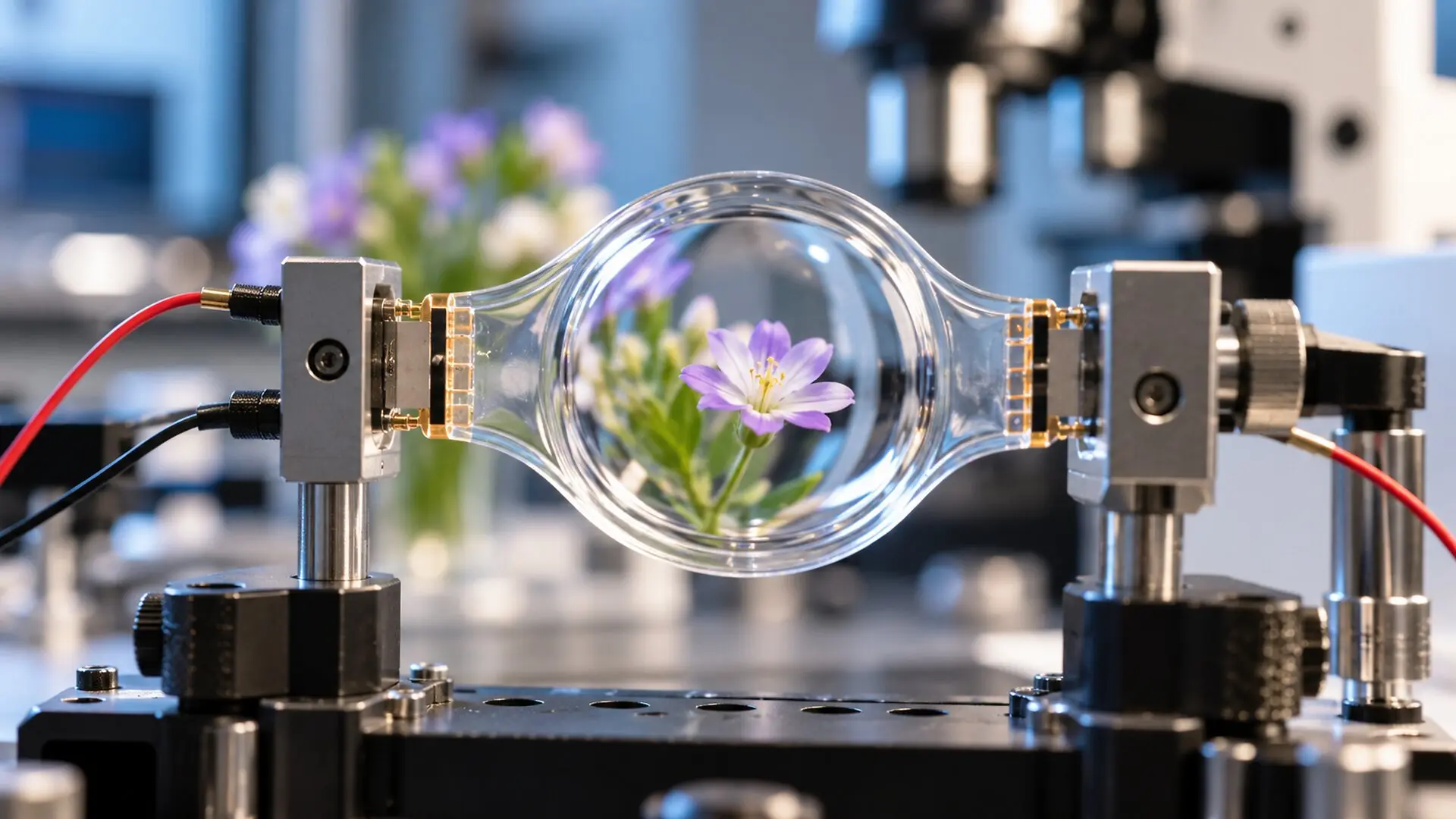
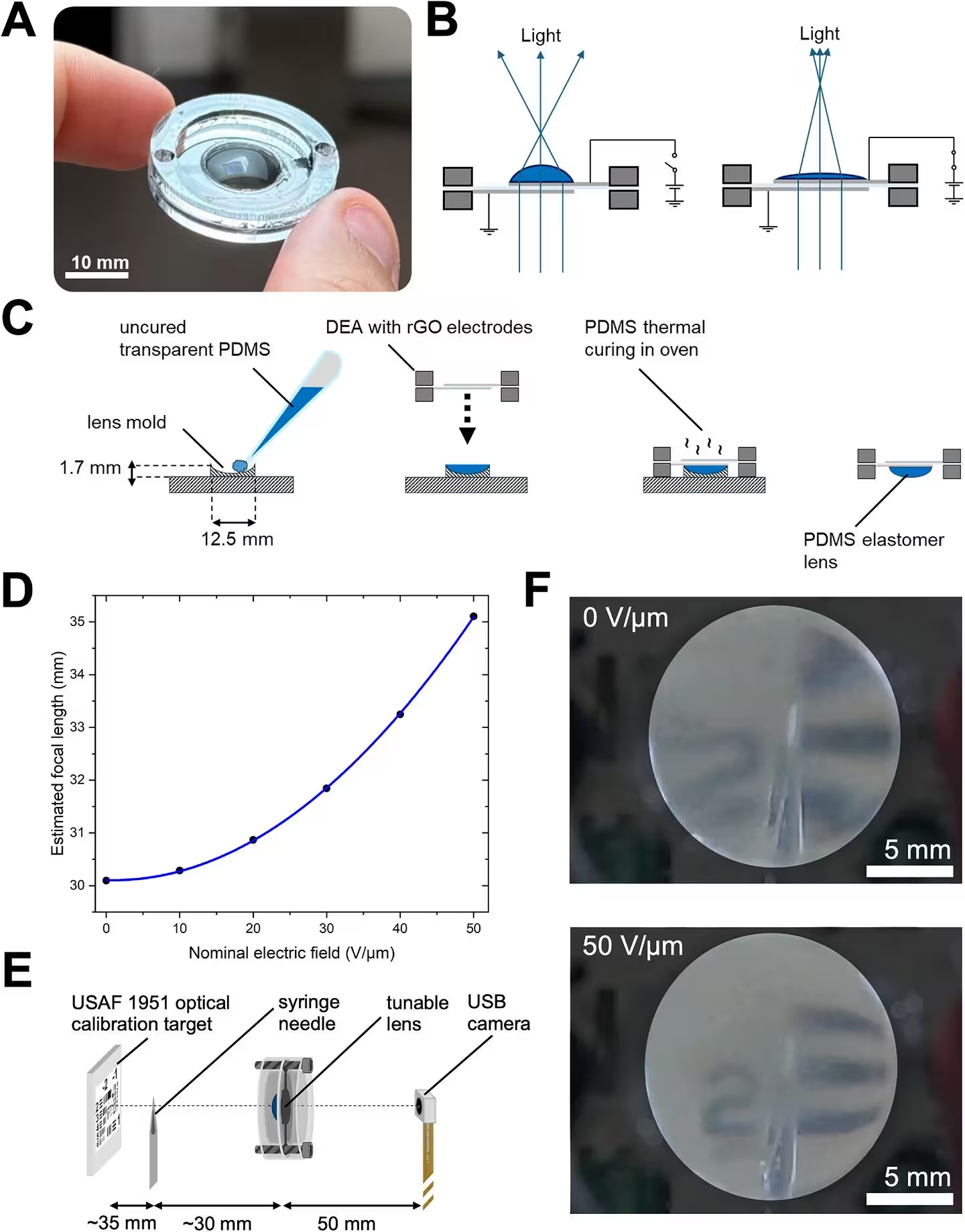
Engineers at Queen Mary University of London have engineered a compact, electrically tunable lens that mimics the natural focusing ability of the human eye. By utilizing spray-coated reduced graphene oxide (rGO) as a flexible, semi-transparent electrode, the team has successfully eliminated the need for the bulky motors and rigid mechanical components typically required for optical zoom and focus adjustments.
The research, published in Advanced Functional Materials, offers a glimpse into a future where miniaturized cameras, medical imaging hardware, and augmented reality headsets can achieve dynamic focus through soft, responsive materials rather than complex mechanical assemblies.
Replacing Mechanics with Soft Actuation
Traditional optical systems rely on shifting rigid lenses back and forth to change focal length. This mechanical process is inherently limited by the weight, volume, and power consumption of the motors and gears required to move them. In contrast, the new prototype from Queen Mary University of London utilizes a dielectric elastomer actuator—a soft, membrane-like material that responds to electrical input.
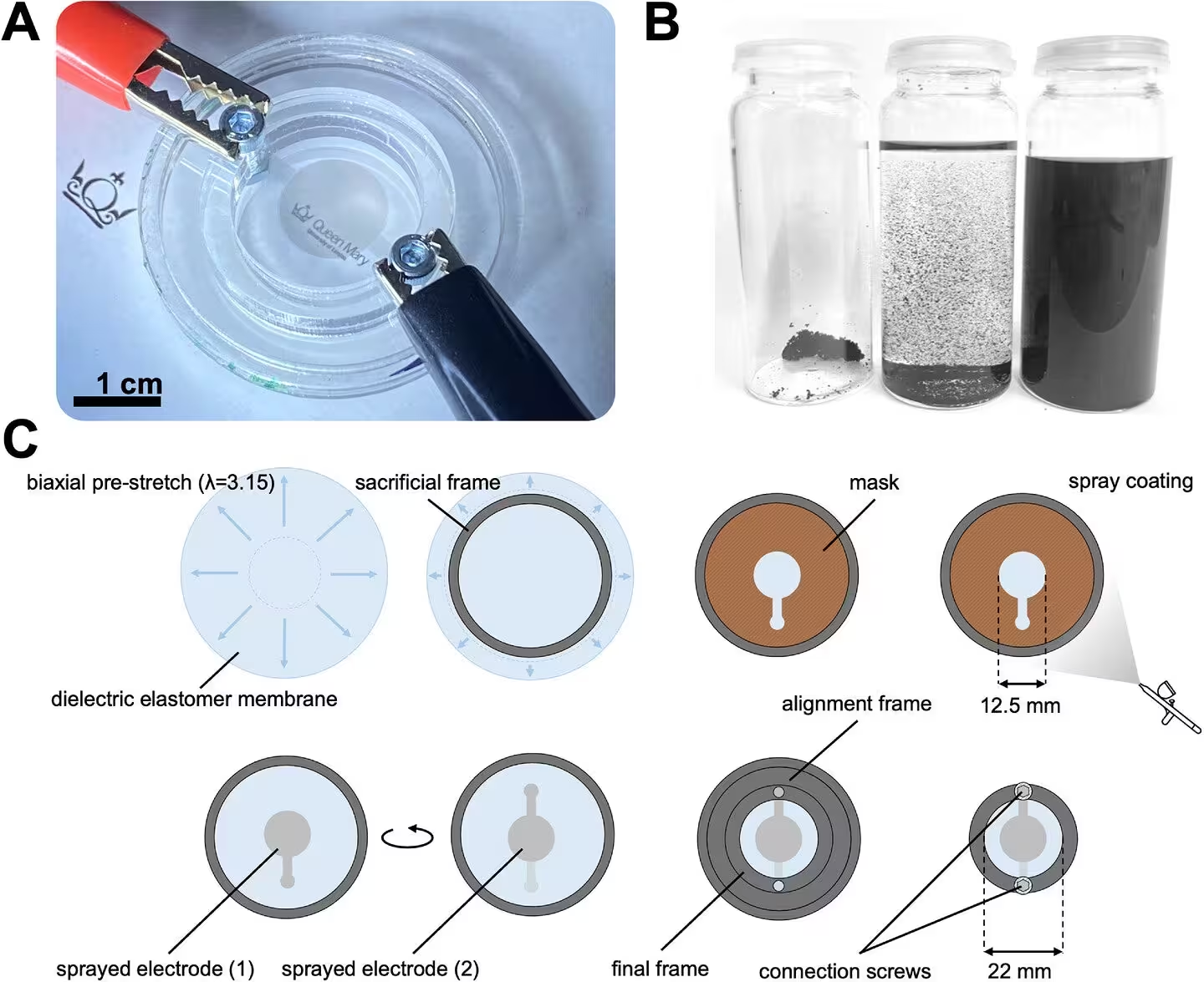
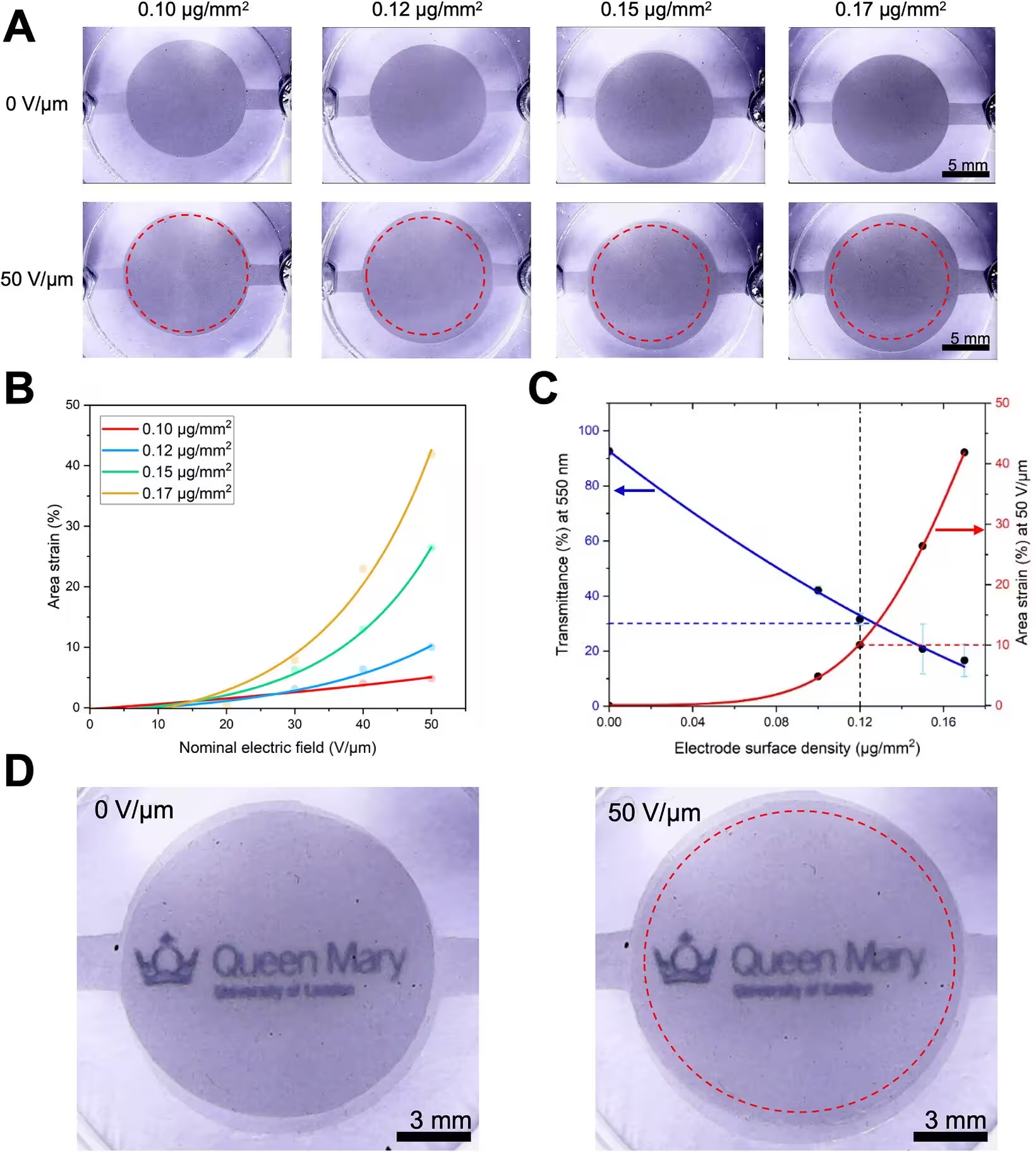
When voltage is applied to the device, the membrane compresses and expands, physically deforming the attached 12.5-millimeter lens. This deformation alters the curvature of the lens, effectively shifting its focal distance from 30 millimeters to 36 millimeters. Because the actuator functions as a thin, integrated layer, the entire system remains significantly more compact than current industry standards.
Graphene’s Role in Optical Transparency
A persistent obstacle in developing electro-active lenses has been the electrode itself. To function, these lenses require conductive materials that can stretch without breaking, yet traditional metals or carbon-based conductors are often opaque, forcing designers to place them around the periphery of the lens. This design constraint often results in larger, less efficient devices.
The team overcame this by leveraging reduced graphene oxide, which provides a balance of electrical conductivity and optical transparency. By dispersing the material in a volatile solvent, the researchers were able to spray-coat a thin, uniform layer onto a pre-stretched acrylic elastomer membrane.
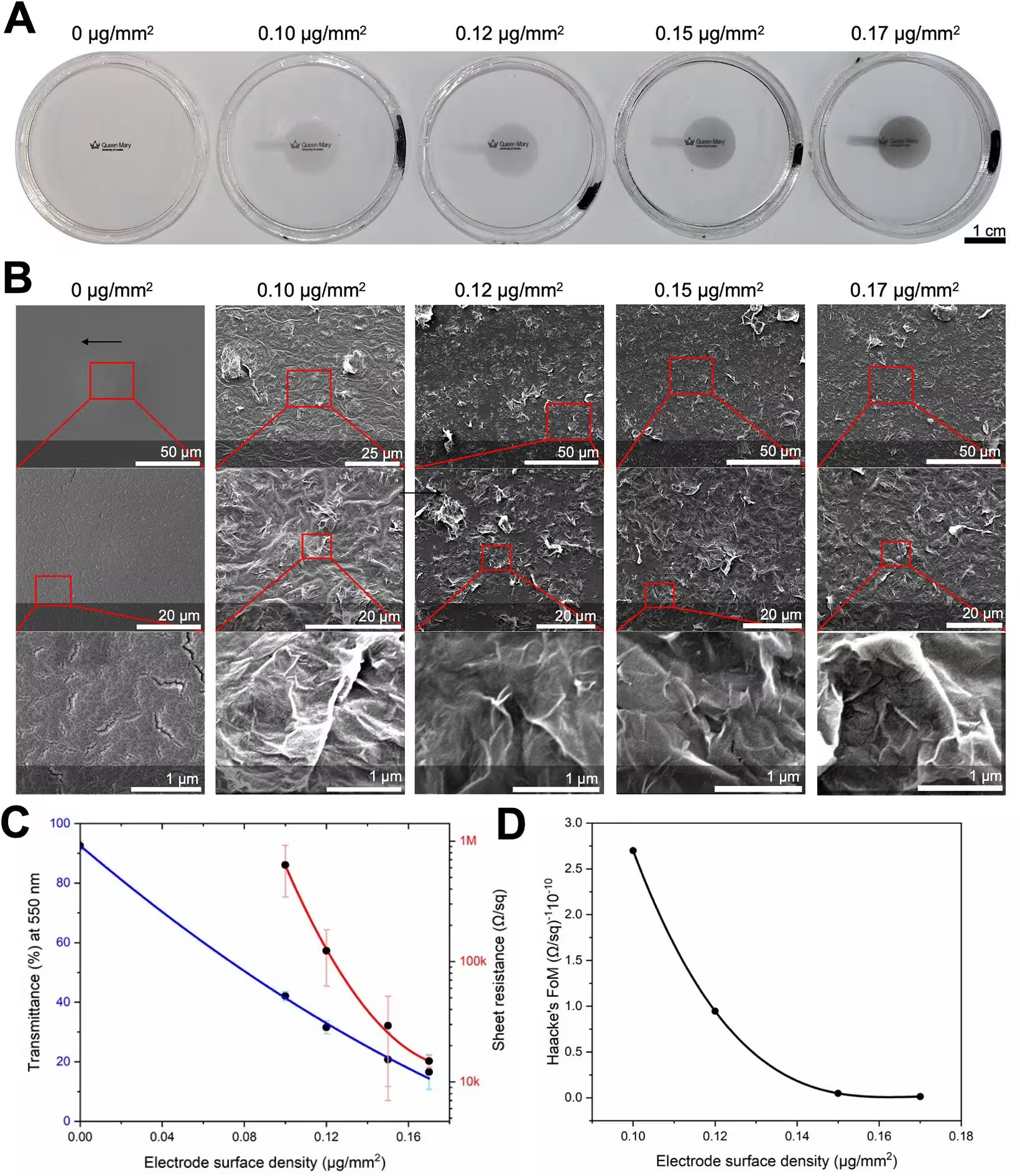
“We had to find the right balance,” noted the researchers. While increasing the density of the graphene coating improves electrical conductivity and lens responsiveness, it also reduces light transmission. The team arrived at a configuration that provides roughly 32 percent transmittance, allowing for functional actuation while maintaining sufficient clarity for imaging applications.
A Path Toward Next-Generation Optics
While the current prototype serves as a proof of concept, there is significant room for refinement. Current challenges include optimizing the smoothness of the electrode surface and enhancing overall light transmission. Microscopic analysis revealed that the coating currently contains clusters of flakes, which can cause minor optical irregularities.
Despite these hurdles, the potential applications for this technology are vast. Lead researcher Professor James Busfield and his team envision this “artificial muscle” approach being integrated into devices where every millimeter counts. As the technology matures, it could lead to silent, efficient autofocus systems for smartphones and high-precision medical tools that can navigate narrow, delicate anatomical pathways.
By moving away from rigid, gear-driven focus systems, this research points toward a new era of optical engineering—one where lenses are soft, lightweight, and capable of adapting to their environment as fluidly as the human eye.
For further reading on soft optical technologies:
- Tuneable Lenses Driven by Dielectric Elastomers: Principles, Structures, Applications, and Challenges (Applied Sciences, 2025)
- Polyelectrolyte Elastomer-Based Ionotronic Electro-Mechano-Optical Devices (Small, 2025)
- High-performance dielectric elastomers with transparent electrodes for wearable and portable technologies (Academia Materials Science, 2025)
- Tunable Lens Driven by Electrohydrodynamic Pumping (Advanced Engineering Materials, 2024)
- Stretchable Transparent Polyelectrolyte Elastomers for All-Solid Tunable Lenses of Excellent Stability Based on Electro-Mechano-Optical Coupling (Advanced Materials Technologies, 2023)
This article has been fact checked for accuracy, with information verified against reputable sources. Learn more about us and our editorial process.
Last reviewed on .
Article history
- Latest version
Reference(s)
- Hu, Zhuoqun., et al. “Tuneable Lenses Driven by Dielectric Elastomers: Principles, Structures, Applications, and Challenges.” Applied Sciences, vol. 15, no. 12, June 19, 2025, pp. 6926 MDPI AG, doi: 10.3390/app15126926. <https://doi.org/10.3390/app15126926>.
- Huang, Yuan., et al. “Polyelectrolyte Elastomer‐Based Ionotronic Electro‐Mechano‐Optical Devices.” Small, vol. 21, no. 42, June 20, 2025 Wiley, doi: 10.1002/smll.202502225. <https://doi.org/10.1002/smll.202502225>.
- Chiba, Seiki., et al. “High-performance dielectric elastomers with transparent electrodes for wearable and portable technologies.” Academia Materials Science, vol. 2, no. 2, June 30, 2025 Academia.edu Journals, doi: 10.20935/AcadMatSci7782. <https://doi.org/10.20935/AcadMatSci7782>.
- Liu, Xuejing., et al. “Tunable Lens Driven by Electrohydrodynamic Pumping.” Advanced Engineering Materials, vol. 26, no. 21, September 16, 2024 Wiley, doi: 10.1002/adem.202400898. <https://doi.org/10.1002/adem.202400898>.
- Zhong, Hao., et al. “Stretchable Transparent Polyelectrolyte Elastomers for All‐Solid Tunable Lenses of Excellent Stability Based on Electro–Mechano–Optical Coupling.” Advanced Materials Technologies, vol. 8, no. 3, October 30, 2022 Wiley, doi: 10.1002/admt.202200947. <https://doi.org/10.1002/admt.202200947>.
Cite this page:
- Posted by Aisha Ahmed