Mars’ North Pole Is Much Cleaner Than Scientists Thought and It Changes Everything
New research reveals Mars’ north pole ice contains far less dust than expected, reshaping our understanding of the planet’s climate and habitable history.
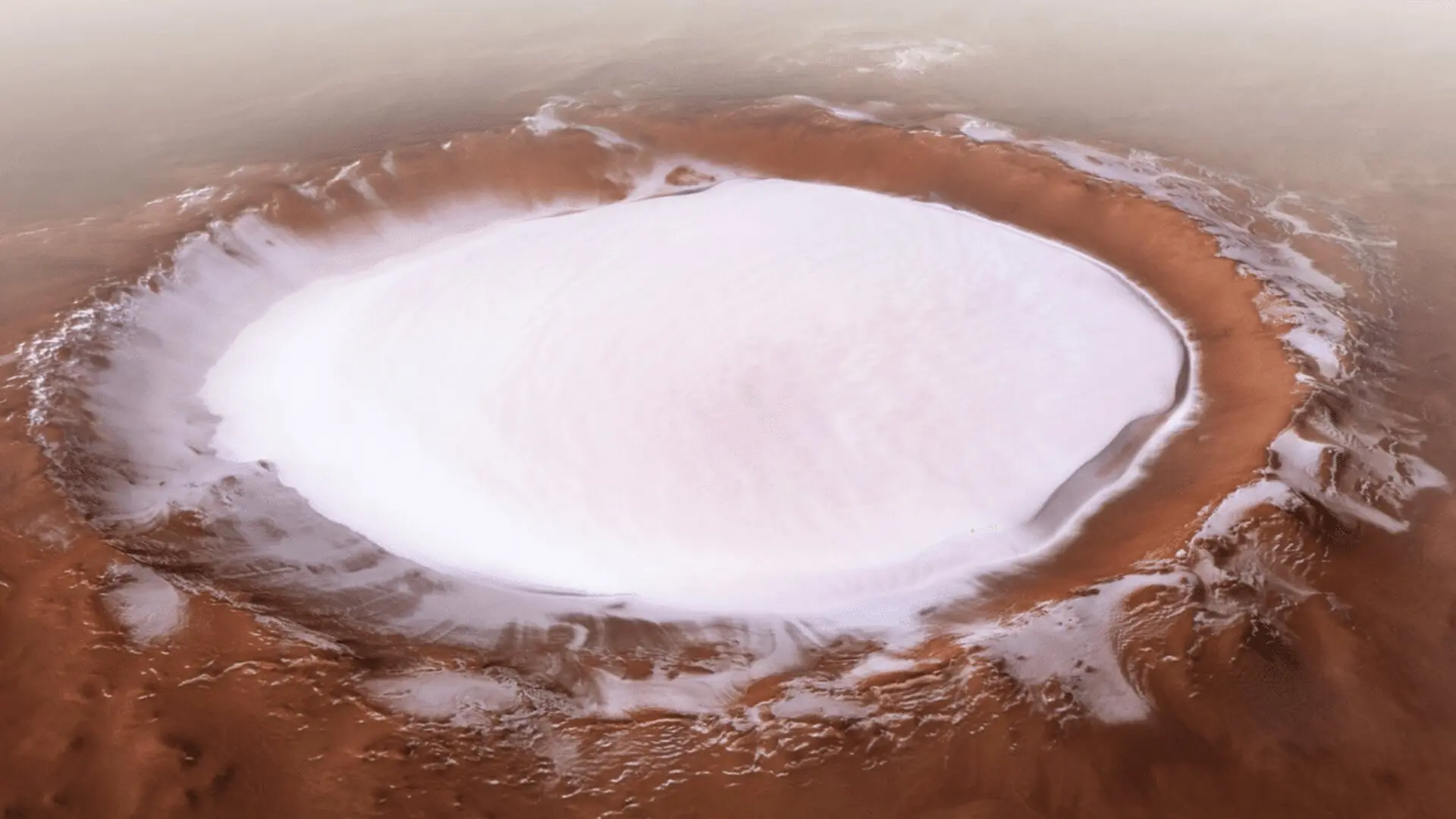
The water ice capping Mars’ north pole is significantly purer than planetary scientists previously assumed, a discovery that necessitates a recalibration of models regarding the Red Planet’s climate history and its long-term energy balance. New research published in npj Space Exploration reveals that the northern polar ice contains approximately 3% dust by mass, a stark reduction from earlier estimates that projected concentrations as high as 25%.
Rethinking the Energy Budget of the Martian North
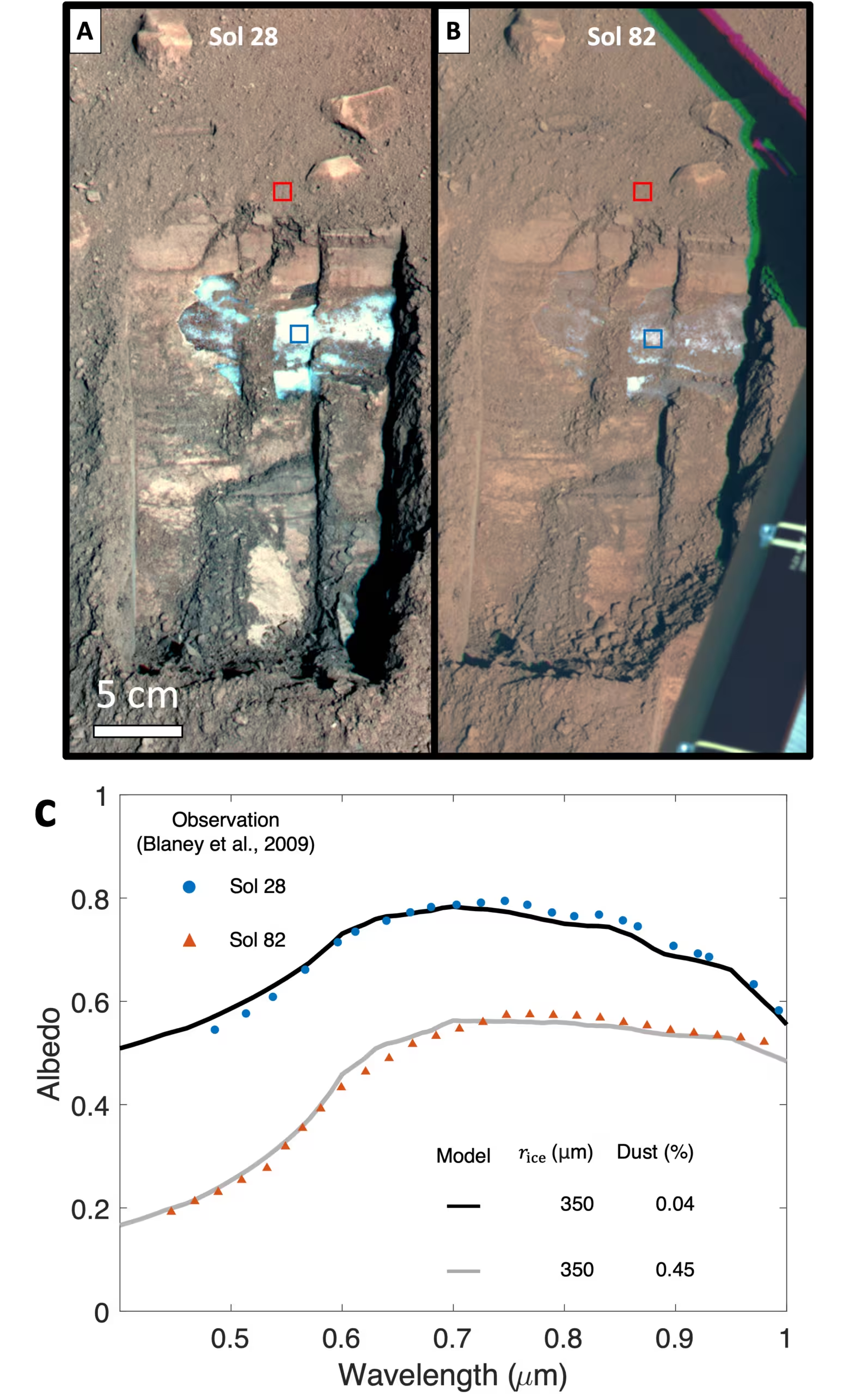
For researchers, the precise concentration of dust within Martian ice is far more than an aesthetic detail. Dust is a primary driver of how ice interacts with solar radiation; it dictates the surface’s albedo—the proportion of sunlight reflected back into space—and governs how much energy the ice absorbs. By correcting the dust-mass estimates, scientists have found that the polar surface is considerably brighter and more reflective than previously modeled, meaning it absorbs less solar heat and remains colder than earlier projections suggested.
Because the atmospheric pressure on Mars is low enough for exposed ice to undergo direct sublimation, this increased reflectivity has profound implications for how water vapor enters the atmosphere. A brighter surface prevents the rapid, heat-driven vaporization that would occur if the ice were darker and more dust-laden. As Aditya Khuller of the University of Washington explained, the physics mirrors a familiar terrestrial concept: just as a dark t-shirt absorbs more heat from the sun, dusty ice absorbs more energy, causing it to warm and vaporize at an accelerated rate.
Applying Terrestrial Physics to Martian Geology
The shift in understanding stems from a critical review of the analytical methodologies used to interpret Martian observations. Past research often relied on optical properties modeled after lunar regolith—the loose, rocky debris covering the Moon. However, Khuller and graduate student Pari Mohan found that this lunar-based approach failed to accurately reproduce the behavior of ice samples on Earth. To rectify this, the team adopted methods developed by University of Washington professor emeritus Steve Warren, whose techniques for analyzing Earth’s snow and ice have been refined over decades of field research.
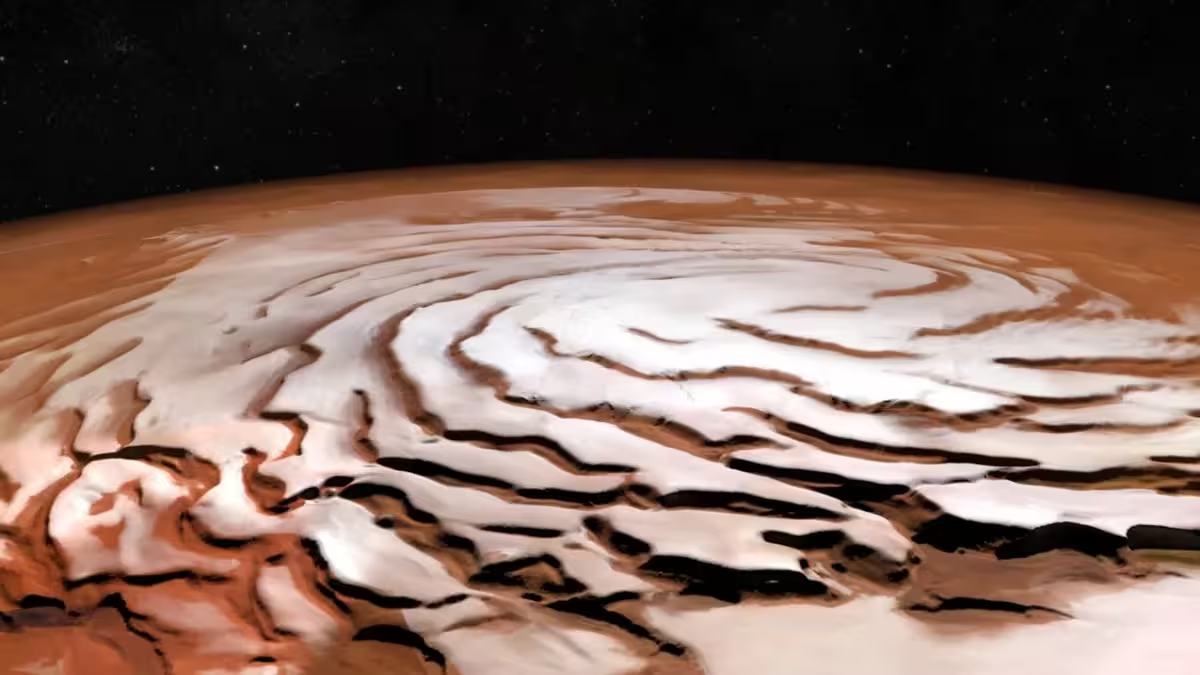
When this Earth-tested framework was applied to data from the Martian poles, the resulting dust concentration dropped to the 3% threshold. This finding is particularly significant because the northern polar ice serves as a vital archive of Mars’ environmental past. These deposits, often referred to as the North Polar Layered Deposits, form a structural “ice-cream sandwich” of alternating clean and dusty layers that preserve a chronological record of the planet’s changing climate conditions.
Seasonal Cycles and the Polar Archive
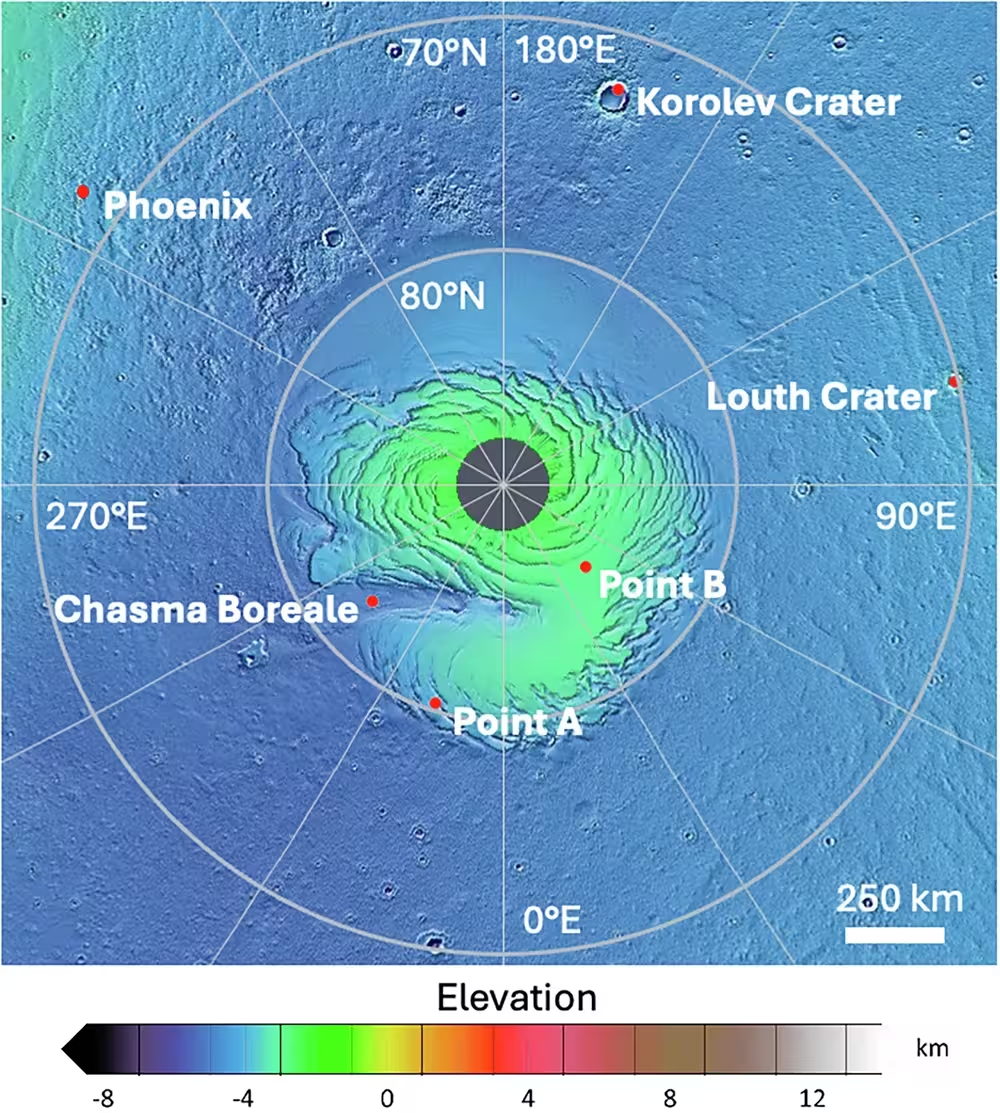
The Martian poles undergo dramatic seasonal transitions that complicate surface analysis. During the winter, a thin layer of carbon dioxide frost deposits over the water ice, which is significantly dustier than the underlying permanent cap. In the northern hemisphere, this seasonal carbon dioxide layer is approximately one meter deep. As the Martian summer approaches, this frost sublimates, exposing the older, much cleaner water-ice surface beneath, which is known as the North Polar Residual Cap.
Orbiting spacecraft, including the Mars Reconnaissance Orbiter and ESA’s Mars Express, have tracked these seasonal changes, revealing how the surface brightness shifts as the frost clears. By differentiating between the dusty seasonal frost and the cleaner, more persistent underlying ice, the researchers have been able to provide a more nuanced view of the Martian poles. This distinction is essential for future climate models, as it confirms that the most active, exposed surfaces of the Martian pole are effectively acting as a highly reflective, thermally stable buffer against the harsh solar environment.
This article has been fact checked for accuracy, with information verified against reputable sources. Learn more about us and our editorial process.
Last reviewed on .
Article history
- Latest version
Reference(s)
- Dohrn, Gillian. “The north pole of Mars is less dusty than scientists thought | UW News.”, September 29, 2026 UW News <https://www.washington.edu/news/2026/09/29/the-north-pole-of-mars-is-less-dusty-than-scientists-thought/>.
Cite this page:
- Posted by Karan Das