AI and Nanotechnology Could Help Detect Alien Life by Reading Molecular Handedness
Scientists are combining AI and nanotechnology to detect potential signs of life in space by analyzing single-molecule electrical patterns in meteorites.
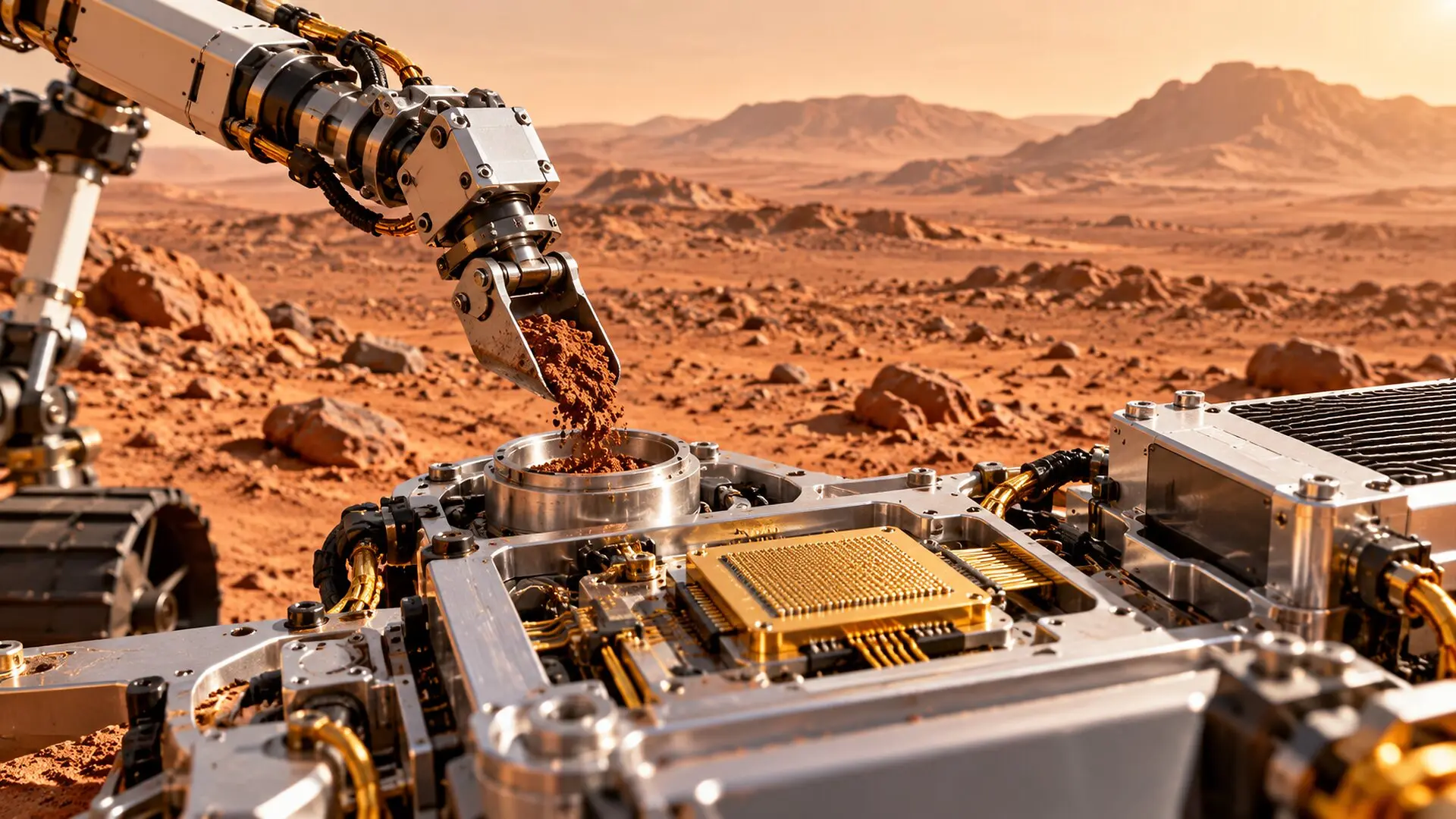
Researchers at the University of Osaka have unveiled a novel electrical sensing technique that could reshape how we detect the chemical building blocks of life in the cosmos. By combining atomically sharp gold electrodes with advanced machine learning, the team has successfully identified the mirror-image structures of amino acids at the single-molecule level.
The findings, detailed in Nature Communications, represent a significant technical milestone in characterizing molecular chirality—the inherent “handedness” of molecules that serves as a crucial indicator in astrobiology. While the technology is not yet a standalone life-detection instrument for space missions, it offers a pathway toward miniaturized, robust sensors capable of operating in extreme environments.
Understanding Molecular Handedness
Many amino acids exist in two forms, labeled L and D, which are identical in composition but function as non-superimposable mirror images of one another. On Earth, biological systems exhibit a striking preference for L-form amino acids. Because non-biological processes typically yield a roughly equal, or racemic, mix of both forms, detecting an imbalance is a standard strategy for scientists looking for evidence of past or present biological activity.
However, an imbalance is not a definitive proof of life, as environmental factors can also influence these ratios. Consequently, the ability to accurately profile these molecules is vital for understanding the chemical history of a sample, whether it originates from a meteorite or a planetary surface.
Engineering the Nanoscale Sensor
The research team, led by Masateru Taniguchi and Takahito Oshiro, utilized a “nanogap” device created by fracturing a thin gold wire. This technique produces a gap approximately 0.5 nanometers wide—a scale small enough to interact with individual molecules.
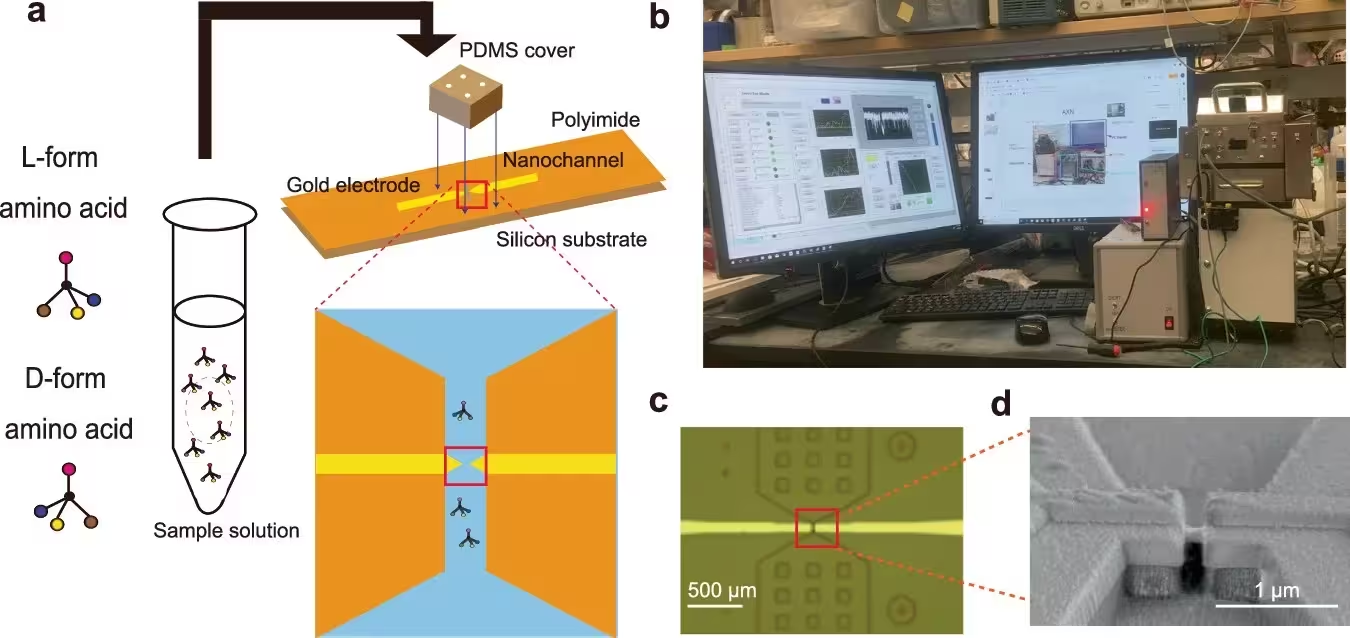
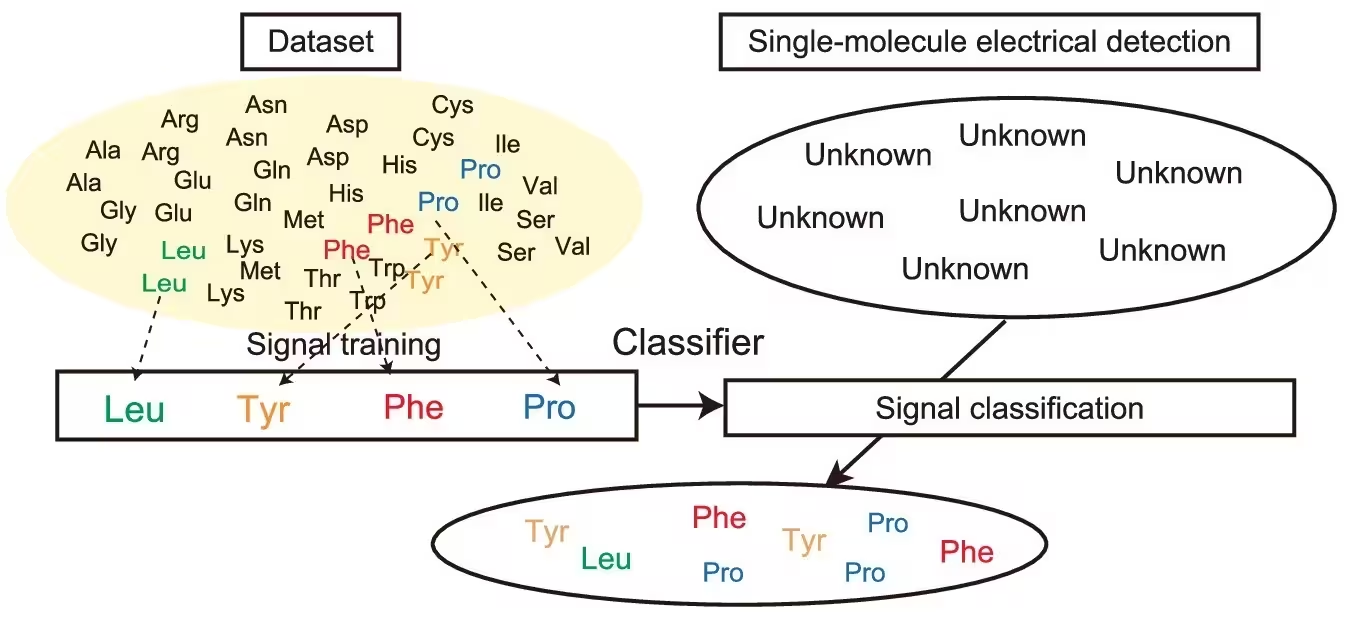
As an amino acid drifts into this gap, it modulates the electrical tunneling current between the gold points. This creates a distinct waveform, which the team processed using machine learning algorithms. By segmenting the signal into 12 distinct data points, the system can distinguish between mirror-image forms that might otherwise appear identical in simpler analyses.
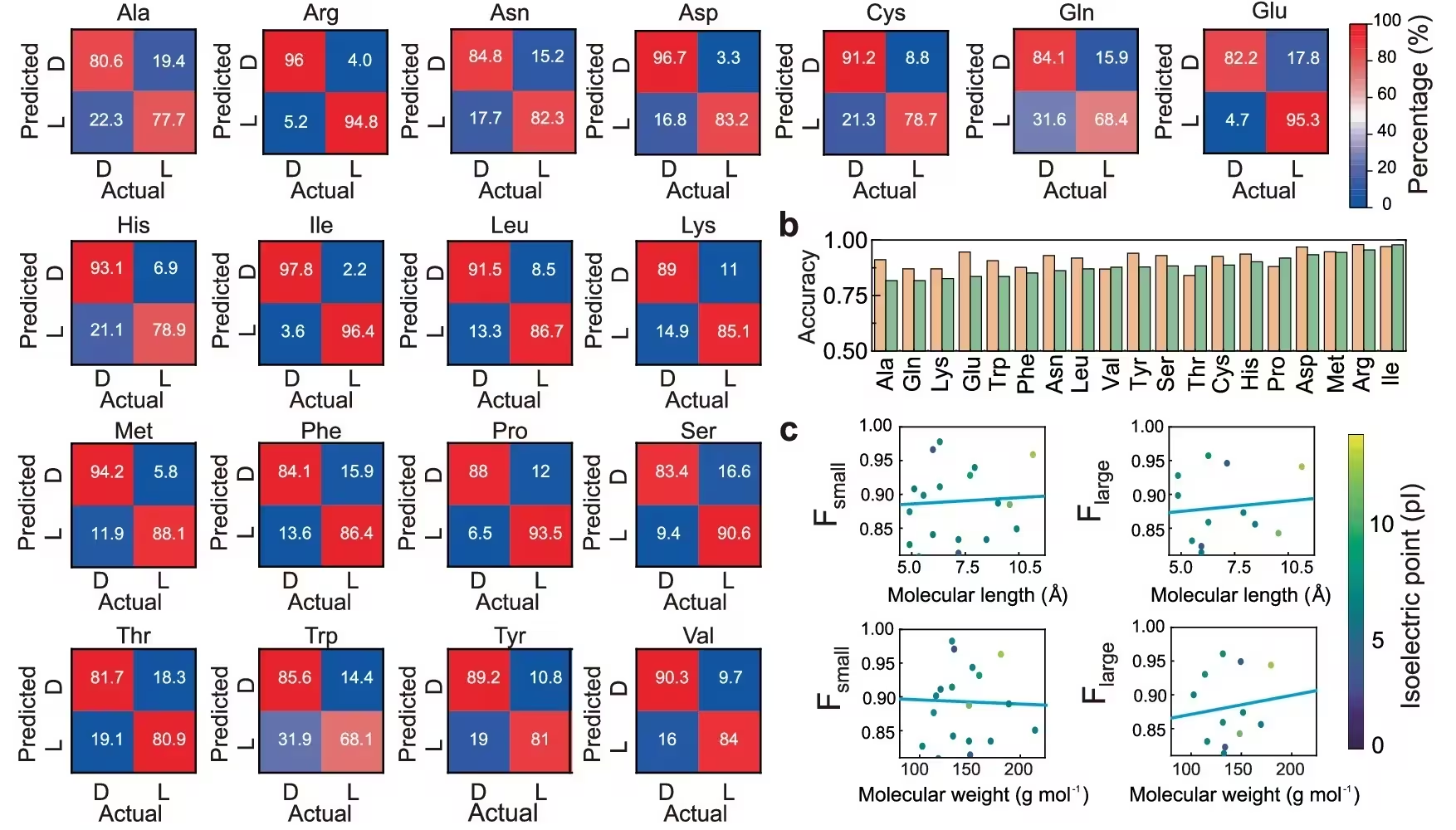
The system demonstrated impressive accuracy, achieving an average F1 score—a metric balancing precision and recall—of 0.876 across 19 different chiral amino acids. Some, like isoleucine, were identified with high confidence, while others proved more challenging.
Testing Against Real-World Samples
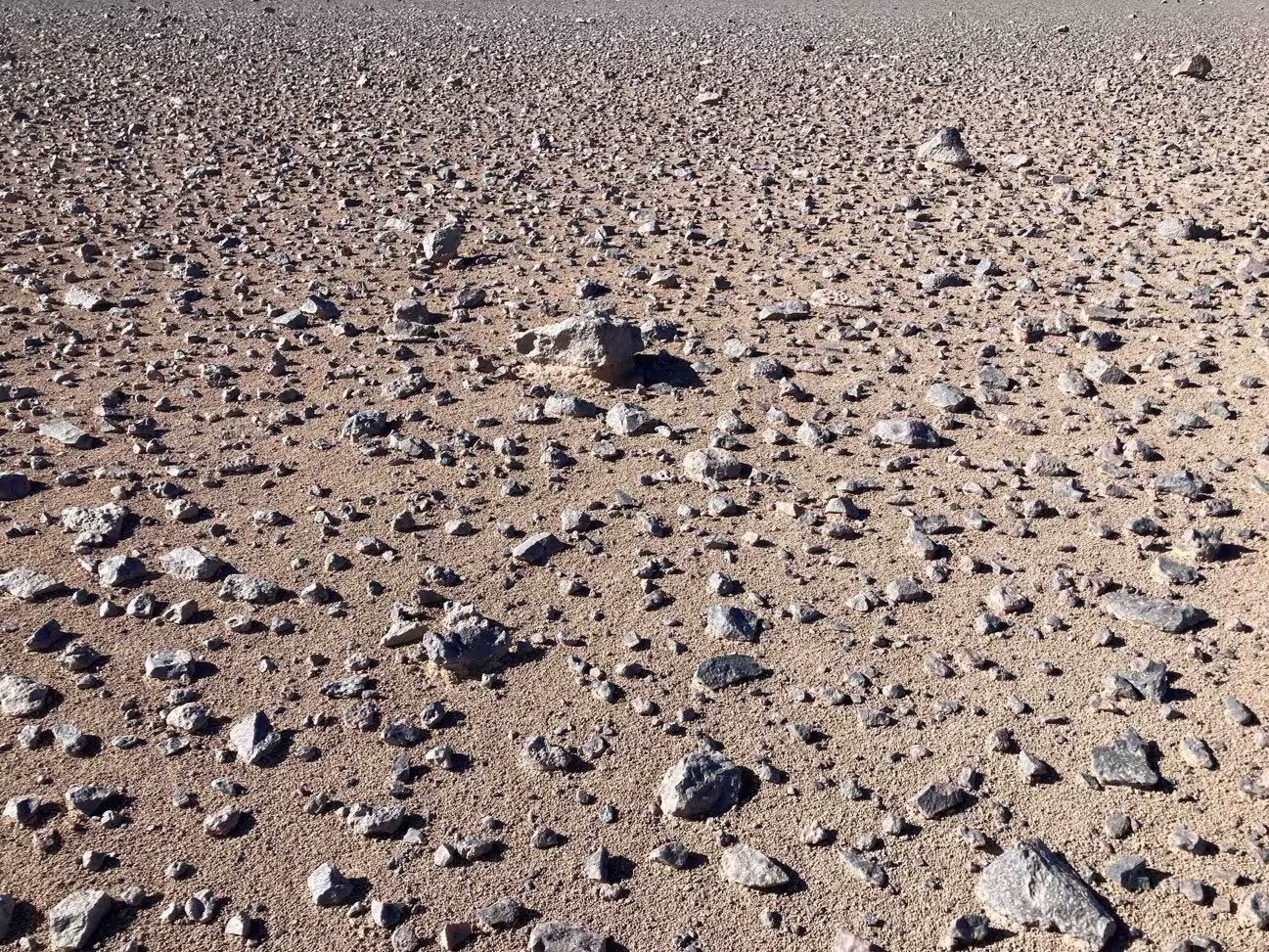
To evaluate the system’s performance, the researchers analyzed extracts from the Murchison meteorite and soil samples taken from the hyperarid core of the Atacama Desert in Chile. These results were compared against traditional liquid chromatography–mass spectrometry.
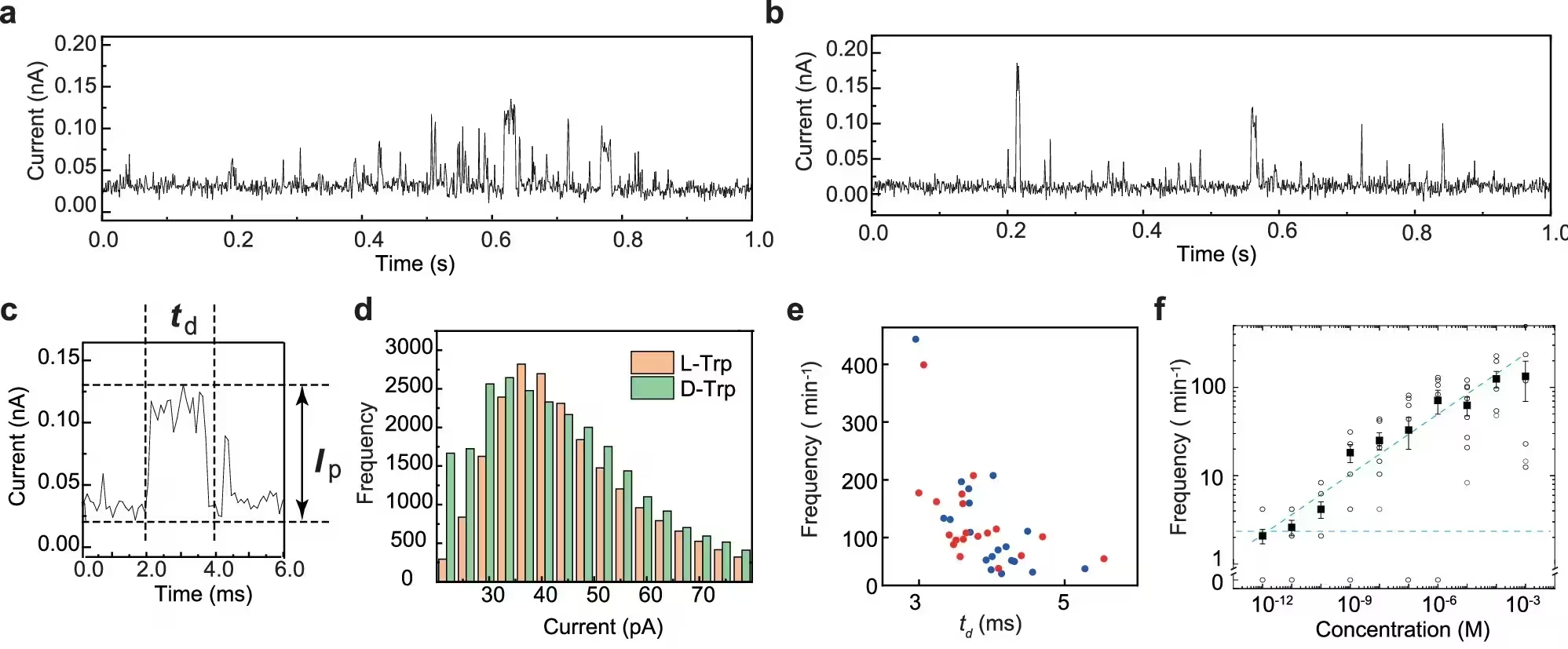
While the nanogap device successfully identified compositional patterns, the researchers noted discrepancies when compared to reference methods. The study highlighted the difficulty of filtering out “noise” in complex environmental samples, though a probability-based filter helped focus the analysis on the most reliable signals.
Future Directions for Space Exploration
The primary advantage of this electrical approach is its potential for extreme miniaturization. Because it eliminates the need for bulky optical equipment or specialized recognition agents, such technology could one day be integrated into compact, vibration-resistant payloads for interplanetary landers.
The team acknowledges that significant hurdles remain. Future iterations of the technology must be calibrated against a wider array of background materials and tested for its ability to handle unidentified molecules. Furthermore, establishing strict contamination-control protocols will be essential before this method can be deployed in the search for extraterrestrial biosignatures.
Relevant Scientific Literature
- Abundant ammonia and nitrogen-rich soluble organic matter in samples from asteroid (101955) Bennu (Nature Astronomy, 2025)
- Challenges and Opportunities in Using Amino Acids to Decode Carbonaceous Chondrite and Asteroid Parent Body Processes (Astrobiology, 2025)
- Can Chirality Answer Whether We Are Alone? (Chirality, 2024)
- Extraterrestrial amino acids and amines identified in asteroid Ryugu samples returned by the Hayabusa2 mission (Geochimica et Cosmochimica Acta, 2023)
- The Search for Chiral Asymmetry as a Potential Biosignature in our Solar System (Chemical Reviews, 2020)
This article has been fact checked for accuracy, with information verified against reputable sources. Learn more about us and our editorial process.
Last reviewed on .
Article history
- Latest version
Reference(s)
- Glavin, Daniel P.., et al. “Abundant ammonia and nitrogen-rich soluble organic matter in samples from asteroid (101955) Bennu.” Nature Astronomy, vol. 9, no. 2, January 29, 2025, pp. 199-210. Springer Science and Business Media LLC, doi: 10.1038/s41550-024-02472-9. <https://doi.org/10.1038/s41550-024-02472-9>.
- Aponte, José C.., et al. “Challenges and Opportunities in Using Amino Acids to Decode Carbonaceous Chondrite and Asteroid Parent Body Processes.” Astrobiology, vol. 25, no. 6, June 12, 2025, pp. 437-449. SAGE Publications, doi: 10.1089/ast.2025.0017. <https://doi.org/10.1089/ast.2025.0017>.
- Bagdžiūnas, Gintautas. “Can Chirality Answer Whether We Are Alone?.” Chirality, vol. 36, no. 8, July 25, 2024 Wiley, doi: 10.1002/chir.23708. <https://doi.org/10.1002/chir.23708>.
- Parker, Eric T.., et al. “Extraterrestrial amino acids and amines identified in asteroid Ryugu samples returned by the Hayabusa2 mission.” Geochimica et Cosmochimica Acta, vol. 347, April 1, 2023, pp. 42-57. Elsevier BV, doi: 10.1016/j.gca.2023.02.017. <https://doi.org/10.1016/j.gca.2023.02.017>.
- Glavin, Daniel P.., et al. “The Search for Chiral Asymmetry as a Potential Biosignature in our Solar System.” Chemical Reviews, vol. 120, no. 11, November 19, 2019, pp. 4660-4689. American Chemical Society (ACS), doi: 10.1021/acs.chemrev.9b00474. <https://doi.org/10.1021/acs.chemrev.9b00474>.
Cite this page:
- Posted by Aisha Ahmed