Astronomers Spot A Star Slowly Cannibalizing Its Nearby Brown Dwarf Companion
Astronomers have discovered a small star slowly consuming a nearby brown dwarf, revealing a rare, steady feeding process 300 light-years from Earth.
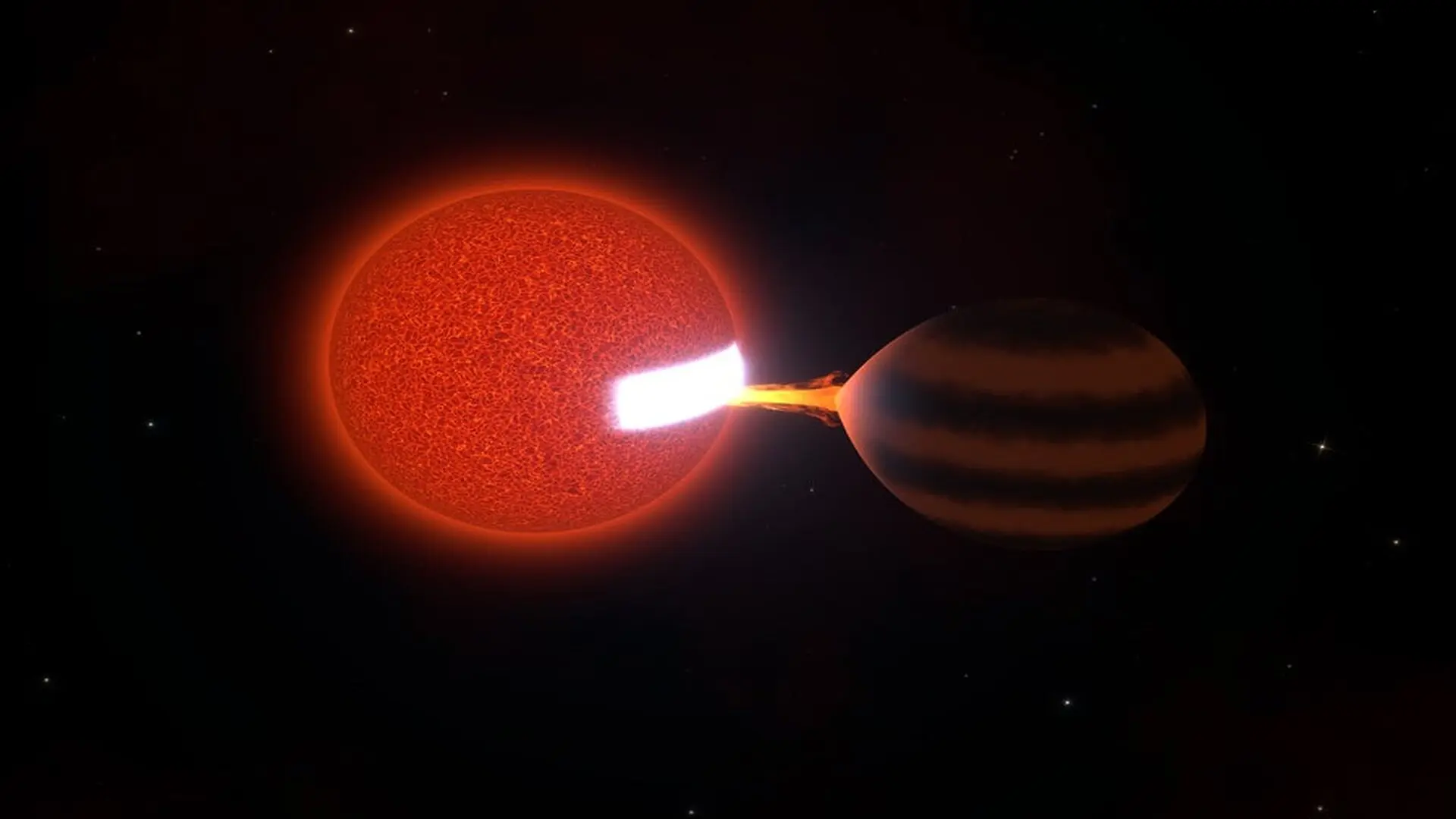
Astronomers have uncovered a rare celestial interaction where a low-mass star is steadily siphoning material from a brown dwarf in a tight, 87-minute orbit. The finding, detailed in Nature Astronomy, marks the first definitive evidence of stable mass transfer from a substellar object onto a main-sequence star, suggesting these pairs may endure in this state for billions of years.
- A small, cool star and a brown dwarf are locked in an 87-minute orbital dance, with the star gradually pulling gas from its companion.
- The discovery offers the first direct confirmation of stable mass transfer between a substellar object and a main-sequence star.
- Unlike violent stellar engulfments, this process is slow and controlled, potentially persisting for vast cosmic timescales.
The system, known as ZTF J0440+2325, resides just a few hundred light-years from Earth. Researchers identified the object through the Zwicky Transient Facility, which monitors the sky for fluctuations in brightness. While initial data suggested a potential black widow binary—a system where a neutron star obliterates a companion—the unique triangular patterns in the light curve and follow-up spectroscopic analysis led the MIT-led research team to a different conclusion.
Unmasking a Celestial Thief
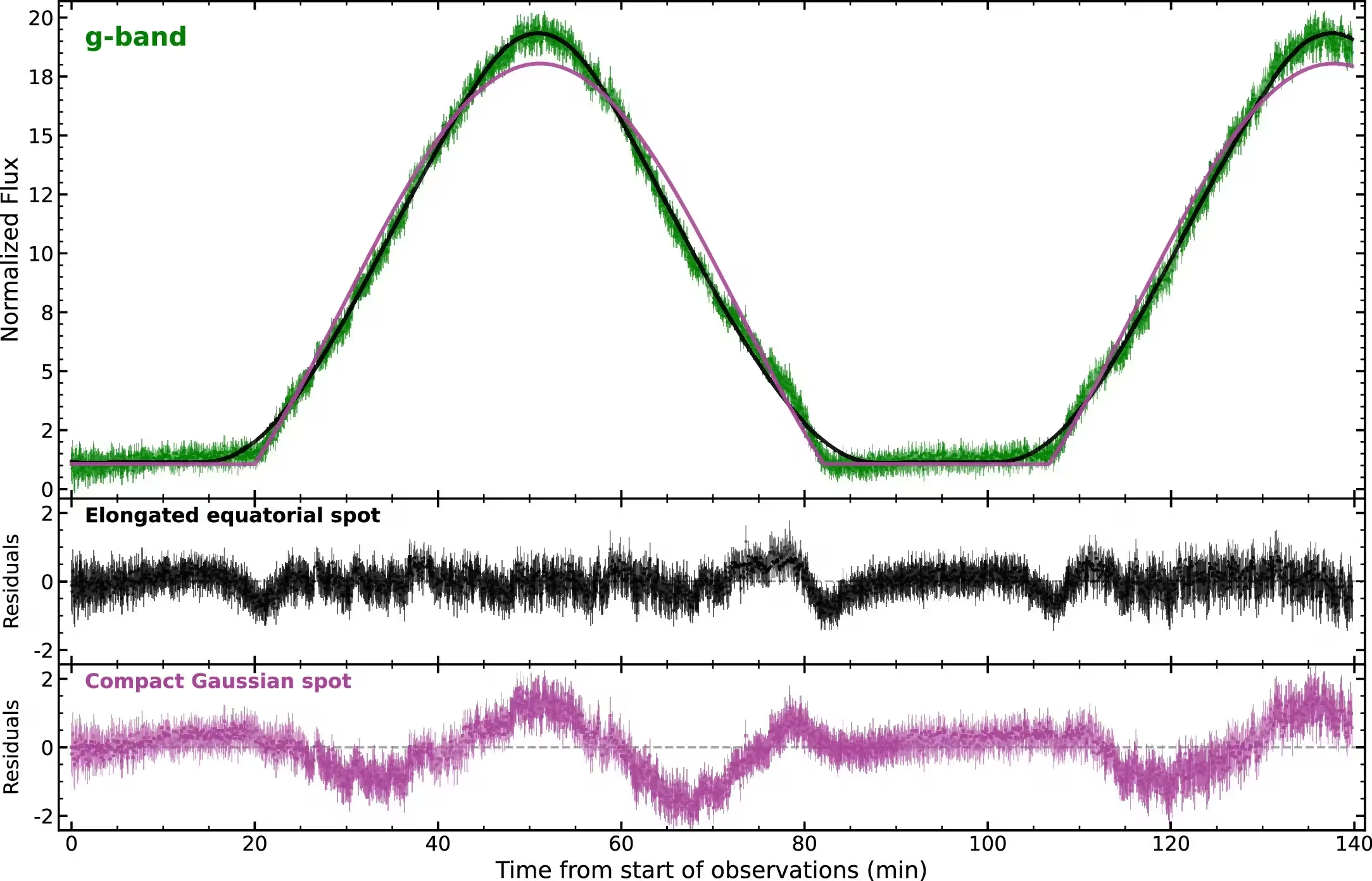
Kevin Burdge, an assistant professor of physics at MIT, first flagged the system due to its unusual, recurring triangular light signature. “I remember first looking at this and thinking, stars don’t make triangular waveforms like this,” Burdge recalled. To solve the puzzle, his team utilized HiPERCAM on the Gran Telescopio Canarias and the Keck Observatory to capture rapid imaging and detailed spectroscopic data.
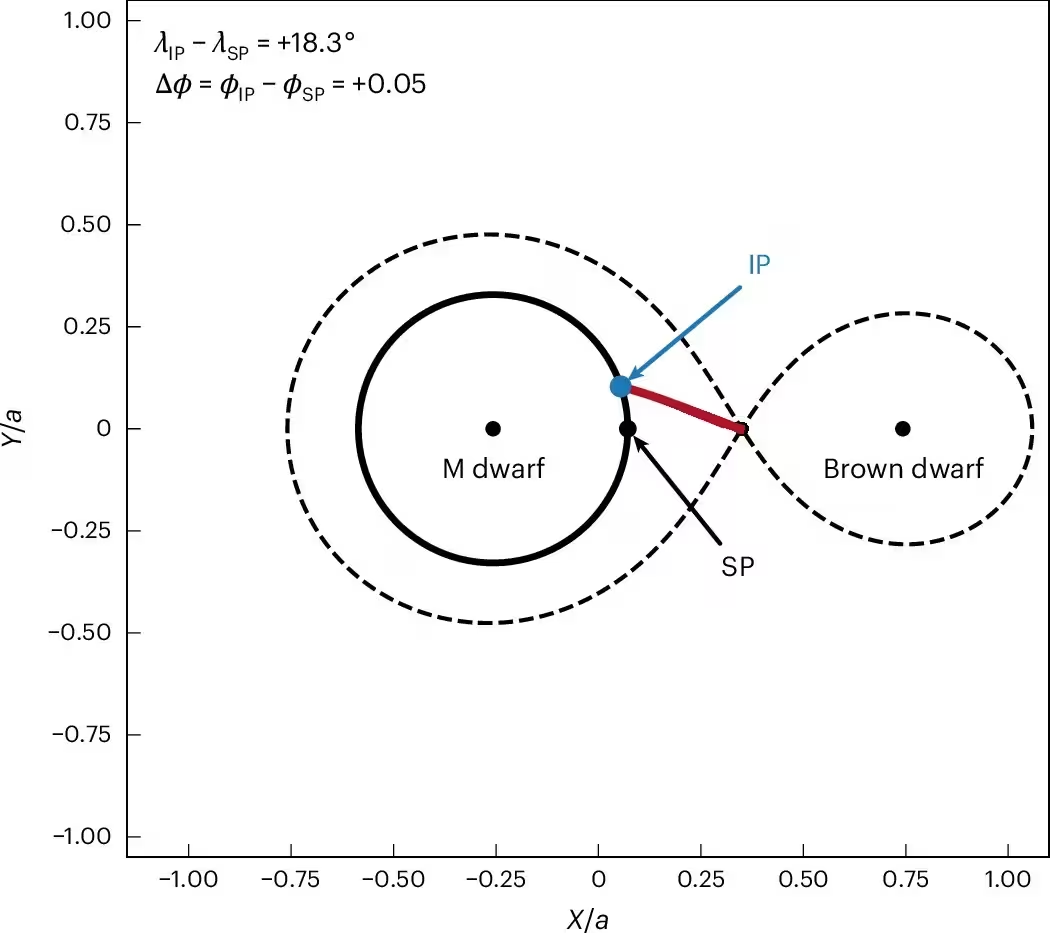
The analysis revealed an M8 dwarf star and a brown dwarf—an object more massive than a planet but lacking the hydrogen-burning capacity of a true star. The two objects are incredibly compact; their entire orbital separation could fit within the diameter of our Sun. The team’s simulations confirmed that the mass loss is characterized by direct-impact accretion, where a stream of gas flows from the brown dwarf and crashes directly onto the star’s surface without forming an intermediate accretion disk.
A Long-Term Steady Feed
The impact of this gas creates a permanent “hot spot” on the stellar surface. As the pair rotates, this bright region moves in and out of view from Earth, creating the characteristic rhythmic flickering detected by the Zwicky telescope. Because the rate of transfer is relatively slow—estimated at roughly one hundred-thousandth of an Earth mass per year—the system avoids the rapid, cataclysmic destruction seen in other binary interactions.
While the team estimates the process could continue for at least ten million years, they believe the configuration is stable enough to persist for much longer. This longevity distinguishes the system from other known binaries, highlighting a diverse range of evolutionary paths for stars with substellar companions.
Expanding the Search
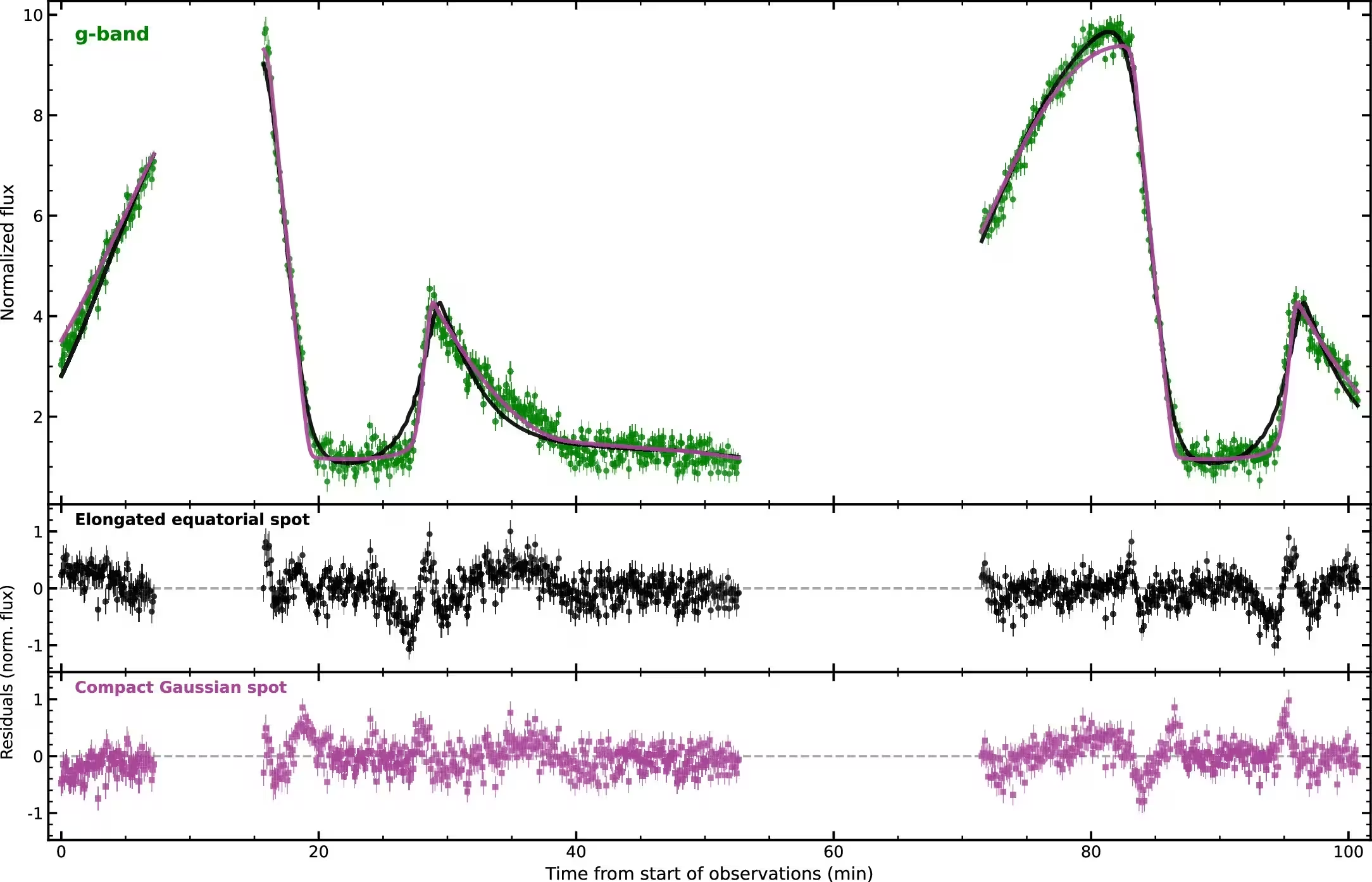
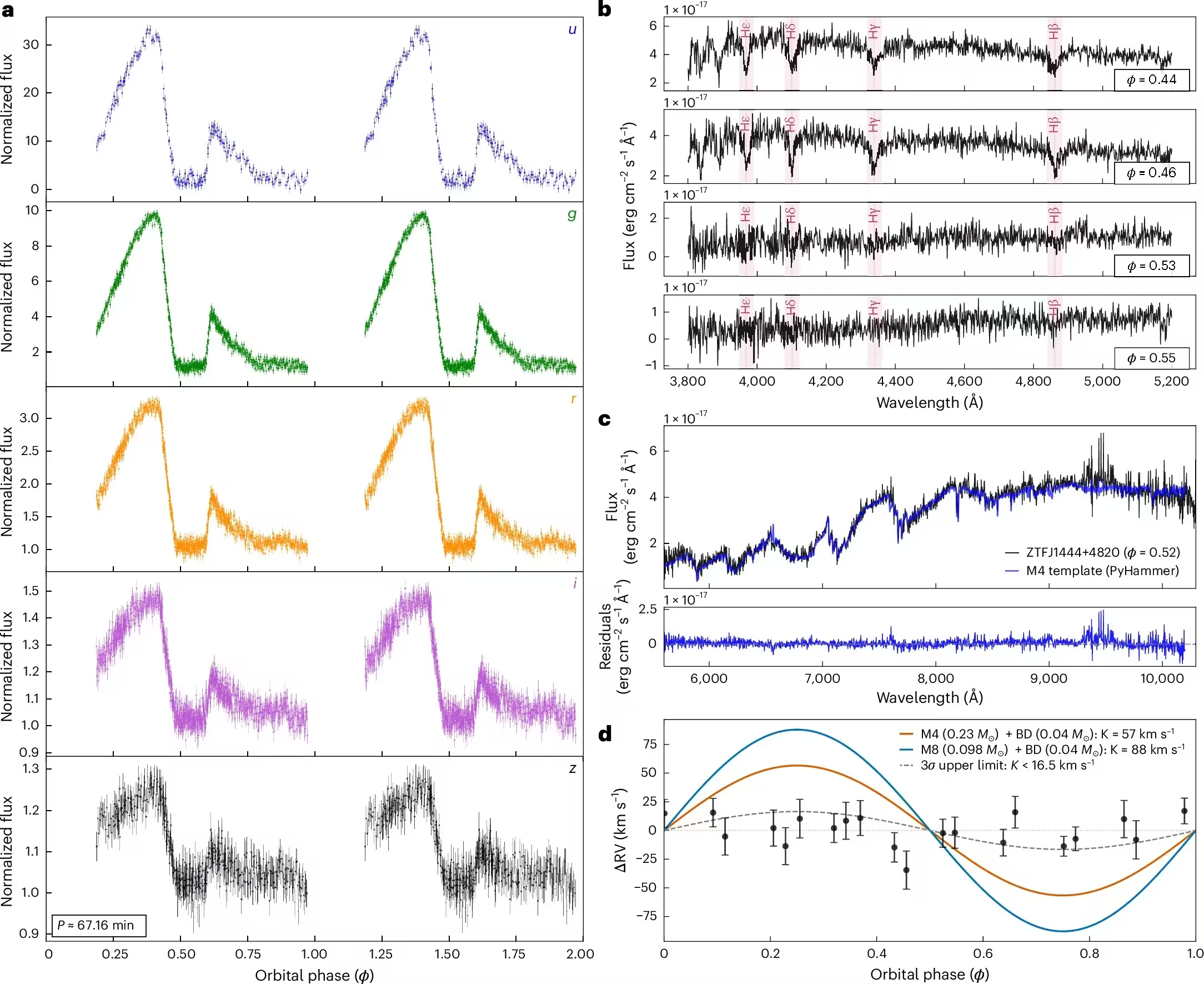
The researchers also highlighted another system, ZTF J1444+4820, which shows similar evidence of accretion. However, the presence of a third, brighter star in that system makes it difficult to isolate the close binary’s signal. Further observations will be necessary to confirm if this second system follows the same “slow-feed” model.
By establishing that these systems can exist in a stable, long-term state, the researchers have opened a new window into how compact binaries evolve. The discovery suggests that stellar consumption does not always have to be a quick or violent event, providing a new benchmark for understanding the dynamics of low-mass systems across the galaxy.
Additional Reading
- A Mass Transferring Brown Dwarf Binary on a 57 Minute Orbit
- Revealing a Main-sequence Star that Consumed a Planet with JWST
- A transiting brown dwarf in a 2 hour orbit
- Minimum Orbital Periods of H-Rich Bodies
- V407 Vul: a direct impact accretor
This article has been fact checked for accuracy, with information verified against reputable sources. Learn more about us and our editorial process.
Last reviewed on .
Article history
- Latest version
Reference(s)
- Householder, Aaron. “Stable mass transfer from a substellar object onto an M dwarf - Nature Astronomy.”, October 5, 2026, pp. 1-10. Nature, doi: 10.1038/s41550-026-02992-6. <https://www.nature.com/articles/s41550-026-02992-6>.
- “The Massachusetts Institute of Technology (MIT).” Massachusetts Institute of Technology <http://web.mit.edu/>.
- Whitebook, Samuel. “A Mass Transferring Brown Dwarf Binary on a 57 Minute Orbit.” CaltechAUTHORS, doi: 10.3847/2041-8213/ae486e. <https://authors.library.caltech.edu/records/44hea-erh63>.
- Lau, Ryan. “Revealing a Main-sequence Star that Consumed a Planet with JWST.” CaltechAUTHORS, doi: 10.3847/1538-4357/adb429. <https://authors.library.caltech.edu/records/an6jm-vbt35>.
- El-Badry, Kareem. “A transiting brown dwarf in a 2 hour orbit.”, vol. 6, September 15, 2023, doi: 10.21105/astro.2307.15729. <https://astro.theoj.org/article/87958-a-transiting-brown-dwarf-in-a-2-hour-orbit>.
- Rappaport, S.. “Minimum Orbital Periods of H-Rich Bodies.” arXiv.org, doi: 10.3847/1538-4357/abf7b0. <https://arxiv.org/abs/2104.12083>.
- Marsh, T.. “V407 Vul: a direct impact accretor.” arXiv.org, doi: 10.1046/j.1365-8711.2002.05346.x. <https://arxiv.org/abs/astro-ph/0201309>.
Cite this page:
- Posted by Aisha Ahmed