Scientists Just Captured the Fastest Processes in Nature Using Record-Breaking X-Ray Flashes
Scientists have generated record-breaking attosecond X-ray pulses, offering a groundbreaking new way to observe and control electron dynamics in matter.

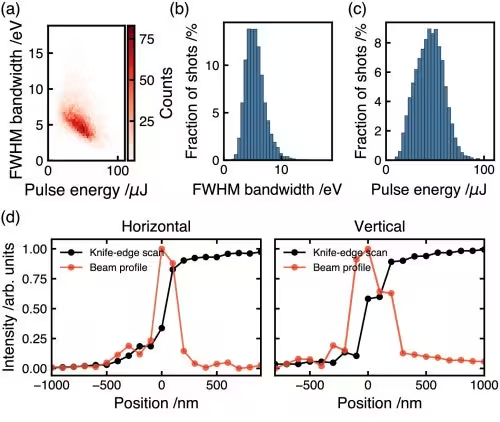
An international team of researchers has set a new benchmark in physics by producing hard X-ray pulses of unprecedented intensity and fluence. By concentrating these extremely brief bursts of light into a nanoscale focal spot, the scientists have opened a new window into the high-speed world of electron dynamics, reaching intensities that exceed 10²⁰ watts per square centimeter.
The achievement, documented in the journal Optica, took place at the European XFEL facility in Schenefeld, Germany. By capturing these pulses at a duration of just 300 attoseconds—a timeframe so short that light travels less than 100 nanometers—researchers believe they are nearing the capability to observe fundamental physical and chemical processes as they happen at the subatomic level.

Engineering Light at the Attosecond Scale
Generating such intense, short-lived pulses requires a sophisticated approach to particle acceleration. Using a free-electron laser, the team propelled electrons through a series of magnets known as an undulator. By employing a technique called self-chirping, which precisely modulates the energy of electrons within a bunch, they were able to compress the resulting X-ray emission into unusually energetic, high-intensity flashes.
To focus this energy effectively, the team utilized an advanced Kirkpatrick-Baez optical system. This mirror arrangement condensed the radiation into a focal area measuring just 180 by 330 nanometers. This extreme concentration is what allows the X-rays to reach the peak intensities necessary to probe electron behavior in real-time.
Verifying Extreme Intensity
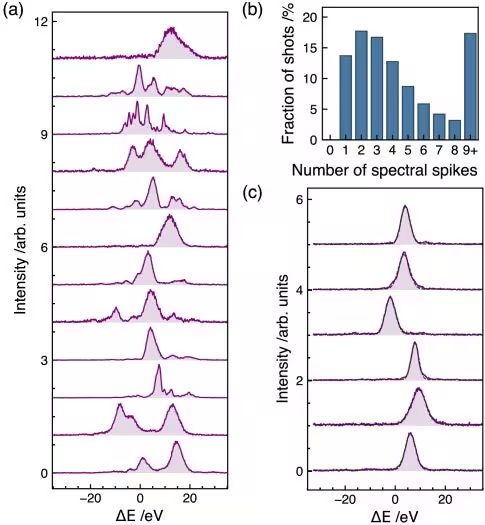
Confirming the duration and power of these pulses presented a unique set of challenges. Because standard electronics cannot track such rapid events, the researchers relied on statistical analysis of over 74,000 individual pulses, identifying those with a single spectral spike. These “single-spike” pulses provided the most reliable data, with spectral bandwidths pointing toward durations near 300 attoseconds.
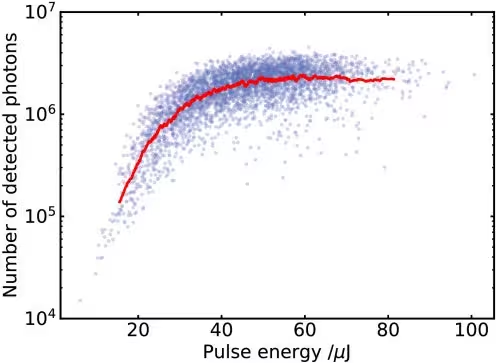
To validate that these pulses were truly hitting their target at the predicted intensities, the team conducted an experiment using thin copper foil. At the high intensities achieved by the new system, the X-rays cause copper atoms to undergo a process of amplified spontaneous emission (ASE). By measuring the resulting fluorescence, the team observed a saturation point in the signal that confirmed the pulses had indeed reached the intensity levels required to manipulate the atomic structure.
Future Applications in Quantum Control
The ability to harness such precise, powerful X-ray pulses offers significant potential for future scientific inquiry. One primary application is in the study of nonlinear light-matter interactions, where the response of a material is not directly proportional to the incoming energy. Furthermore, these pulses could allow researchers to capture high-resolution X-ray imaging of complex molecules before radiation damage alters the electronic state of the sample.
Looking ahead, the team expects that further advancements in focusing technology will continue to expand these capabilities. The European XFEL is slated to receive a new, upgraded focusing system in 2027, developed in partnership with the University of Hamburg. As this technology becomes more accessible, it could eventually lead to the ability to control quantum states, providing researchers with the tools to influence electron motion during chemical reactions.
Key Research Perspectives
- High-power attosecond x-ray free-electron lasers: Physics and design strategy: An analysis of accelerator physics and design strategies. (Physical Review Accelerators and Beams, 2026)
- Experimental demonstration of attosecond hard X-ray pulses: Details on using amplified spontaneous emission for pulse duration inference. (Nature Photonics, 2026)
- Attosecond inner-shell lasing at ångström wavelengths: Insights into nonlinear X-ray lasing and electronic dynamics. (Nature, 2025)
- Nanofocused attosecond hard x-ray free-electron laser with intensity exceeding 10¹⁹ W/cm²: Benchmarking earlier intensity improvements. (Optica, 2025)
- Attosecond physics: A foundational review of light pulse generation and electron dynamics. (Reviews of Modern Physics, 2009)
This article has been fact checked for accuracy, with information verified against reputable sources. Learn more about us and our editorial process.
Last reviewed on .
Article history
- Latest version
Reference(s)
- Inoue, Ichiro., et al. “Generation of high-fluence and high-intensity hard x-ray attosecond pulses at European XFEL.” Optica, September 23, 2026 Optica Publishing Group, doi: 10.1364/OPTICA.613284. <https://doi.org/10.1364/OPTICA.613284>.
- “European XFEL.” <https://www.xfel.eu/>.
- “Universität Hamburg.”, November 28, 2026 <https://www.uni-hamburg.de/en.html>.
- Xu, Chenzhi., et al. “High-power attosecond x-ray free-electron lasers: Physics and design strategy.” Physical Review Accelerators and Beams, vol. 29, no. 10, October 21, 2026 American Physical Society (APS), doi: 10.1103/hqjn-r9k9. <https://doi.org/10.1103/hqjn-r9k9>.
- Inoue, Ichiro. “Experimental demonstration of attosecond hard X-ray pulses - Nature Photonics.”, vol. 20, no. 11, pp. 1303-1308. Nature, doi: 10.1038/s41566-026-02026-7. <https://www.nature.com/articles/s41566-026-02026-7>.
- Linker, Thomas. “Attosecond inner-shell lasing at ångström wavelengths - Nature.”, vol. 642, no. 8069, pp. 934-940. Nature, doi: 10.1038/s41586-025-09105-9. <https://www.nature.com/articles/s41586-025-09105-9>.
- “2586005.” <https://www.osti.gov/servlets/purl/2586005>.
- Krausz, Ferenc., et al. “Attosecond physics.” Reviews of Modern Physics, vol. 81, no. 1, February 2, 2009, pp. 163-234. American Physical Society (APS), doi: 10.1103/RevModPhys.81.163. <https://doi.org/10.1103/RevModPhys.81.163>.
Cite this page:
- Posted by Deepak Malhotra