Why Static Gene Lists Fail to Explain Real-Time Brain Activity in Neurological Disorders
A new methodological review reveals a major gap between static omics databases and the dynamic, real-time physics of living neural circuits.
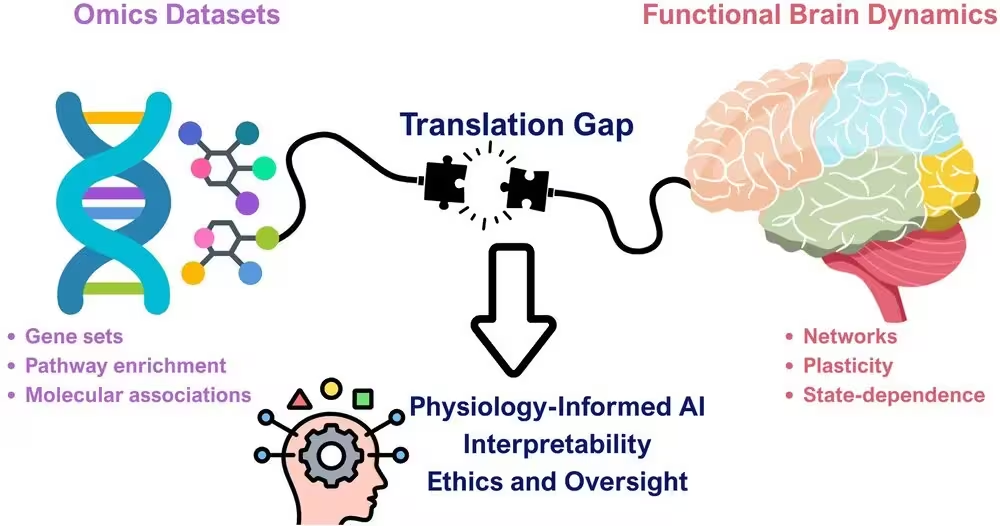
Brain cells rely on complex electrical rhythms and chemical signals that shift within seconds, yet scientists trying to understand neurological disorders often rely on static genetic lists that miss these fast-moving changes entirely. A comprehensive review published in Chronic Diseases and Translational Medicine highlights a fundamental mismatch between massive public molecular databases and the real-time physics of the human brain. While researchers frequently use pre-packaged groups of genes to study conditions like epilepsy and migraine, these static snapshots fail to capture how neural circuits actually behave under pressure.
Why Do Static Molecular Lists Fail to Explain Living Brain Tissue?
Large public repositories such as the Gene Expression Omnibus store vast amounts of transcriptomic data, which measures the gene activity inside cells. Scientists often apply gene set enrichment analysis to find patterns in these enormous molecular lists. However, author Rukiye Ölçüoğlu from Baskent University explains that grouping genes together ignores the vital element of time. Brain function unfolds over milliseconds to minutes, driven by feedback loops, rhythmic synchronization, and constant adaptation known as plasticity.
A gene list can tell a researcher which molecules are present in a tissue sample, but it cannot reveal what a synapse is actively doing in a living circuit. Neuronal systems maintain stability through multiscale homeostatic regulation, actively buffering against molecular disruptions. When investigators treat static gene counts as direct proof of a functional disease mechanism, they risk overlooking the dynamic network properties that actually dictate whether a patient experiences symptoms.
How Do Epilepsy and Migraine Expose the Limits of Static Data?
Chronic neurological conditions demonstrate the hazard of relying on molecular data without physiological context. Epilepsy is driven by sudden shifts in network excitability and synchronization across distributed brain regions. Although genome-wide association studies have identified numerous genetic risk variants, these markers only explain a fraction of clinical diversity and cannot predict when a seizure will start or stop.
Migraine similarly unfolds as an episodic brain disorder characterized by shifting neural excitability across the brainstem, thalamus, and cortex. Longitudinal patient scanning has revealed that hypothalamic activity and regional coupling fluctuate dramatically across different phases of a single migraine cycle. Inherited risk variants captured in public genetic catalogs do not register these transient physiological states, proving that static molecular inventories cannot replace real-time functional observation.
Can Physiology-Informed Artificial Intelligence Bridge the Gap?
As computational biology embraces advanced algorithms, artificial intelligence models trained exclusively on high-dimensional data frequently operate as opaque black boxes. These systems prioritize raw predictive accuracy over biological plausibility, sometimes amplifying statistical correlations without yielding true mechanistic insight. In clinical environments, unanchored algorithms risk encoding hidden demographic biases and failing to translate across diverse patient populations.
To overcome these limitations, the review advocates for a physiology-informed modeling framework. Rather than letting algorithms search for unconstrained patterns, future precision medicine tools should incorporate established neurobiological laws directly into their architecture, such as excitation-inhibition balance and network topology. By combining rigorous data harmonization, cross-cohort validation, and strict ethical governance, researchers hope to build predictive models that respect both the dynamic nature of the human brain and the demands of equitable healthcare.
The research was published in Chronic diseases and translational medicine on November 19, 2026.
This article has been fact checked for accuracy, with information verified against reputable sources. Learn more about us and our editorial process.
Last reviewed on .
Article history
- Latest version
Reference(s)
- Ölçüoğlu, Rukiye. “From Gene Sets to Brain Function: A Physiology‐Informed Framework for Multi‐Omics Integration in Precision Neurophysiology.” Chronic Diseases and Translational Medicine, November 19, 2026 Wiley, doi: 10.1002/cdt3.70078. <https://doi.org/10.1002/cdt3.70078>.
Cite this page:
- Posted by Hassan Raza