Yeast Waste And Cheap Metals Turn Into A Powerful Weapon Against Toxic Ozone Pollution
A novel bimetallic catalyst built from microbial biomass destroys harmful ozone at room temperature, offering a green solution for polluted air.
A new catalyst made from yeast waste and cheap metals can destroy toxic ozone gas at room temperature, offering a sustainable way to clean polluted indoor and industrial air. Ozone is a harmful atmospheric pollutant generated by solar radiation acting on vehicle and industrial emissions, as well as by common indoor equipment like laser printers and air purifiers. Long-term exposure to the gas can trigger severe respiratory and cardiovascular health issues while also driving global warming.
To tackle this problem, researchers have developed an efficient catalyst by loading manganese and cobalt onto carbon derived from waste yeast biomass. The material was activated through high-temperature heating, resulting in an exceptional capacity to break down ozone into harmless oxygen. The detailed findings are published in the Journal of Saudi Chemical Society by Ningning Feng and colleagues.
How Does Yeast Waste Help Build a Better Catalyst?
Traditional catalysts for destroying ozone often rely on expensive precious metals like platinum, palladium, or gold, making large-scale deployment too costly. Transition metal oxides offer a more affordable alternative, but they typically require complex chemical manufacturing processes and struggle to maintain their stability over time. The team turned to industrial yeast residue as a sustainable carrier because microbial biomass naturally possesses a rough, porous surface packed with functional groups that readily bind metal ions.
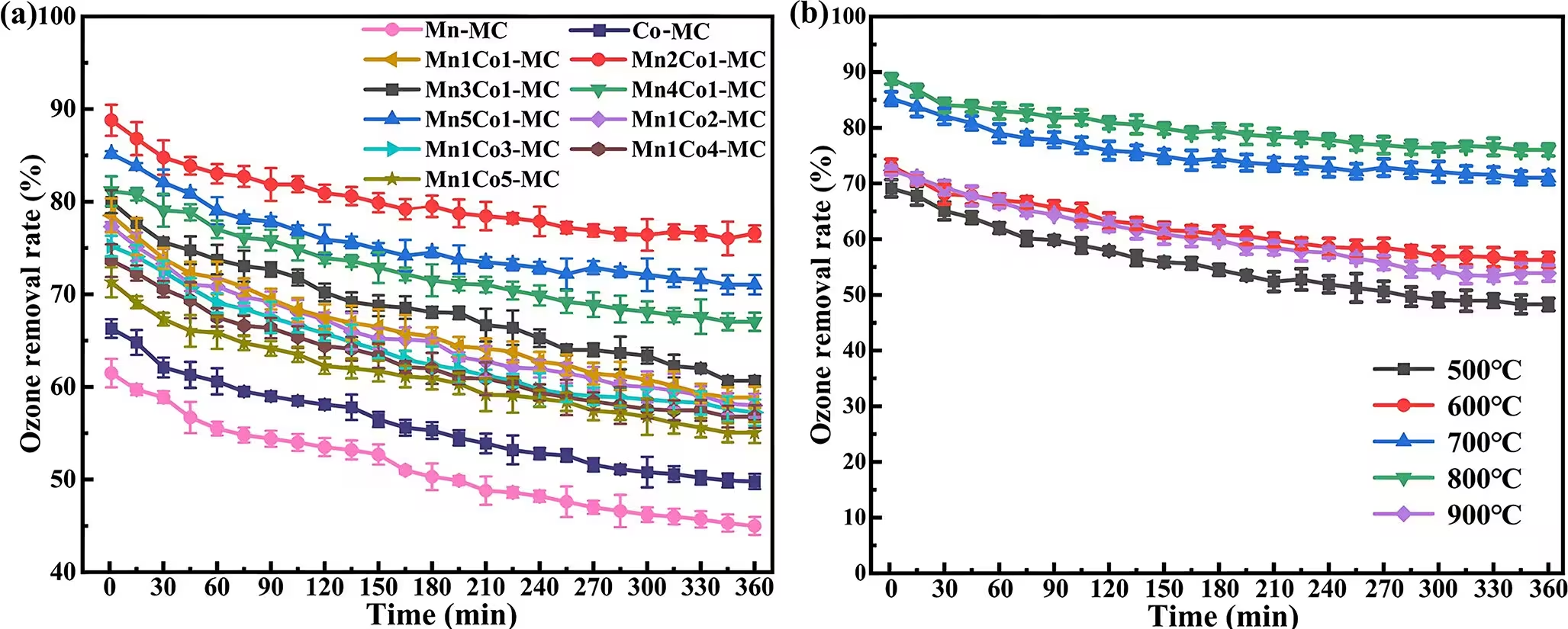
By soaking the yeast residue in solutions containing manganese and cobalt salts, the researchers successfully anchored the metals onto the biomass. The mixture was then heated to 800 degrees Celsius in a furnace filled with pure argon gas to carbonize the material and create a sturdy porous structure. This green synthesis method minimizes the use of harsh chemical reagents while transforming agricultural waste into a high-performance environmental cleanup tool.
What Makes the Two-Metal Combination So Effective?
Laboratory tests evaluating different metal ratios revealed that combining manganese and cobalt in a two-to-one mass ratio produced the highest catalytic efficiency. When exposed to an incoming ozone concentration of about four thousand six hundred parts per million, the optimized catalyst achieved an initial removal rate of nearly 89 percent. Even after six continuous hours of operation, the removal rate remained stable at about 77 percent.
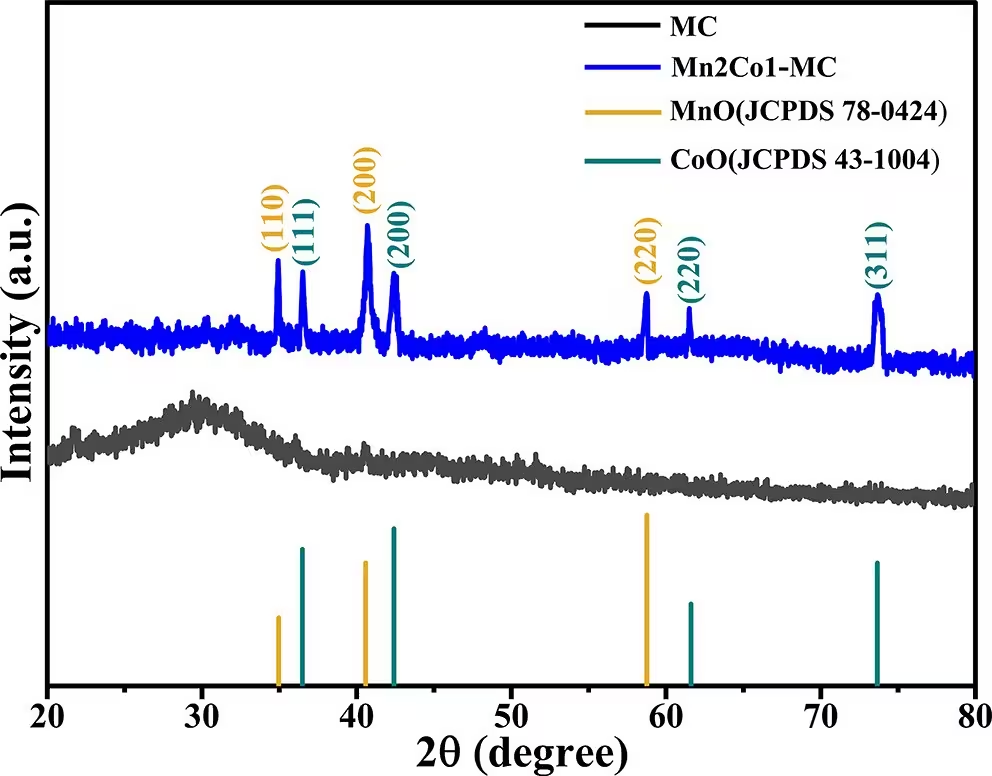
Advanced structural analysis showed that the material formed a large specific surface area of nearly 450 square meters per gram. This vast surface area, combined with tiny pores, allows ozone molecules to diffuse rapidly and make intimate contact with active metal sites. The interaction between the manganese and cobalt oxides creates crucial defect sites and oxygen vacancies on the surface, which serve as the primary locations where ozone molecules are captured and broken apart.
Why Does Humidity Slow Down the Cleanup Process?
Water vapor in the air presents a major hurdle for many air purification systems by competing with target pollutants for active surface spots. When the relative humidity was raised from one percent to 80 percent, the ozone removal efficiency of the yeast-derived catalyst experienced a noticeable decline. Computer simulations using density functional theory confirmed that water molecules bind strongly to the active oxygen vacancies on the catalyst surface.
This competitive adsorption forms surface hydroxyl groups and traps intermediate peroxide species, which slows down the overall reaction cycle. Despite this humidity hurdle, the material maintained stable performance over multiple dry and wet testing cycles, losing only a fraction of its initial activity. The researchers note that future improvements could focus on boosting surface water-repellency to make the material even more resilient in humid real-world environments.
The research was published in Journal of Saudi Chemical Society on November 23, 2026.
This article has been fact checked for accuracy, with information verified against reputable sources. Learn more about us and our editorial process.
Last reviewed on .
Article history
- Latest version
Cite this page:
- Posted by Anjali Singh