Dietary Microplastics Stunt Fish Growth and Damage Tissues in New Study
Feeding trials reveal that polyvinyl chloride particles reduce fish weight gain, impair feeding activity, and cause intestinal damage.

Feeding young Nile tilapia diets containing six percent plastic particles cuts their final weight by over twenty percent and causes severe tissue damage in the gut, gills, and muscle, a new study reveals.
Aquaculture is crucial for global food security, supplying affordable and highly nutritious animal protein to millions of people. In 2022, global aquaculture production reached a record 94.4 million tons, surpassing capture fisheries for the first time. However, the sector faces emerging challenges posed by environmental pollutants such as heavy metals, pesticides, and pharmaceuticals, with microplastics gaining significant attention. Microplastics, defined as synthetic polymer fragments smaller than five millimeters, are now recognized as pervasive pollutants in both marine and freshwater systems. They arise as primary particles or as secondary fragments from the degradation of larger plastics.
How Does Dietary Plastic Affect Fish Growth and Behavior?
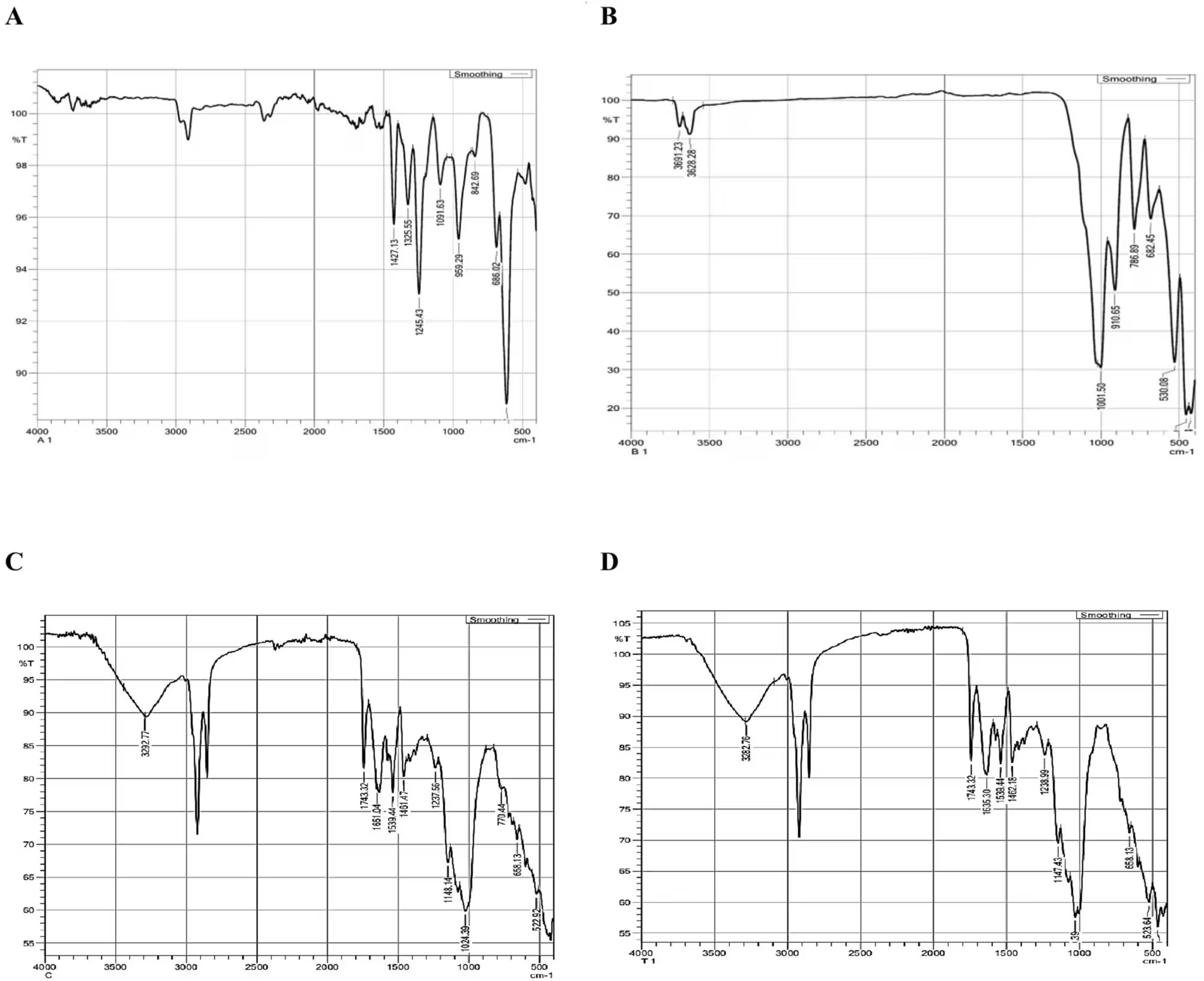
To investigate these impacts under controlled conditions, Irshad Bibi and colleagues from the University of Mianwali and other institutions evaluated the dietary effects of polyvinyl chloride microplastics compared with inert kaolin clay particles on GIFT tilapia, scientifically known as Oreochromis niloticus. The detailed findings are published in Scientific Reports. The researchers formulated five experimental feeds, including a control feed, feeds containing three percent and six percent kaolin clay, and feeds containing three percent and six percent polyvinyl chloride microplastics. Juvenile fish with an average initial weight of about 0.33 grams were fed these experimental diets for 49 days in a controlled laboratory setup.
The feeding trials showed that growth performance differed significantly among the dietary treatments. Fish in the control group and the three percent kaolin group attained significantly higher final body weights, reaching about 3.16 grams and 3.11 grams respectively, compared to about 2.49 grams in the six percent kaolin group. The groups receiving microplastics showed intermediate values, but overall weight gain and feed conversion efficiency dropped as particle concentrations increased. Apparent feed conversion ratio, which measures how much feed is required to produce weight gain, worsened significantly in the particle-supplemented groups.
Why Do Microplastics Suppress Feeding Activity in Nile Tilapia?
Feeding behavior was altered markedly by dietary microplastic exposure. Feed acceptance scores and feeding activity declined significantly in the groups receiving plastic and high levels of kaolin. Feeding latency, measured as the time it took fish to begin eating, increased significantly with microplastic inclusion. Control fish initiated feeding much more rapidly than treatment groups, while fish receiving six percent microplastics showed the greatest feeding delay and reduced daily feed intake.
Correlation analysis revealed strong interrelationships between feeding behavior and growth performance parameters. Feed intake, feeding attempts, and feeding activity correlated positively with weight gain and specific growth rate. Conversely, response latency showed strong negative correlations with growth indices, suggesting that hesitant feeding responses directly contributed to reduced growth performance and poorer body condition.
What Kind of Tissue Damage Do Plastic Particles Cause?
Histopathological examination of tissue samples revealed treatment-dependent alterations in the gills, muscle, and gut. Fish in the control group and the three percent kaolin group exhibited normal tissue morphology with no signs of pathological damage. In contrast, higher particle inclusion levels induced progressive structural disruptions.
Muscle tissues showed degenerative changes such as fiber dissociation, necrosis, segmentation, and atrophy in the groups receiving higher particle loads. Gill tissues displayed moderate to severe lesions, including epithelial detachment, lamellar defects, filament disruption, and secondary lamellar fusion, with the most severe gill damage occurring in the six percent microplastic group. Intestinal tissue suffered the most pronounced damage, showing enterocyte necrosis, cell sloughing, cytoplasmic vacuolization, and inflammatory cell infiltration, which compromise absorptive function and nutrient assimilation.
What Are the Limitations and Next Steps for Aquaculture?
The authors note that the experiment was conducted under controlled laboratory conditions, examined only a single polymer type and specific concentrations, and ran for a relatively short duration of 49 days. Additionally, biochemical markers of stress and toxicity were not assessed, which limits the ability to explain the underlying mechanisms completely. Future research should examine a broader range of microplastic types, polymer compositions, particle sizes, and environmentally relevant concentrations, while also exploring mitigation strategies such as feed reformulation and improved processing technologies to support sustainable aquaculture systems.
The research was published in Scientific Reports on November 23, 2026.
This article has been fact checked for accuracy, with information verified against reputable sources. Learn more about us and our editorial process.
Last reviewed on .
Article history
- Latest version
Cite this page:
- Posted by Bilal Abbasi