One Third of Young Tuberculosis Survivors Suffer From Lingering Lung Damage
New research shows that curing the acute bacterial infection does not guarantee full recovery, with many young patients facing chronic breathing difficulties.

A recent cross-sectional evaluation reveals that nearly a third of children and adolescents who successfully finish treatment for pulmonary tuberculosis still struggle with lingering respiratory problems. While curing the acute bacterial infection is a major public health milestone, the findings indicate that recovery does not stop the moment medication ends for many young patients in high-burden settings.
Persistent Respiratory Symptoms and Physical Signs in Young Survivors
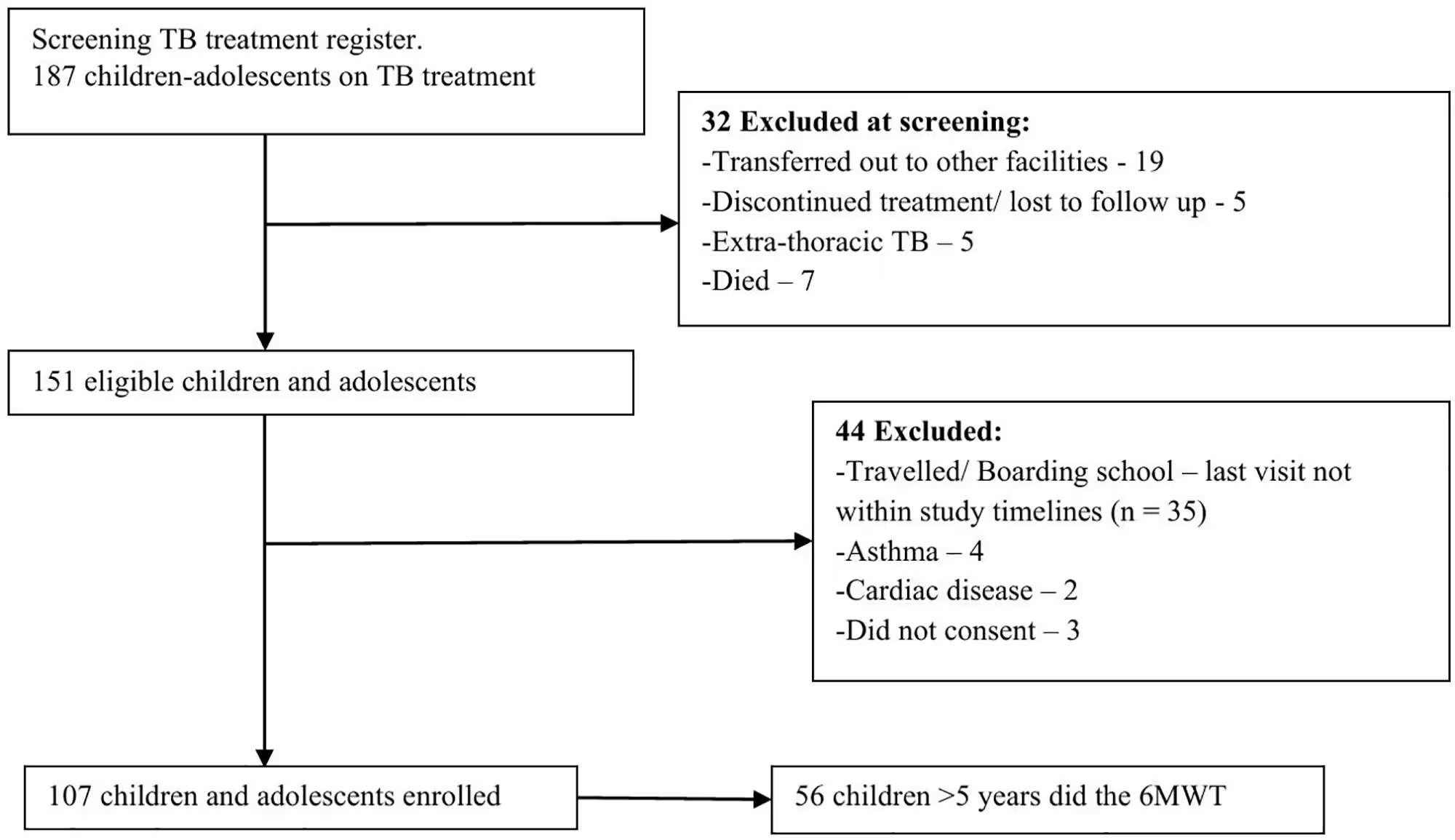
The research, published in PLOS One, was conducted by Mercy Kamene Sammy and colleagues between July 2022 and January 2023 across seven health facilities in Nairobi City County, Kenya. The team focused on patients under the age of 20 who had recently completed treatment for intrathoracic tuberculosis, which affects the chest cavity and lungs. Out of 107 enrolled participants, 29 percent reported at least one persistent respiratory symptom, most commonly a lingering cough in 21.5 percent of cases and chest congestion in 9.3 percent. Other reported difficulties included wheezing, chest tightness, chest pain, and breathlessness.
Beyond what patients and caregivers reported verbally, physical examinations uncovered objective warning signs in over half of the participants. Roughly 26.7 percent suffered from tachypnea, a medical term for abnormally fast breathing, while 16.8 percent had reduced air entry into their lungs and 14 percent showed crackling sounds upon auscultation, which involves listening to the chest with a stethoscope. Furthermore, 11.2 percent of the children displayed suboptimal resting oxygen levels, and 6.5 percent exhibited central cyanosis, a bluish discoloration of the skin indicating dangerously low oxygen in the bloodstream.
Exercise Limitations Reveal Hidden Impairments
To measure functional fitness beyond resting examinations, researchers asked participants older than 5 years to perform a six-minute walk test. Out of 56 children who completed this physical challenge, a striking 71.4 percent showed exercise limitation by covering less than 80 percent of the distance predicted for their age, height, and sex. Among those impaired, more than half suffered from moderate to severe movement restrictions. Additionally, nearly a fifth of the tested children experienced a significant drop in blood oxygen saturation of 4 percent or more during physical exertion, pointing to underlying lung vulnerability that ordinary rest assessments might completely miss.
Older Age and Severe Initial Illness Increase Post-Treatment Risks
Statistical analysis pointed to two major risk factors linked to the development of post-tuberculosis lung disease, known clinically as PTLD. Older children and adolescents faced significantly higher odds of ongoing respiratory morbidity, likely because their more mature immune systems mount a stronger inflammatory response that can cause collateral damage to delicate lung tissue. Additionally, patients who required hospital admission at the time of their initial tuberculosis diagnosis were more than ten times as more likely to exhibit lasting complications. Hospitalization serves as a clear marker of severe disease severity and deeper parenchymal lung involvement, which leaves behind permanent structural changes.
The authors acknowledge several limitations in their work, including its cross-sectional design that only captured a snapshot within the first month after treatment completion, preventing long-term tracking over time. They also noted that diagnostic investigations such as chest X-rays and formal pulmonary function testing were unavailable due to resource constraints, relying instead on clinical symptoms, physical examinations, and functional tests. Despite these constraints, the study highlights an urgent need for structured, routine respiratory screenings for pediatric patients completing tuberculosis therapy so that vulnerable survivors can be linked to specialized care early.
The research was published in PLOS One on November 20, 2026.
This article has been fact checked for accuracy, with information verified against reputable sources. Learn more about us and our editorial process.
Last reviewed on .
Article history
- Latest version
Reference(s)
- Sammy, Mercy Kamene., et al. “Prevalence and factors associated with post-tuberculosis lung disease among children and adolescents in Kenya: A multi-centre study.” PLOS One, vol. 21, no. 11, November 20, 2026, pp. e0362688 Public Library of Science (PLoS), doi: 10.1371/journal.pone.0362688. <https://doi.org/10.1371/journal.pone.0362688>.
Cite this page:
- Posted by Bilal Abbasi