Fungal Rot Destroys Taif Rose Fragrance by Altering Volatile Compounds
Gray mold infections deplete valuable essential oil precursors while introducing strong musty odors in Saudi Arabia’s signature rose harvest.

When the prized Damask roses of Saudi Arabia fall victim to gray mold, the resulting rot does far more than destroy petal tissue, as a new study shows it also rewrites the chemical signature of the region’s famous floral harvest. Researchers examining commercial rose farms in the Taif highlands found that fungal infections rapidly deplete the key compounds responsible for the flower’s signature fragrance while introducing heavy off-odors. The findings offer new insights into how postharvest decay damages both the economic value and sensory quality of one of the Middle East’s most traditional aromatic crops.
Cultivated extensively across more than nine hundred high-altitude farms, the Taif rose, known scientifically as Rosa damascena Mill. var. trigintipetala, yields over five hundred million flowers annually. These blossoms serve as the raw material for valuable essential oils, rose water, and cosmetics. However, the delicate petals are highly susceptible to environmental pathogens during harvest and storage. Among these, the fungus Botrytis cinerea acts as a destructive agent of gray mold, leading to tissue breakdown and severe aromatic deterioration.
How Does Fungal Diversity Shift Across Taif Rose Petals?
To establish a baseline for petal health, Hanan Alomari and colleagues investigated the culturable fungal communities inhabiting healthy and infected petals collected from twenty commercial farms in the Al-Hada and Al-Shafa highlands. Using culture-dependent isolation combined with internal transcribed spacer ribosomal DNA sequencing, published in Scientific Reports, the team identified eighteen distinct fungal species belonging to nine genera within the Ascomycota and Mucoromycota phyla.
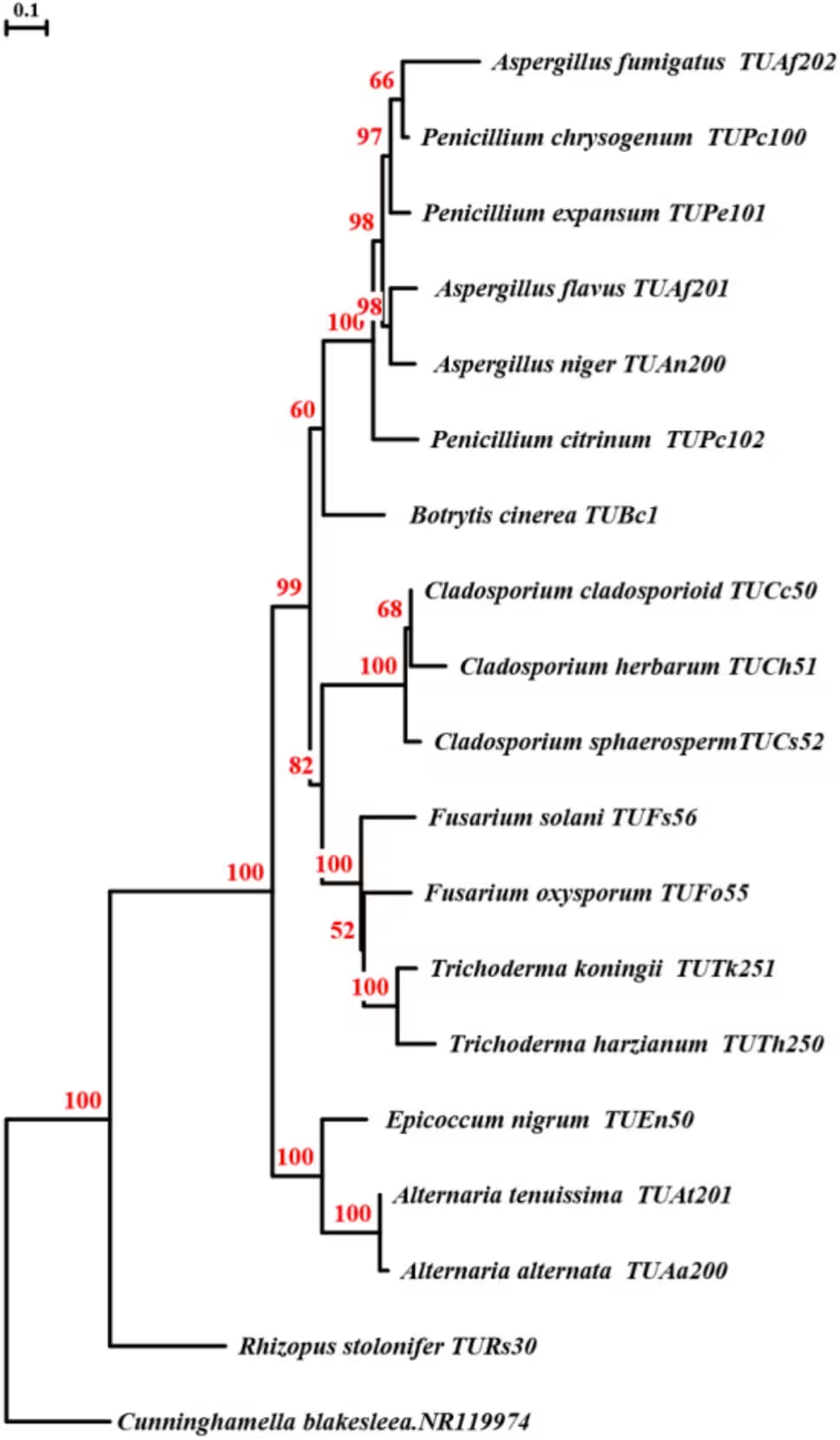
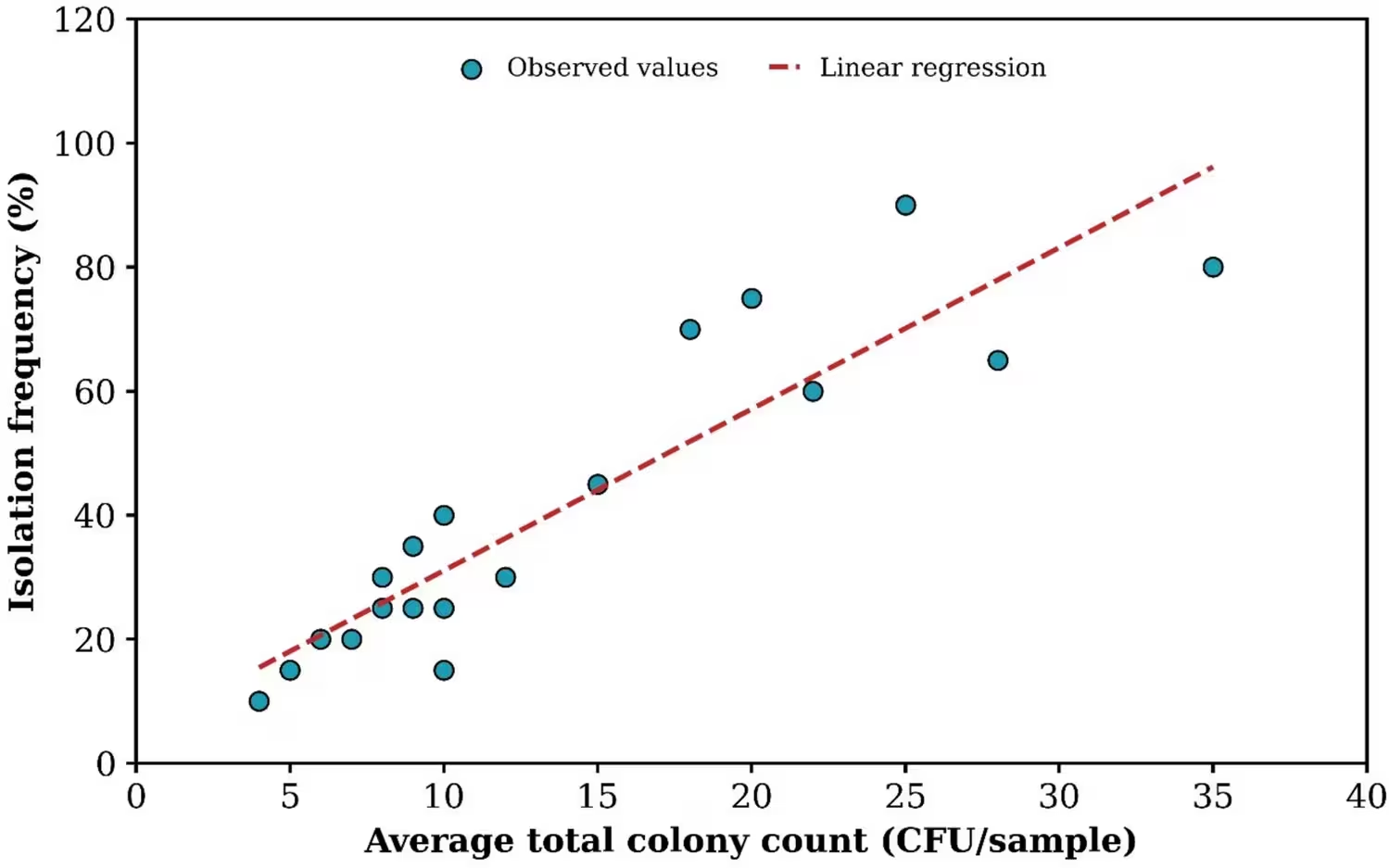
The research revealed a diverse microbial ecosystem dominated by Cladosporium cladosporioides, which appeared in ninety percent of the samples, and Alternaria alternata, found in eighty percent. While Botrytis cinerea was recovered from only fifteen percent of the initial healthy flower samples, its presence triggered major ecological shifts. Non-metric multidimensional scaling ordinations demonstrated that infected petals clustered separately from healthy ones, indicating that the pathogen actively alters the resident fungal community as tissue decay progresses.
What Happens to the Essential Floral Scents During Infection?
The sensory impact of gray mold proved severe. A trained twelve-member panel evaluated the aroma attributes of healthy, naturally infected, and experimentally inoculated petals on a nine-point scale. The results showed dramatic declines in floral intensity, freshness, and sweetness, accompanied by a sharp surge in musty and moldy off-odors.
Gas chromatography-mass spectrometry analyses confirmed that these sensory shifts stemmed from biochemical changes in the volatile organic compounds. Healthy petals are rich in monoterpene alcohols like geraniol and citronellol, which drive the commercial value of Taif rose products. Following infection, levels of geraniol dropped by sixty-two percent, and citronellol plummeted by seventy-one percent. Simultaneously, the concentration of the fungal volatile 1-octen-3-ol increased roughly fifteen-fold, creating the characteristic musty smell of gray mold.
Can Electronic Noses Spot Rose Disease Before It Spreads?
Because traditional sensory evaluations take time, the researchers tested a metal oxide semiconductor electronic nose to determine if volatile fingerprinting could detect the disease automatically. Using five-fold cross-validation, the electronic nose successfully distinguished healthy petals from infected ones with an overall classification accuracy of ninety-five point two percent. Principal component analysis indicated that the primary component separated healthy and infected samples cleanly, showing strong potential for rapid, non-destructive sorting.
The authors noted certain limitations to their work, including its focus solely on culturable fungi and sampling restricted to a single flowering season. Even so, the close agreement between naturally infected petals and those inoculated in controlled laboratory settings validates the experimental model. These findings establish a foundation for deploying advanced electronic sensing tools to safeguard postharvest quality in commercial rose production.
The research was published in Scientific Reports on November 23, 2026.
This article has been fact checked for accuracy, with information verified against reputable sources. Learn more about us and our editorial process.
Last reviewed on .
Article history
- Latest version
Cite this page:
- Posted by Anjali Singh