Cosmic Gamma Rays Put Einstein’s Speed of Light Rule to the Ultimate Test
New cosmic gamma-ray measurements confirm Einstein’s speed of light rule, showing no evidence of relativity violations across vast intergalactic distances.
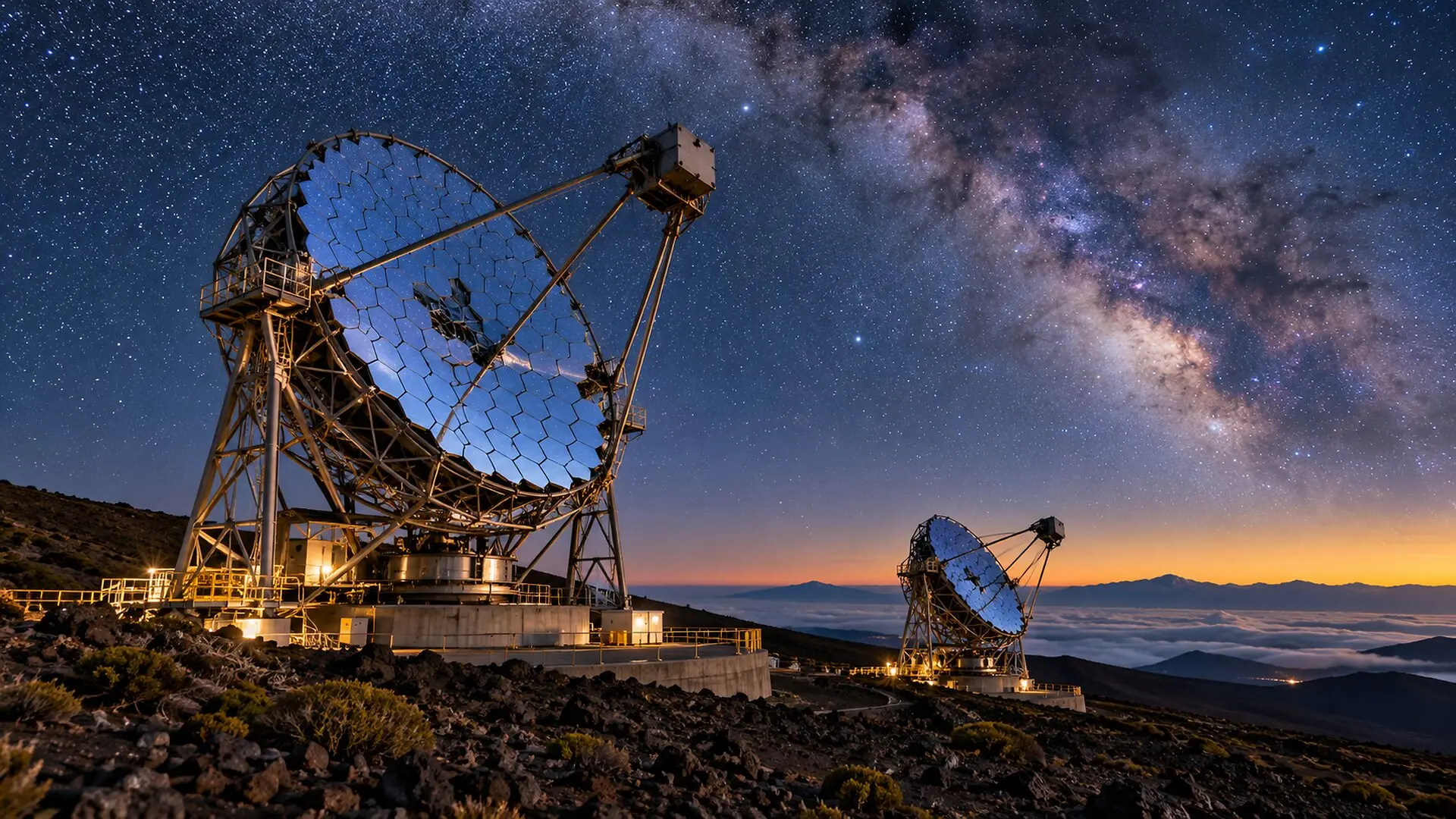
- A rigorous re-examination of cosmic gamma-ray data has turned up no evidence of deviations from the established laws of Lorentz invariance.
- Researchers have successfully tightened the constraints on specific photon-sector parameters by approximately one order of magnitude through the use of a unified statistical framework.
- While these results effectively narrow the field for certain fringe theories of new physics, inherent uncertainties regarding source emission and detector precision continue to be critical factors in the analysis.
Light that traverses the vast expanse of the cosmos serves as a unique laboratory for testing one of the pillars of modern physics. If high-energy photons moved at a velocity distinct from their lower-energy counterparts, the immense distances of space would act as a magnifying glass, causing the arrival times of these particles to drift apart. Astronomers leverage brief, high-energy cosmic events to search for these minute discrepancies.
Led by Mercè Guerrero, a team of scientists has refined this search by analyzing existing gamma-ray measurements. Their findings, published in Physical Review D, have improved the bounds on specific parameters associated with potential violations of Lorentz invariance by roughly a factor of ten.
The study concluded that there is no indication of the violations tested. Instead, the team’s work establishes a more robust link between observational astronomy and the theoretical frameworks that allow for departures from standard physics. This result narrows the available space for specific hypotheses rather than providing a final verdict on the nature of light or the complexities of quantum gravity.
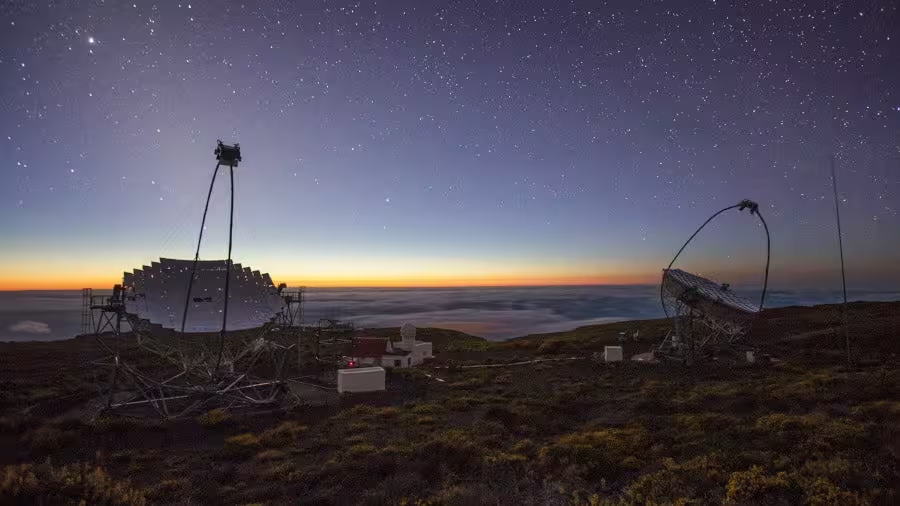
Scrutinizing the Velocity of Light
Special relativity asserts that the fundamental laws of physics remain consistent for all observers in uniform motion. Lorentz invariance, which dictates that these laws do not favor any particular spatial direction, is a core component of this principle, with the constant speed of light in a vacuum serving as its bedrock.
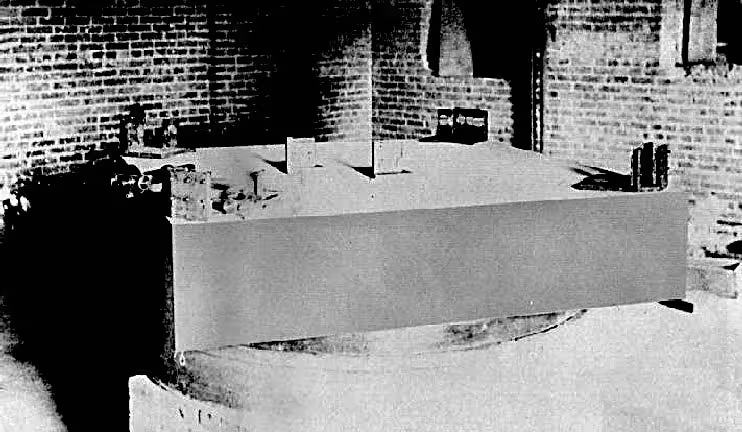
This principle has withstood rigorous scrutiny for over a century. In 1887, the iconic Michelson-Morley experiment attempted to detect Earth’s movement through a hypothetical light-carrying medium by comparing light speeds in different directions. Their null result became a cornerstone of modern scientific thought.
Lorentz symmetry is now foundational to quantum field theory and the Standard Model of particle physics, both of which have been validated by decades of experimental success. While this makes any deviation difficult to identify, the possibility of a flaw remains a high-stakes area of inquiry.
The tension between general relativity, which explains gravity through spacetime geometry, and quantum mechanics, which relies on a different set of rules for matter, remains a significant challenge. Certain proposed theories of quantum gravity permit minor violations of Lorentz symmetry, providing physicists with a way to test these ideas, though not every approach necessitates a fluctuating speed of light.
Using Galactic Distances to Detect Miniscule Anomalies
The experimental strategy relies on capturing photons of varying energies that are emitted simultaneously. In the standard view, energy should not influence the speed at which light travels through a vacuum, but some alternative models predict an energy-dependent variation.
While such effects are likely too subtle to detect over short distances, the vast voids of space allow any minute differences in velocity to accumulate into measurable timing delays. Very-high-energy gamma rays from sources such as gamma-ray bursts, pulsars, and active galactic nuclei are the ideal subjects for this research.
However, detecting a delay is not enough to confirm a violation. Scientists must account for the possibility that photons of different energies may simply leave the source at different times. Additionally, detector sensitivity and calibration uncertainties play a significant role in how researchers interpret these arrival patterns.
Aligning Observational Data with Theoretical Models
The research collaboration included Anna Campoy-Ordaz, Robertus Potting, and Markus Gaug, working alongside Guerrero to bridge the gap between astronomical observation and the mathematical language of the Standard-Model Extension (SME). This framework provides a consistent way to describe potential symmetry violations.
The team focused on photon-sector effects characterized by quadratic energy dependence, while also accounting for potential variations in direction across the sky. By standardizing existing bounds, correcting for missing mathematical variables, and synchronizing statistical conventions, the researchers were able to significantly refine the constraints on individual SME coefficients.
Implications of the Research
By improving the precision of these tests by an order of magnitude, the researchers have effectively excluded a wider range of theoretical models that predicted larger violations. While this does not rule out every potential departure from Einstein’s rules, it sets a new baseline for what is physically plausible at current levels of sensitivity.
The fundamental mystery of quantum gravity remains, but these results help filter out models that are incompatible with observed data. Addressing the intrinsic timing delays of the sources themselves remains a hurdle that requires studying a broader array of celestial objects to ensure that propagation effects are not being confused with emission characteristics.
Future Prospects for Fundamental Physics
Upcoming facilities like the Cherenkov Telescope Array Observatory are expected to play a pivotal role in the next phase of this search. By providing superior sensitivity and wider energy coverage, these telescopes will allow for even tighter constraints on light-speed stability.
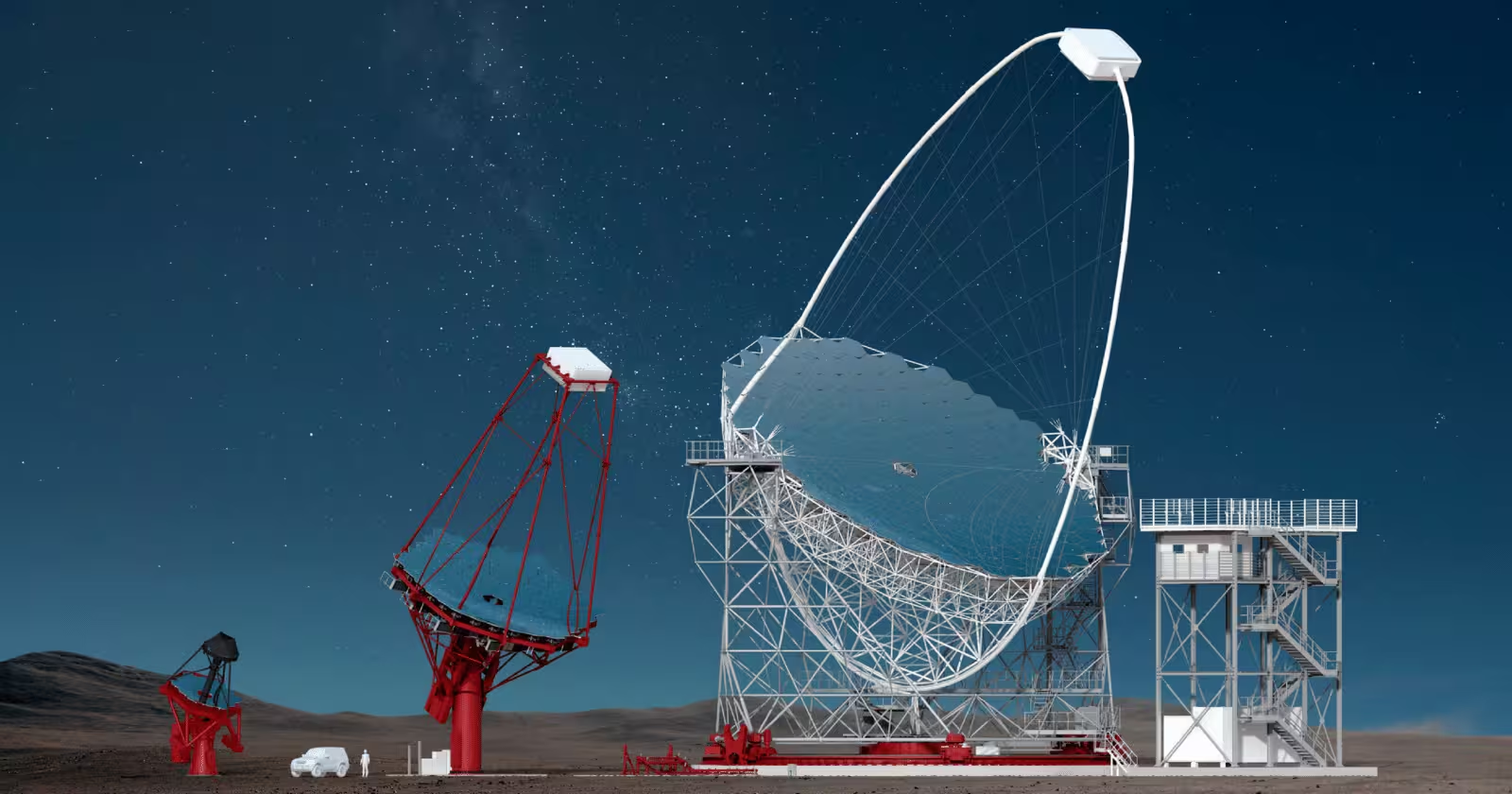
For now, the constant speed of light has successfully defended its territory against another round of challenges. The work of Guerrero and her colleagues provides not just a more precise limit on potential deviations, but a clearer, more rigorous method for future researchers to continue the investigation.
Essential Reading on Light Propagation
Discriminating between different modified dispersion relations from gamma-ray observations: A 2025 analysis in Physical Review D exploring how different models correlate source distance with photon delays.
Stringent Tests of Lorentz Invariance Violation from LHAASO Observations of GRB 221009A: An examination of high-energy bursts to place limits on energy-dependent light travel (Physical Review Letters, 2024).
Constraints on Lorentz invariance violation from the extraordinary Mrk 421 flare of 2014 using a novel analysis method: A study of rapid fluctuations in an active galactic nucleus (Journal of Cosmology and Astroparticle Physics, 2024).
Quantum gravity phenomenology at the dawn of the multi-messenger era—A review: A comprehensive overview of how researchers are attempting to test the limits of quantum gravity (Progress in Particle and Nuclear Physics, 2022).
This article has been fact checked for accuracy, with information verified against reputable sources. Learn more about us and our editorial process.
Last reviewed on .
Article history
- Latest version
Reference(s)
- Guerrero, Merce., et al. “Bounding anisotropic Lorentz invariance violation from measurements of the effective energy scale of quantum gravity.” Physical Review D, vol. 112, no. 10, November 4, 2025 American Physical Society (APS), doi: 10.1103/k3xg-wkrc. <https://journals.aps.org/prd/abstract/10.1103/k3xg-wkrc>.
- “Homepage - CTAO.”, May 29, 2017 CTAO <https://www.ctao.org/>.
- Caroff, S.., et al. “Discriminating between different modified dispersion relations from gamma-ray observations.” Physical Review D, vol. 111, no. 8, April 15, 2025 American Physical Society (APS), doi: 10.1103/PhysRevD.111.083021. <https://doi.org/10.1103/PhysRevD.111.083021>.
- Cao, Zhen., et al. “Stringent Tests of Lorentz Invariance Violation from LHAASO Observations of GRB 221009A.” Physical Review Letters, vol. 133, no. 7, August 15, 2024 American Physical Society (APS), doi: 10.1103/PhysRevLett.133.071501. <https://doi.org/10.1103/PhysRevLett.133.071501>.
- Abe, S.., et al. “Constraints on Lorentz invariance violation from the extraordinary Mrk 421 flare of 2014 using a novel analysis method.” Journal of Cosmology and Astroparticle Physics, vol. 2024, no. 07, July 19, 2024, pp. 044 IOP Publishing, doi: 10.1088/1475-7516/2024/07/044. <https://doi.org/10.1088/1475-7516/2024/07/044>.
- Addazi, A.., et al. “Quantum gravity phenomenology at the dawn of the multi-messenger era—A review.” Progress in Particle and Nuclear Physics, vol. 125, July 1, 2022, pp. 103948 Elsevier BV, doi: 10.1016/j.ppnp.2022.103948. <https://doi.org/10.1016/j.ppnp.2022.103948>.
Cite this page:
- Posted by Aisha Ahmed