Webb Telescope Uncovers Hidden Planet Beta Pictoris C in Iconic Star System
James Webb Telescope discovers a new planet around the iconic Beta Pictoris star, shedding light on planetary formation.
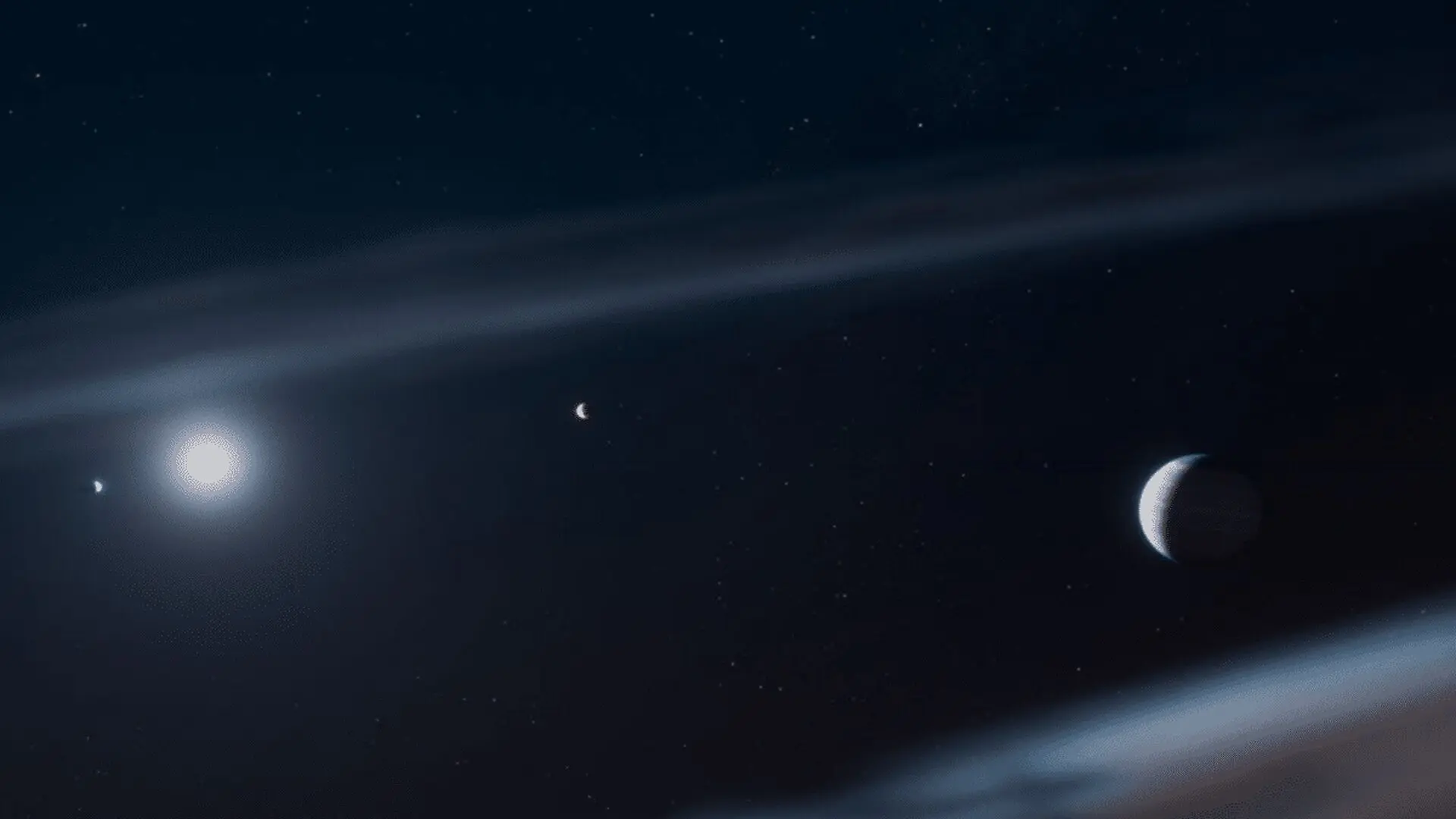
Using the James Webb Space Telescope, astronomers have identified a previously unseen planet orbiting the nearby star Beta Pictoris, a result reported in a recent paper in Astrophysical Journal Letters. The find emerged while the team examined data for the already known giant Beta Pictoris b, showing that the celebrated young planetary system still holds hidden members.
Webb’s Infrared Survey Uncovers a Hidden World
The detection was made with Webb’s high‑resolution infrared instruments while researchers focused on Beta Pictoris b. An anomalous signal in the spectroscopic data hinted at an additional body circling the star, prompting a closer look.
The newcomer, designated Beta Pictoris c, adds a fresh data point for probing planet formation around youthful stars. At roughly 63 light‑years distant, the Beta Pictoris system has long attracted attention for its bright debris disk and ongoing planetary assembly.
“Our aim was to study the known planet, not to hunt for another,” said Aidan Gibbs. “When the unexpected signal showed up, we realized we were looking at something completely different.”
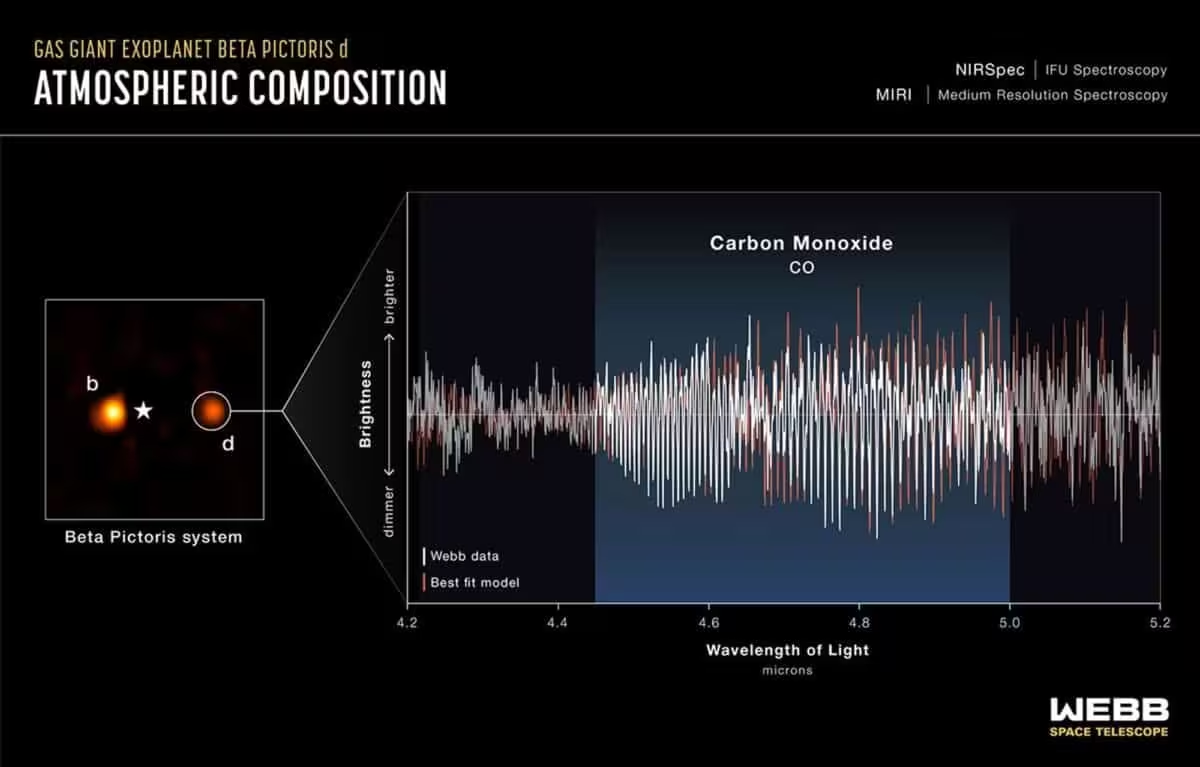
Combining imaging with simultaneous spectroscopy allowed the team to distinguish a genuine planetary signal from artifacts or dust structures that can mimic planets in raw images.
“A bright spot appeared in the IFU data, but we know not to trust such features without spectral confirmation,” explained Jean‑Baptiste Ruffio, a researcher at UC San Diego and lead investigator of the Webb observations. “The concurrent spectrum let us verify that we were indeed seeing a planet.”
Adding a New Piece to the Beta Pictoris Mosaic
Surrounded by a massive disk of leftover material, the young star serves as a natural laboratory for observing how nascent planets interact with their surroundings.
“Each new planet we uncover enriches our understanding of this dynamic system,” said Aidan Gibbs, lead author and postdoctoral fellow at UC San Diego. “Beta Pictoris continues to provide critical insights into how planetary architectures develop.”
Beta Pictoris c offers a fresh target for probing temperature regimes, atmospheric composition, and orbital behavior. Its proximity and youth make it a rare window onto processes that may have shaped our own solar system.
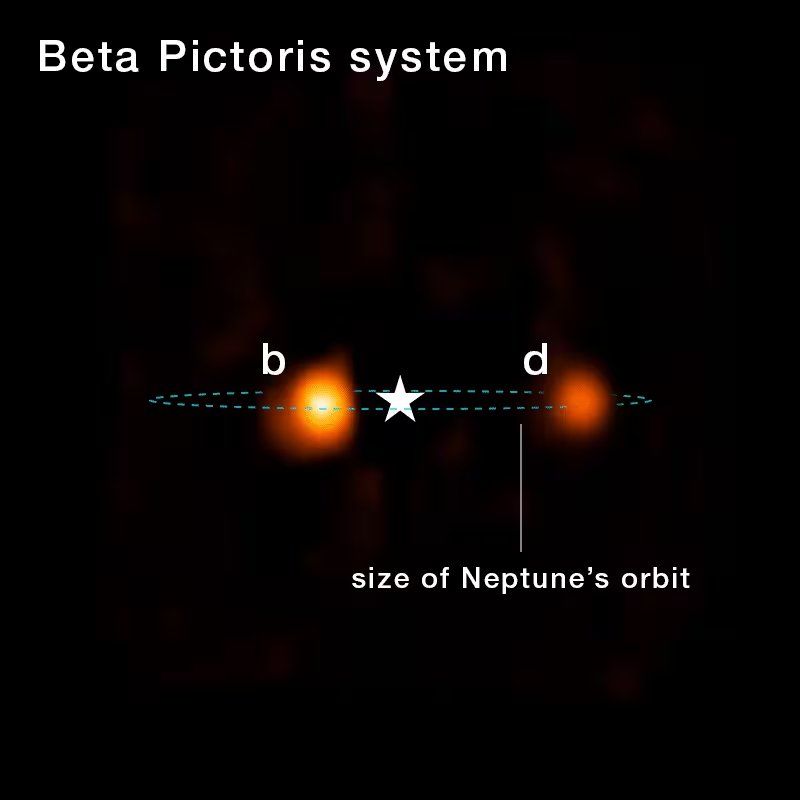
Spectral Data Unlock Hidden Details
Webb’s capacity to obtain detailed spectra provides insights that images alone cannot reveal, allowing researchers to infer temperature, chemical makeup, and motion directly from the light of distant worlds.
“A spectrum is a treasure trove of information,” Ruffio noted. “Beyond confirming a planet’s existence, it instantly tells us about its physical state and dynamics.”
For scientists studying exoplanets, such data illuminate formation histories, material inventories, and orbital mechanics, expanding our grasp of planetary diversity across the galaxy.
The finding underscores how cutting‑edge instrumentation can reshape our understanding of even well‑examined systems, revealing hidden components once observational limits are overcome.
This article has been fact checked for accuracy, with information verified against reputable sources. Learn more about us and our editorial process.
Last reviewed on .
Article history
- Latest version
Cite this page:
- Posted by Aisha Ahmed