ALMA Captures First Direct Oxygen Signal From Galaxies 800 Myr After the Big Bang
Direct detection of neutral gas fueling star formation in the universe’s earliest galaxies offers new insight into cosmic origins.
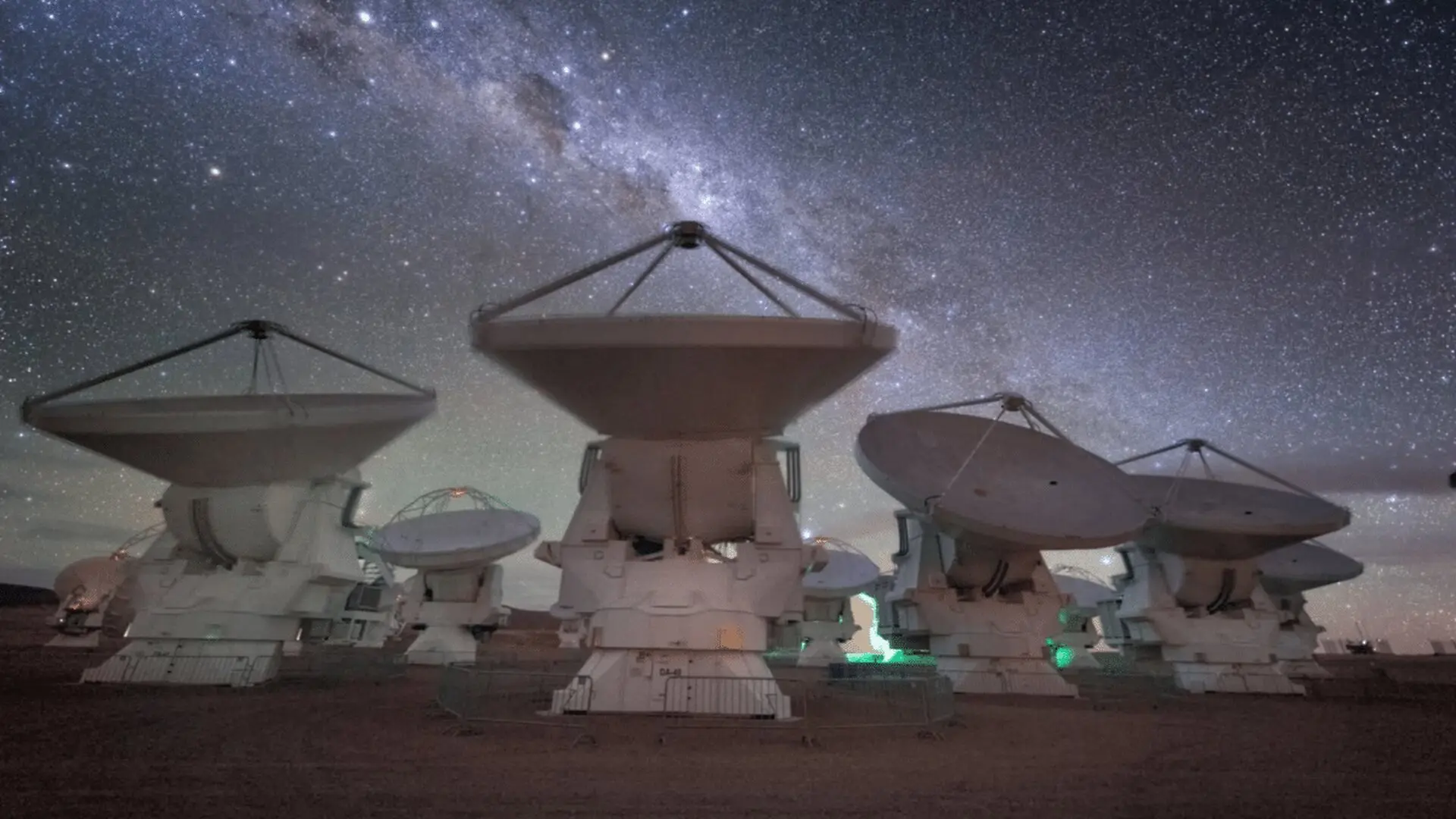
A team of astronomers using the Atacama Large Millimeter/submillimeter Array (ALMA) has captured the faint glow of neutral oxygen in galaxies that existed only 700‑800 million years after the Big Bang, providing a direct glimpse of the raw material that fuels the earliest bursts of star formation.
Shedding Light on the Hidden Gas Reservoirs of the Young Universe
While telescopes such as the James Webb Space Telescope (JWST) and the Hubble Space Telescope (HST) have revealed countless details about ancient stars and ionized gas, the cold, neutral component that directly fuels new stars has largely evaded detection. This invisible reservoir, essential for piecing together how the first galaxies grew, could only be inferred from indirect tracers that often mix signals from multiple environments. The new ALMA observations break through that barrier, offering one of the clearest views yet of the neutral gas that shaped cosmic history during its formative epoch.
Detecting a Rare Oxygen Line at Cosmic Dawn
Targeting four typical star‑forming galaxies from a time when the universe was under a billion years old, the international team measured the [O I] 145 µm emission line in each object. Because this line originates solely from neutral oxygen atoms, it serves as a much cleaner indicator of neutral gas than the more commonly used [C II] line, which can arise in both neutral and ionized regions. Complementary observations of the [N II] 205 µm line, which traces only ionized gas, showed only weak signals, confirming that the bulk of the detected emission comes from neutral material.
ALMA Meets JWST: A Detailed Portrait of Early Galaxies
Published in the Astrophysical Journal, the study combined ALMA data with JWST imaging to probe the physical and chemical state of the gas. The analysis revealed that the neutral gas in these galaxies is exceptionally dense—comparable to the dense clouds found in contemporary starburst galaxies—while the surrounding radiation fields appear somewhat milder than those typical of local starbursts. This suggests that early galaxies were compact, gas‑rich systems capable of sustaining vigorous star formation under conditions that differ from many present‑day counterparts. By juxtaposing the oxygen and carbon lines, the researchers also refined the interpretation of earlier [C II] measurements, placing years of archival data into a clearer physical framework.
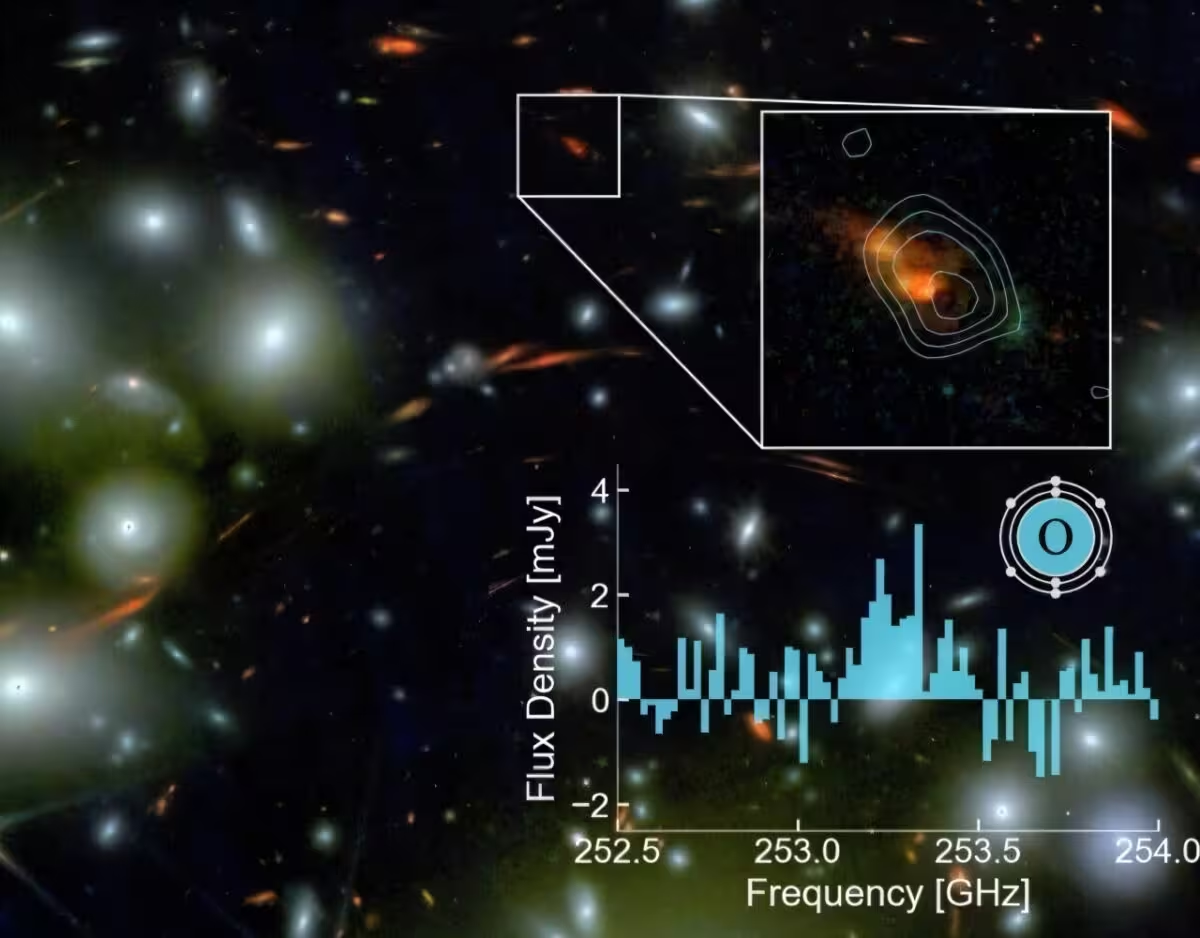
Credit: Assistant Professor Yoshinobu Fudamoto, Chiba University, Japan
The Farthest Direct Neutral‑Gas Detection to Date
Assistant Professor Yoshinobu Fudamoto highlighted the breakthrough, noting:
“Our results represent the most distant direct detection of neutral gas in typical star-forming galaxies to date. This analysis unlocks the wealth of existing [C II] observations as a probe of neutral gas in the early universe.”
The quote underscores how the new method not only adds fresh observations but also enhances the scientific value of extensive archives of [C II] data. Researchers can now revisit those measurements with greater confidence, extracting insights that were previously obscured by uncertainties about the origin of the observed emission.
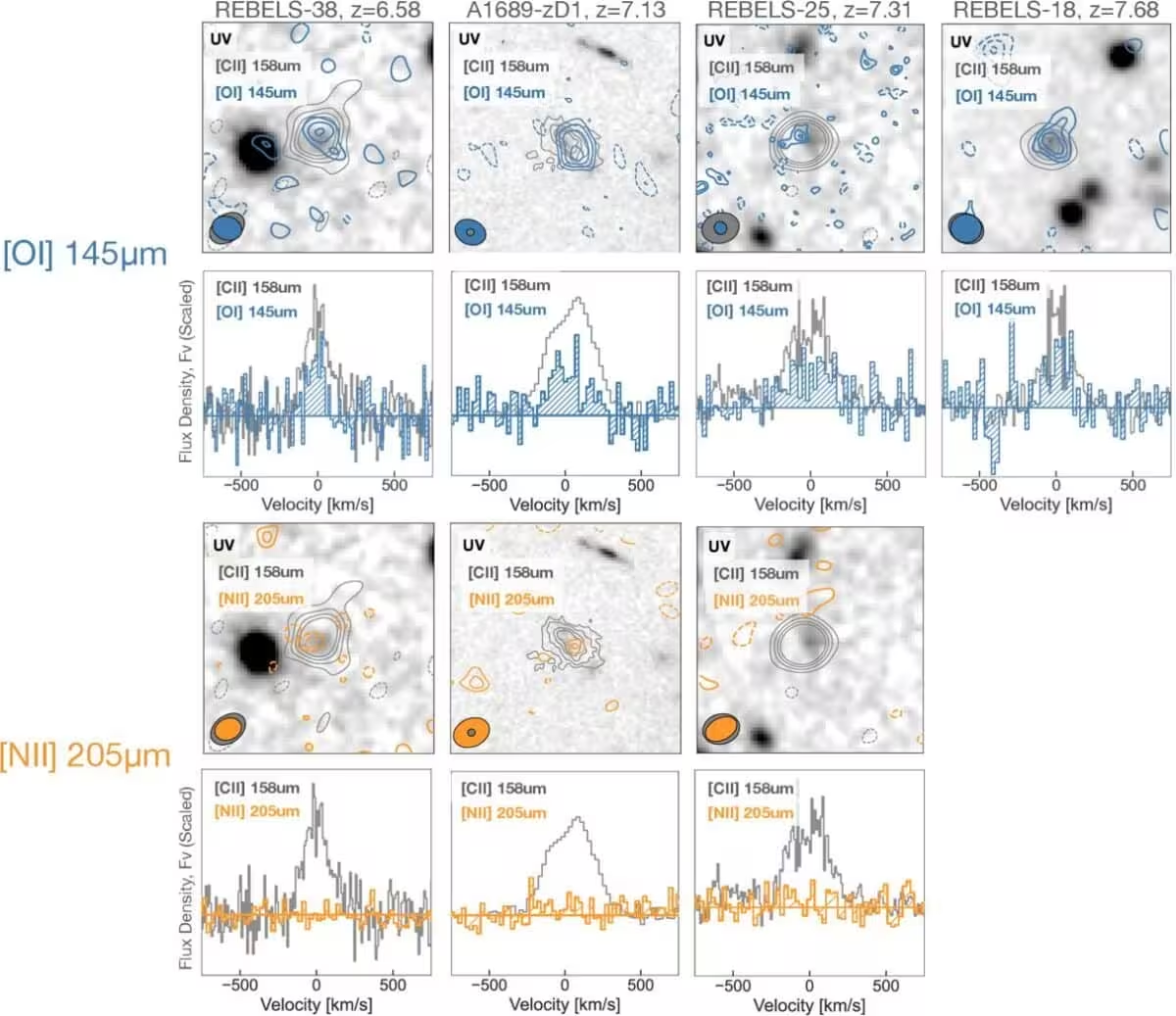
Credit: The Astrophysical Journal
A New Tool for Probing the Fuel of Early Star Formation
Dr Akio K. Inoue emphasized that establishing the [O I] 145 µm line as a reliable tracer opens a fresh avenue for investigating the elusive neutral gas that powered the first generations of stars. Upcoming surveys that combine ALMA, JWST, and next‑generation observatories are expected to expand the sample far beyond the four galaxies reported here. By mapping how gas accumulates, collapses, and ignites star formation over cosmic time, astronomers aim to answer a central question in astrophysics: how did the primordial galaxies that emerged from the Big Bang evolve into the complex structures we observe today, including our own Milky Way?
This article has been fact checked for accuracy, with information verified against reputable sources. Learn more about us and our editorial process.
Last reviewed on .
Article history
- Latest version
Reference(s)
- Fudamoto, Yoshinobu., et al. “ALMA Observations of [O
i ] 145 μ m and [Nii ] 205 μ m Emission Lines from Star-forming Galaxies at z ∼ 7.” The Astrophysical Journal, vol. 1004, no. 2, June 15, 2026, pp. 194 American Astronomical Society, doi: 10.3847/1538-4357/ae5bad. <https://iopscience.iop.org/article/10.3847/1538-4357/ae5bad>.
Cite this page:
- Posted by Aisha Ahmed