JWST Reveals Neptune’s Mysterious Moon Nereid Might Be Original, Not Captured
New analysis suggests a mysterious Neptune moon may be misidentified, with fresh evidence challenging previous assumptions.
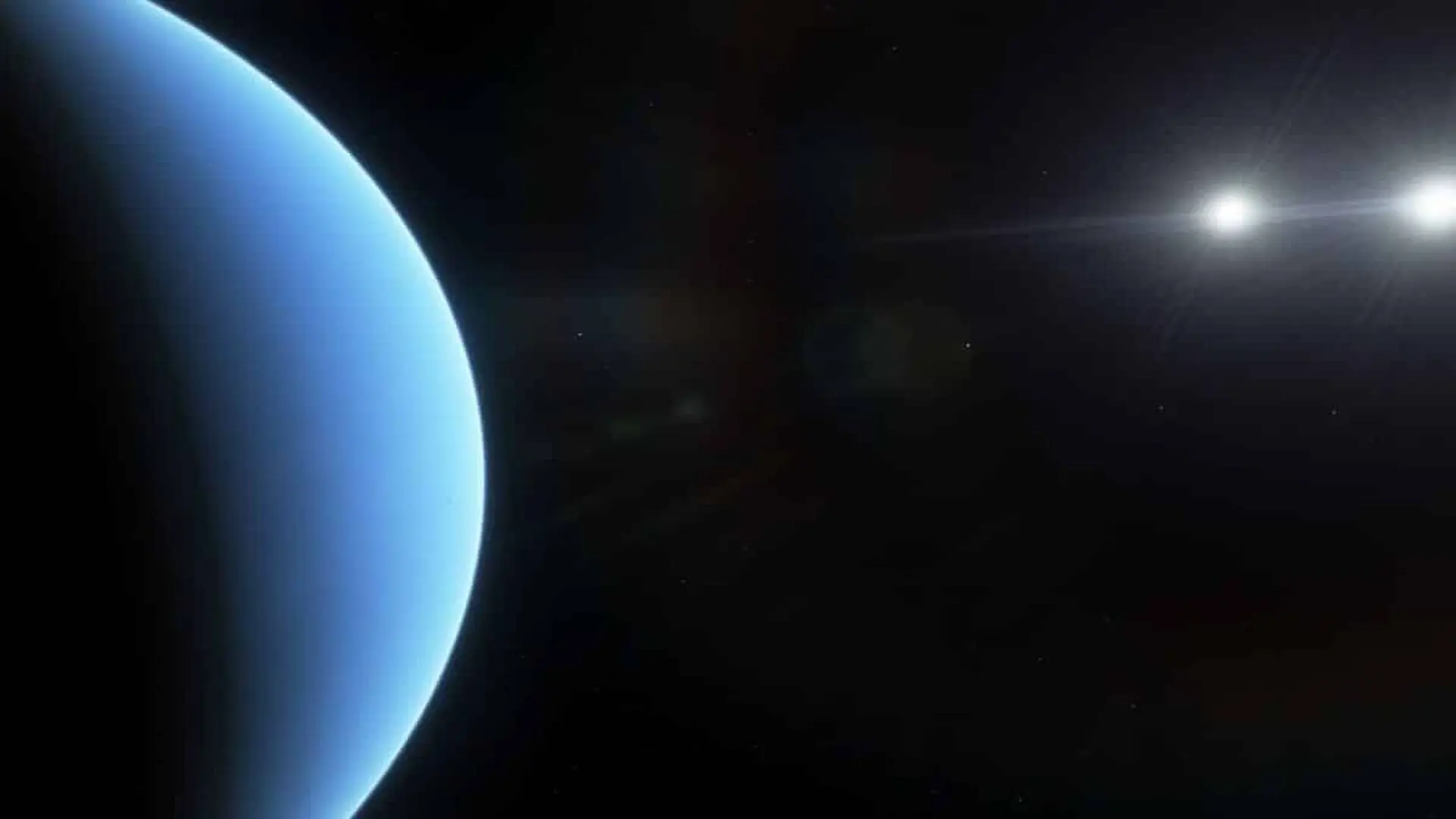
A fresh analysis combining infrared data from the James Webb Space Telescope with computer models of Neptune’s early environment suggests that the irregular moon Nereid may actually be a relic of the planet’s original satellite family, rather than a foreign object captured from the Kuiper Belt.
The researchers argue that Nereid’s extreme orbit is more likely the aftermath of a massive gravitational disturbance than evidence of an external origin, a view that could reshape how planetary scientists classify one of the Solar System’s most enigmatic moons.
JWST Sheds New Light on Neptune’s Moon Nereid
First spotted in 1949 by astronomer Gerard Kuiper, Nereid was the only known companion of Neptune until the Voyager 2 flyby in 1989. Its highly eccentric path, taking roughly 360 days to circle the planet, long fueled the hypothesis that it was a captured Kuiper Belt object, especially given that Neptune’s largest moon, Triton, is also thought to hail from that distant region.
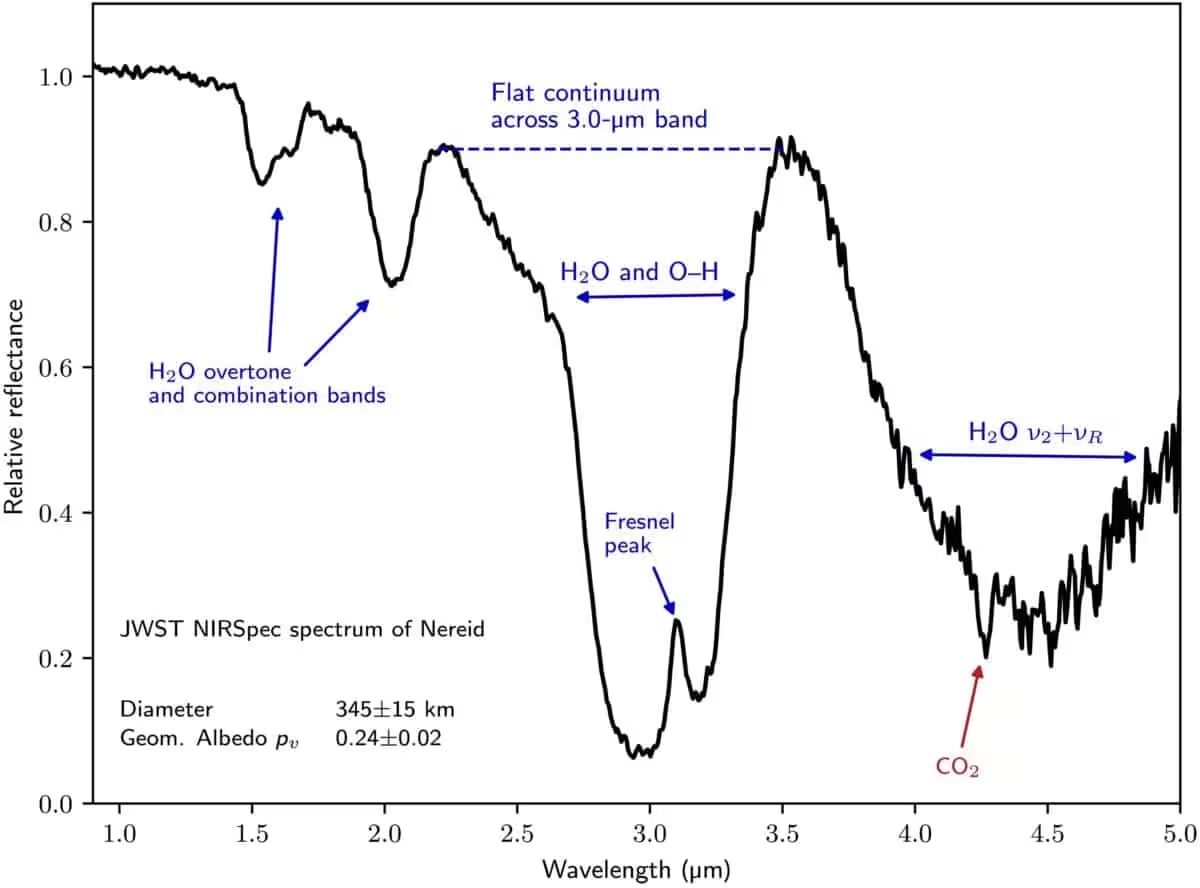
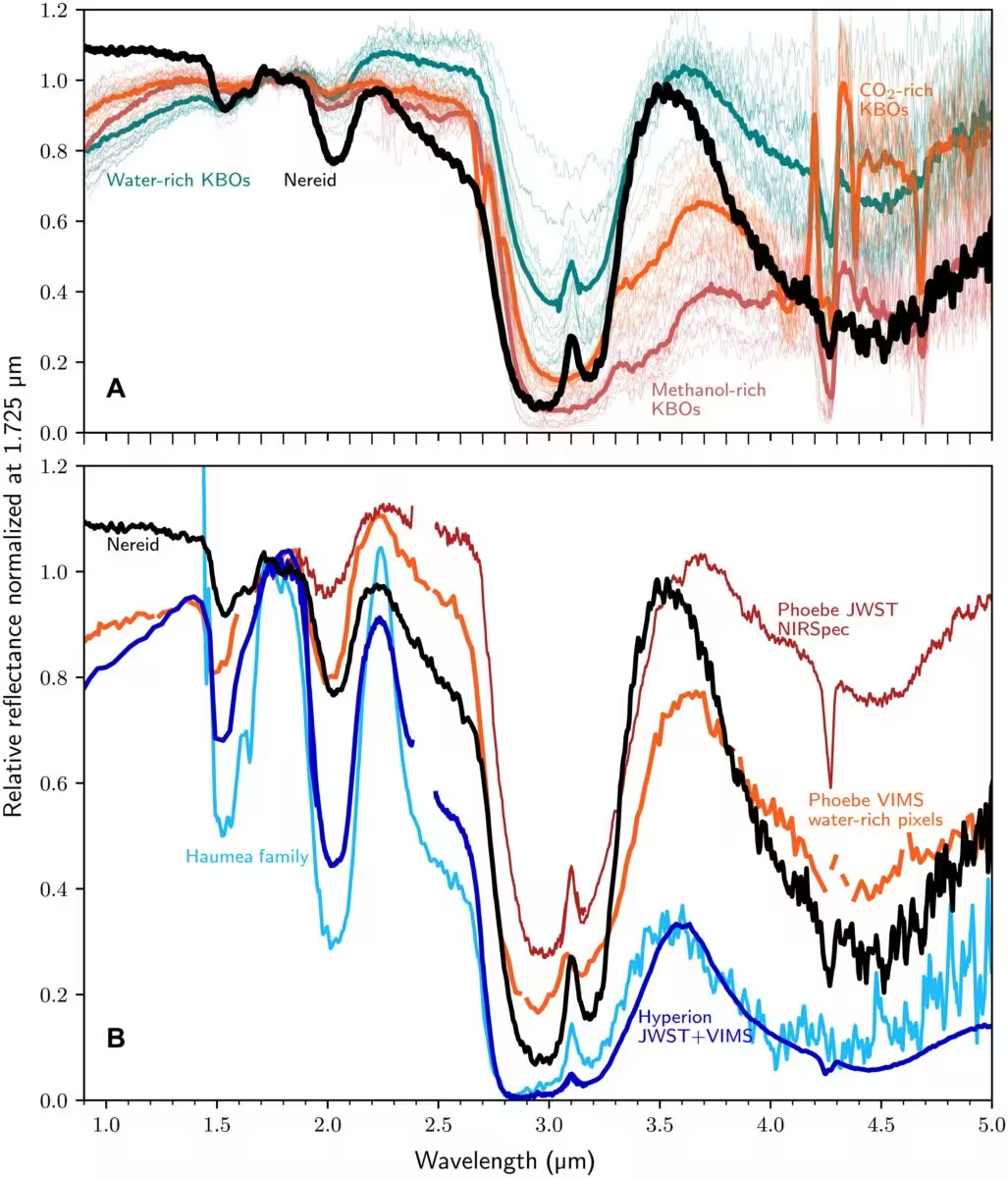
Using JWST’s infrared spectrographs, the team compared Nereid’s surface reflectance with that of known captured Kuiper Belt objects, such as Saturn’s moon Phoebe. The analysis revealed that Nereid’s water‑rich craters display a spectral signature that diverges sharply from Phoebe’s, hinting at a different compositional history. The paper, published in Science Advances, emphasizes this discrepancy:
“Nereid’s unique spectrum among outer Solar System bodies is not consistent with a scenario where Nereid is captured during the early Solar System’s dynamic instability.” The findings therefore weaken the long-standing capture hypothesis.
How Triton’s Capture May Have Reshaped Neptune’s Satellite System
The attention then shifts to Triton, the ice‑giant’s dominant moon, whose retrograde orbit signals that it was not formed in situ. Current models propose that Triton arrived as part of a binary Kuiper Belt pair, and that its insertion into Neptune’s gravity well was anything but gentle.
To explore the cascading effects of such an event, the authors employed the REBOUND N‑body integrator to simulate a primordial Neptunian system populated with regular moons before introducing Triton into the mix.
The simulations show that Triton’s insertion destabilized the pre‑existing moon cluster, prompting collisions, ejections, and the generation of debris. The authors suggest that some of this material may have settled into the faint ring structures now observed around Neptune and could have seeded the formation of smaller satellites such as Proteus.
Could Nereid Be the Last Remnant of an Ancient Moon Cluster?
Across dozens of runs, about one‑fifth of the scenarios produced a survivor that was flung onto a highly elongated, inclined trajectory—an orbit that mirrors Nereid’s present‑day path.
This outcome implies that Nereid might have begun as a regular Neptunian moon before Triton’s disruptive arrival sent it into its current distant, eccentric orbit, preserving it while its siblings were lost to collisions or escape.
If Nereid indeed survived the violent reshuffling of Neptune’s moon system, it would represent a rare window into a generation of satellites that otherwise vanished without a trace, offering new clues about the dynamical history of the outer planets.
This article has been fact checked for accuracy, with information verified against reputable sources. Learn more about us and our editorial process.
Last reviewed on .
Article history
- Latest version
Reference(s)
- Belyakov, Matthew., et al. “Nereid as a regular satellite of Neptune.” Science Advances, vol. 12, no. 21, May 22, 2026 American Association for the Advancement of Science (AAAS), doi: 10.1126/sciadv.aeb1429. <https://www.science.org/doi/10.1126/sciadv.aeb1429>.
Cite this page:
- Posted by Aisha Ahmed