LIGO’s Odd Sub‑Solar Wave May Be First Primordial Black Hole – Could Unlock Dark Matter
Newly discovered black hole challenges expectations with bizarre traits making it a cosmic enigma
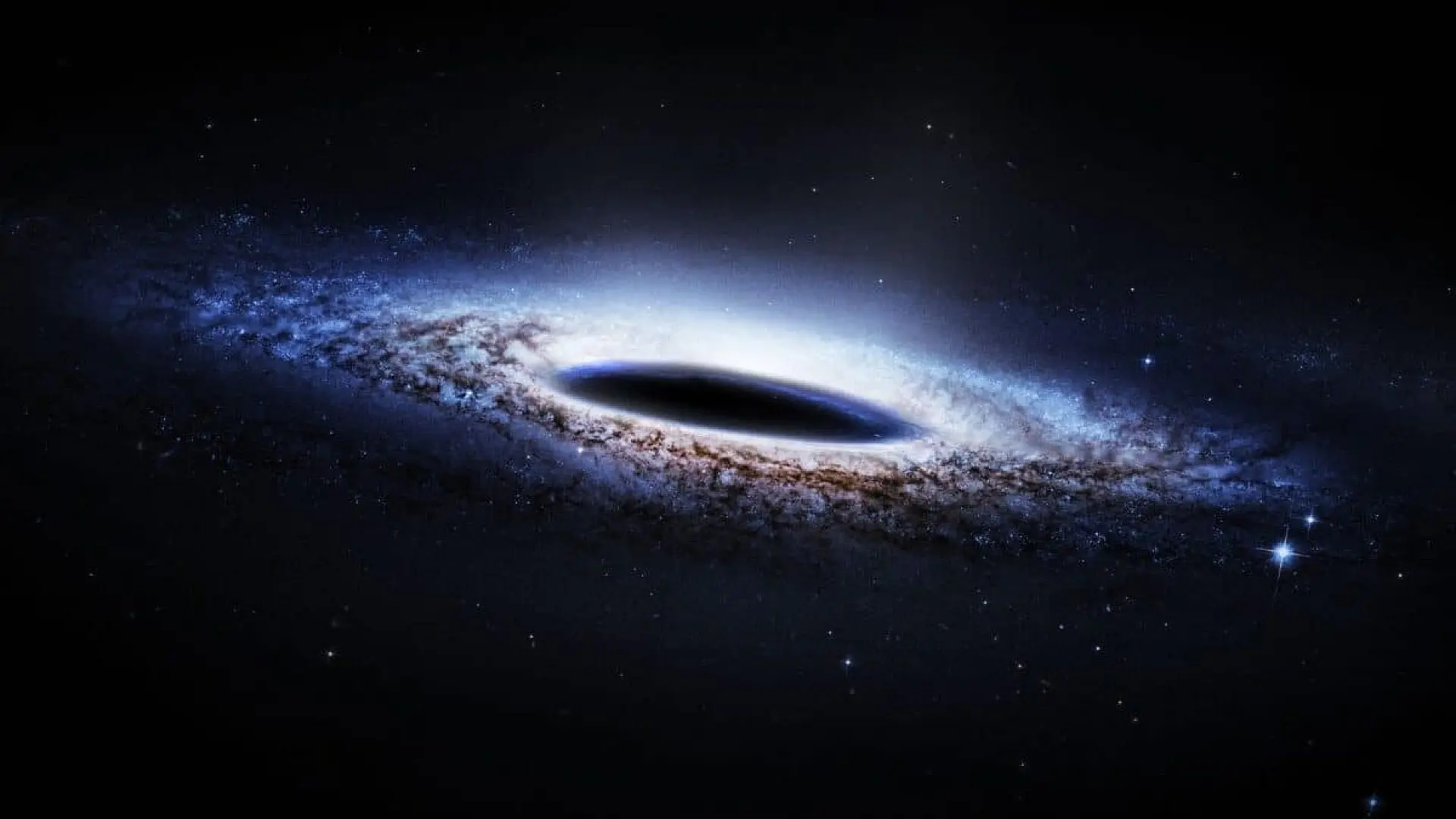
A puzzling gravitational‑wave detection recorded by LIGO has revived a long‑standing cosmological hypothesis. Scientists at the University of Miami argue the signal could represent a primordial black hole, an exotic object that would have emerged within moments after the Big Bang.
Unlike the black holes formed from the collapse of massive stars, primordial black holes are thought to have originated in the extreme densities of the early universe. Although the concept has existed for decades, no such object has ever been confirmed, and its potential role in accounting for dark matter—approximately 85 percent of the universe’s total matter—adds extra intrigue.
Unusual Waveform Defies Standard Black‑Hole Models
The investigation began after LIGO’s automated system issued an alert late last year for a merger that involved at least one component lighter than the Sun. This mass range is unexpected because conventional stellar‑evolution theory does not predict black holes below a solar mass.
“The most common black holes form as the result of a supernova, the death of a massive star. So, their masses can range from a few times the Sun’s mass to billions of solar masses,” said Nico Cappelluti, an associate professor in the University of Miami’s Department of Physics.
While some astrophysicists caution that the signal could be instrumental noise, the characteristics of the event remain difficult to reconcile with known astrophysical mechanisms.
Assessing a Primordial Origin
Cappelluti and doctoral candidate Alberto Magaraggia explored whether the waveform matches predictions for a primordial black‑hole merger that occurred in the dense early‑universe environment.
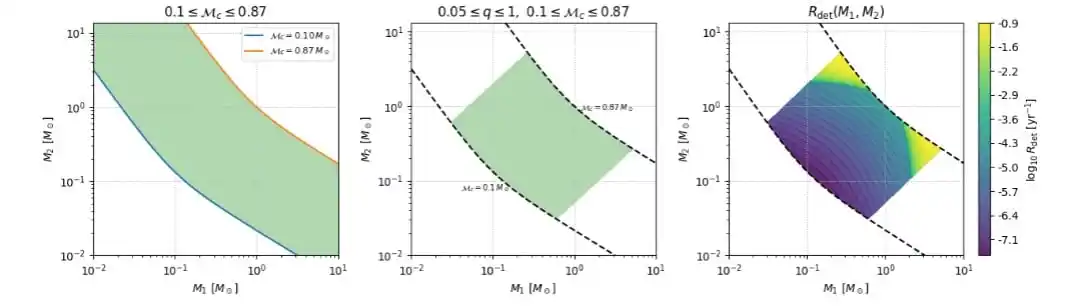
Their analysis, published in The Astrophysical Journal, argues that the observed signal aligns with a subsolar‑mass primordial black‑hole scenario. The team also modeled the expected population density and detection rate for such objects.
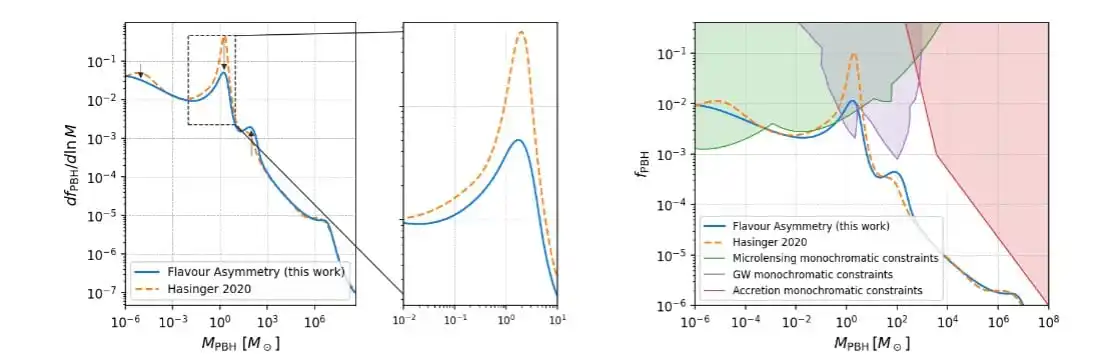
“We attempted to estimate how many primordial black holes may exist in the universe and how many of them LIGO should be able to detect,” Magaraggia explained. “And our results are encouraging. We predict that subsolar black holes like the one LIGO may have observed should indeed be rare, consistent with how infrequently such events have been seen so far.”
The study concludes that low‑mass primordial black holes would be scarce, a finding that mirrors the limited number of comparable gravitational‑wave detections to date.
Old Theory Meets Modern Observation
The notion of primordial black holes was originally put forward by Soviet physicists Yakov Zeldovich and Igor Novikov, and later expanded by Stephen Hawking, who suggested such objects might account for dark matter.
For many years the hypothesis remained untested, but the advent of gravitational‑wave astronomy—sparked by LIGO’s first detection in 2015—has provided a new avenue to probe the idea.
The researchers stress that a single anomalous event cannot confirm the existence of primordial black holes. Additional observations of similar low‑mass mergers will be essential before the scientific community can reach a definitive verdict.
This article has been fact checked for accuracy, with information verified against reputable sources. Learn more about us and our editorial process.
Last reviewed on .
Article history
- Latest version
Reference(s)
- “Nico Cappelluti.” <https://people.miami.edu/profile/530dc9f1ae801155ac4a398d43ccfbdd>.
- Magaraggia, Alberto., et al. “Implications for Primordial Black Hole Dark Matter from a Single Subsolar Mass Gravitational-wave Detection in LVK O1–O4.” The Astrophysical Journal, vol. 1000, no. 2, March 27, 2026, pp. 262 American Astronomical Society, doi: 10.3847/1538-4357/ae48f9. <https://iopscience.iop.org/article/10.3847/1538-4357/ae48f9>.
- projects, Contributors. “Soviet physicist, physical chemist and cosmologist (1914-1987).”, February 18, 2004 Wikimedia Foundation, Inc. <https://en.wikipedia.org/wiki/Yakov_Zeldovich>.
- <https://fr.wikipedia.org/wiki/Igor_Novikov>.
Cite this page:
- Posted by Aisha Ahmed