Don’t Miss Tonight’s Rare Mercury‑Venus‑Jupiter Alignment – Spot the Cosmic Trio in 45 Minutes
Fenomeno celeste imperdibile: il 12 giugno allineamento fugace di Mercurio, Venere e Giove per uno spettacolo unico nel cielo serale.
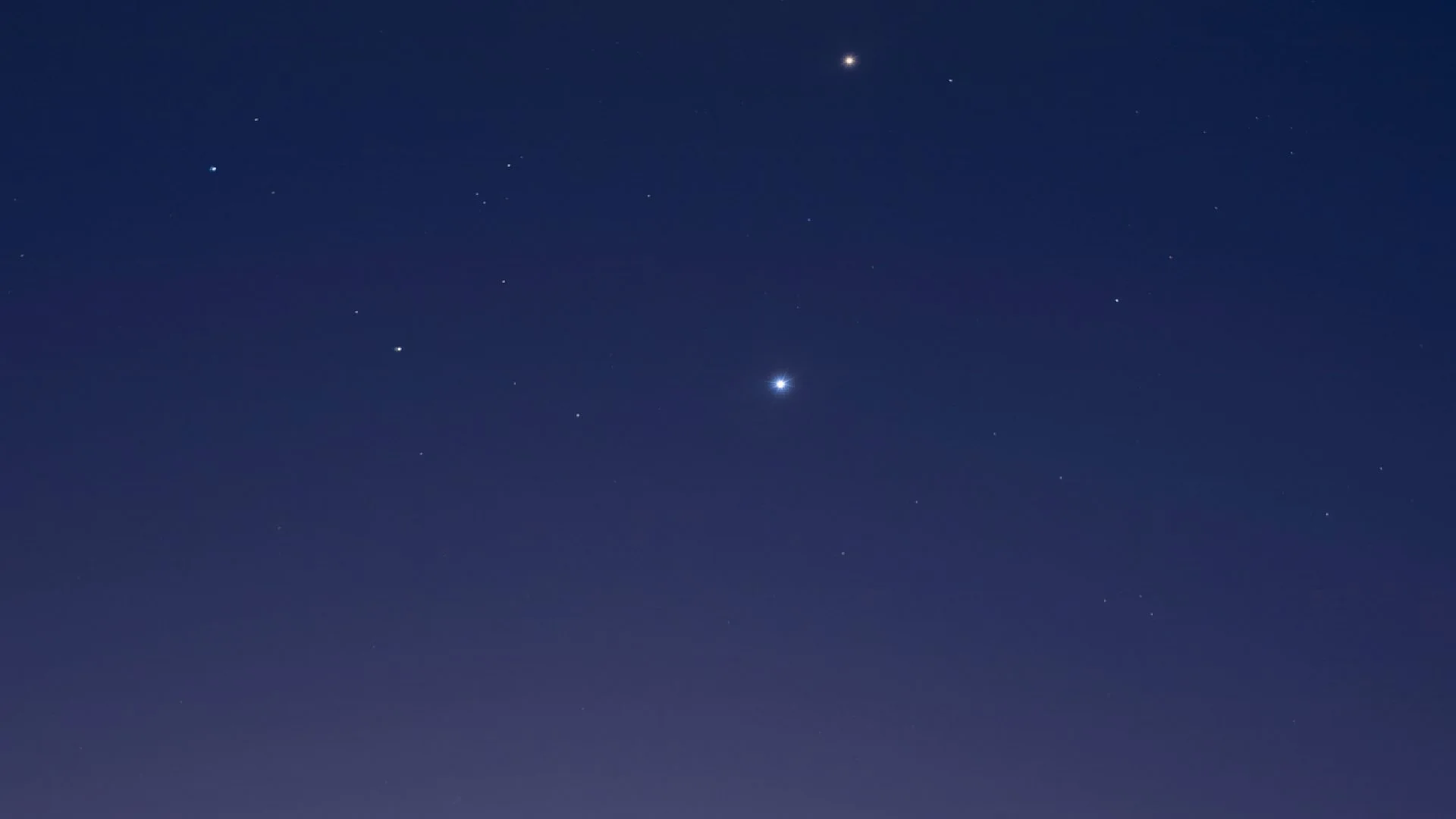
Tonight, observers around the world will have a short-lived chance to see an uncommon planetary line‑up as Mercury, Venus and Jupiter sweep across the western sky shortly after dusk. The brief window demands a prompt and steady gaze, rewarding those who are ready with a striking celestial display.
How the Three Planets Align
All three bodies line up along the ecliptic, with Venus positioned furthest west, Mercury in the middle and Jupiter trailing to the east. Since June 9, Venus and Jupiter have been gradually separating, while Mercury has just emerged from the Sun’s glare to join the trio. According to Space.com, the formation is most pronounced between 30 and 45 minutes after sunset, after which the planets dip below the horizon, making the event fleeting.
Advice for Skywatchers
Through a telescope, Venus will appear as a bright, nearly full disk, while Mercury will show a distinct half‑moon shape—an unusual sight in twilight. Jupiter, though lower on the horizon, may reveal faint bands around its equator under steady atmospheric conditions. Achieving a clear view of all three requires steady positioning and attention to atmospheric turbulence. Even a modest pair of binoculars can sharpen the view of the planetary procession.
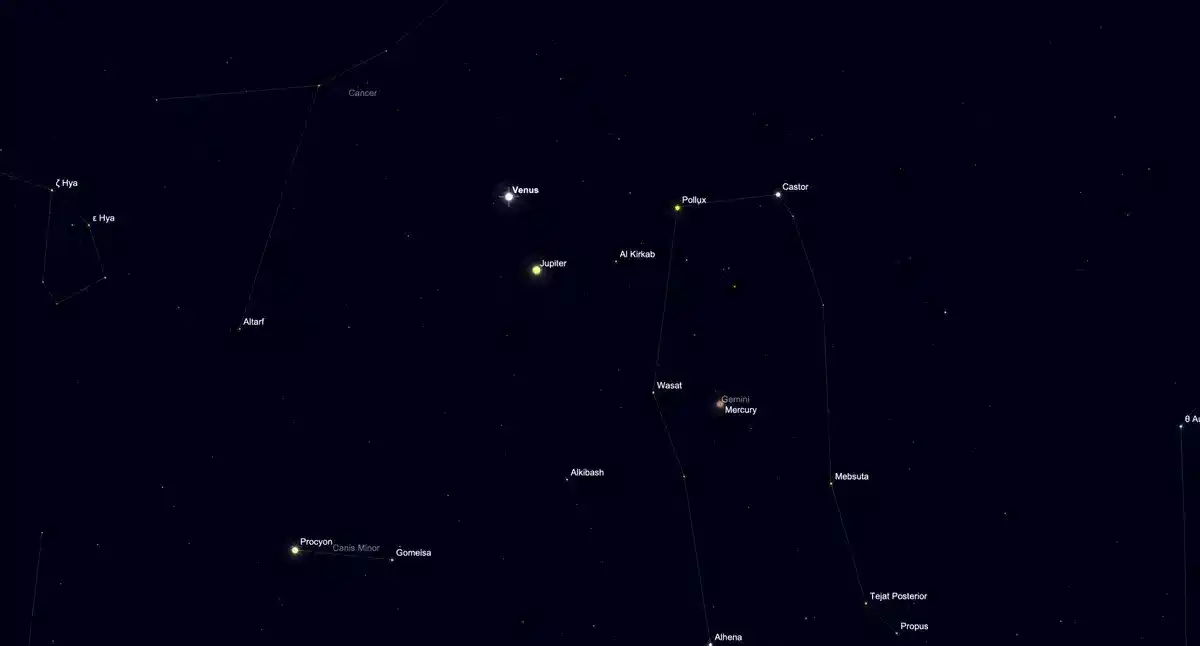
Credit: Starry Night
Capturing the Alignment on Camera
Photographers can document the event without a telescope by mounting a 50‑85 mm prime lens on a DSLR or mirrorless camera. The scene works well for landscape astrophotography, letting shooters place the planets above mountains, city skylines or tree lines to create a “cosmic ladder” effect. Exposure settings should balance the deepening twilight hues with the bright planetary disks. Space.com notes that this combination of natural beauty and photographic potential makes June 12 a unique opportunity for compelling astro‑images without specialized gear.
Why This Event Matters to Enthusiasts
Planetary gatherings such as this serve as practical illustrations of solar‑system dynamics, helping hobbyists and students visualize planetary phases, apparent brightness and orbital geometry. The contrast between Mercury’s half‑moon and Venus’s gibbous glow offers both a technical challenge and a rewarding visual payoff, sharpening observational skills and deepening appreciation for celestial mechanics.
Essential Viewing Tips
To make the most of the brief alignment, face the west‑northwest horizon just after sunset and ensure an unobstructed view free of buildings or trees. The optimal observing window lasts roughly half an hour to forty‑five minutes, so having equipment ready and knowing the timing are crucial. For photographers, including a recognizable landscape element can greatly enhance the final image, turning the planets from mere points of light into part of a striking cosmic narrative.
This article has been fact checked for accuracy, with information verified against reputable sources. Learn more about us and our editorial process.
Last reviewed on .
Article history
- Latest version
Reference(s)
- Malartre, Jules-Pierre. “Don't miss this beautiful 3-planet parade after sunset tonight — it won't last long.”, June 11, 2026 Space <https://www.space.com/stargazing/a-beautiful-3-planet-parade-will-shine-after-sunset-on-june-12-but-youll-have-to-be-quick-to-catch-it>.
Cite this page:
- Posted by Aisha Ahmed