Milky Way’s secret past collision and looming tug from the Large Magellanic Cloud
Uncover how the Milky Way’s structure is being reshaped by a neighboring dwarf galaxy after a cosmic collision
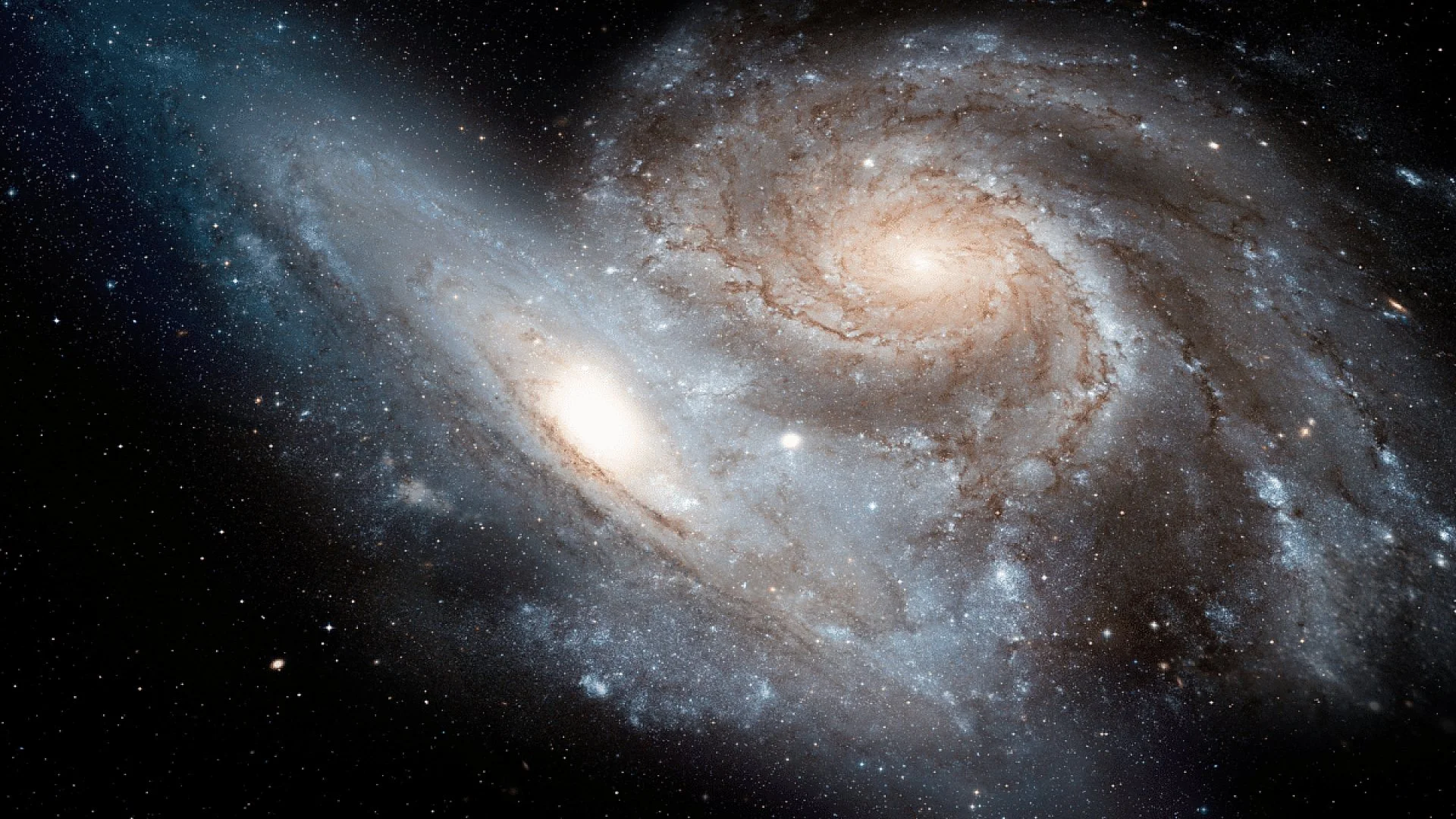
Roughly eight to eleven billion years ago the Milky Way suffered a cataclysmic merger that scrambled its stellar architecture and flung countless stars onto eccentric paths. New research highlighted by The Conversation suggests the galaxy is now entering another era of change, as the massive dwarf neighbor known as the Large Magellanic Cloud exerts a powerful gravitational tug that is reshaping the Milky Way’s outer regions. What looks like a tranquil night sky is actually a dynamic record of ancient collisions, ongoing interactions, and continual evolution.
Tracing the Milky Way’s Fossil Record
Astronomers such as Vasily Belokurov treat the Milky Way like an archaeological site, piecing together its history from the motions and chemistry of billions of stars. Among the stellar population, a subset of “migrant” stars originated in smaller satellite galaxies before being captured during past mergers. These interlopers move in ways that cut across the smooth rotation of the disk and carry lower abundances of heavy elements, indicating slower chemical evolution in dwarf environments. By mapping these foreign stars, scientists can reconstruct the timing and impact of ancient encounters, revealing how each event rewrote the galaxy’s structure.
The Gaia‑Sausage Encounter
The most influential of those early collisions is the Gaia‑Sausage‑Enceladus event, which unfolded roughly eight to eleven billion years ago. The impact propelled stars from the pre‑existing disk into the halo, creating a population of “exiles” far from their birthplaces and adding new star clusters to the Milky Way. In addition to altering stellar orbits, the merger likely reoriented the galactic disk and deformed the surrounding dark‑matter halo, a massive invisible scaffold that shapes the galaxy’s gravity. Data from the Gaia mission have shown that this halo is far from a simple sphere; it can stretch, warp, and respond dynamically, much like a ship listing under turbulent seas.

Credit: Vasily Belokurov, CC BY-NC-ND
A New Gravitational Partner Takes Center Stage
After a long period of relative stability, the Milky Way is now feeling the pull of its largest satellite, the Large Magellanic Cloud (LMC). The dwarf galaxy’s mass is sufficient to tug on the outer halo, setting the Milky Way on a slow, spiraling trajectory that will reshape its overall shape. Unlike the ancient merger that was driven by internal dynamics, this present‑day interaction is an external force that may leave one of the two galaxies largely intact while the other is heavily altered. The ongoing encounter mirrors the earlier sausage merger, underscoring that even seemingly quiet galaxies are subject to continual change.
Gaia’s Stellar Survey Illuminates Future Paths
The Gaia space telescope has catalogued nearly two billion stars, providing an unprecedented archaeological record of the Milky Way’s past and a window into the behavior of dark matter that dominates the galaxy’s outskirts. By analyzing how stars respond to gravitational influences from past mergers and current companions, researchers can model future distortions and refine their understanding of the invisible scaffolding that holds the galaxy together. The calm night sky, therefore, captures a fleeting moment in a system that has been broken, rebuilt, and is now moving toward its next major transformation.
This article has been fact checked for accuracy, with information verified against reputable sources. Learn more about us and our editorial process.
Last reviewed on .
Article history
- Latest version
Cite this page:
- Posted by Aisha Ahmed