JWST reveals scorching dawn‑dusk temperature divide on hot Jupiter WASP‑121b
Ultra-hot exoplanet WASP-121 b’s extreme day-night weather revealed in JWST’s high-res first glimpse
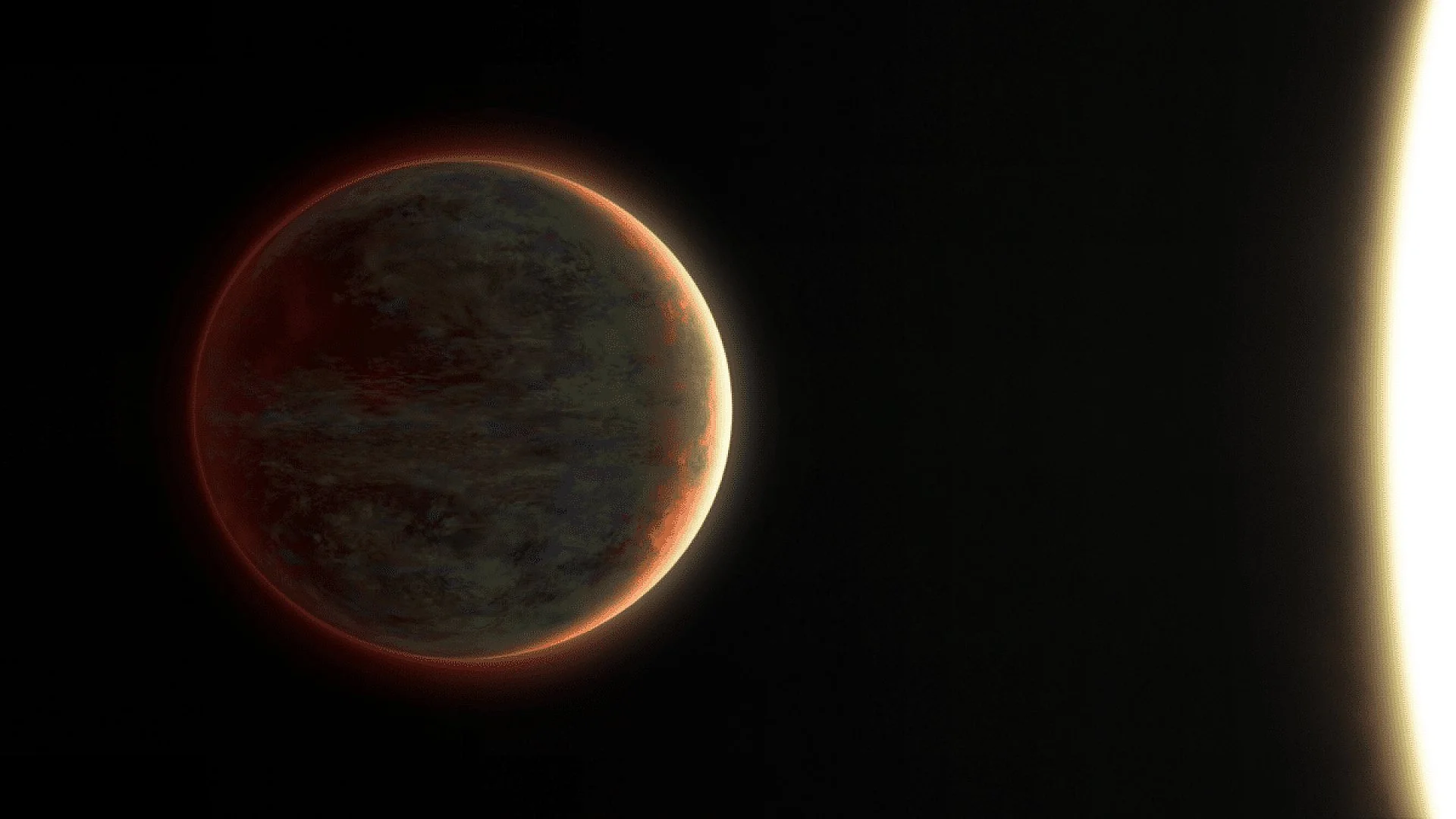
Using the James Webb Space Telescope, astronomers have obtained the most detailed view yet of the scorching gas giant WASP‑121 b, uncovering a striking contrast between its dawn‑side and dusk‑side atmospheres. The findings, released in Nature Astronomy, provide the first direct evidence that some exoplanets experience a pronounced temperature and chemistry split from morning to evening, reshaping theories of extreme planetary climates.
Mapping Atmospheric Layers Across Longitudes
A team led by Cyril Gapp at the Max Planck Institute for Astronomy in Heidelberg examined how infrared starlight is filtered by WASP‑121 b during its transit. By tracking subtle changes in absorption as the planet rotates, they reconstructed a longitudinal profile of its atmosphere.
“With its unprecedented observational quality, JWST gives us the most detailed glimpses into distant planets to date: By measuring how starlight absorption changes as WASP‑121 b rotates, we probe its atmosphere longitude by longitude,” said Gapp.
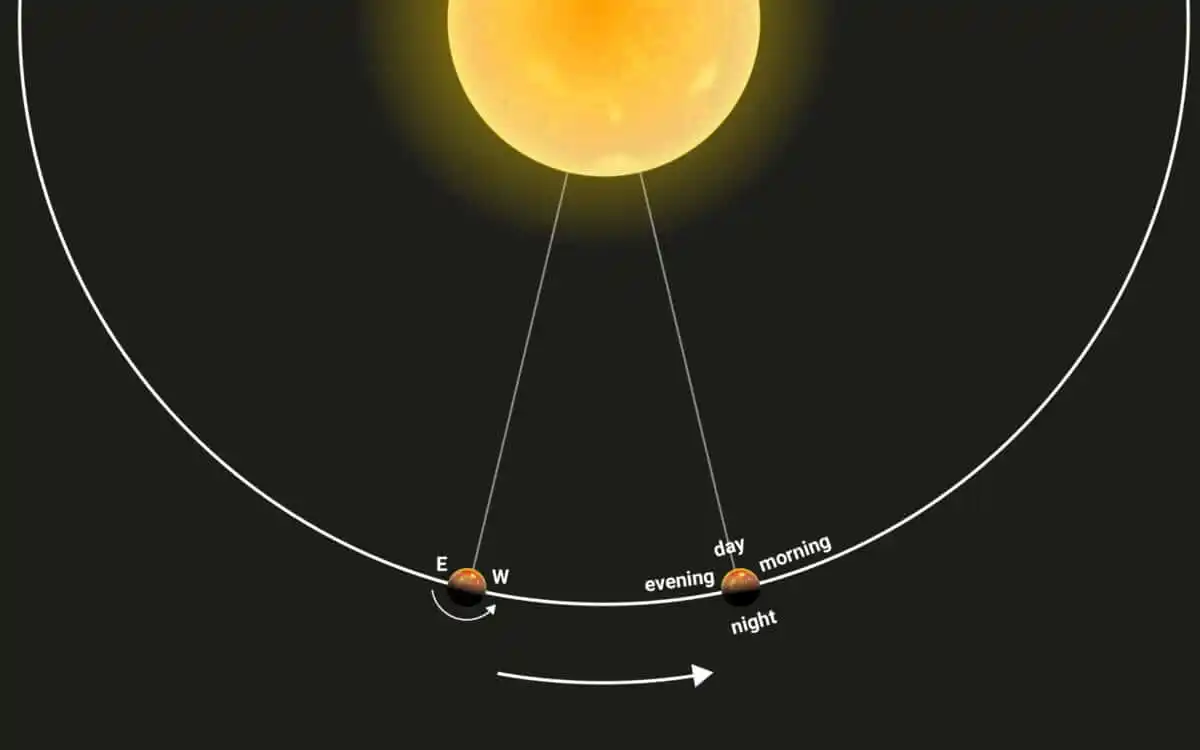
The analysis revealed that the evening (dusk) terminator blocks more starlight than the morning (dawn) side. This pattern matches predictions of strong eastward winds that transport heat from the day‑facing hemisphere toward the night‑facing side, inflating the evening atmosphere and enhancing its opacity.
Credit: MPIA (CC BY 4.0)
Heat Extremes on a Tidally Locked Giant
WASP‑121 b belongs to the class of hot Jupiters that keep one face perpetually illuminated while the opposite side remains in darkness.
“WASP‑121b is particularly extreme, with average temperatures on the dayside hemisphere being around 2,770 Kelvin, while those on the nightside are closer to about 1,000 Kelvin,” explained co‑author Tom Evans‑Soma from the University of Newcastle, Australia.
Those figures translate to roughly 2,500 °C on the day side and 725 °C on the night side, establishing a dramatic thermal gradient. JWST’s Near‑Infrared Spectrograph (NIRSpec) captured not only the temperature contrast but also the chemical signatures, showing water molecules dissociate at the highest temperatures while carbon‑monoxide emissions increase primarily because of heating.
Transit Geometry Reveals Atmospheric Flow
As the planet moves across its star, a slight rotation allows researchers to sample successive atmospheric slices. The leading edge (morning terminator) precedes the orbit, whereas the trailing edge (evening terminator) follows it. This shifting perspective, combined with high‑resolution spectroscopy, maps temperature and composition variations around the planetary rim.
Brightness fluctuations recorded during the transit matched expectations for heat redistribution by strong winds, confirming long‑standing models. Small mismatches between observations and simulations hint that additional processes—such as silicate cloud formation—might modulate infrared absorption, especially on the dawn side where mineral clouds could veil deeper, hotter layers.
Challenges for Atmospheric Simulations
Current models of ultra‑hot gas giants struggle to reproduce the full dawn‑dusk contrast. By adding cloud physics and refining circulation codes, the authors achieved a closer fit to the JWST data, but further advances are needed to fully characterize these hostile environments.
The work also outlines a roadmap for future studies, identifying several other ultra‑hot Jupiters that are suitable for similar transit observations. Comparing multiple worlds with this technique could reveal whether the observed longitudinal patterns are common or unique, deepening our grasp of planetary weather at extreme temperatures.
A New Era of Exoplanet Weather Mapping
JWST’s sensitivity now permits scientists to move beyond bulk temperature estimates toward detailed, spatially resolved weather maps of distant worlds. The WASP‑121 b results, published in Nature Astronomy, expose the violent climate of an ultra‑hot gas giant and set a benchmark for forthcoming atmospheric investigations.
This article has been fact checked for accuracy, with information verified against reputable sources. Learn more about us and our editorial process.
Last reviewed on .
Article history
- Latest version
Reference(s)
- Gapp, Cyril. “Atmospheric asymmetries in WASP-121 b revealed by rotational transits detected with JWST - Nature Astronomy.”, June 10, 2026, pp. 1-11. Nature, doi: 10.1038/s41550-026-02887-6. <https://www.nature.com/articles/s41550-026-02887-6>.
Cite this page:
- Posted by Aisha Ahmed