Cracks Appear in US Nuclear Waste Dome on Pacific Atoll, Raising Leak Risk After 50 Years
Rising seas are cracking the Cold War nuclear waste dome, risking exposure of hidden radioactive legacy.
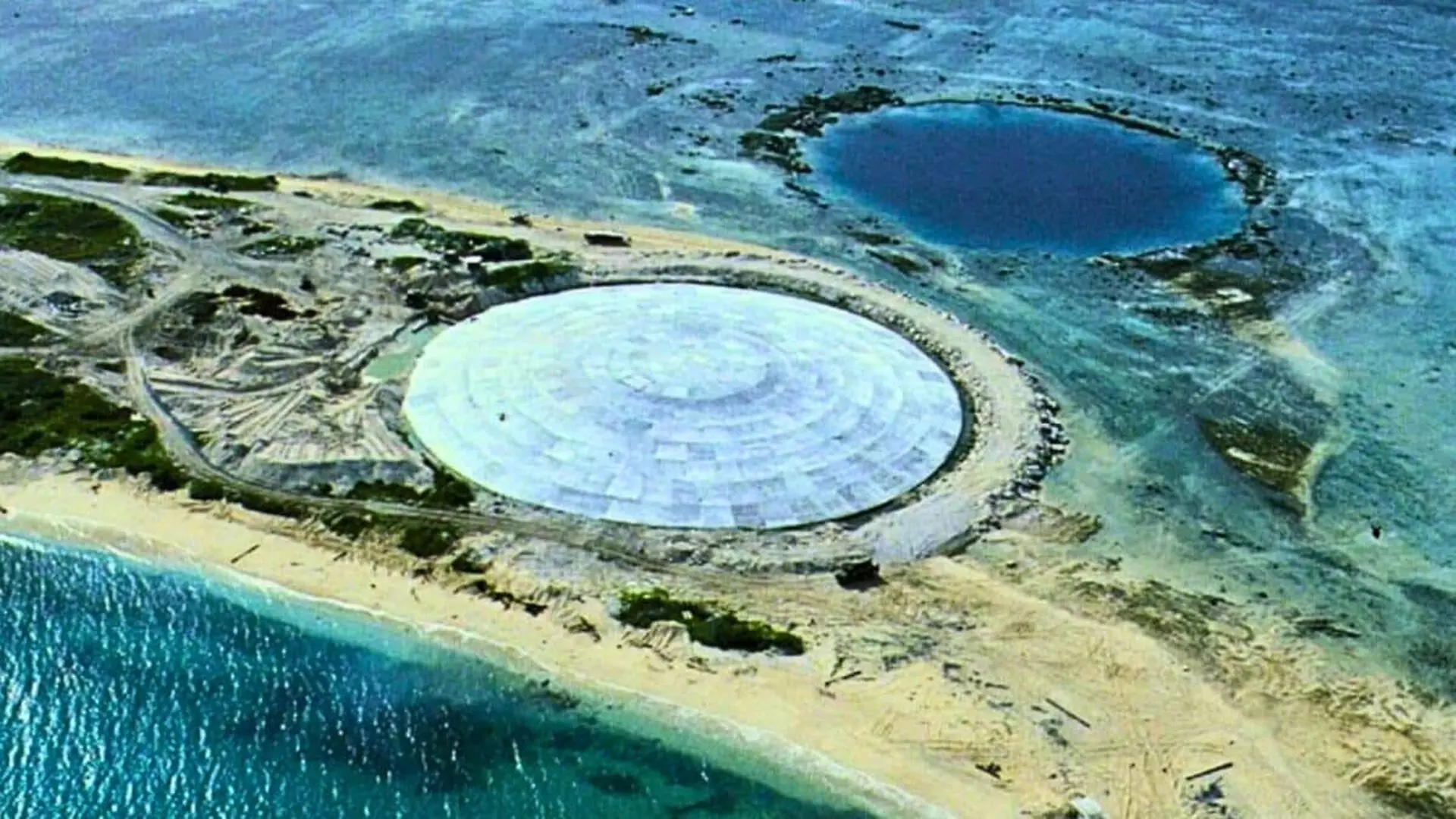
A network of fissures now criss‑crosses the concrete lid that caps a radioactive pit on Runit Island, the easternmost tip of Enewetak Atoll in the Marshall Islands. With each tide, groundwater swirls beneath the slab, and scientists warn that this movement could ferry contaminated sediments into the nearby lagoon.
The atoll lies roughly 30 km from villages that still rely on the lagoon for fishing and food gathering. According to the 2021 census, about 600 residents call Enewetak home, keeping the fate of the dome a pressing local concern.
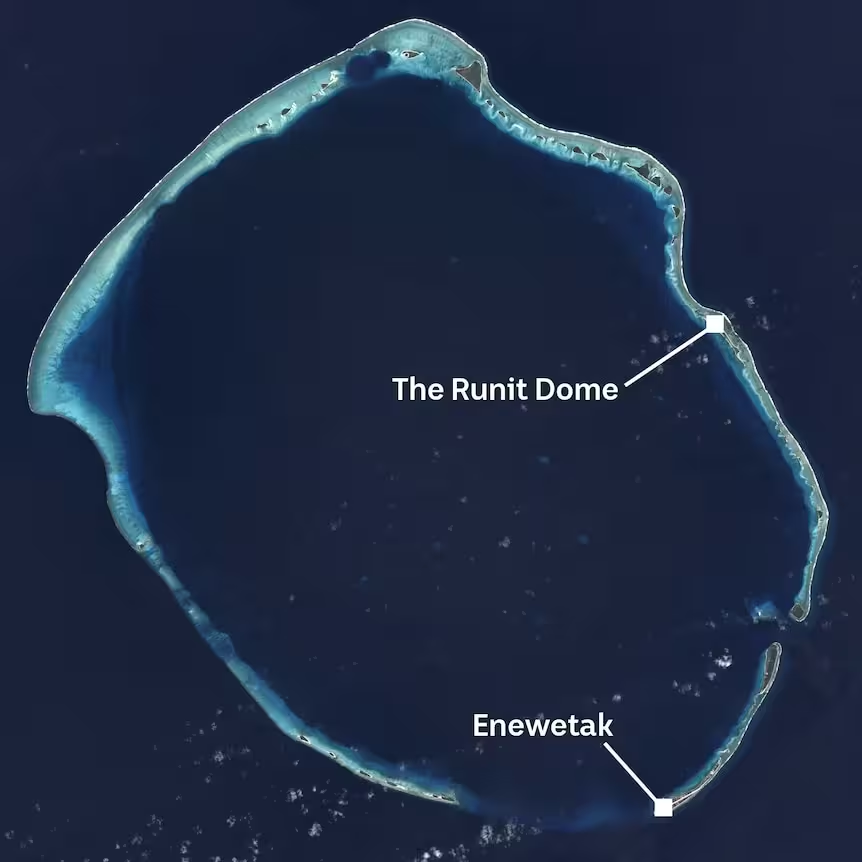
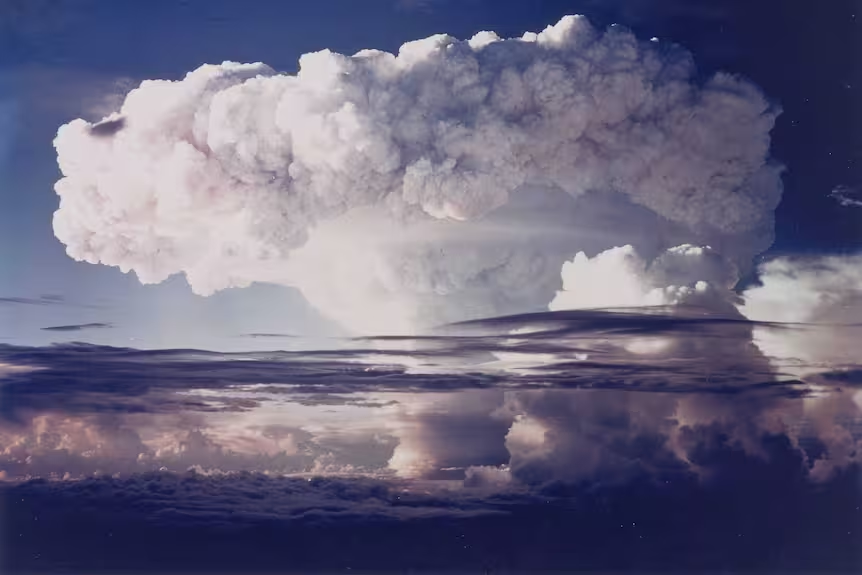
From 1946 to 1958, the United States detonated 67 nuclear devices across Enewetak and Bikini Atolls, forcing more than 300 islanders to relocate. One of those blasts, an 18‑kiloton test named “Cactus,” created a crater roughly 10 m deep on Runit.
In the late 1970s, U.S. military crews excavated over 120,000 tonnes of contaminated earth and debris from the atoll, dumped it into the crater, and sealed it beneath an 18‑inch concrete cover. The resulting structure, now referred to as the Runit Dome, was intended as a permanent containment solution, yet it was never designed for rising seas or intensifying tropical storms.
Materials Buried Beneath the Dome
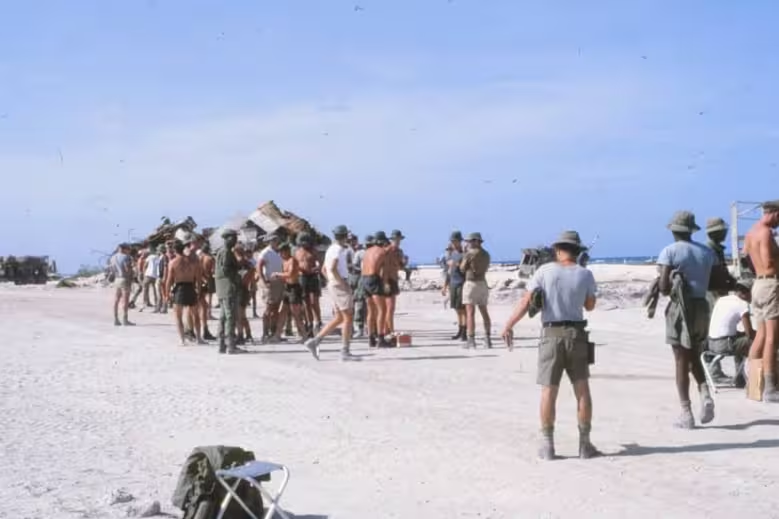
Robert Celestial arrived on Enewetak in 1978 as a U.S. Army truck driver, under the impression that he was clearing World War II remnants. He later learned that the loads he hauled were radioactive waste from the nuclear test site. “We didn’t do a good job,” Celestial told ABC News, describing a cleanup where contaminated material was poured straight into the lagoon.
After returning to the United States, Celestial experienced skin eruptions that seeped through his clothing and was medically discharged after seven years of service. He subsequently suffered from brittle‑bone disease, osteoporosis, arthritis, and kidney and liver complications. The Atomic Heritage Foundation has recorded similar health issues, including cancer, among veterans who spent six‑month tours on Enewetak.
Celestial noted that the U.S. government only formally acknowledged these service members as “atomic veterans” eligible for benefits in 2023. Of the roughly 4,000 personnel who took part in the cleanup, the National Association of Atomic Veterans reports that only a few hundred remain alive.
Cracking Concrete and Tidal Forces
Five decades after its construction, the dome’s outer shell shows visible deterioration. Recent research papers have highlighted expanding fissures, and a United Nations assessment concluded that the cover is not watertight. Tidal fluctuations drive groundwater through the base, a pathway that could transport radionuclides into the lagoon.
Ivana Nikolic‑Hughes of Columbia University and president of the Nuclear Age Peace Foundation inspected the site in 2018 and observed the cracks firsthand. Soil samples taken around the perimeter at that time revealed heightened radiation, indicating that contaminants had already migrated beyond the dome’s confines.
Arjun Makhijani, a nuclear engineer and head of the Institute for Energy and Environmental Research, stressed the disparity between the dome’s lifespan and the half‑life of the waste it contains. Plutonium‑239, a key component of the buried material, remains hazardous for more than 24,000 years. Makhijani pointed out that cracks have emerged in under half a century, a timescale far shorter than the period required for the waste to become safe.
Debate Over Hazard and Accountability
U.S. officials maintain that the structure is stable and that any breach would be minor compared with the extensive contamination already present in the lagoon from decades of testing. The Department of Energy attributes the fissures to normal aging processes.
Nikolic‑Hughes challenged that position, questioning why a containment facility was built if the surrounding waters were already heavily polluted. She also suggested the possibility that unexploded ordnance from failed tests might still be trapped inside, though this hypothesis has not been verified.
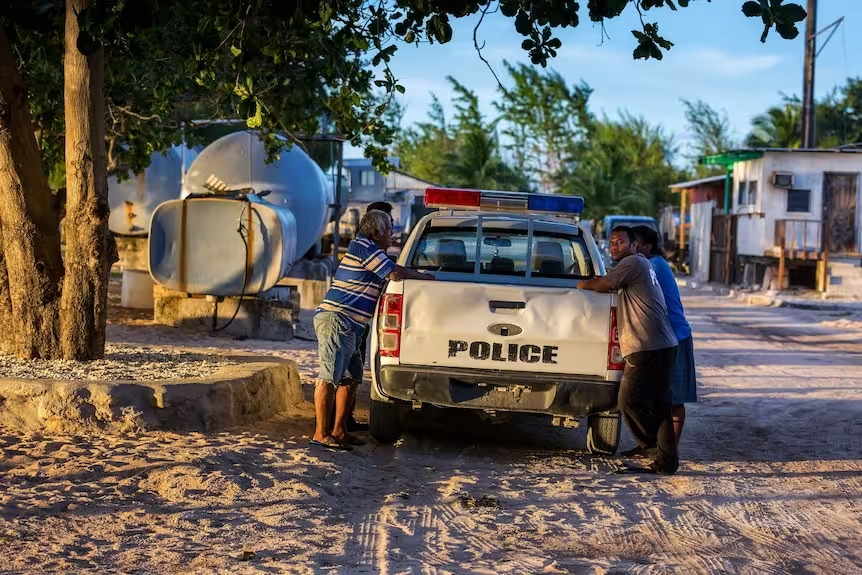
Responsibility for the dome is entangled in the 1986 Compact of Free Association, which granted the Marshall Islands independence in exchange for U.S. military access and financial aid. The agreement also settled all claims related to the nuclear testing program, effectively transferring liability for the dome to the Marshallese government.
Marshallese officials have since indicated that they did not fully grasp the implications of the compact when it was signed. The island’s health ministry lacks the technical expertise and resources to undertake a comprehensive remediation.

Former health secretary Jack Niedenthal described the dome as a reminder of a U.S. error, noting that responses have largely consisted of additional concrete and periodic studies. “With sea levels rising and the atoll only a few feet above high tide, the situation is increasingly worrisome,” he said, emphasizing that any failure on Runit would affect the entire lagoon and the communities that depend on it.
This article has been fact checked for accuracy, with information verified against reputable sources. Learn more about us and our editorial process.
Last reviewed on .
Article history
- Latest version
Reference(s)
- Evans, Kyle. “Cracks appear in Runit Dome amid sea level rise in Marshall Islands.”, March 14, 2026 ABC News <https://www.abc.net.au/news/2026-03-15/cracks-appear-in-runit-dome-amid-sea-level-rise/106423684>.
Cite this page:
- Posted by Karan Das