Don’t Miss Jupiter And The Moon’s Rare Evening Dance Tonight! Here’s Where to Look!
On May 20, Jupiter and the waxing moon will share the western sky, creating a spectacular visual treat for those watching the heavens.
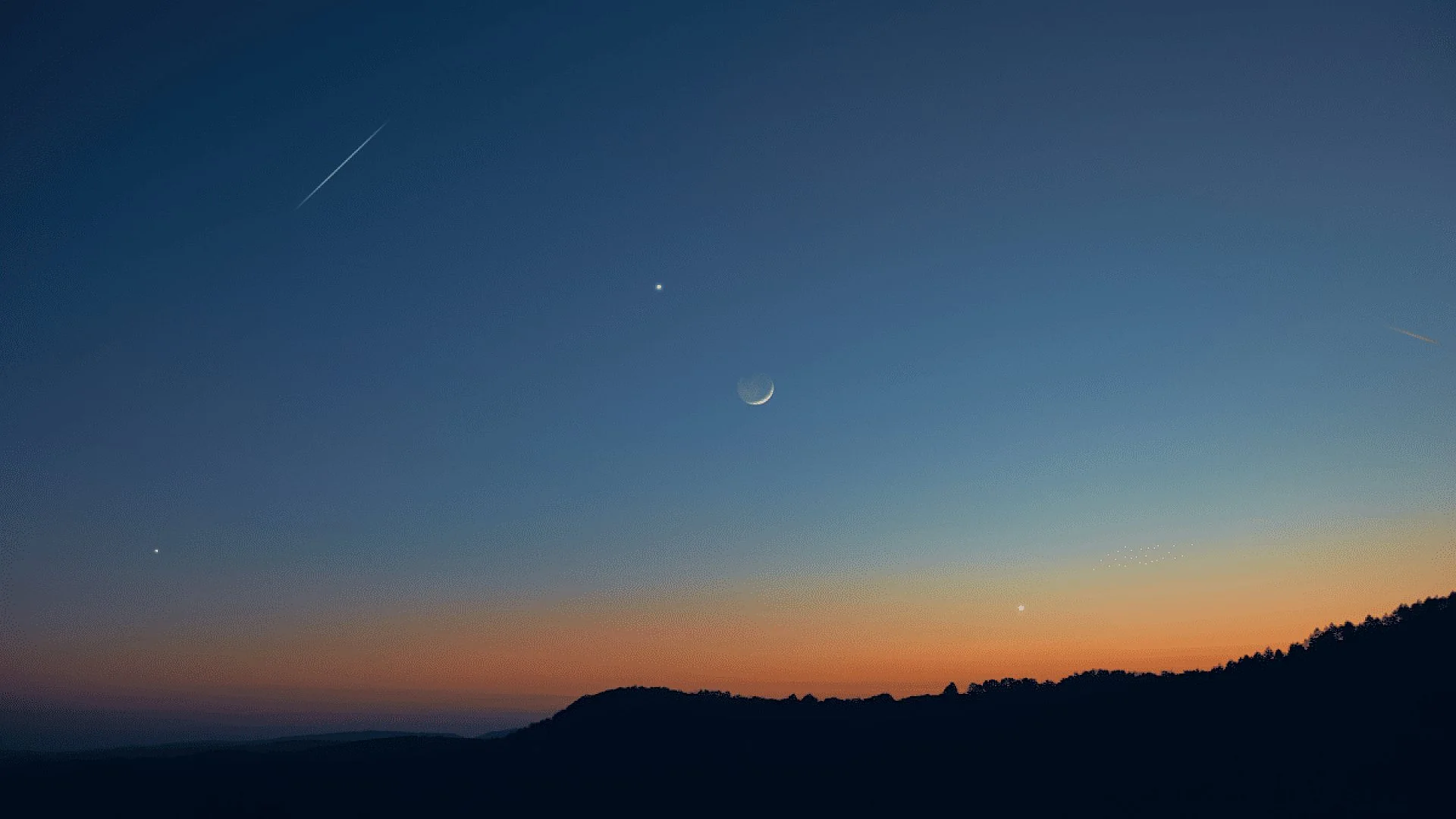
Get ready for a breathtaking celestial spectacle on the evening of May 20, as the waxing crescent moon forms a striking conjunction with Jupiter, the largest planet in our solar system. According to astronomers, this rare alignment will be visible in the United States just after sunset, captivating both amateur and seasoned stargazers alike.
A Cosmic Dance Unfolds
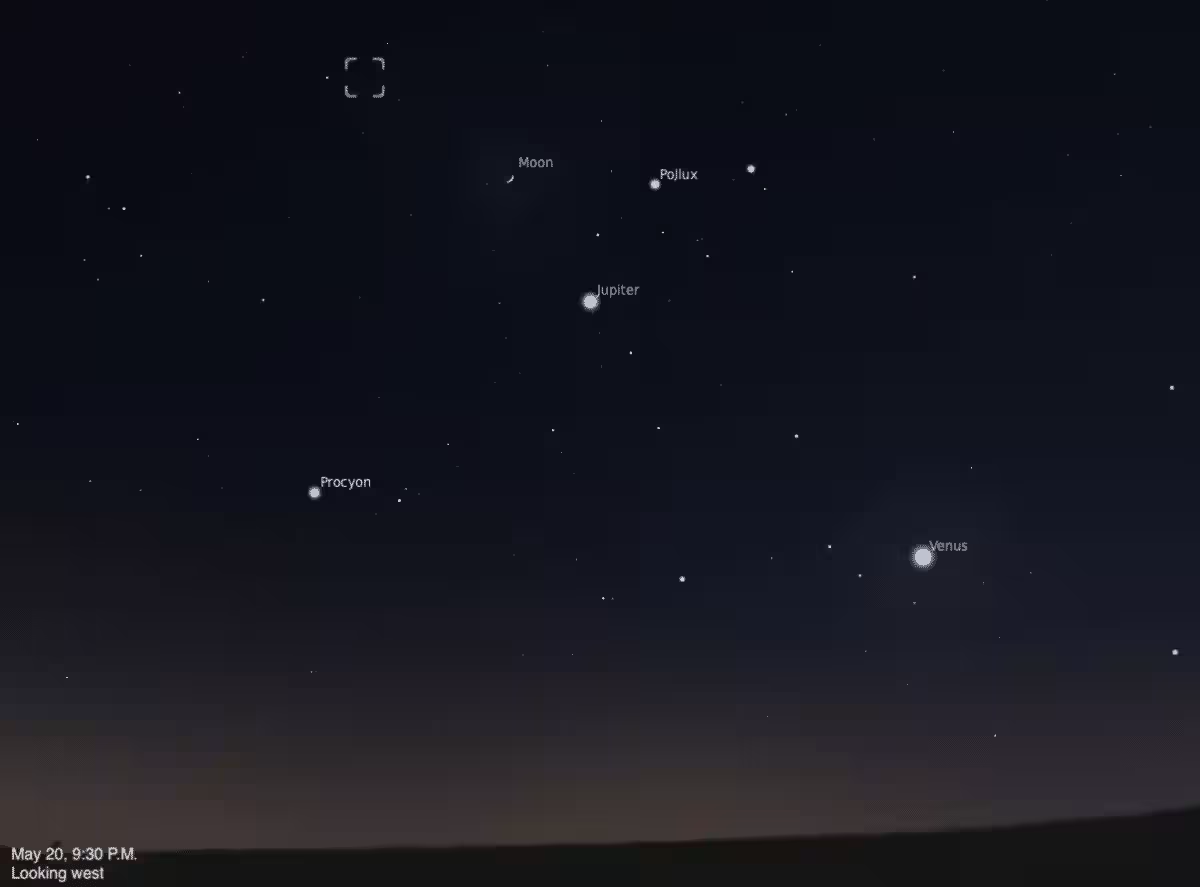
As the sun dips below the horizon, the crescent moon will appear to dance beside Jupiter, separated by less than 10 degrees – roughly the width of a clenched fist held at arm’s length. This celestial display will be accompanied by the bright stars Castor and Pollux in the constellation Gemini, adding depth and context to the evening sky. This alignment not only promises a visually stunning moment but also serves as a reminder of the dynamic motions of our celestial neighbors.
Venus Joins the Cosmic Trio
While Jupiter and the moon take center stage, Venus will remain visible just above the horizon, shining brightly as the evening star. With its subtle phase changes and pale, featureless disk, Venus presents an opportunity for telescope users to observe its unique characteristics. Remember to wait until the sun is fully set before pointing a telescope westward to safely study Venus, whose brightness rivals that of Jupiter and the moon, creating a trio of captivating objects in the early evening sky.
Unveiling the Secrets of Jupiter and the Moon
Telescope enthusiasts with a 4-inch scope or larger can explore the wonders of Venus, while a 6-inch scope reveals the stunning features of Jupiter, including its cloud bands, the Great Red Spot, and its four largest moons – Io, Europa, Ganymede, and Callisto. Observing the moon through a telescope offers an equally rich experience, with dramatic craters, the dark oval of Mare Crisium, and ancient lava plains like Mare Fecunditatis becoming visible. These features provide a tangible connection to the long history of our solar system’s formation.
Timing is Everything
Exact visibility depends on your location. For viewers in the northeastern U.S., Venus will set roughly two and a half hours after sunset, followed by Jupiter, with the crescent moon disappearing around midnight. Skywatchers elsewhere should consult resources like Time and Date’s skywatching tracker for precise timings. This alignment serves as a reminder that while celestial events are universal, the view from Earth varies dramatically based on latitude, longitude, and local topography.
This article has been fact checked for accuracy, with information verified against reputable sources. Learn more about us and our editorial process.
Last reviewed on .
Article history
- Latest version
Cite this page:
- Posted by Aisha Ahmed