Underwater Dive Reveals Young Maya Woman and Ancient Pottery in Deep Mexican Cenote
Archaeologists explore newly uncovered ancient remains beneath a flooded cenote, hoping each detail will shed light on the lost civilization.
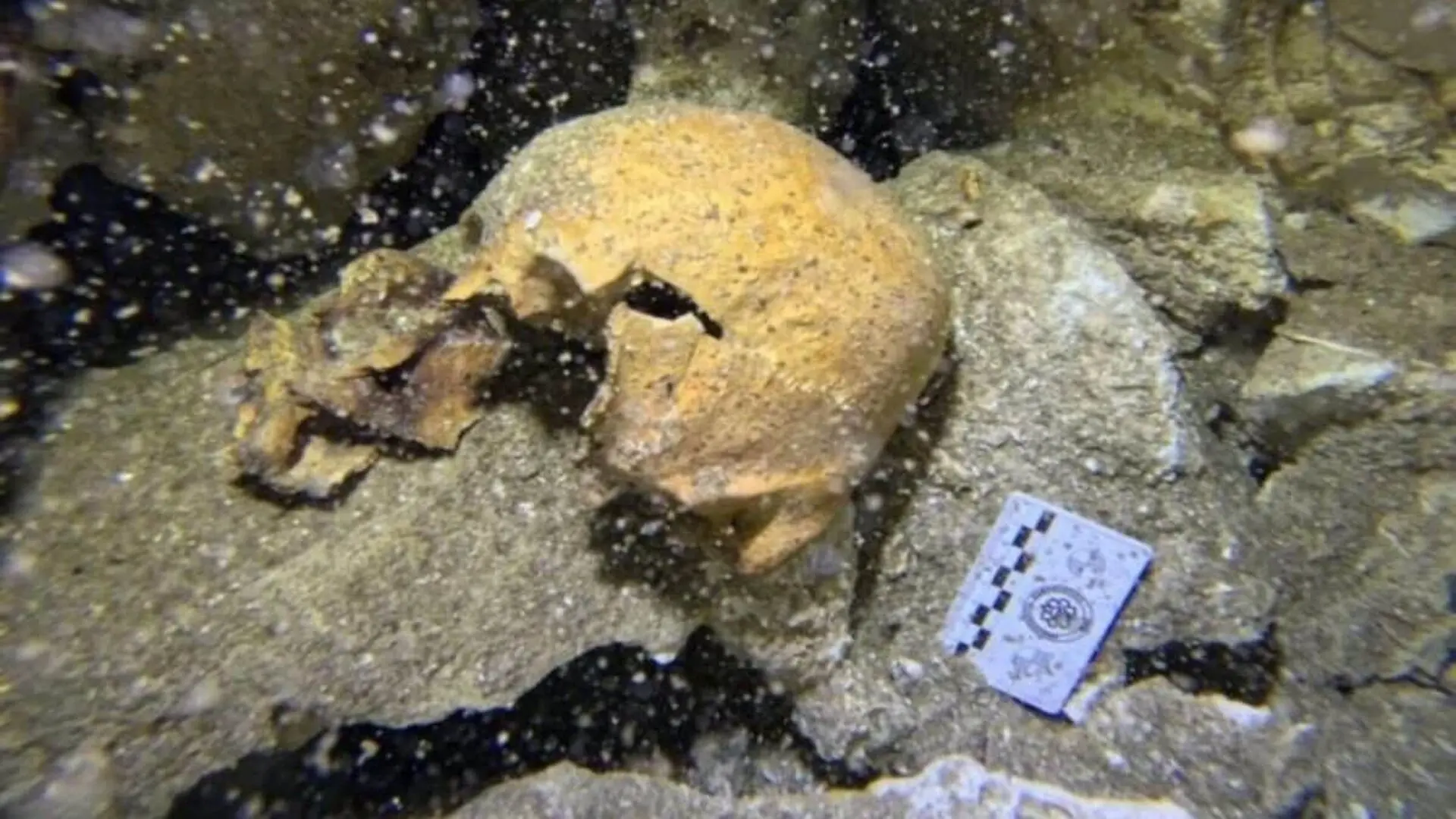
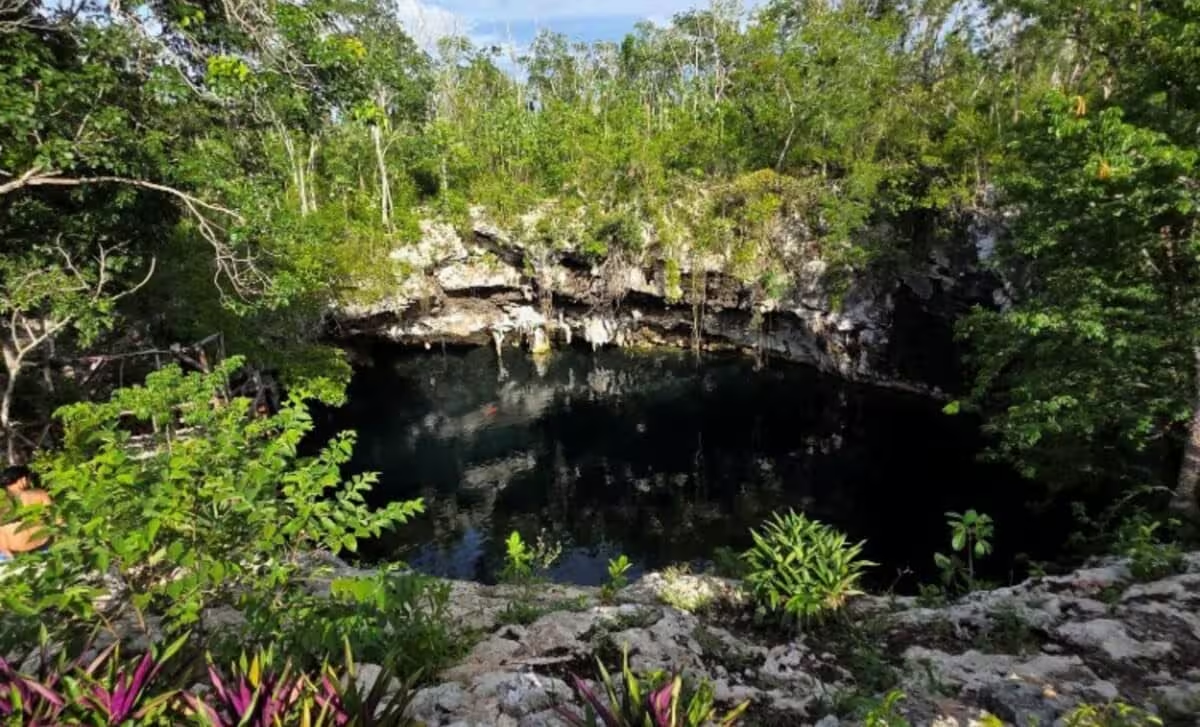
A team of underwater archaeologists from Mexico’s National Institute of Anthropology and History (INAH) has uncovered the remains of a young Maya individual and a collection of ancient ceramic vessels deep within Cenote Yaakun, a flooded sinkhole located near Playa del Carmen.
The human remains, temporarily labeled Yatzila—a Maya term that translates to “beloved person”—were recovered during a five‑day dive that took researchers to depths ranging from 42 to 53 metres. The expedition, organized by the Sub‑directorate of Underwater Archaeology (SAS), was prompted by reports from local custodians and technical divers who first noted cultural material in the cenote in late 2025.
Dual Zones Reveal Separate Ritual and Domestic Contexts
Archaeologists identified two distinct zones spaced roughly 30 metres apart. One zone contained human and animal bones, while the other held a small assemblage of Maya ceramic vessels. The findings have given rise to the Cenote Yaakun Research Project, now officially endorsed by INAH’s Archaeology Council.
A Submerged Chamber Holds a Time‑Capsule of Maya Life
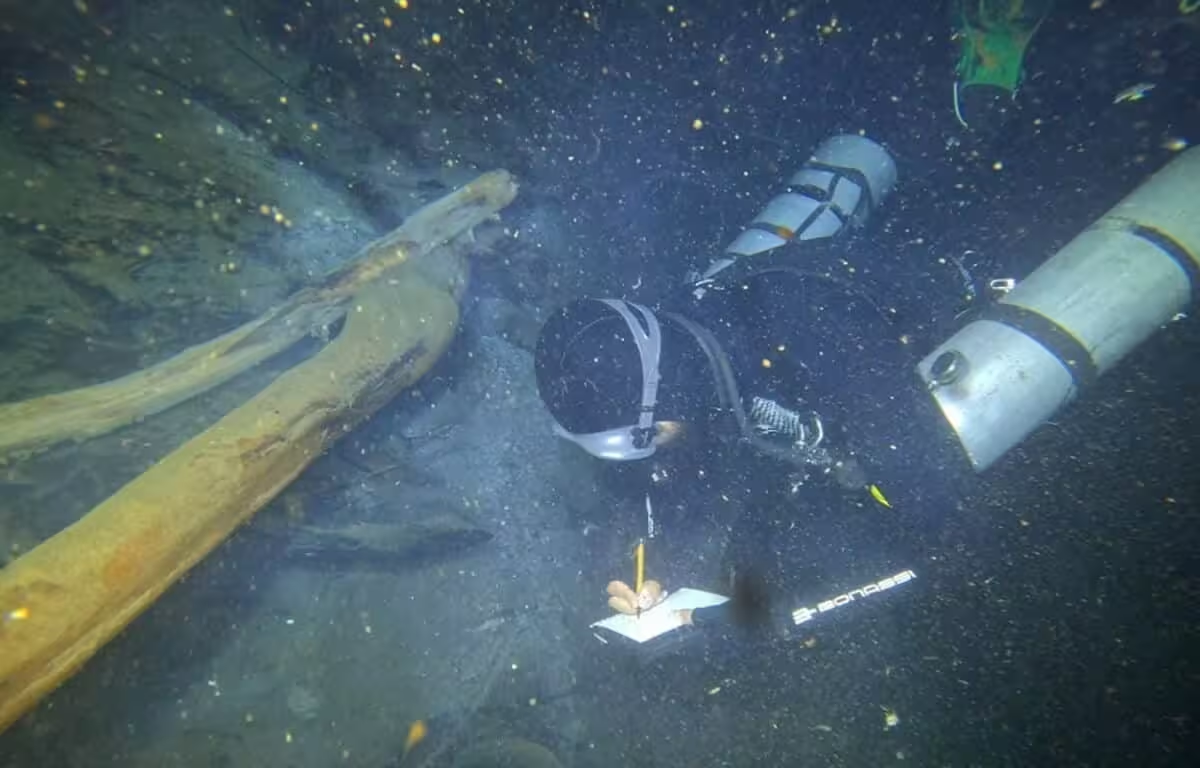
Cenote Yaakun plunges more than 80 metres, with the archaeological deposits located in a sloping chamber beneath a dense layer of hydrogen sulfide. Underwater archaeologist Gustavo García García employed photogrammetry to generate high‑resolution maps of both zones, allowing the team to document the site without disturbing its fragile context.
The project also underscores the importance of local stewardship. Culture Secretary Claudia Curiel de Icaza emphasized that “scientific research and social participation are fundamental to preserving these contexts intact and passing them on to future generations.”
“Several elements remain in their original positions, although some fragments of the skull had been displaced,” he said. “This underlines the fragility of underwater archaeological contexts. Our objective is to preserve the site in situ and encourage both the local community and diving groups to help protect it.”
Physical Analysis Suggests a Young Adult Female
The skeletal material was located between 42 and 46 metres below the water’s surface, accompanied by animal bones. Physical anthropologist Salvador Isab Estrada identified fragments of the arms, legs, pelvis and lower jaw. Dental examination revealed three intact molars and wear patterns consistent with a young adult, likely aged between 18 and 25 years.
The exact identity of Yatzila remains unknown, and researchers hope a 2027 expedition will allow them to extract a tooth for ancient DNA analysis. For the time being, the team has refrained from removing the remains, retrieving only a single ceramic fragment for laboratory study.
Ceramic Vessels Offer Clues to Late Postclassic Maya
The second zone yielded three globular ceramic vessels recovered from depths of up to 53 metres. One vessel is intact, while the other two are broken. Preliminary stylistic assessment links the pottery to the East Coast Maya tradition, suggesting a date range within the Late Postclassic period (AD 1200‑1521). Further analysis will be required to refine the chronology.
According to an INAH bulletin, a conservation plan will delineate protected zones around the deposits and involve landowners and diving operators to prevent accidental disturbance of the artifacts.
The overarching goal is to preserve this underwater “time capsule” so that future research can proceed without altering the original archaeological context.
This article has been fact checked for accuracy, with information verified against reputable sources. Learn more about us and our editorial process.
Last reviewed on .
Article history
- Latest version
Reference(s)
- <https://en.wikipedia.org/wiki/Claudia_Curiel_de_Icaza>.
- <https://www.researchgate.net/profile/Salvador-Estrada>.
- “Cenote Yaakun, en Playa del Carmen, resguarda los restos de una posible mujer antigua: Yatzil.”, July 16, 2026 <https://www.inah.gob.mx/boletines/cenote-yaakun-en-playa-del-carmen-resguarda-los-restos-de-una-posible-mujer-antigua-yatzil>.
Cite this page:
- Posted by Elizabeth Taylor