Century-Old Mystery of Angel Insects Finally Solved by Genomics
Angel insects have baffled scientists for a century, leaving their spot on the evolutionary tree unresolved.

Reconstructing the full evolutionary tree of Earth’s organisms varies dramatically in difficulty across different groups. While larger mammals or even most vertebrates can be placed with relative ease, the sheer magnitude of insect diversity—estimated at up to 20 million species—creates a monumental puzzle, and several lineages have long resisted clear classification.
One of the most recalcitrant groups is the order Zoraptera, commonly dubbed “angel insects” or “ground lice.” Despite representing one of the smallest insect orders, with only 41 formally described species, Zoraptera has puzzled taxonomists for generations. A research team from the Chinese Academy of Sciences has finally resolved its placement by analysing an expanded suite of genetic data, publishing the results in Proceedings of the Royal Society B.
A Misleading Name Sets the Stage for Confusion
When Italian entomologist Filippo Silvestri introduced the order in 1913, he chose the term Zoraptera, meaning “pure wingless.” The label proved problematic, as many members actually possess wings, sowing early doubt about their true relationships and launching a century‑long debate over where these insects belong.
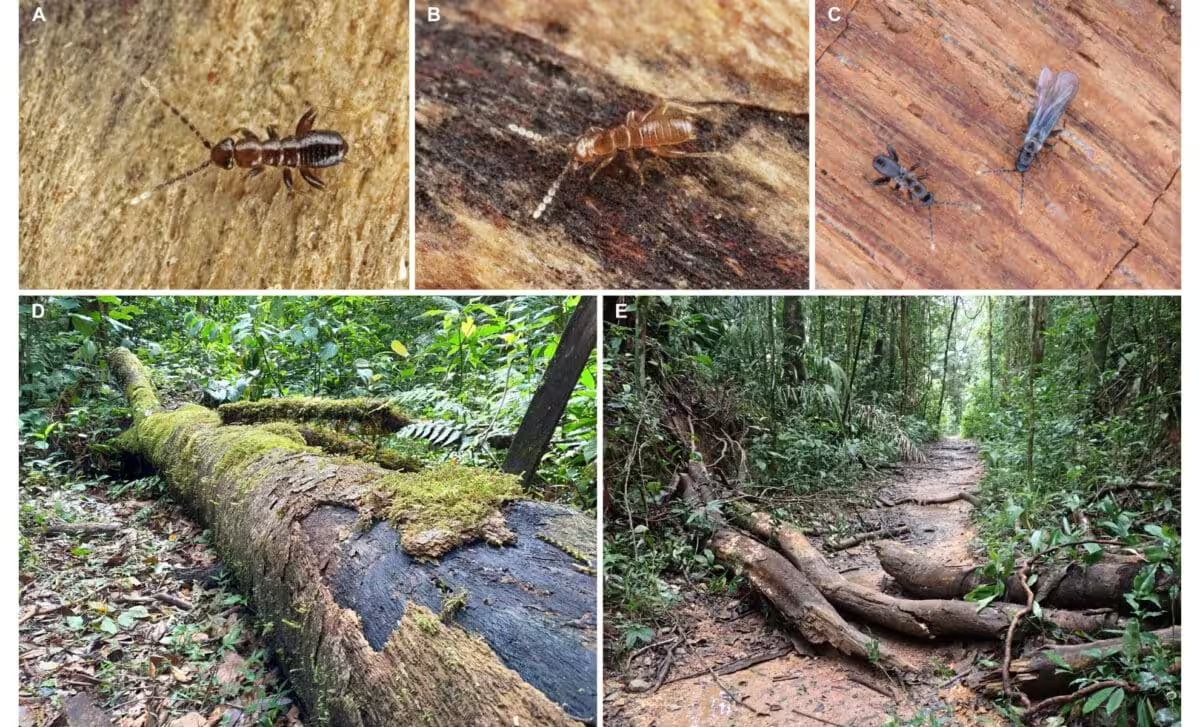
Phys.org notes that angel insects display a mosaic of morphological traits that do not align cleanly with any other order, even though they superficially resemble termites. This puzzling blend of characters earned the problem the moniker “Hundred‑Year Conundrum” among evolutionary biologists.
Why a Tiny Lineage Holds a Key Evolutionary Clue
The scientific interest in Zoraptera stems from its position at a pivotal node in insect evolution. The group appears to sit near the divergence point of Polyneoptera, a massive clade that today comprises roughly 98 percent of all hexapod species on the planet.
Molecular analyses have consistently placed Zoraptera within Polyneoptera, but the exact branching order remained contested. One camp favored the “Haplocercata‑first” hypothesis, grouping Zoraptera with earwigs as the earliest offshoot. Another camp supported a “Zoraptera‑first” scenario, proposing that angel insects split off before any other polyneopteran lineages.
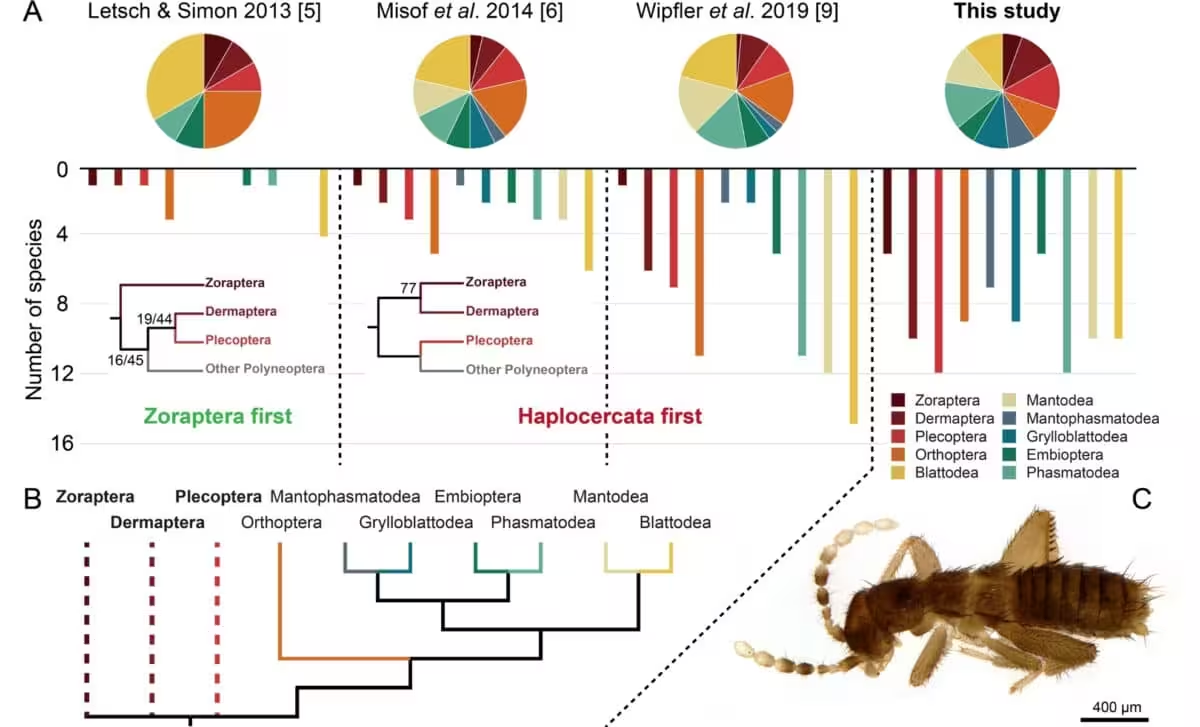
Authors Yehao Wang and Chenyang Cai observed that previous analyses repeatedly produced conflicting placements, suggesting that uncorrected molecular biases rather than genuine evolutionary signals were influencing results.
Expanded Genomes and Refined Models Break the Deadlock
Wang, Cai and their collaborators generated new genomic sequences from species closely related to Zoraptera and applied advanced statistical frameworks unavailable to earlier studies. They highlighted that earlier work suffered from limited Zorapteran DNA and uneven sampling across relevant insect groups. By scaling up the dataset and employing models designed to filter compositional heterogeneity, the team found decisive support for the Zoraptera‑first hypothesis.
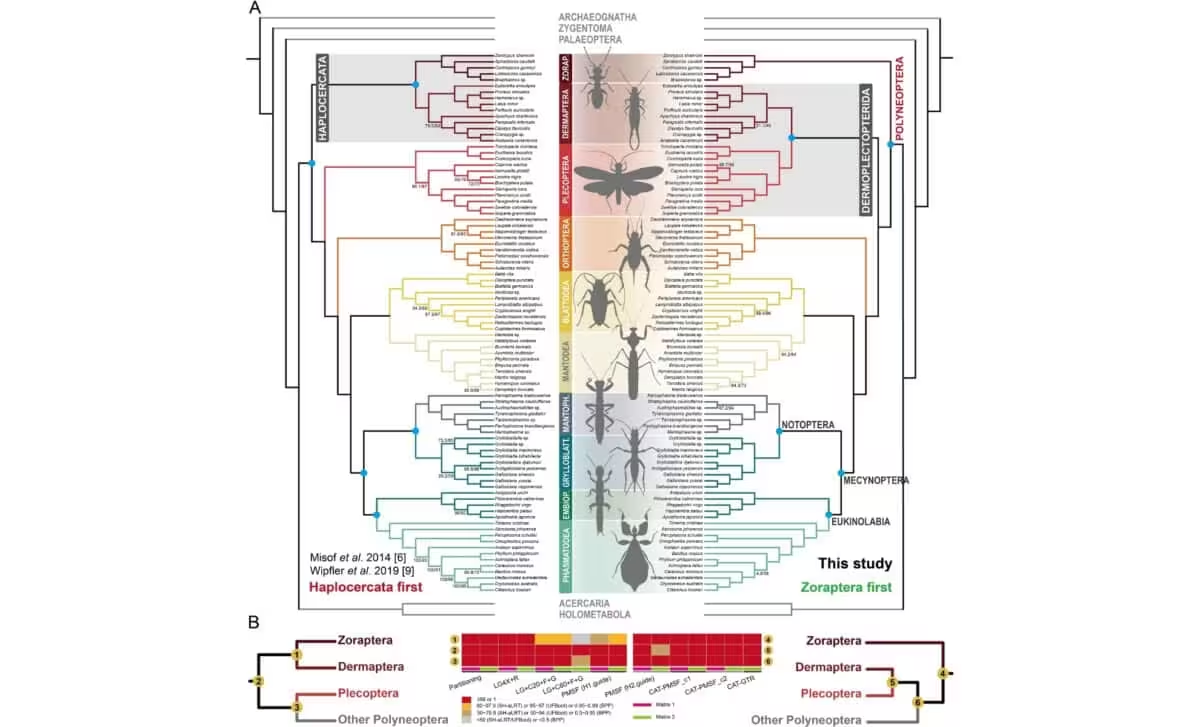
The authors stress that rigorous statistical treatment, together with integrated morphological and molecular evidence, is essential for resolving deep‑time insect relationships. They propose that the same workflow could be applied to other unresolved branches of the tree of life.
With Zoraptera now confidently positioned as the earliest diverging lineage within Polyneoptera, future research can focus on pinpointing the timing of this split and unraveling the evolutionary origins of the group’s distinctive traits.
This article has been fact checked for accuracy, with information verified against reputable sources. Learn more about us and our editorial process.
Last reviewed on .
Article history
- Latest version
Cite this page:
- Posted by Elizabeth Taylor