Ancient Bristle Worm Jaws Uncover New Bio-Metal Class With Metal-Like Strength
Ancient marine worm jaws unveil a pressure‑responsive material that mimics metal strength, prompting the proposal of a new class of biological materials.
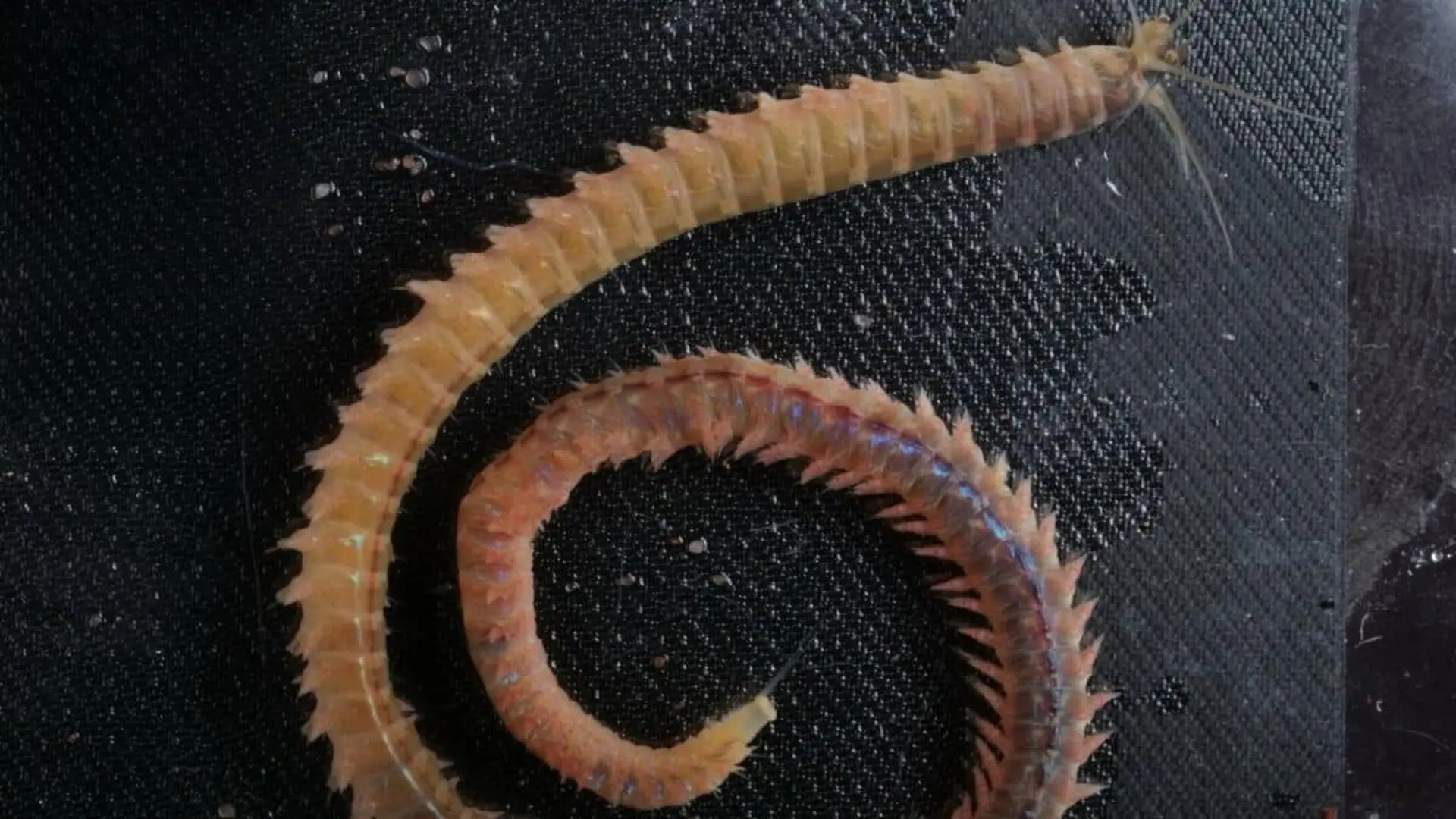
A team of scientists from TU Wien and the University of Vienna has uncovered a previously unrecognized class of natural material while probing the jaw structure of the marine bristle worm Perinereis cultrifera. By integrating protein frameworks with metal ions, the worm’s jaws achieve a level of hardness and strain‑responsive behavior that parallels metallic alloys, yet they arise from an entirely different biochemical architecture.
The tiny predator, a member of the Nereididae family, relies on these reinforced jaws to seize and crush its prey. Unlike the calcium‑based shells or bone found in most hard tissues, the worm’s mandibles consist of a protein matrix intricately coordinated with metallic ions, creating a hybrid that defies traditional material categories.
Jaws of Marine Worm Mimic Metallic Hardness in Tests
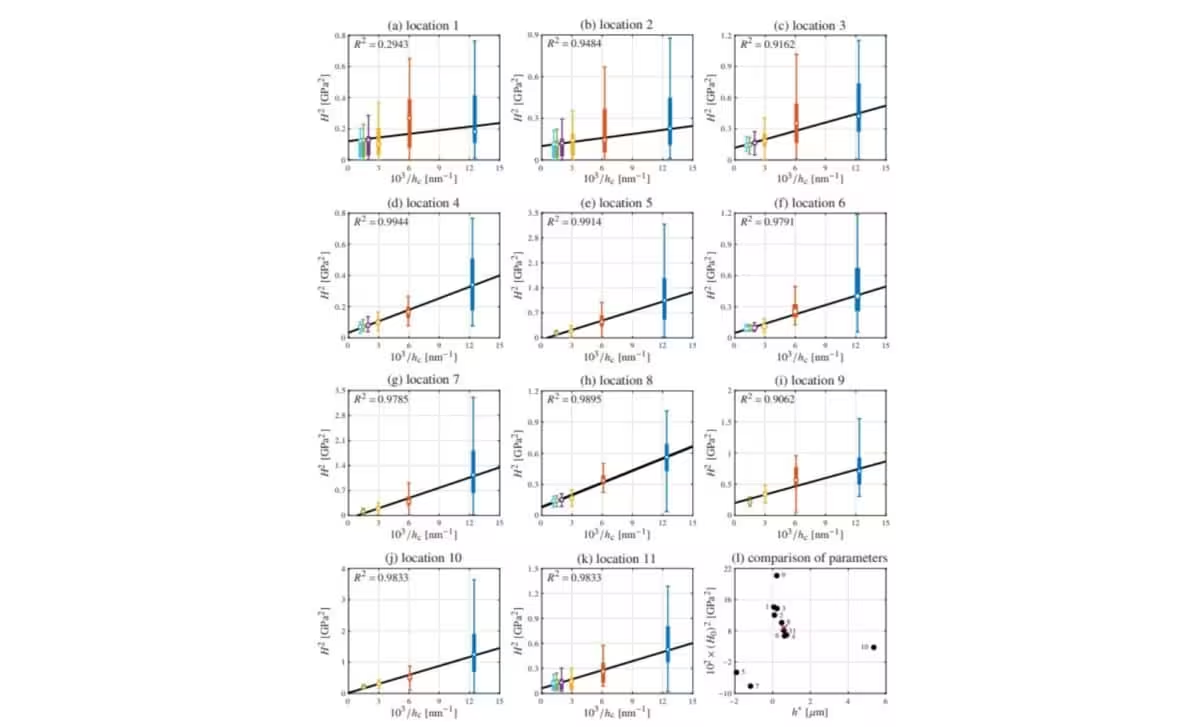
To quantify the mechanical performance, the researchers employed nanoindentation, pressing a miniature probe into different jaw regions and recording resistance to deformation. Complementary chemical mapping revealed a pronounced enrichment of metal ions at the distal tips, correlating with the observed increase in hardness where the jaws engage prey.
Repeated indentations across a cross‑section of the mandible exposed the so‑called Nix‑Gao size effect—a hallmark of crystalline metals such as copper and silver—where smaller inspected volumes exhibit greater resistance than larger ones. Although the worm’s material lacks a crystalline lattice, its ion‑protein network reproduces the same depth‑dependent hardness trend, indicating a shared underlying strain‑gradient plasticity mechanism.
Defining Features Separate Bio-Metals from Traditional Metals
Beyond sharing a metal‑like hardness profile, the worm jaws display a distinct elasticity that varies with scale—an attribute not typical of conventional crystalline metals. Christian Hellmich, a co‑author of the study, highlighted this size‑dependent elasticity as a signature of what the team terms “bio‑metals.”
Mathematical modeling in the paper suggests that the coordinated metal ions within the protein scaffold generate internal force gradients, producing measurable strain variations that differ from those in pure metallic lattices. Consequently, the material exhibits a dual character, blending polymer‑like flexibility with metal‑type strength.
The authors argue that “bio‑metals” should be defined by a combination of structural organization, ion‑protein coordination, and a suite of mechanical responses that include both hardness and strain‑responsive elasticity. This definition moves beyond simple analogies to metals, framing bio‑metals as a distinct natural material class.
The findings, published in Biophysics Reviews, open new avenues for exploring how organisms engineer such high‑performance composites without mineralization. Future work aims to survey additional bristle‑worm species, refine the theoretical framework, and test whether genetic modifications can tune the ion‑protein architecture, potentially guiding bio‑inspired material design.
In sum, the jaw of Perinereis cultrifera exemplifies a material that unites exceptional hardness, scale‑dependent mechanical behavior, and a unique protein‑ion arrangement, supporting the proposal that bio‑metals constitute a separate category of natural engineering materials.
This article has been fact checked for accuracy, with information verified against reputable sources. Learn more about us and our editorial process.
Last reviewed on .
Article history
- Latest version
Reference(s)
- “Christian Hellmich | TU Wien.” <https://www.tuwien.at/en/cee/imws/strength/team/christian-hellmich>.
Cite this page:
- Posted by Elizabeth Taylor