Scientists Trigger Finger Regrowth in Mice Using Two Proteins and a Blastema Blueprint
Scientists test a serum mimicking salamander limb regeneration; early mouse results show promising regrowth potential.
Scientists have long turned to creatures such as axolotls to understand how lost tissues can be rebuilt. These salamanders can regrow a missing limb in about 40‑50 days, whereas mammals typically seal wounds with scar tissue instead of restoring the original structure.
The new work zeroes in on the blastema—a transient cluster of undifferentiated cells that appears during regeneration in species capable of limb regrowth. Researchers propose that coaxing mammals to form this structure could unlock dormant regenerative pathways.
Two‑Protein Protocol Triggers Finger Regrowth in Mice
In the experiment, the team removed the tip of a mouse digit and let the wound close naturally. Ken Muneoka, PhD, professor of veterinary physiology and pharmacology at Texas A&M University, explained that waiting for full skin closure aligns the repair window with the peak of the animal’s innate inflammatory response.
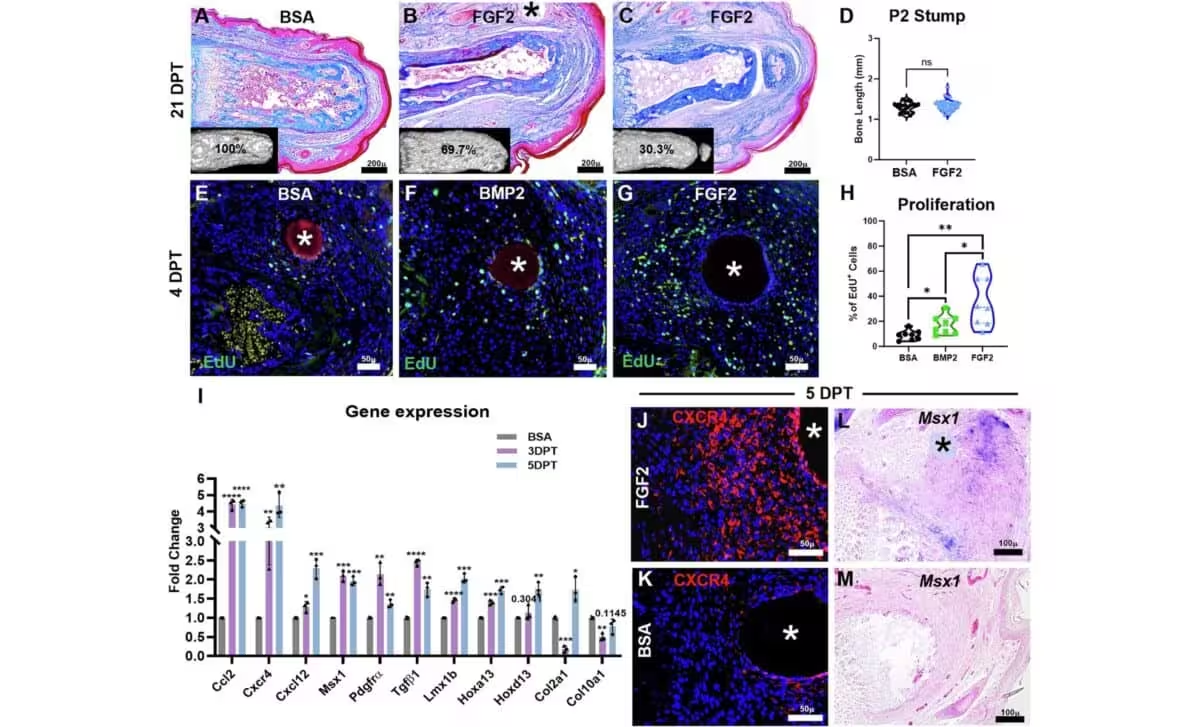
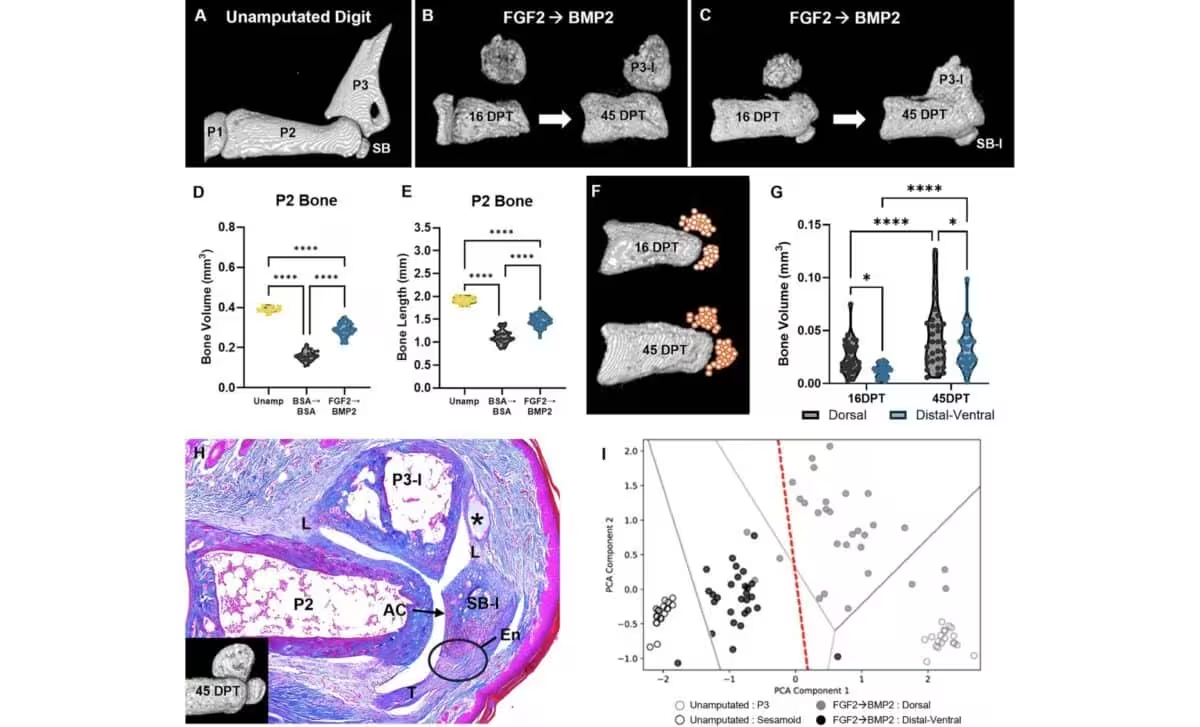
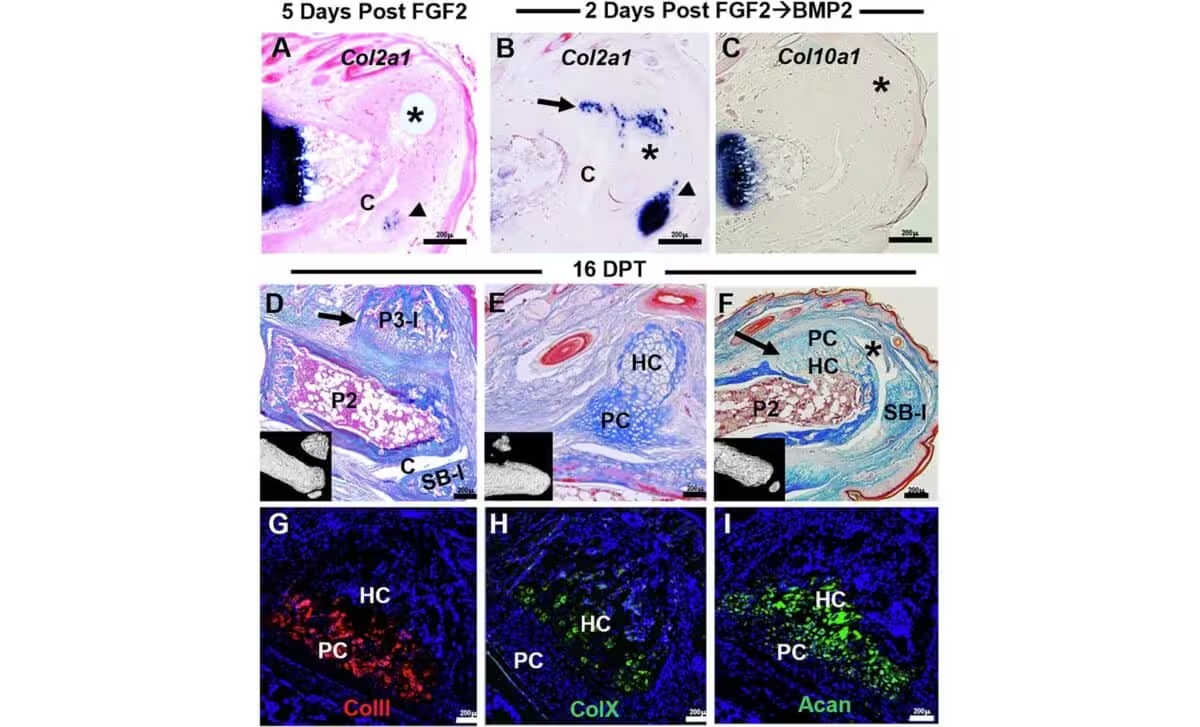
With the blastema in place, the researchers applied a second factor, BMP2, known for its role in bone formation and elongation. Administered after FGF2, BMP2 acted on the blastema cells and drove the creation of a new bone segment at the digit tip.
A Latent Developmental Blueprint May Govern Regeneration
The findings raise the possibility that a similar approach could one day be applied to humans. Muneoka cautioned that success hinges on the integrity of the developmental program that originally shapes limbs in the embryo.
Evidence from the mouse study suggests that this embryonic “blueprint” can be reactivated when the regenerative stimulus is provided via the treatment. In practice, the capacity to regrow may depend on whether the underlying genetic template remains unaltered.
Muneoka noted that individuals whose limbs were compromised by external factors during development—such as prenatal alcohol or drug exposure—might respond differently compared with those whose defects stem from genetic mutations that disrupt the blueprint itself.
“The human body uses this ‘blueprint’ to build the limb during embryogenesis, and our data indicate that the same plan can be tapped when regeneration is triggered,” Muneoka explained. He added that, if the blueprint persists, regrowth could occur, although the timeline for such a process remains uncertain.
Broader Regenerative Potential Beyond Digits
The team also explored whether the mechanisms uncovered might extend to other tissues. Prior work published in Nature Genetics and PNAS has shown overlapping genetic requirements for limb and lung development.
Additional research in salamanders demonstrated that proteins driving limb regeneration also contribute to the regrowth of structures such as gills [source], hinting at a shared biological toolkit.
“These observations suggest a universal regenerative logic, which raises optimism that our digit‑focused strategy could be adapted for other organs,” Muneoka said.
He warned, however, that organ regeneration poses distinct challenges. Some tissues are essential for survival while they regenerate, meaning that donor transplants may still be required in severe cases.
Age‑related decline in regenerative capacity also emerged as a limitation. Muneoka cited a 2021 mouse study that showed both blastema formation and the quality of regrowth diminish with advancing age.
While the prospect of regrowing lost body parts remains under active investigation, the current research indicates that mammals possess latent regenerative mechanisms that can be activated under defined conditions.
This article has been fact checked for accuracy, with information verified against reputable sources. Learn more about us and our editorial process.
Last reviewed on .
Article history
- Latest version
Reference(s)
- User, Super. “How long does it take for a salamander to regenerate a limb? - Ambystoma.uky.edu.”, July 24, 2018 <https://ambystoma.uky.edu/about/19-fun-facts-cat/71-how-long-does-it-take-for-a-salamander-to-regenerate-a-limb>.
- Sekine, Keisuke. “Fgf10 is essential for limb and lung formation - Nature Genetics.”, vol. 21, no. 1, pp. 138-141. Nature, doi: 10.1038/5096. <https://www.nature.com/articles/ng0199_138>.
- Arman, Esther., et al. “Fgfr2 is required for limb outgrowth and lung-branching morphogenesis.” Proceedings of the National Academy of Sciences, vol. 96, no. 21, October 12, 1999, pp. 11895-11899. National Academy of Sciences, doi: 10.1073/pnas.96.21.11895. <https://www.pnas.org/doi/full/10.1073/pnas.96.21.11895>.
- Saito, Nanami., et al. “Fgf- and Bmp-signaling regulate gill regeneration in Ambystoma mexicanum.” Developmental Biology, vol. 452, no. 2, August 1, 2019, pp. 104-113. Elsevier BV, doi: 10.1016/j.ydbio.2019.04.011. <https://www.sciencedirect.com/science/article/pii/S0012160618307875>.
- <https://academic.oup.com/biomedgerontology/article-abstract/76/10/1726/6273190?login=false>.
Cite this page:
- Posted by Elizabeth Taylor