A Crushed 1-Million-Year-Old Skull Found in China Could Prove Humans Split Into Distinct Groups Far Earlier Than Expected
A decades‑old fossil skull, reexamined with cutting‑edge tech, unveils an unexpected secret about early human evolution.
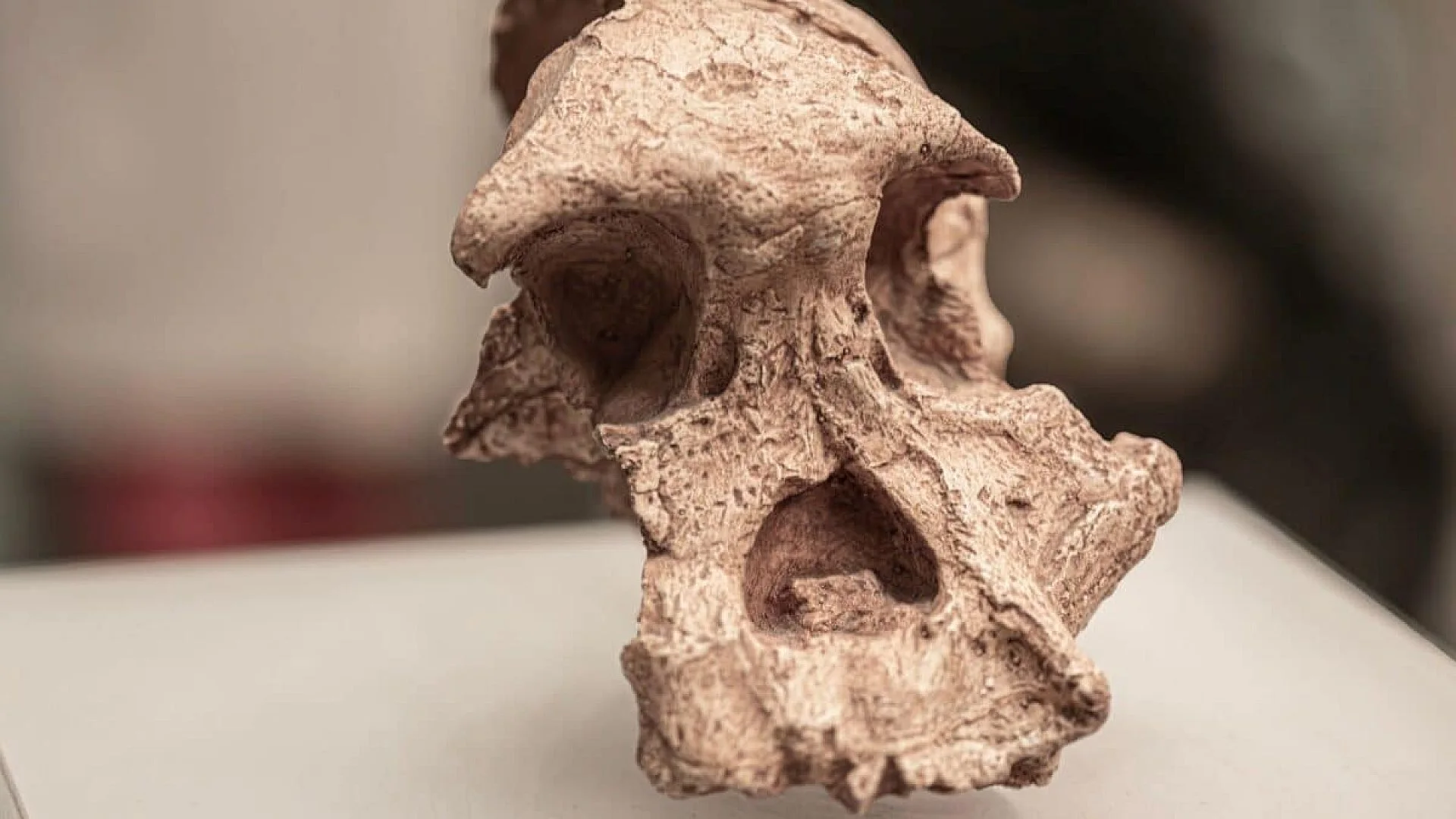
A fossil cranium recovered from central China in 1990 and dated to roughly one million years old is forcing researchers to rethink the timing of early human diversification. The specimen, called Yunxian 2, was long assigned to Homo erectus, but a suite of modern imaging tools has revealed a mosaic of anatomical traits that blur the boundaries between known species.
High‑Resolution Imaging Reveals a Composite Skull
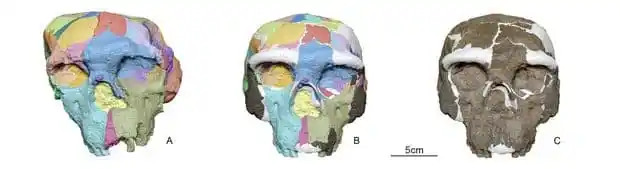
The team applied computed tomography, structured‑light scanning and bespoke virtual‑reconstruction software to capture every fragment of the damaged fossil. Physical models were also produced with 3D printing to verify the digital results, as reported by the BBC. The analysis uncovered a combination of features: a forward‑projecting lower face typical of Homo erectus, alongside aspects reminiscent of Homo longi (the so‑called “Dragon Man”) and even certain traits seen in modern Homo sapiens.
Comparisons with more than a hundred other fossils, detailed in the Science paper, showed that Yunxian 2 occupies an unusual position in the hominin record, prompting the authors to suggest a much earlier split among major lineages.
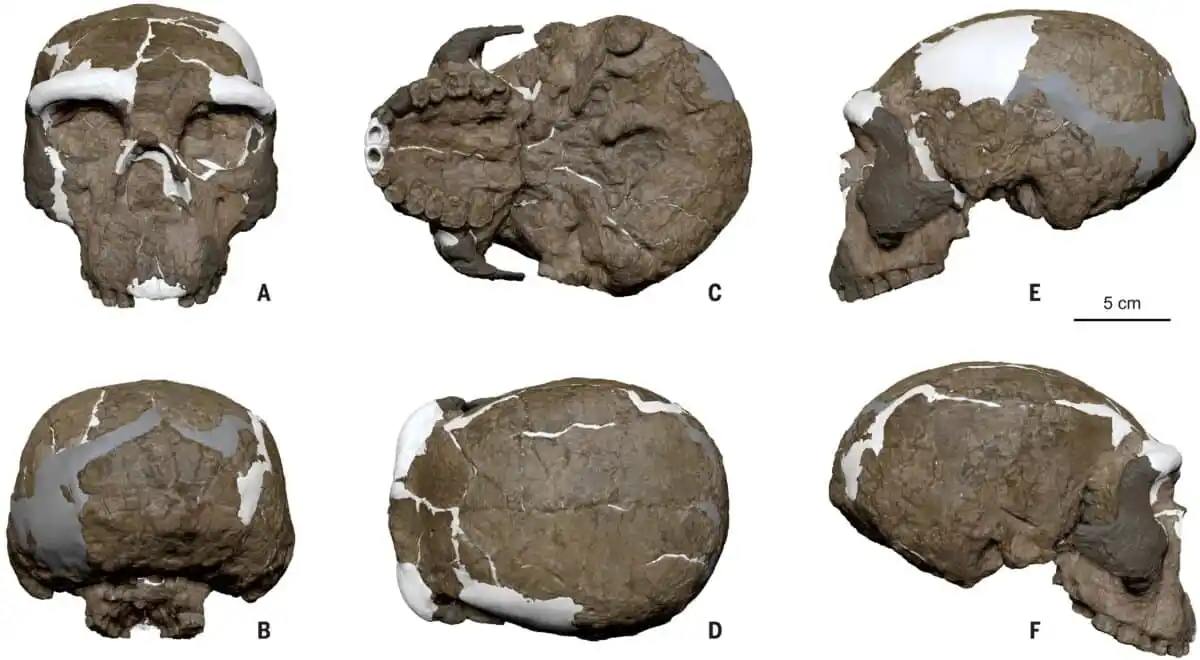
The researchers emphasized that they iterated through multiple reconstruction scenarios before reaching confidence in the final model.
“We tested it again and again to test all the models, use all the methods, and we are now confident about the result, and we’re actually very excited.”
Implications for the “Muddle in the Middle”
The period between one million and 300,000 years ago—often dubbed the “Muddle in the Middle”—has long resisted clear interpretation. Chris Stringer of the Natural History Museum in London argues that Yunxian 2 indicates distinct human groups were already present a million years ago, potentially moving the major divergence events back by about 400,000 years.
“This changes a lot of thinking,” Stringer said. “It suggests that by 1 million years ago, our ancestors had already split into distinct groups, pointing to a much earlier and more complex human evolutionary split than previously believed.”
If the early split is real, it could mean that lineages leading to Neanderthals and modern Homo sapiens emerged earlier than many current models predict.

Cautious Reception from the International Community
While the technical quality of the reconstruction earned praise, many experts warned that the evolutionary interpretation remains provisional. Michael Petraglia of Griffith University highlighted the potential shift in thinking about East Asia’s role in hominin evolution, but noted that “the jury’s still out.”
“There’s a big change potentially happening here, where east Asia is now playing a very key role in hominin evolution,” he said.
Geneticist Andy Herries of La Trobe University cautioned that morphology alone can be ambiguous, pointing to cases where DNA evidence contradicted skeletal assessments. Evolutionary geneticist Aylwyn Scally of Cambridge University echoed this sentiment, describing the conclusions as plausible but emphasizing the need for additional data, preferably from genetic analyses, before revising the human family tree.
“That picture is still quite unclear to us, so if the conclusions of this research are supported by other analyses, ideally from some genetic data, then I think we would start to be increasingly confident about it.”
This article has been fact checked for accuracy, with information verified against reputable sources. Learn more about us and our editorial process.
Last reviewed on .
Article history
- Latest version
Reference(s)
- “Million-year-old skull rewrites human evolution, say scientists.”, September 25, 2025 <https://www.bbc.com/news/articles/cdx01ve5151o>.
- Feng, Xiaobo., et al. “The phylogenetic position of the Yunxian cranium elucidates the origin of Homo longi and the Denisovans.” Science, vol. 389, no. 6767, September 25, 2025, pp. 1320-1324. American Association for the Advancement of Science (AAAS), doi: 10.1126/science.ado9202. <https://www.science.org/doi/10.1126/science.ado9202>.
Cite this page:
- Posted by Elizabeth Taylor