Archaeologists Spent 30 Years Excavating This Hidden Cave in Spain, Here’s What They Found Inside
Explore the hidden Spanish cave that safeguards Europe’s richest prehistoric archive, uncovered after decades of excavation.
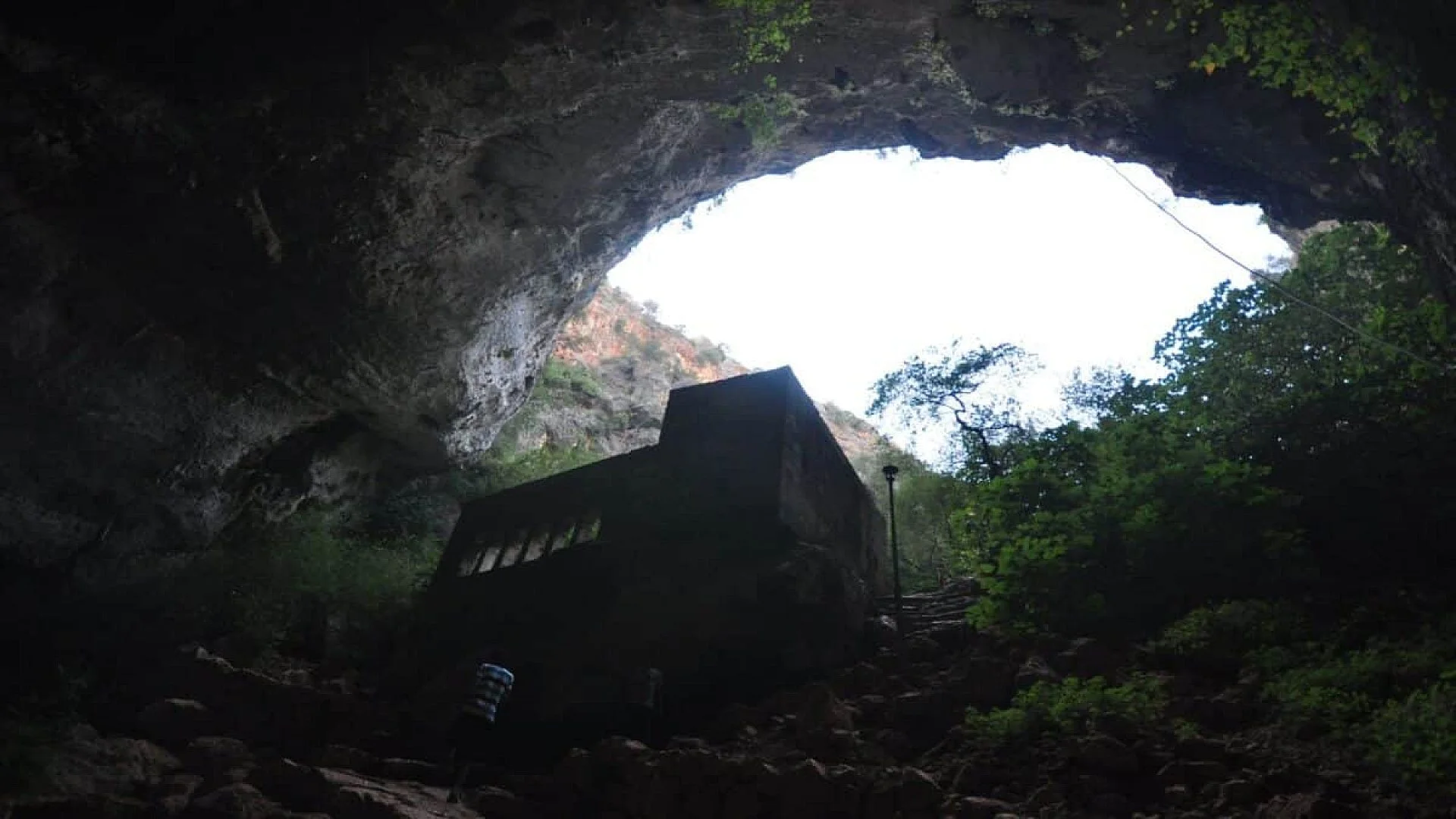
At first glance, El Mirón Cave appears to be just another limestone shelter perched in the mountains of northern Spain. Beneath its floor, however, lies an archaeological sequence so extensive that it has taken three decades of work to begin untangling its complex history.
Since the first excavations began in 1996, researchers have uncovered layers that stretch from the last Neanderthal groups to Bronze Age societies. A recent synthesis in the Journal of Anthropological Research offers an unusually comprehensive view of how successive generations lived, adapted, and returned to the same shelter over thousands of years.
A Millennial Archive Beneath El Mirón
Perched above the Asón River Valley in Cantabria and not far from the Bay of Biscay, El Mirón’s broad entrance and dry interior made it an appealing refuge for prehistoric peoples. Over time, the accumulated deposits have preserved a remarkably continuous record of human use.
The study published in the Journal of Anthropological Research documents evidence from nine major cultural phases, ranging from the Middle Paleolithic through the Solutrean, Magdalenian, Neolithic and into the Bronze Age. Few Iberian sites provide such an uninterrupted sequence.
Artifacts include stone implements, faunal remains, engraved objects and hearths. Analyses indicate hunting of red deer, ibex, horse, chamois and roe deer, while fish fragments reveal that salmon and trout also featured in the diet.
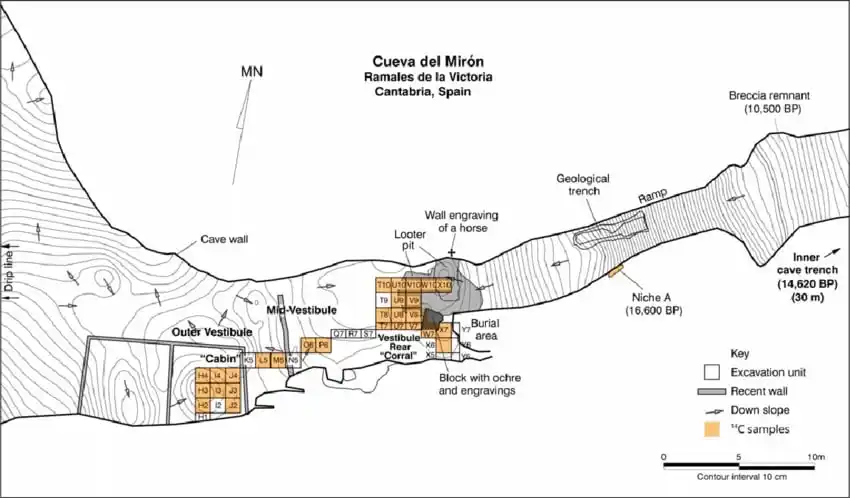
A pivotal moment in the cave’s record is the appearance of agriculture. Work led by the University of New Mexico identified Neolithic layers that contain the earliest signs of wheat cultivation, domesticated livestock and pottery in northern Atlantic Spain, dating to roughly 6,500 years ago. Subsequent occupations left behind storage pits and evidence of metalworking, such as a copper awl.
“El Mirón is what we call in archaeology, a persistent place, a site where people have lived and done a wide variety of activities, repeatedly for over 40,000 years,” as Lawrence Straus of the University of New Mexico explained.
The Enigmatic Red Lady of El Mirón
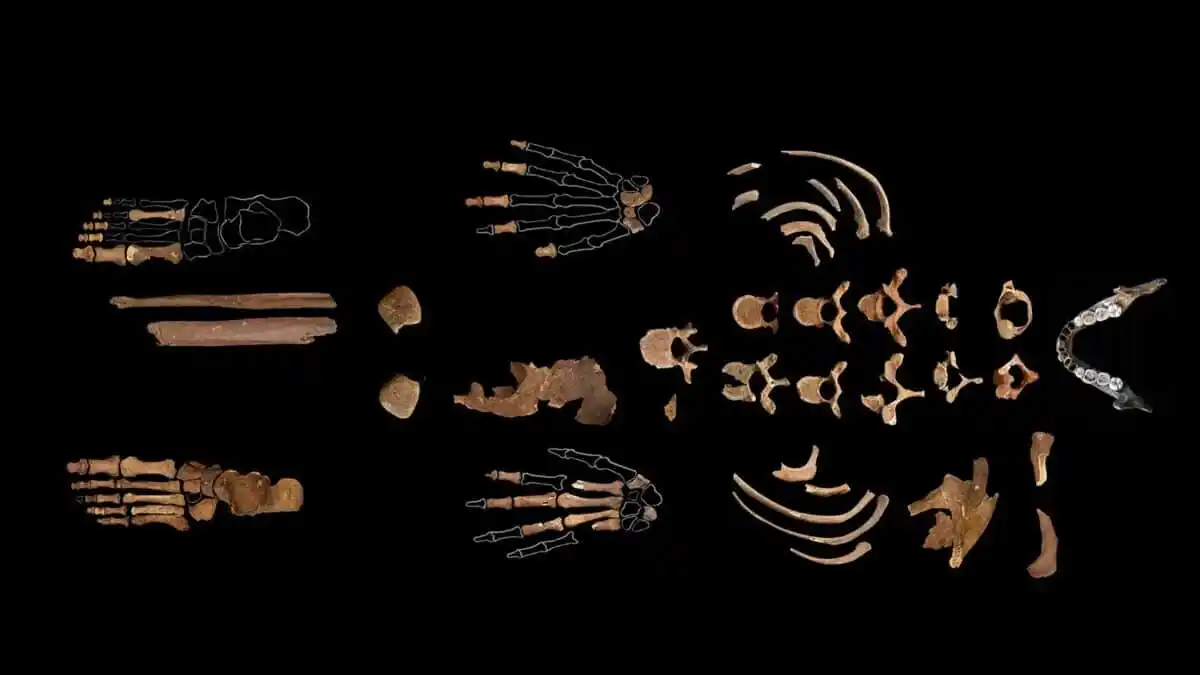
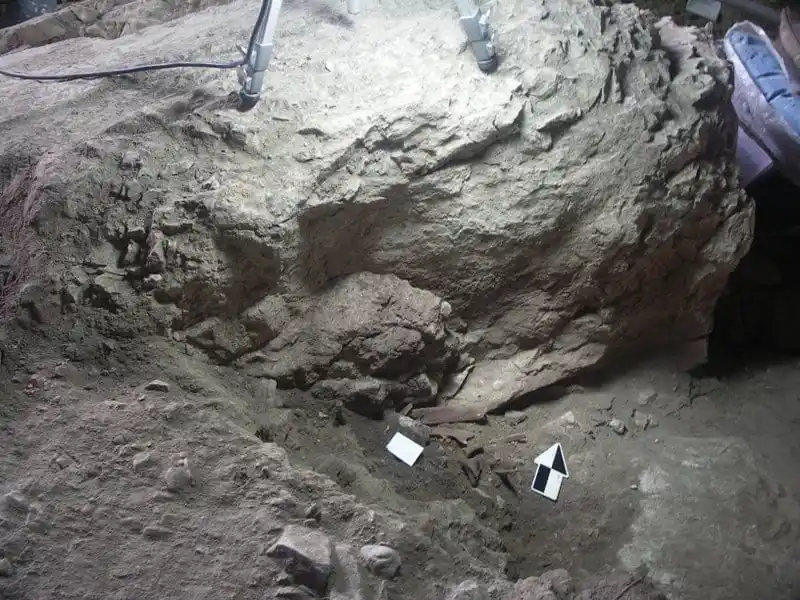
Among the many finds, a partial skeleton recovered in 2010 has captured particular attention. The remains belong to a woman interred during the Magdalenian period, roughly 19,000 years ago, and she has become known as the Red Lady of El Mirón, a name derived from the vivid red ochre that covered both her bones and the surrounding sediment.
“After the discovery of the first human bones, including the mandible and a tibia, as we continued to dig in the SE corner of the vestibule rear, we always knew when we were in the burial layer,” Straus recalled. “It is bright red and sparkles with hematite crystals.”
Chemical analysis traced the ochre to a source about 25 km away on the Cantabrian coast, suggesting that the pigment was deliberately transported to the site for the burial.
Genetic Insights from an Ice‑Age Woman
Advances in molecular archaeology have added a new dimension to the Red Lady’s story. DNA extracted from her remains linked her to Upper‑Palaeolithic hunter‑gatherer groups known as Goyet, Fournol and Villabruna.
“El Mirón has turned out to be a treasure trove of ancient genetic information,” Straus said. “The DNA extracted from the Red Lady by Nobel Prize winner, Svante Pääbo of the Max Planck Institute in Germany, has changed our understanding of Ice Age European populations,” Straus said.
The genomic data indicate she likely had dark skin, dark hair and dark eyes, and she was estimated to be between 35 and 40 years old at death. Dental calculus analysis also revealed traces of her diet—land mammals, marine fish, seeds, plant material and fungi—along with ancient bacterial communities preserved for millennia.
Over the past decade, researchers have integrated sediment DNA sequencing, stable‑isotope analysis and other cutting‑edge methods unavailable during the initial 1990s digs. Coupled with traditional fieldwork, these techniques have cemented El Mirón’s reputation as one of Europe’s most informative prehistoric locales.
This article has been fact checked for accuracy, with information verified against reputable sources. Learn more about us and our editorial process.
Last reviewed on .
Article history
- Latest version
Reference(s)
- Straus, Lawrence Guy., et al. “A Window into 40,000 Years of the Prehistory of Iberia: The Long Excavation of El Mirón Cave, Cantabrian Spain.” Journal of Anthropological Research, vol. 82, no. 1, March 1, 2026, pp. 1-42. University of Chicago Press, doi: 10.1086/739377. <https://www.journals.uchicago.edu/doi/10.1086/739377>.
- Borders, Megan. “UNM anthropology researcher and team’s 30-year excavation reveals rich prehistoric history.” UNM UCAM Newsroom <https://news.unm.edu/news/unm-anthropology-researcher-and-teams-30-year-excavation-reveals-rich-prehistoric-history>.
- “Lawrence Straus :: Anthropology | The University of New Mexico.” <https://anthropology.unm.edu/people/faculty/profile/lawrence-straus.html>.
- Straus, Lawrence. ““The Red Lady of El Mirón”. Lower Magdalenian Life and Death in Oldest Dryas Cantabrian Spain: An Overview.”, January 1, 2015 Elsevier BV, doi: PropertyValue. <https://www.academia.edu/51977066/_The_Red_Lady_of_El_Mir%C3%B3n_Lower_Magdalenian_Life_and_Death_in_Oldest_Dryas_Cantabrian_Spain_An_Overview>.
Cite this page:
- Posted by Elizabeth Taylor