Tiny DNA switches that predate Neanderthals may hold the key to human language
Scientists uncover a DNA fragment linking human language origins to ancient prehistory, suggesting our speech may be rooted in genetics
A new analysis published in Science Advances suggests that a tiny slice of the human genome could have been pivotal in endowing our species with language. The investigators argue that these regulatory DNA segments existed well before the split between modern humans and Neanderthals, hinting that the biological “hardware” for speech was already in place.
The work was carried out by a team at University of Iowa Health Care. By pairing contemporary genomic tools with behavioral data collected from hundreds of students three decades ago, the researchers examined how particular DNA control regions might influence language performance.
Language is often highlighted as a defining human trait, yet the mechanisms that scaffold the brain structures enabling speech remain elusive. Rather than targeting the language faculty directly, the study focuses on the genetic switches that modulate neural development.
Regulatory DNA Segments That Pack a Punch
The scientists zeroed in on what they call Human Ancestor Quickly Evolved Regions (HAQERs). These are not protein‑coding genes but tiny stretches of DNA that act as on/off switches for other genes.
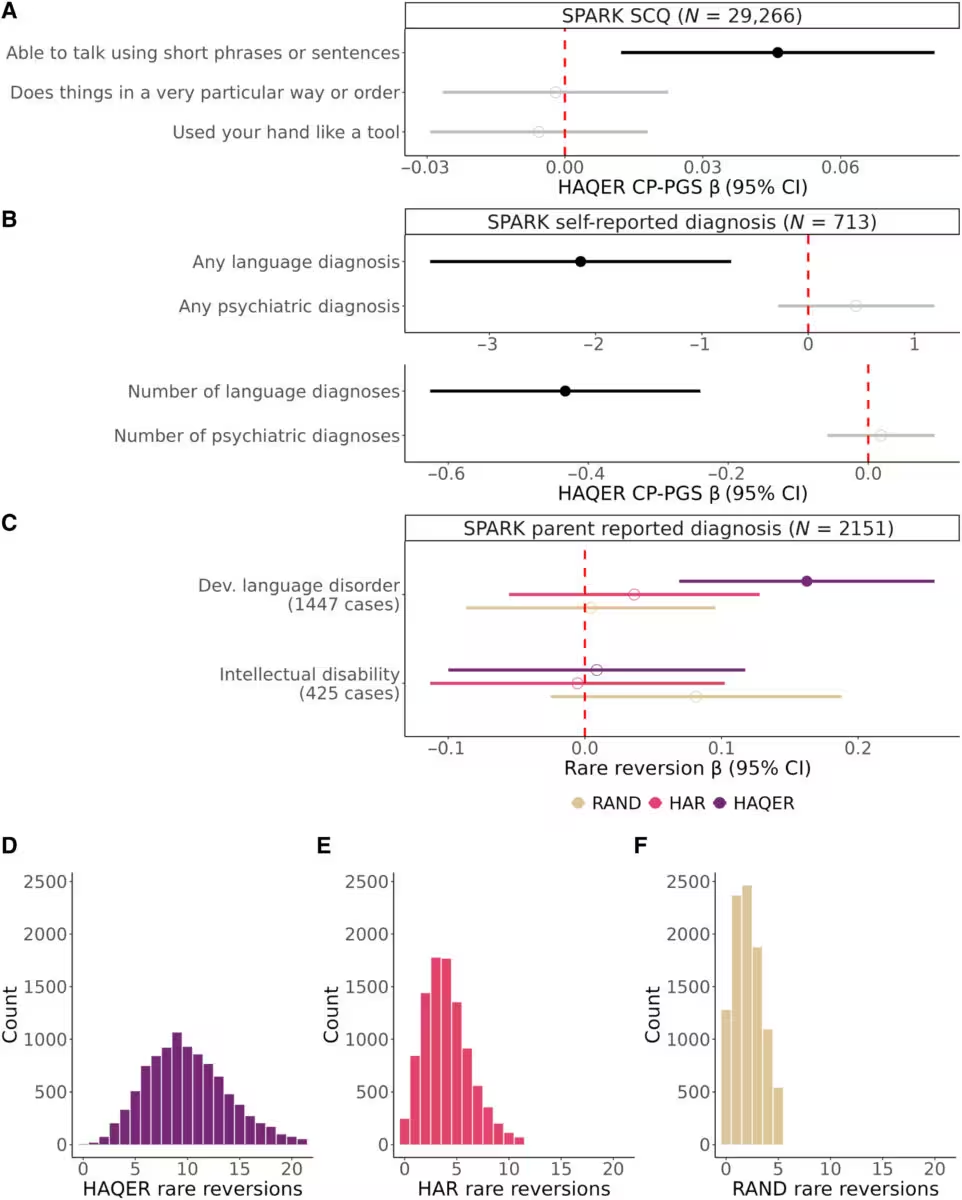
According to Jacob Michaelson, a professor of psychiatry and neuroscience at the University of Iowa, HAQERs constitute less than one‑tenth of one percent of the genome. Despite their modest size, the analysis shows they exert roughly 200 times more influence on language ability than any other genomic region.
“What we’re seeing is how a very small part of the genome can have an outsized influence, not just on who we were as a species, but on who we are as individuals,” Michaelson said.
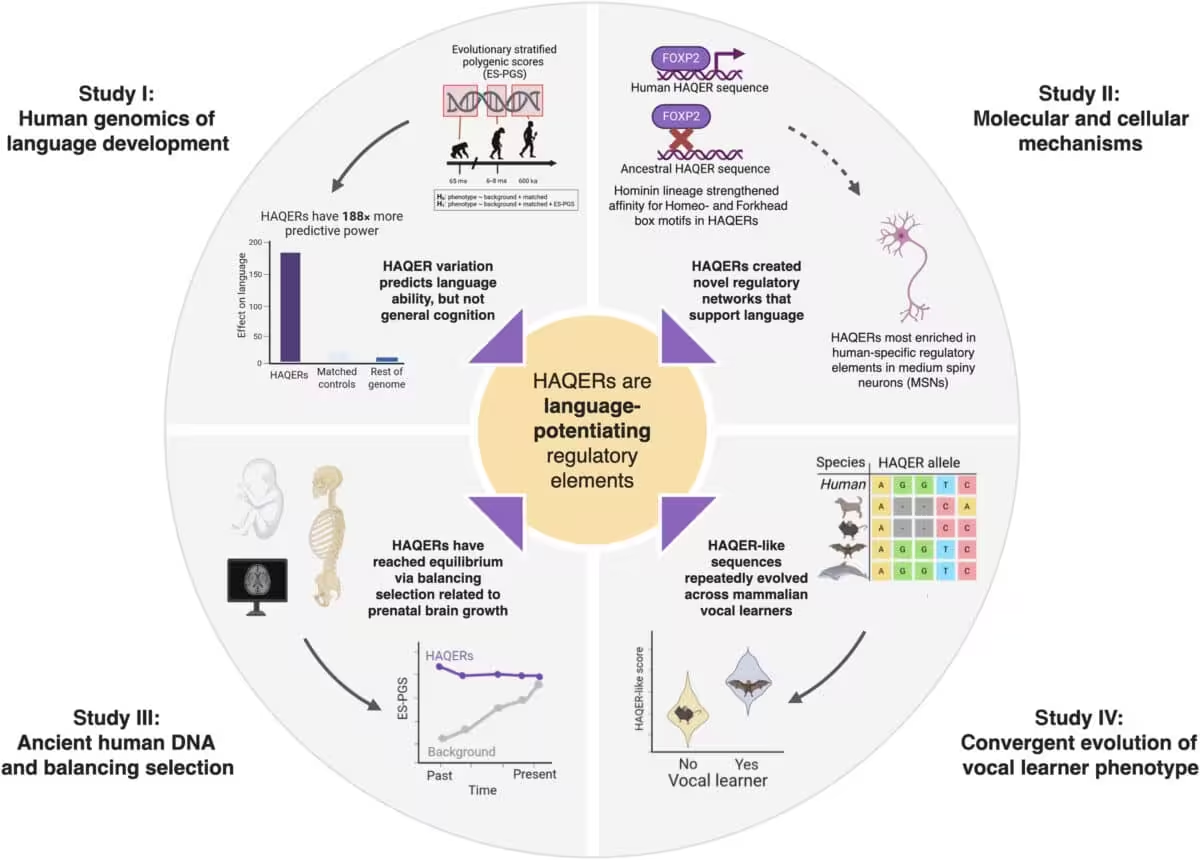
The researchers liken these regions to volume knobs that fine‑tune genetic activity, with the well‑known FOXP2 gene acting as one of the mechanisms that adjust those knobs.
From Classroom Tests to Genome Sequencing
The project traces its roots to a 1990s investigation led by Bruce Tomblin, now professor emeritus in the University of Iowa’s Department of Communication Sciences and Disorders. Tomblin assessed language proficiency in 350 Iowa students and collected saliva samples for future analysis.
Those samples were archived until advances in DNA sequencing made it possible to read them in detail. Using the stored material, Michaelson’s group linked variations in the genome to differences in language performance across the original cohort.
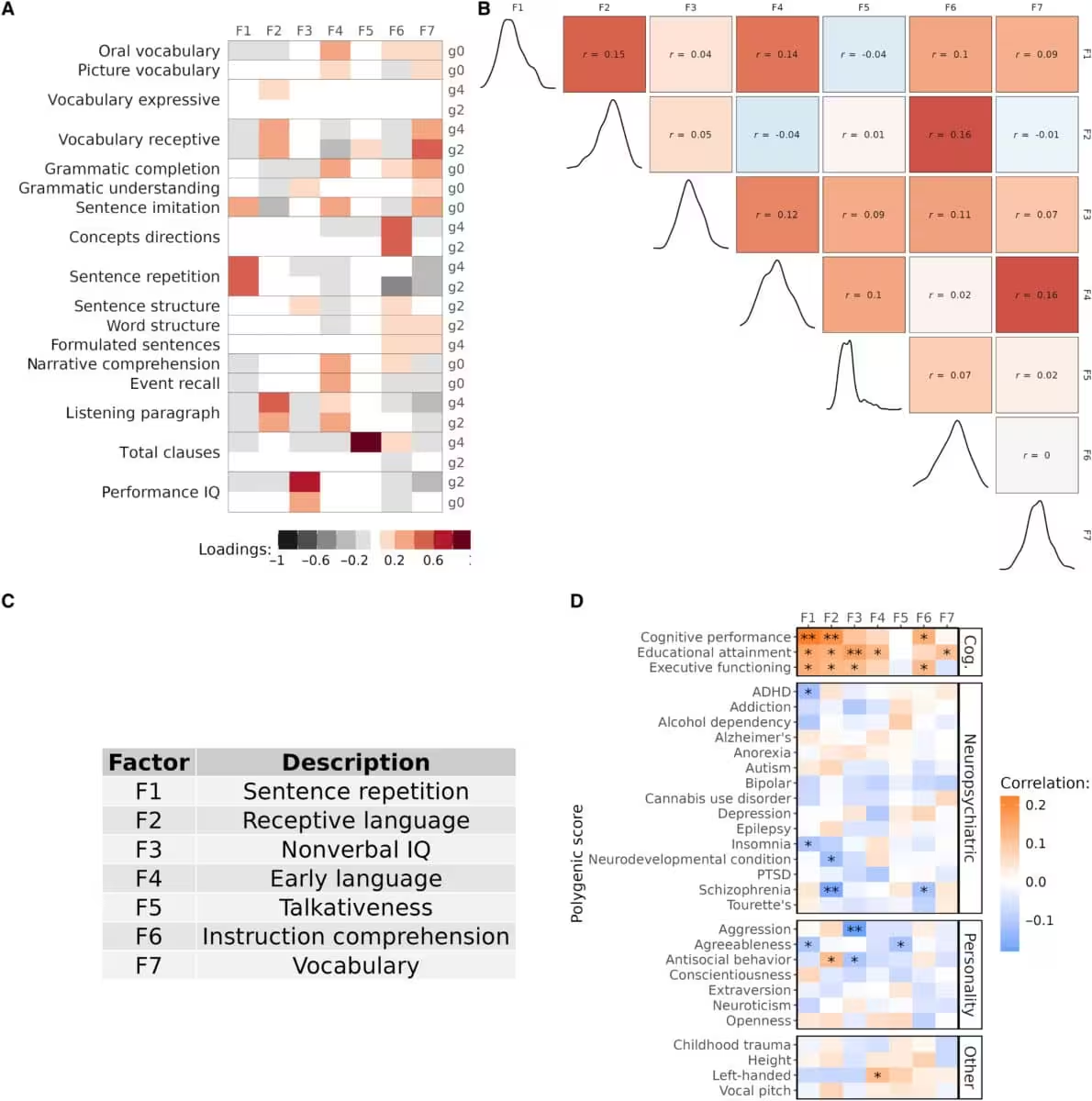
To pinpoint when these regulatory effects first emerged, the team created an evolutionary‑stratified polygenic score (ES‑PGS). This metric allowed them to map genetic influences onto a timeline spanning roughly 65 million years.
Ancient Roots of Linguistic Capacity
A striking outcome of the analysis is that HAQERs linked to language were already present before the divergence of modern humans and Neanderthals. In fact, the genetic signatures appear marginally stronger in Neanderthals than in contemporary populations.
“This HAQERs aspect, a sliver of the genome, has remained relatively constant, even as other aspects have been going up and up and up to make modern humans smarter and smarter,” Michaelson stated. “We can say humans at least had the ‘hardware’ for language earlier than what we previously thought.”
The authors propose that balancing selection has kept these regions stable over evolutionary time. HAQERs contribute to fetal brain growth and are associated with larger brain and skull dimensions, yet the accompanying increase in infant head size may have imposed obstetric constraints that limited further expansion.
This article has been fact checked for accuracy, with information verified against reputable sources. Learn more about us and our editorial process.
Last reviewed on .
Article history
- Latest version
Reference(s)
- “Jacob Michaelson, PhD.” Michaelson Lab - The University of Iowa <https://michaelson.lab.uiowa.edu/people/jacob-michaelson>.
- “J. Bruce Tomblin, PhD.” Communication Sciences and Disorders - College of Liberal Arts and Sciences | The University of Iowa <https://csd.uiowa.edu/people/j-tomblin>.
- Posted by Elizabeth Taylor