Scientists Identify Ancient Maya Astronomer At Xultun Behind 1,200-Year-Old Planetary Formula
A mysterious inscription of Sak Tahn Waax accompanies a formula linking time cycles to planetary motions, hinting at ancient cosmological knowledge.
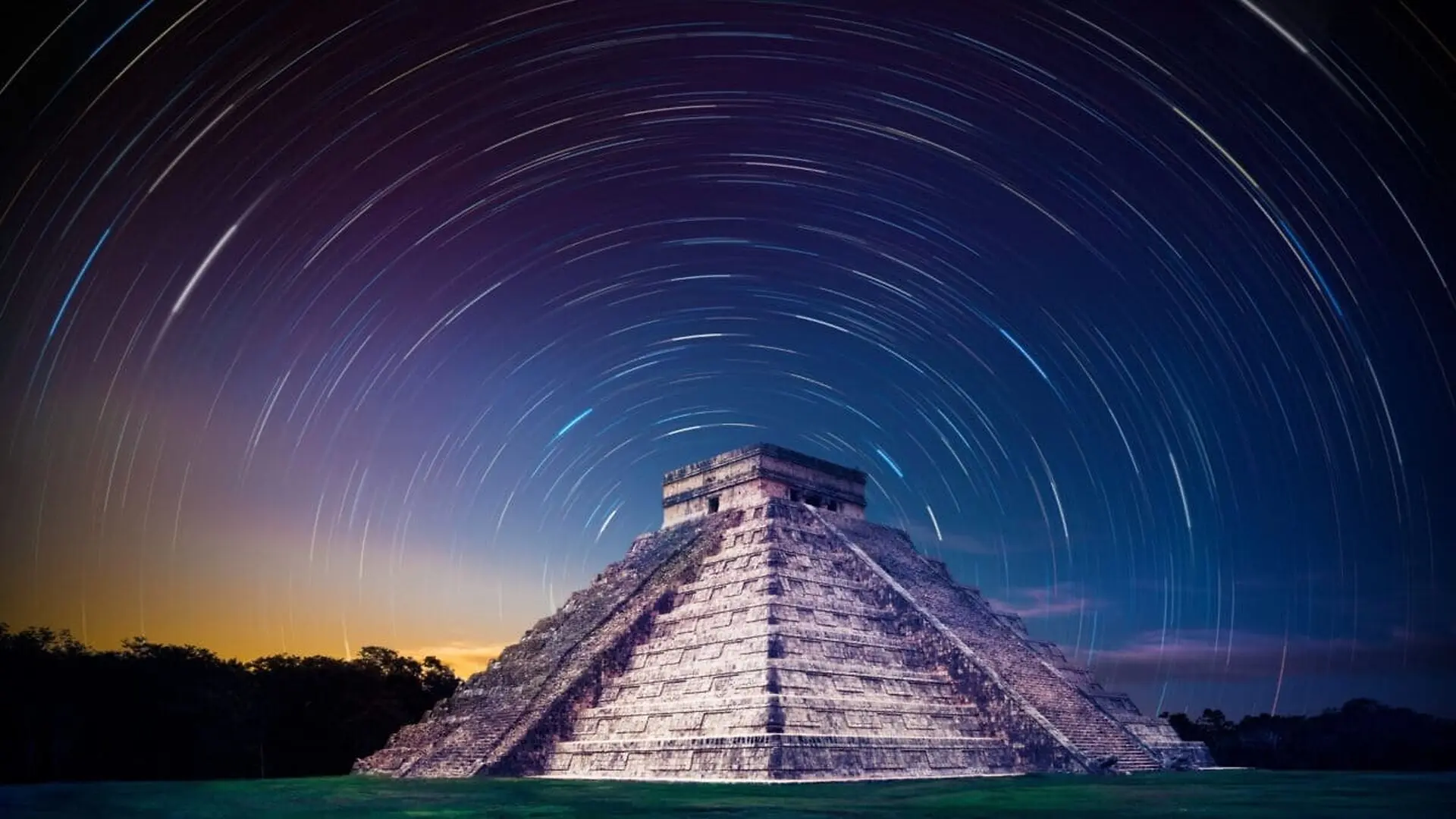
Archaeologists working at the Maya site of Xultun uncovered a plastered wall inside a structure dated to roughly 781 CE that bears a series of mathematical notes. The find reshapes current understanding of Maya scientific literature, which has long lacked identifiable authors.
While the Maya are renowned for sophisticated astronomical observations recorded in codices, the individuals who compiled these works have historically remained anonymous. This new inscription provides a rare glimpse of a named scholar attached to a mathematical text.
Maya Astronomer Identified on an Ancient Wall
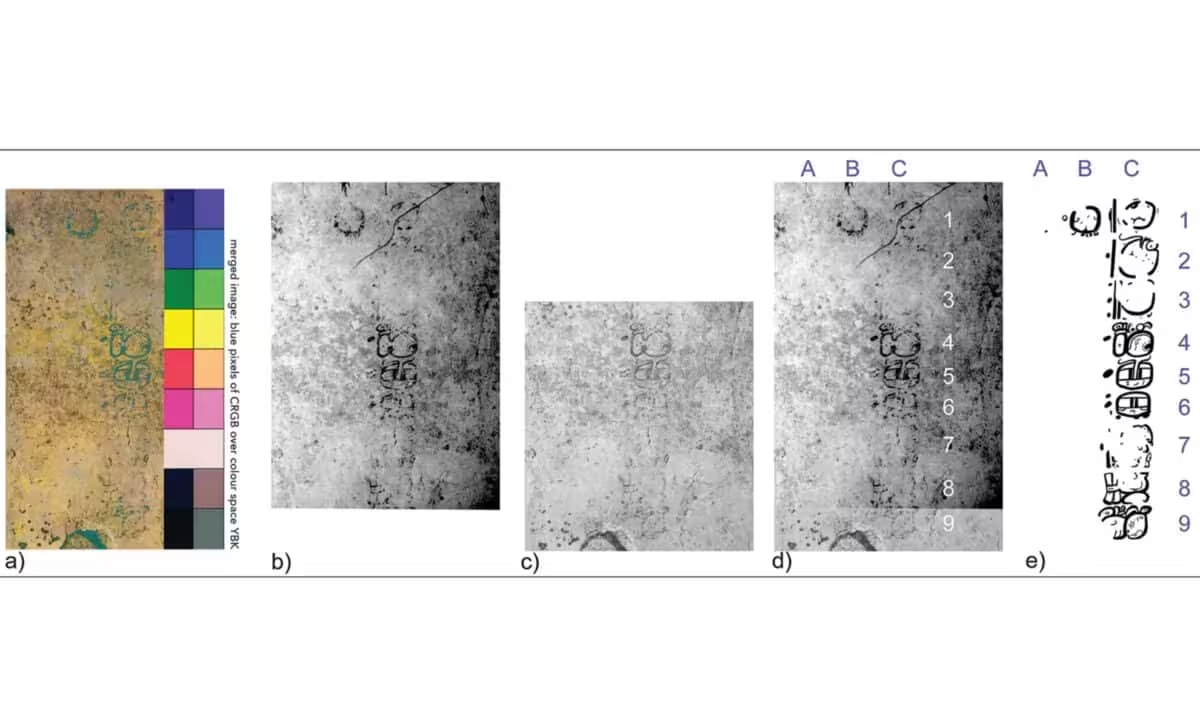
The name Sak Tahn Waax—translated as “White‑Chested Fox”—appears on the interior wall of the Xultun building, positioned beside one of 52 miniature mathematical passages etched into the plaster.
Experts suggest the markings functioned as working notes drafted while formulating astronomical equations, rather than polished final copies. The calculations likely served as preliminary sketches for Maya scholar‑astronomers.
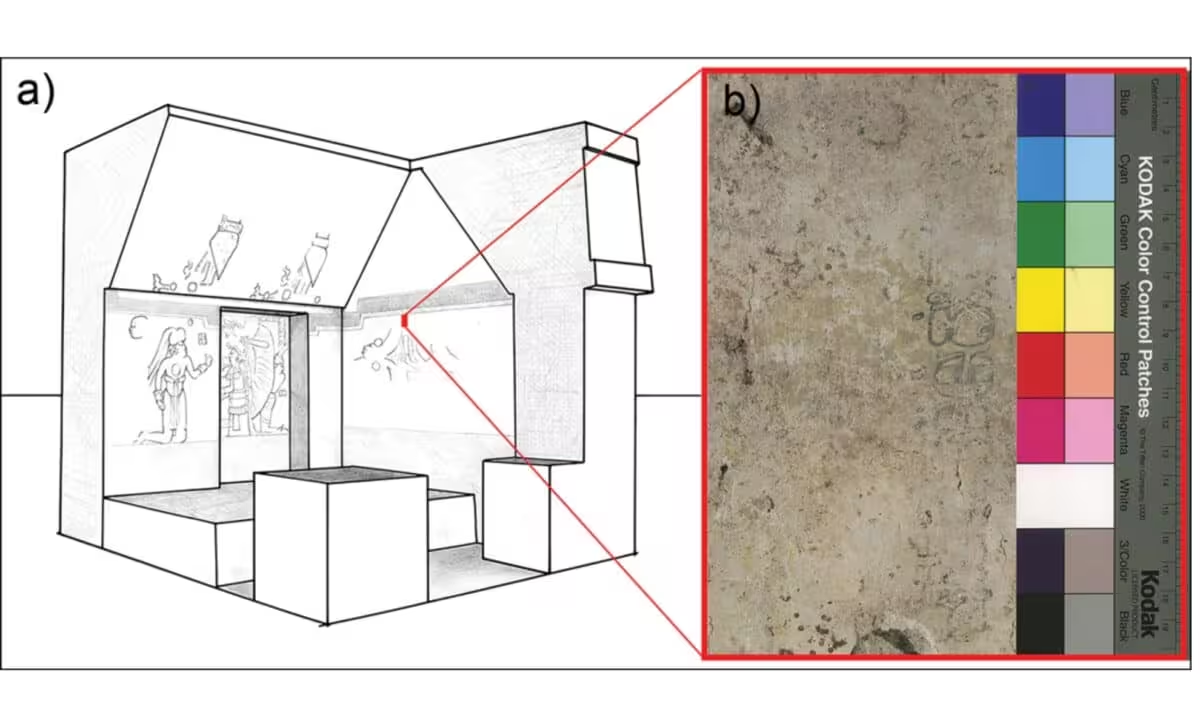
According to a study published in Antiquity, MIT scholar Franco Rossi describes the plaster surfaces as “whiteboards” where Maya intellectuals jotted calculations en route to the formal codices.
“These rough‑draft calculations and tables are akin to finding an early version of a well‑known manuscript, or a sketch of a great artwork,” Rossi explained.
The passage linked to Sak Tahn Waax weaves together several temporal cycles, including the 260‑day ritual calendar, the solar year, and the orbital periods of Venus and Mars.
A Novel Formula Mapping Planetary Motions
The fragment presents a distinctive reading of the 2,920‑day interval, a span that matches the time required for Venus to return to the same position relative to the Sun.
Researchers characterize the computation as a “playful” approach that appears in multiple Maya codices, reflecting an inventive method of reconciling astronomical observations with calendrical systems.
Rossi notes that the equation showcases Sak Tahn Waax’s grasp of how different time‑keeping cycles intersect, highlighting the sophisticated interplay between planetary dynamics and Maya calendars.
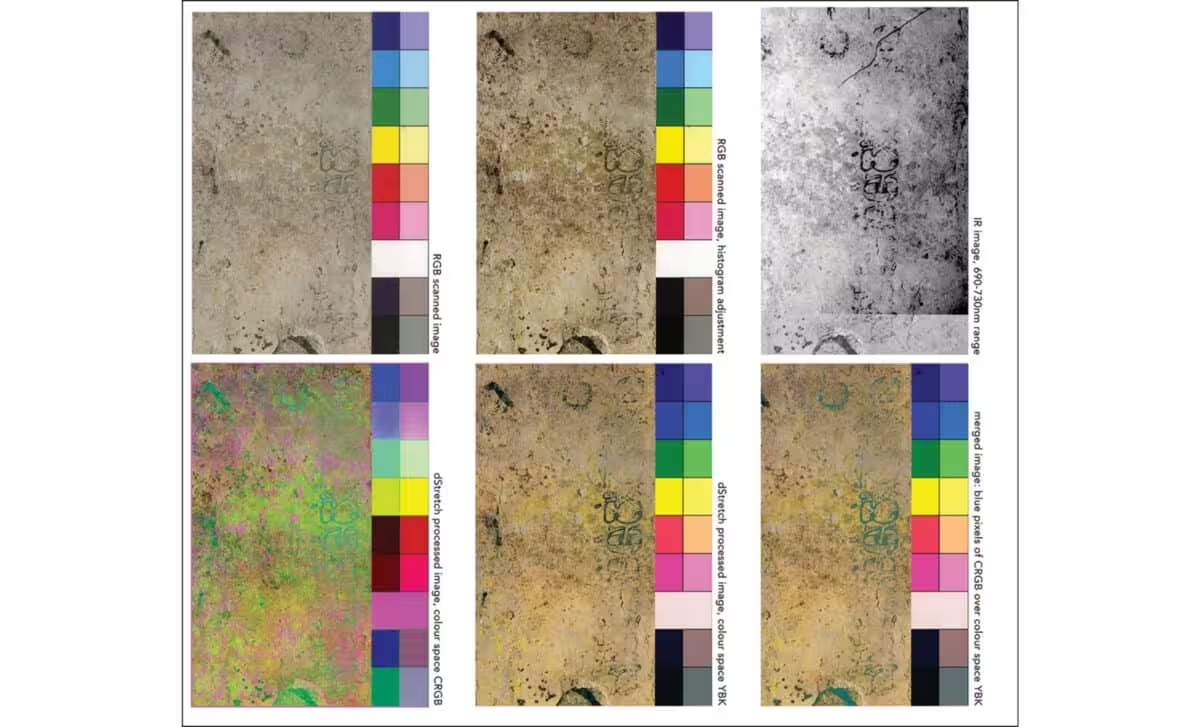
The precise role of Sak Tahn Waax in producing the inscription remains under discussion; scholars have not yet determined whether the mathematician personally penned the text or if another hand appended the name.
Nevertheless, this discovery marks the first instance of a Maya mathematician being linked to a specific scientific document, suggesting that some scribes may have signed their contributions even though surviving codices rarely name their authors.
Xultun as a Center for Elite Scribal Production
The same building also features a mural depicting male and female scribes alongside motifs linked to rulership and deities. One panel shows the Xultun ruler Yax We’n Chan K’inich portrayed as a Maize‑Wind god bearing a scorpion tail.
Rossi interprets the artwork as evidence that codices were compiled within privileged residential compounds, with both genders participating in the recording of astronomical and ritual knowledge.
It is still unknown whether the formula associated with Sak Tahn Waax was later incorporated into any of the few surviving Maya codices, most of which were destroyed during the Spanish conquest.
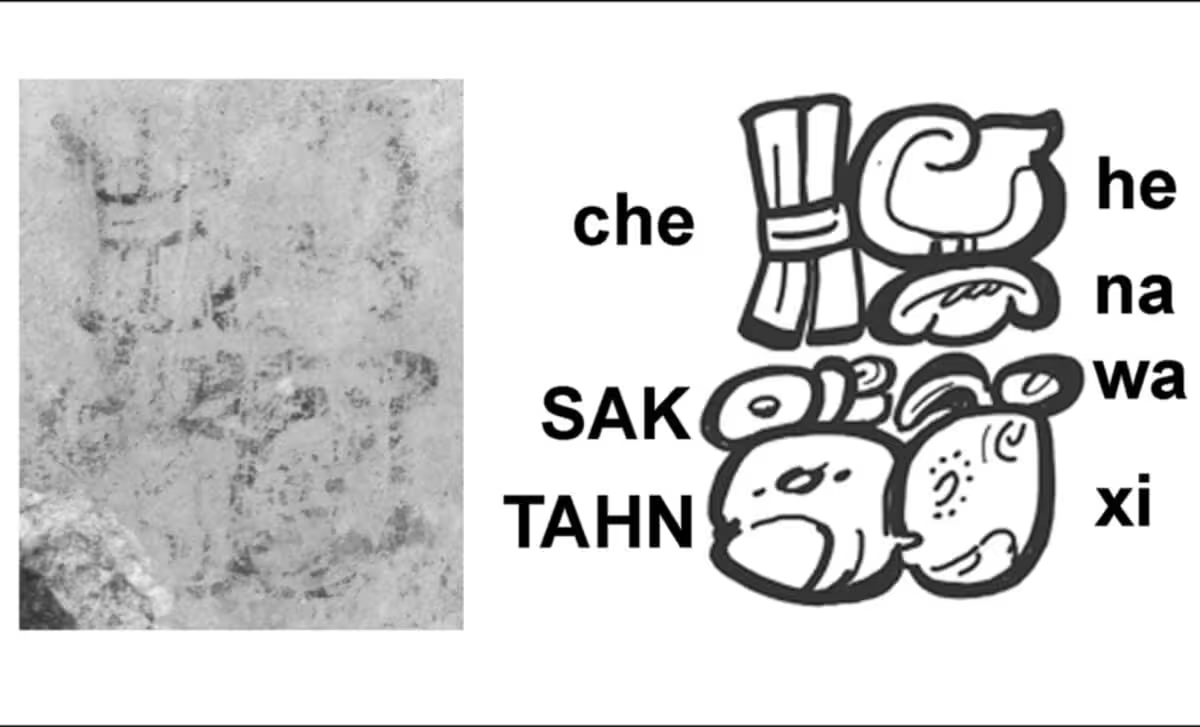
The team concludes that around 781 CE a scholar at Xultun observed celestial bodies, recorded the motions of Venus and other planets in a novel format, and attached his own name to the work—a practice that may have been more common among Maya intellectuals than the surviving record suggests.
This article has been fact checked for accuracy, with information verified against reputable sources. Learn more about us and our editorial process.
Last reviewed on .
Article history
- Latest version
Reference(s)
- Rossi, Franco. “The identification and work of an eighth-century Maya mathematician | Antiquity | Cambridge Core.”, pp. 1-16. Cambridge Core, doi: 10.15184/aqy.2026.10378. <https://www.cambridge.org/core/journals/antiquity/article/identification-and-work-of-an-eighthcentury-maya-mathematician/FDE9610F9D80ADBC245CAC2B8F204070>.
- “Franco Rossi | People | MIT Anthropology.” <https://anthropology.mit.edu/people/lecturers/franco-rossi>.
Cite this page:
- Posted by Zara Tariq