Scientists Have Discovered a Way to 3D Print Lunar Structures Using Moon Dust and Recycled Plastic
Researchers have tested an innovative material combination that could allow for lunar construction without the need to ship resources from Earth.
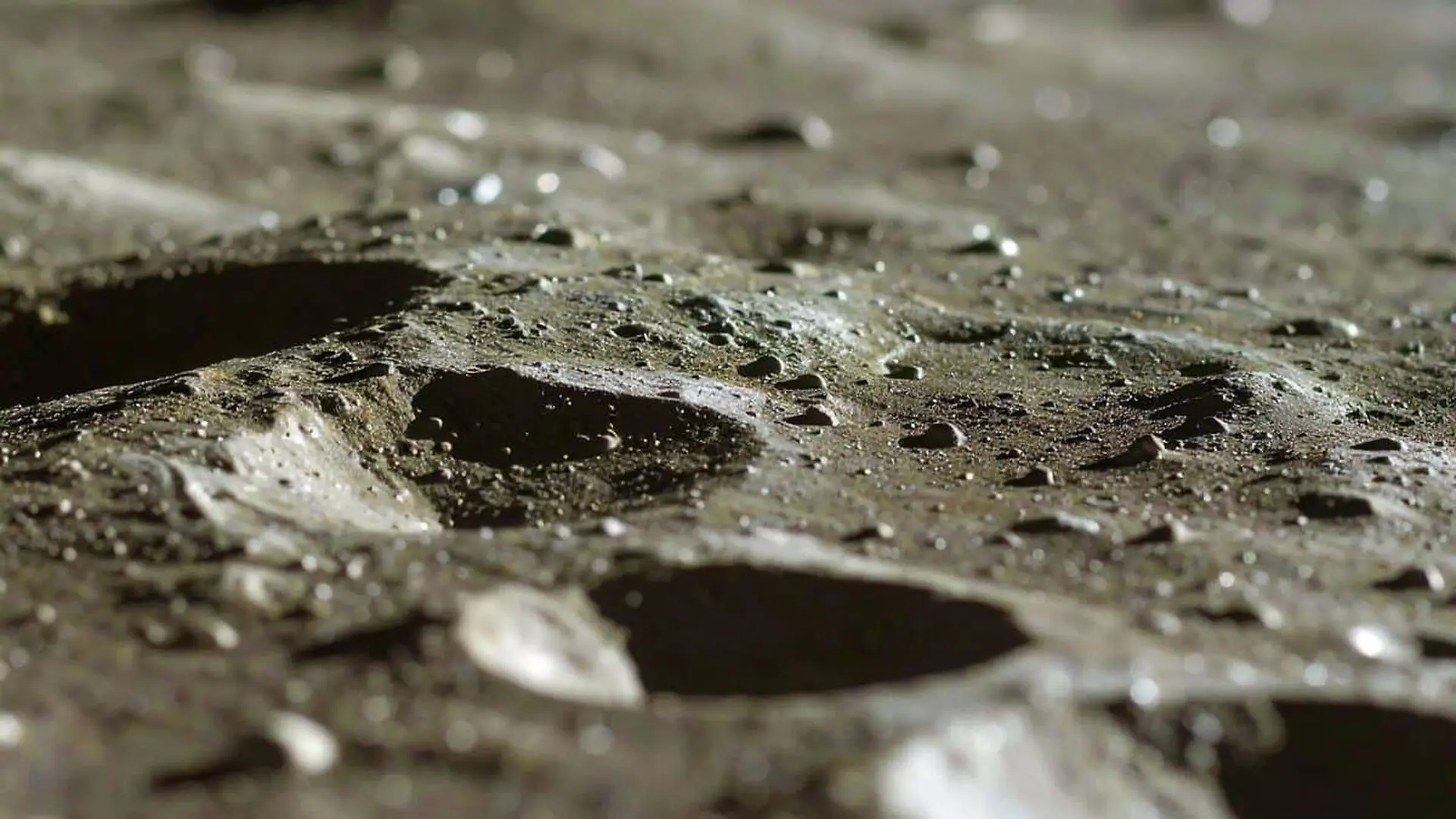
Transporting construction materials from Earth to the Moon is a logistical and financial hurdle of massive proportions, with costs often exceeding $1 million per kilogram. To bypass this barrier, researchers are increasingly looking toward in-situ resource utilization, or the practice of manufacturing goods from materials already present on the lunar surface. A recent study conducted at Concordia University offers a promising path forward by blending simulated lunar regolith with recycled, high-performance plastics to create functional 3D-printed components.
Transforming Moon Dust into Infrastructure
The lunar surface is blanketed in regolith, a coarse, abrasive layer of dust and fragmented rock. In their research, published in the journal Composites Part B: Engineering, scientists Farshad Malekpour and Mehdi Hojjati explored the potential of integrating this abundant resource with poly(ether ketone ketone) (PEKK). This durable, recyclable thermoplastic serves as an ideal matrix for creating mission-critical hardware.
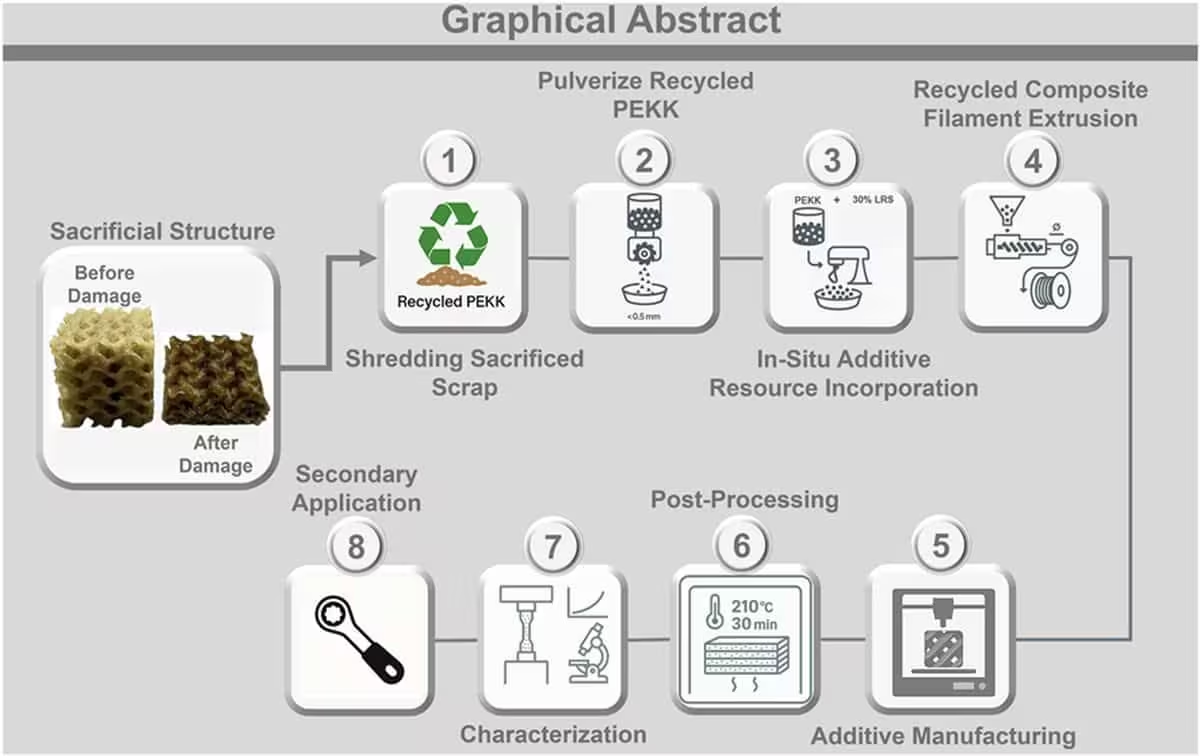
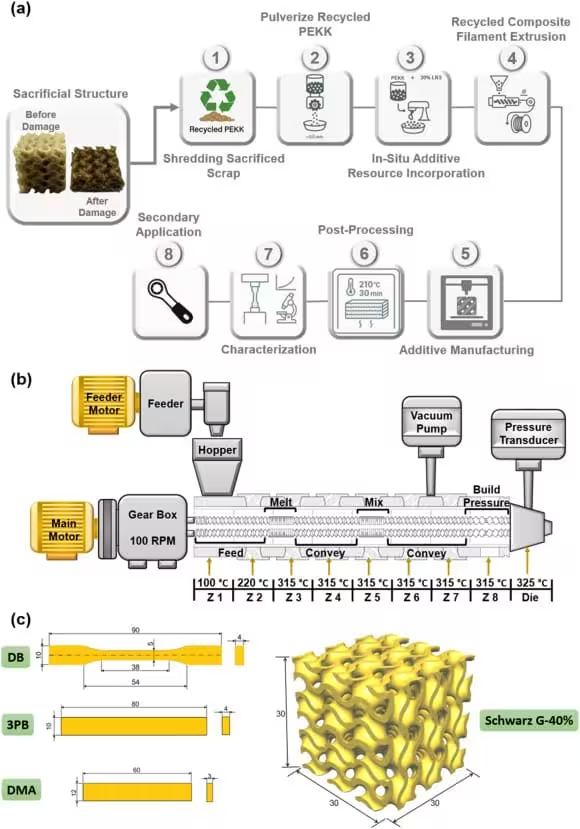
The research team successfully fabricated various items, including handheld tools and impact-absorbing hardware, using this composite filament. Beyond reducing reliance on Earth-bound shipments, the regolith provided unexpected manufacturing benefits. During the heating process, the presence of mineral particles in the mixture acted as a stabilizer, effectively reducing warping and shrinkage while lowering the crystallization temperature of the PEKK. This optimization makes the additive manufacturing process significantly more energy-efficient.
Sustainability Through Circular Manufacturing
A core focus of the project was the viability of a closed-loop system. The team demonstrated that previously printed structures could be shredded, ground into a powder, and re-processed into new filament without sacrificing the thermal or mechanical integrity of the plastic. Even after three consecutive cycles of recycling and re-printing, the material remained thermally stable, with the lunar soil particles distributed uniformly throughout the composite matrix.
However, the researchers noted a key trade-off. While the lunar soil particles were effective for certain applications, their addition increased internal porosity, leading to higher brittleness compared to pure PEKK. Consequently, the team suggests this material is best suited for sacrificial structures designed to absorb energy—such as impact dampeners for landing modules—rather than for permanent load-bearing architecture.
Mehdi Hojjati, a professor within Concordia’s Department of Mechanical, Industrial and Aerospace Engineering, emphasizes that this represents a foundational step in integrating space-grade polymers with extraterrestrial regolith. While the current tests relied on simulated dust rather than actual samples returned from the Moon, the success of these early trials suggests that a sustainable, circular approach to off-world manufacturing is an achievable goal for future lunar missions.
This article has been fact checked for accuracy, with information verified against reputable sources. Learn more about us and our editorial process.
Last reviewed on .
Article history
- Latest version
Reference(s)
- Malekpour, F.., et al. “Circular additive manufacturing of recycled PEKK–regolith composites for sacrificial structures in lunar in-situ resource utilization.” Composites Part B: Engineering, vol. 326, November 1, 2026, pp. 114013 Elsevier BV, doi: 10.1016/j.compositesb.2026.114013. <https://www.sciencedirect.com/science/article/pii/S1359836826006347?via%3Dihub>.
- “PEKK Polyetherketoneketone | Arkema Global.” <https://www.arkema.com/global/en/products/product-families/pekk-kepstan/>.
- “Mehdi Hojjati - Concordia University.” <https://www.concordia.ca/faculty/mehdi-hojjati.html>.
Cite this page:
- Posted by Zara Tariq