Two Swiss Glaciers Have Vanished Entirely as Record Heat Devastates the Alps
Swiss glaciers lost 5.5% of their volume this year, marking a devastating record as nearly a fifth of the nation’s ice has vanished since 2021.
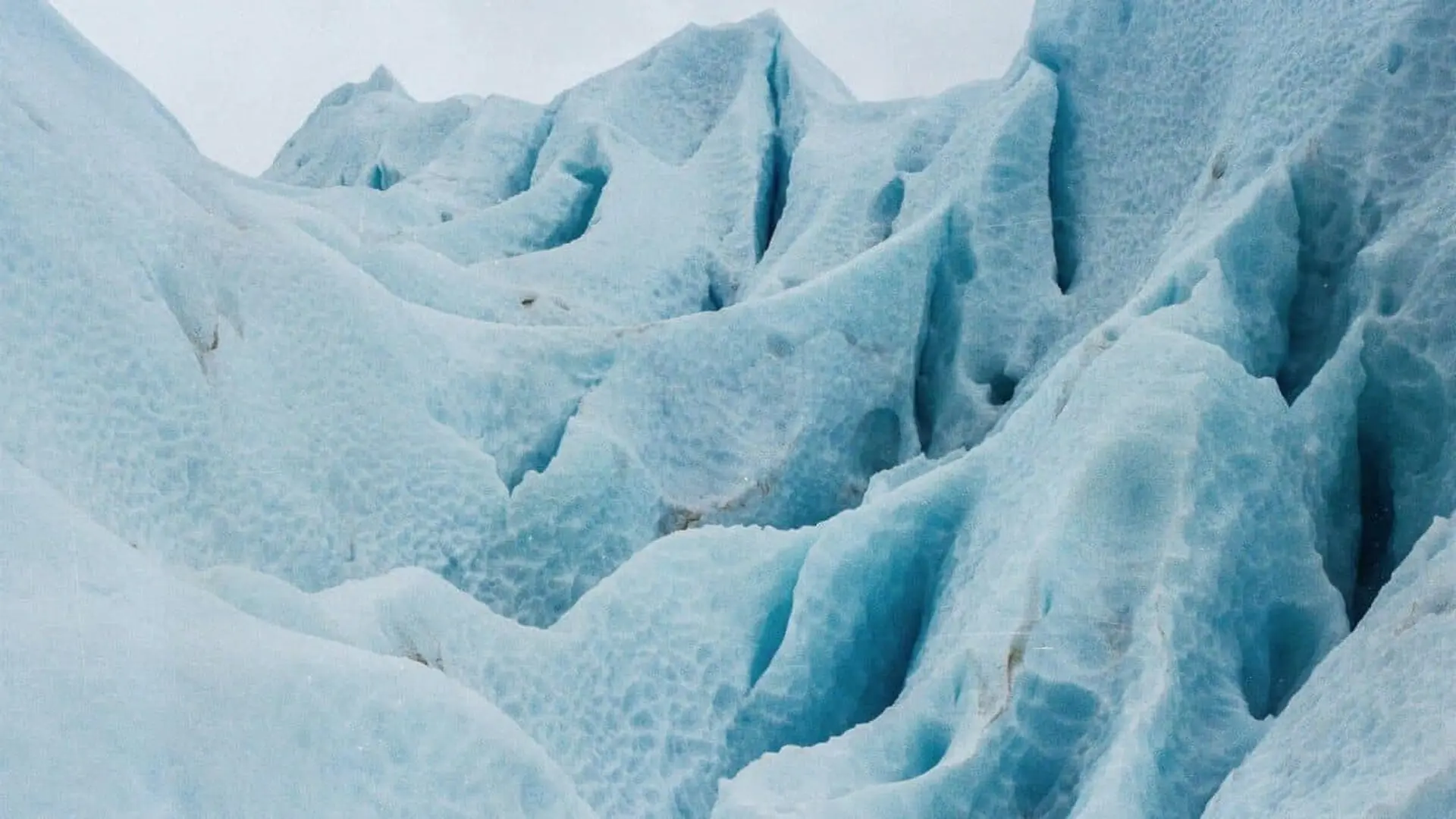
Switzerland’s iconic Alpine landscape is undergoing a rapid and irreversible transformation as record-breaking summer heat and insufficient winter snow have pushed the nation’s glaciers to a critical breaking point. Data compiled by Glacier Monitoring Switzerland (GLAMOS)—a collaborative network involving ETH Zurich and the universities of Fribourg and Zurich—reveals that 2026 was a catastrophic year for these frozen giants, with several glaciers experiencing their most severe mass loss since records began, and at least two smaller bodies of ice vanishing entirely.
A Deadly Combination of Low Snowfall and Extreme Heat
The crisis was set in motion during the winter of 2025–2026, which failed to provide the protective blanket of snow typically required to shield glacier ice from the coming summer sun. By late April, national snow accumulation had plummeted to 25% below average. This early exposure of bare ice created a vulnerability that was ruthlessly exploited by a series of intense heatwaves between May and September.
According to the latest GLAMOS annual report, the period from June through August 2026 marked the hottest summer months ever recorded in Switzerland. The impact was amplified by an unprecedented duration of high temperatures: the freezing level remained above 4,000 meters for 76 days, doubling the historical average and setting a new national milestone for thermal intensity.
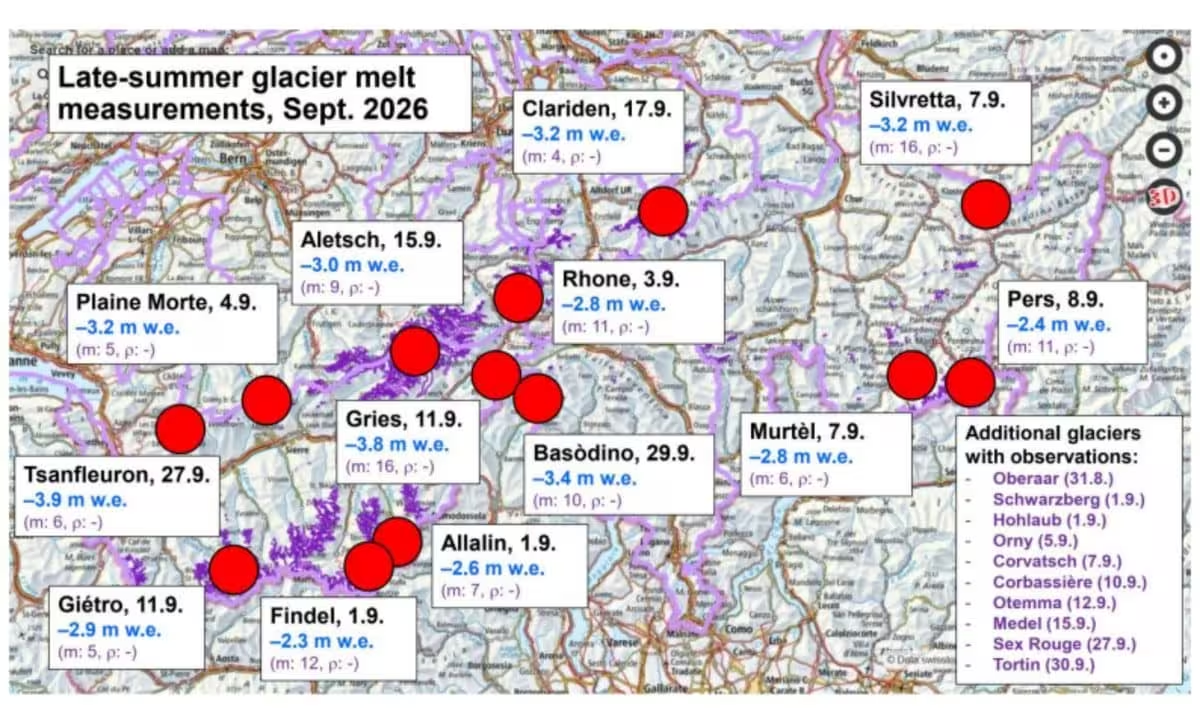
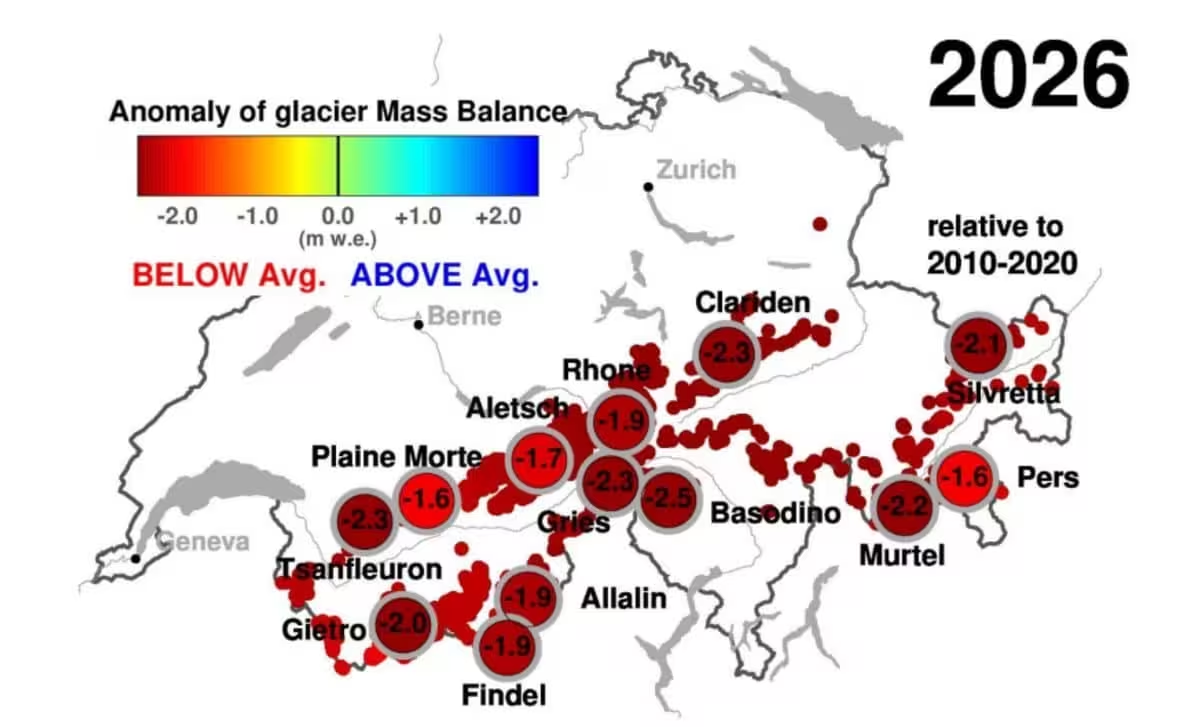
The consequences were visible at nearly every altitude. By mid-July, seasonal snow had largely vanished, exposing dark ice to solar radiation. Even at extreme elevations of 3,800 meters near Alphubel, researchers measured several meters of ice loss. Across the monitored sites, ten glaciers recorded losses exceeding 3 meters of water equivalent, placing 2026 in the same league as the infamous record-breaking melt of 2022. Iconic landmarks, including the Great Aletsch, Rhône, Clariden, and Allalin glaciers, hit their most negative mass balance levels on record.
A Five-Year Trend of Escalating Decay
While 2026 was extreme, it is symptomatic of a broader, accelerating decline. In the last five years alone, Swiss glaciers have shed ice at more than double the speed of any previous five-year interval on record. Since 2000, Switzerland has lost roughly one-third of its total glacier-covered area, leaving the country with approximately 714 square kilometers of ice remaining. The total volume of ice has plummeted from its turn-of-the-century levels, with a loss of over 30 cubic kilometers in just over two decades.
The disappearance of smaller glaciers, such as the Bella Tola in Valais and the Griessfirn/Plattalvafirn in Glarus, serves as a stark harbinger for the future. While a definitive count of lost glaciers awaits the next full inventory in 2028, the physical evidence of their retreat is already reshaping the high-altitude topography of the Alps.
Beyond the loss of scenery, the retreat has profound implications for the nation’s glaciers and their role as essential water towers. Although the melting intensity remains high, the total volume of runoff is beginning to wane because there is simply less ice left to melt. This trend creates a precarious outlook for the future, particularly regarding irrigation, hydropower stability, and the health of local ecosystems during the increasingly frequent summer droughts.
This article has been fact checked for accuracy, with information verified against reputable sources. Learn more about us and our editorial process.
Last reviewed on .
Article history
- Latest version
Reference(s)
- “GLAMOS DOI publication landing page.” <https://doi.glamos.ch/pubs/annualrep/annualrep_2026.html>.
Cite this page:
- Posted by Karan Das