Divers Find 400 Year Old Shipwreck in Baltic Sea Containing a Mysterious Unknown Object
A mysterious object discovered on board continues to baffle experts, leaving researchers scrambling to uncover its true origin and purpose.
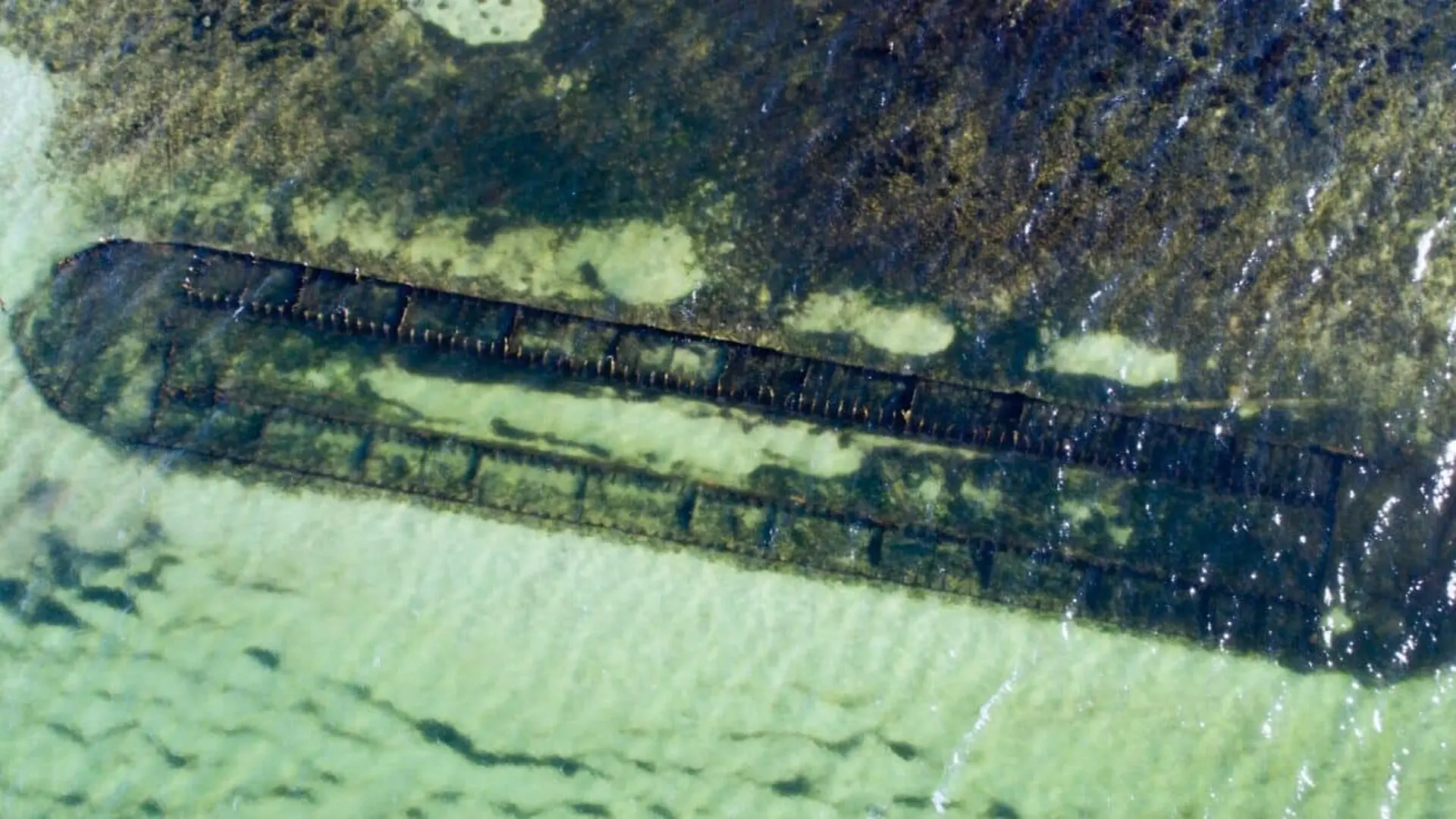
Deep beneath the silt of Germany’s Bay of Greifswald, a routine survey for a planned gas pipeline revealed an unexpected historical treasure. What appeared in sonar imagery as a scattered collection of debris—anchors, tools, and weathered timber—turned out to be the resting place of a 17th-century merchant vessel. Discovered in 2023, the wreck offers a rare, if fleeting, glimpse into the maritime commerce of the Baltic Sea nearly 400 years ago.
Michał Grabowski, an underwater archaeologist from the University of Warsaw, first identified the significance of the site after reviewing initial site photographs. Recognizing that the objects formed a coherent maritime assemblage, his team initiated an urgent, large-scale investigation. Because the wreck sat directly in the path of heavy dredging equipment, the researchers had a narrow window to conduct their work. In a high-stakes race against industrial development, the team completed 22 dives in just 12 days, documenting and recovering over 60 artifacts from the challenging, sediment-heavy seabed.
The construction of the ship reflects the clinker-built tradition common throughout northern Europe during the 1600s. The hull’s survival, though partial, showcases planks overlapped and secured with iron nails, with seams traditionally caulked using a mixture of animal hair and tar. Dendrochronological analysis of the salvaged timber, which suggests the wood was harvested between 1626 and 1639, confirms the vessel operated during the height of the Baltic’s bustling trade era.
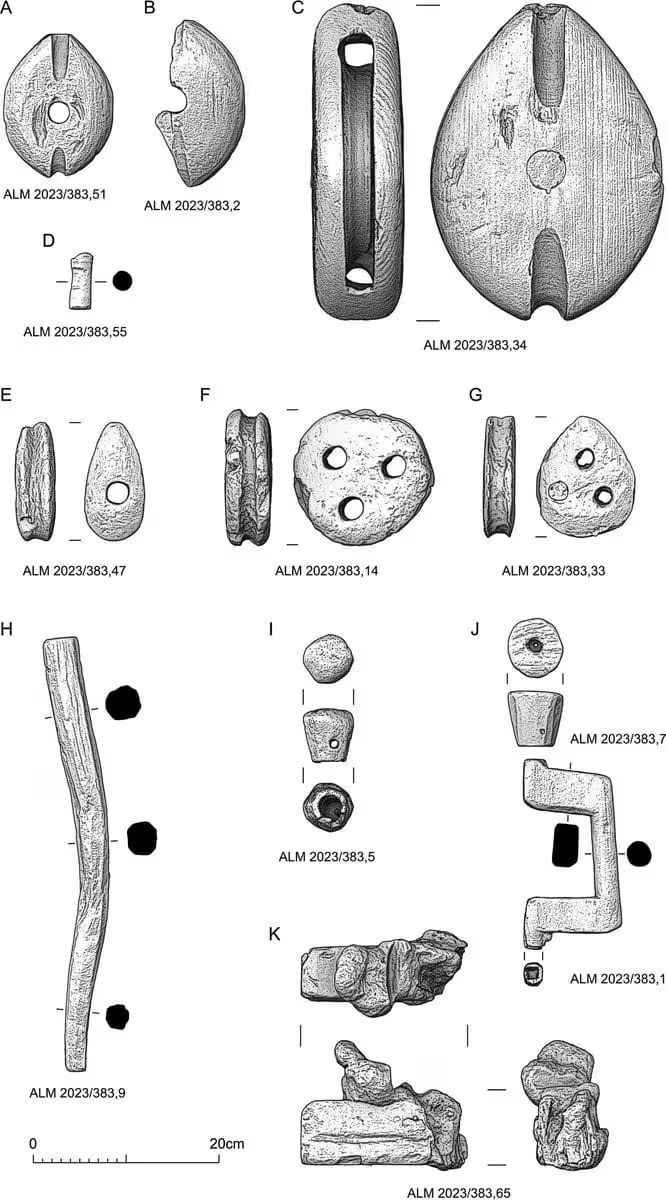
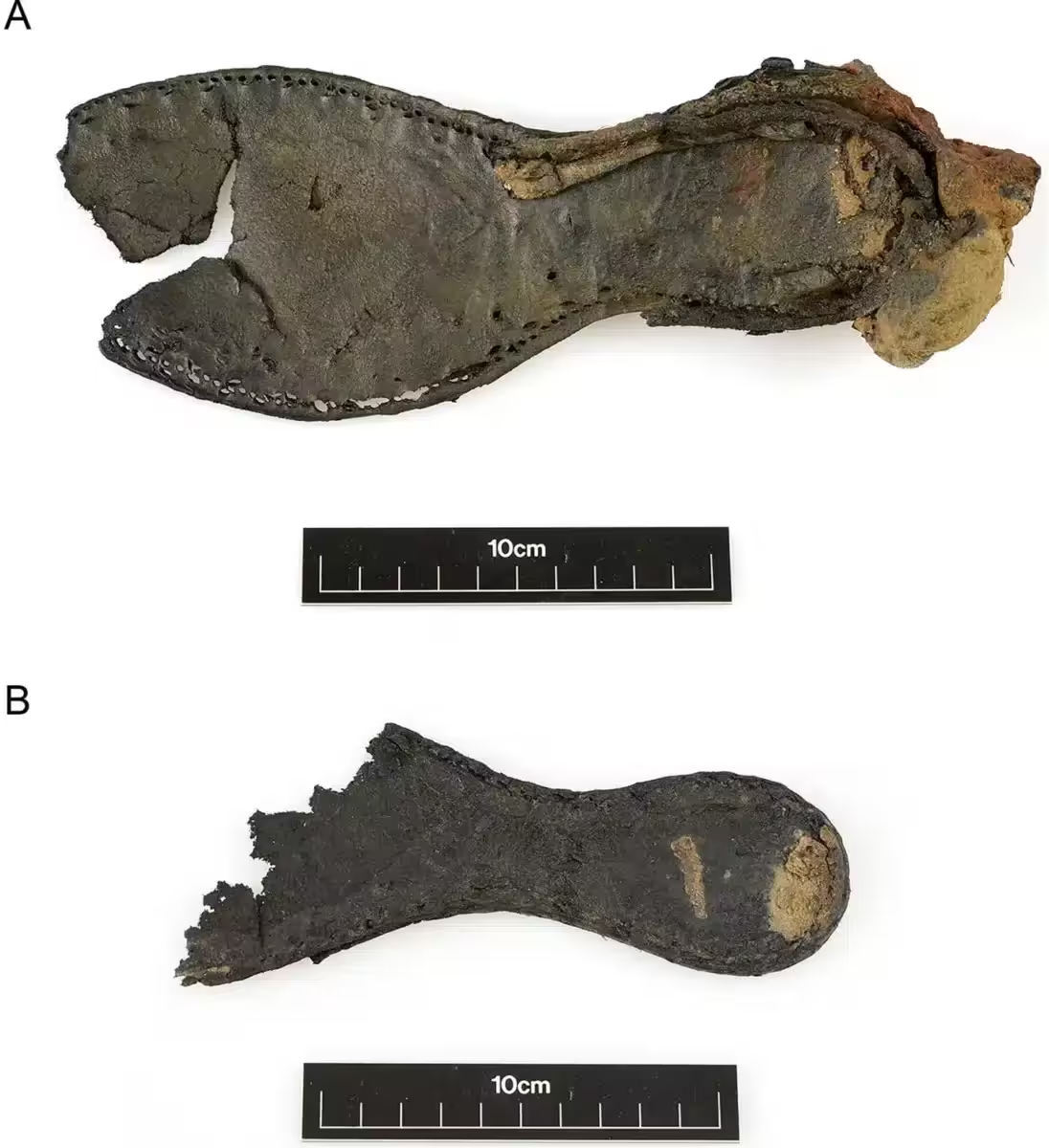
While the ship’s specific identity remains lost to time, the artifacts recovered from the site tell a story of life at sea. The team discovered the remains of a bilge pump fashioned from a hollowed-out oak trunk and various carpentry tools, including a hand-drill handle reminiscent of those found on the 1545 shipwreck Mary Rose. These items suggest a crew well-prepared for self-sufficiency and long-range travel. However, personal effects were surprisingly minimal, consisting mostly of leather shoe soles and a strap.
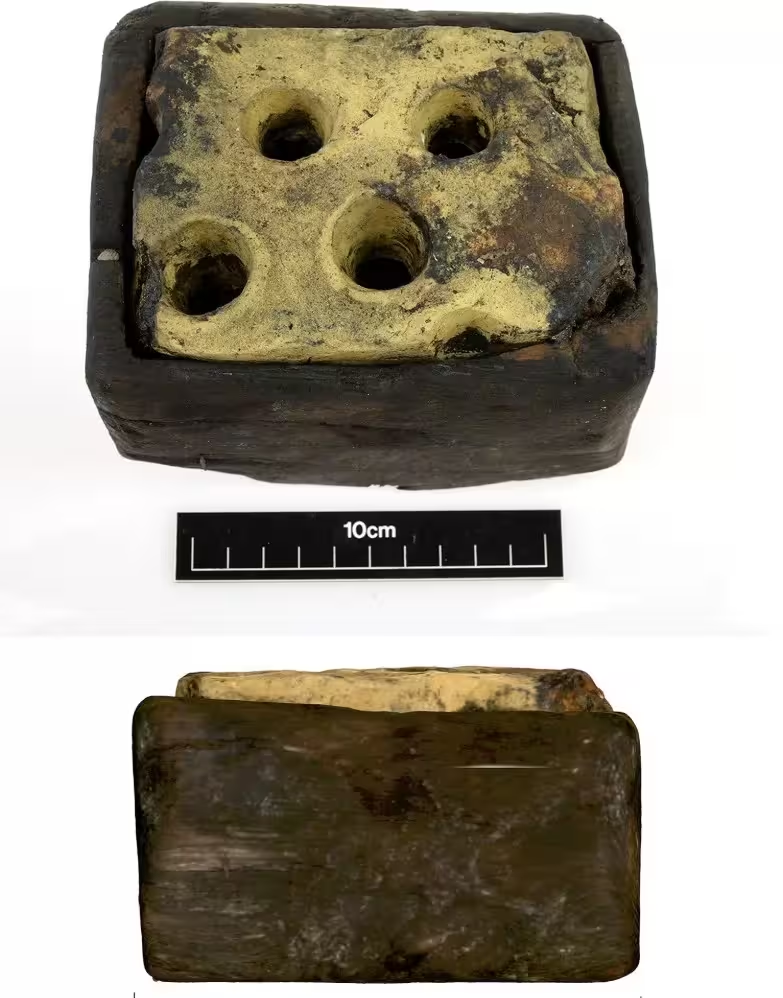
One particular discovery continues to baffle experts: a perforated clay brick encased in an oak frame. While researchers hypothesize it functioned as a specialized sharpener for drill bits, its unique design has no direct parallels in the archaeological record. Grabowski notes that the mystery of this tool remains a primary focus of his ongoing research.
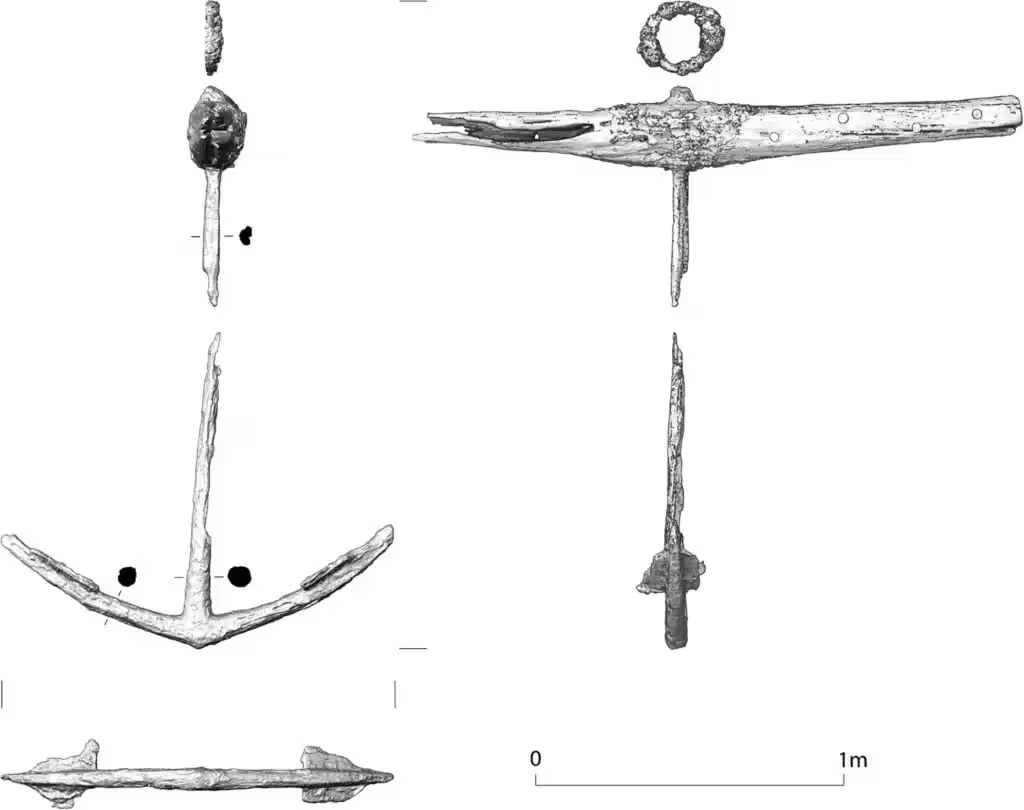
The circumstances surrounding the ship’s final moments are equally enigmatic. While some timber shows signs of charring, suggesting fire may have played a role in the vessel’s demise, the evidence is not definitive. The presence of two anchors and related equipment indicates the ship may have been at anchor when it was lost.
“I try not to speculate,” Grabowski said, emphasizing the need for scientific rigor over assumptions. “Otherwise, we risk creating an alternative history.”
To preserve the site, the pipeline route was adjusted, and the wreckage has been covered with protective sandbags. Archaeologists remain hopeful that future expeditions will explore the eastern reaches of the site, where additional sections of the vessel likely lie undisturbed. For now, the small collection of animal bones recovered from the deck—remnants of the pork and mutton that once sustained the crew—serves as a poignant reminder of the human lives intertwined with this silent, centuries-old wreck.
This article has been fact checked for accuracy, with information verified against reputable sources. Learn more about us and our editorial process.
Last reviewed on .
Article history
- Latest version
Cite this page:
- Posted by Vikram Desai