Rare Neanderthal Wood Tools Including a Mysterious Club Found in Spanish Cave
Archaeologists have unearthed rare 13,000-year-old wooden artifacts in Spain, revealing sophisticated tools and a mysterious club used by Neanderthals.
Archaeologists working at the Abric Romaní site near Barcelona have uncovered a rare, perishable cache of Neanderthal technology, offering a window into a world usually lost to the decay of time. Mineral deposits within the rock shelter have preserved wooden artifacts dating back between 62,000 and 40,000 years, providing evidence that Neanderthal life involved sophisticated woodcraft far beyond simple fire-making.
Beyond Stone Tools: The Hidden Material Culture of Neanderthals
A comprehensive study published in Science Advances on October 7, 2026, details the analysis of 597 wooden remains extracted from 16 distinct stratigraphic layers. While the vast majority of the recovered material consisted of raw wood or fuel remnants, a select group of items showed clear, intentional modifications. Led by Palmira Saladié of IPHES-CERCA, the research team highlights that these findings significantly expand our understanding of Neanderthal engineering, shifting the focus from the stone tools that dominate the historical record to the versatile wooden implements that likely underpinned their daily survival.
Hunting Gear and Domestic Utility
Among the most striking discoveries are two wooden spears found in archaeological level R. One, measuring 2.45 meters, exhibits proportions consistent with a thrusting spear designed for close-quarters engagement. The second, a fragmented specimen reconstructed at 199 centimeters, was found alongside discarded branches and a pinecone, hinting that it may have been retired after structural failure. Notably, the first spear was recovered in proximity to the skulls of four red deer, suggesting seasonal hunting activity during the autumn or winter months, though researchers caution that direct links between the weaponry and the kills remain difficult to confirm through bone analysis alone.
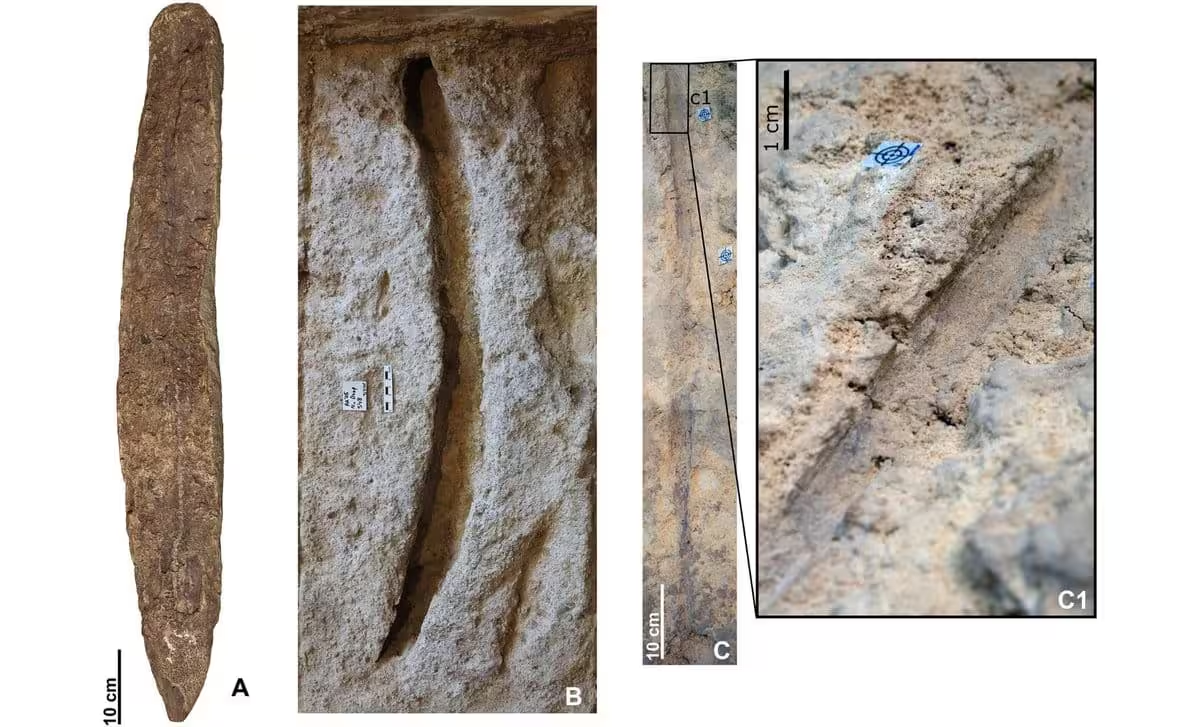
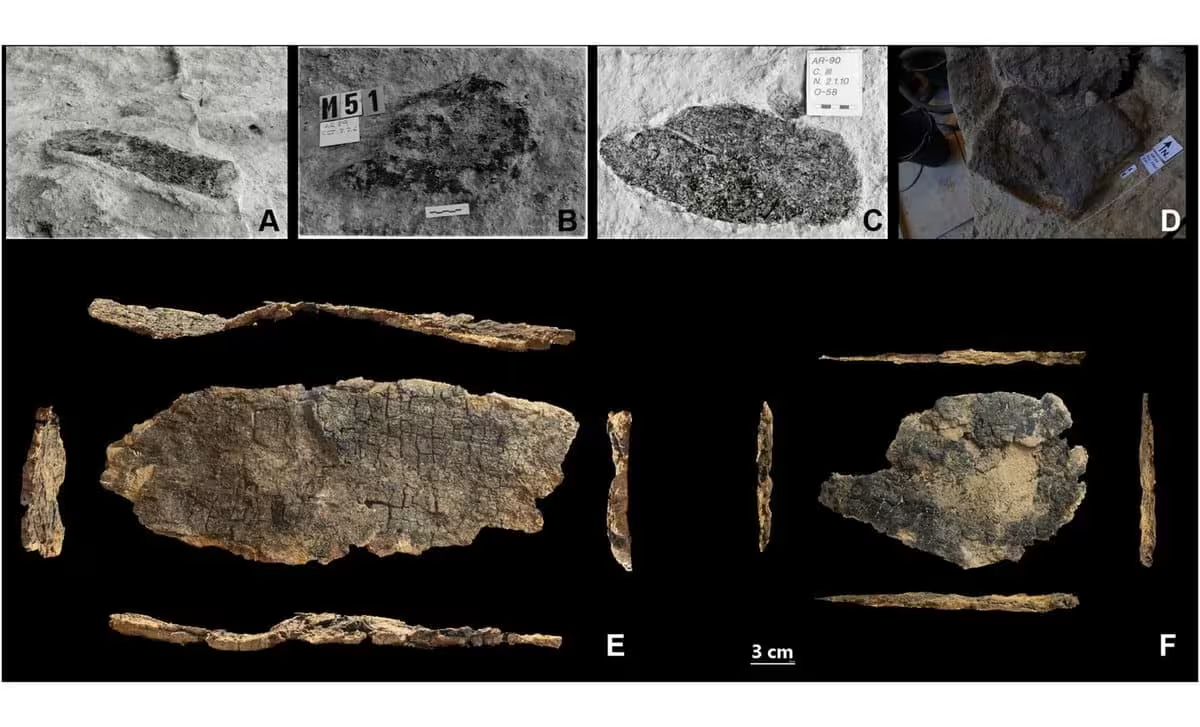
The collection also sheds light on domestic life. Excavators identified roughly meter-long pointed implements, likely used as digging sticks for foraging underground tubers or preparing hearth pits. Furthermore, researchers identified several concave, charred bark fragments that may have functioned as primitive trays for transporting food or managing embers. Unlike the pine that characterized most of the site, these trays were fashioned from juniper, suggesting a specific selection of materials based on function.
A Rare Club and Potential Architectural Elements
Perhaps the most enigmatic find is an artifact from level P, which features a distinct handle and a triangular, pointed head. With visible scraping marks indicating deliberate shaping, the object is believed to be a percussion tool or club. Such items are exceedingly rare in the Paleolithic record, with the only comparable discovery originating from the much older Kalambo Falls site in Zambia. The function of this specific tool remains open to debate, ranging from its use in hunting and fishing to potential roles in social conflict.
Evidence for structural complexity was also present. At level N, a 5.10-meter-long pole was discovered situated near a series of hearths, leading researchers to theorize that it could have been part of a windbreak or a more permanent shelter. While the specific layout of such structures is lost to time, the presence of these materials at Abric Romaní confirms that Neanderthals were adept at manipulating their environment, utilizing everything from Scots pine to juniper to build, heat, and hunt within the challenging landscapes of prehistoric Europe.
This article has been fact checked for accuracy, with information verified against reputable sources. Learn more about us and our editorial process.
Last reviewed on .
Article history
- Latest version
Reference(s)
- Saladié, Palmira., et al. “Neanderthal woodworking at Abric Romaní: Insights into the role of wood in a Middle Palaeolithic domestic context.” Science Advances, vol. 12, no. 41, October 9, 2026 American Association for the Advancement of Science (AAAS), doi: 10.1126/sciadv.aeh2287. <https://www.science.org/doi/10.1126/sciadv.aeh2287>.
- <https://www.researchgate.net/profile/Palmira-Saladie>.
Cite this page:
- Posted by Vikram Desai