Scientists Discover Mysterious Never-Before-Seen Metal Inside Hiroshima Bombing Debris
Researchers have discovered a microscopic grain that survived the Hiroshima fireball, revealing a strange internal structure locked inside for decades.
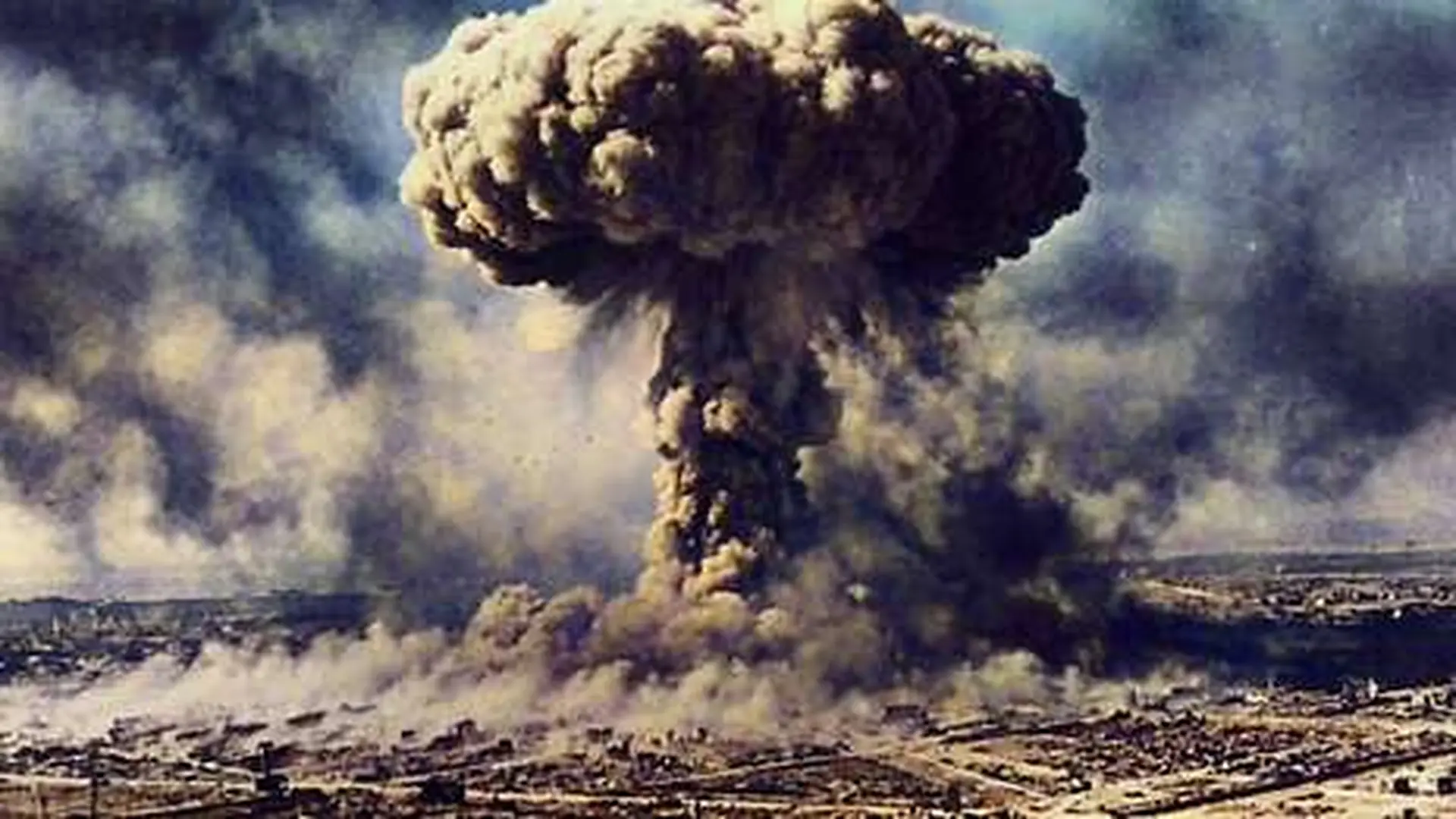
Tucked away within the mundane sand dunes along Hiroshima Bay lie microscopic remnants of a catastrophic event. These glassy, spherical particles, ranging from micrometers to millimeters in size, are often ignored by passersby, yet they serve as silent, physical records of the atomic blast that leveled the city on August 6, 1945.
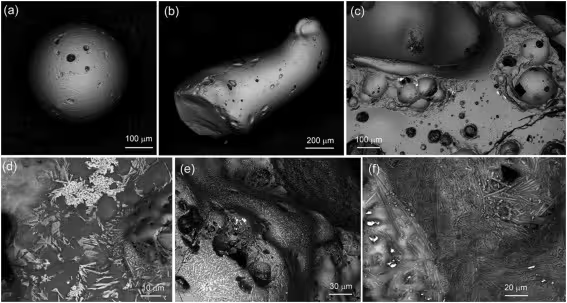
When the atomic bomb detonated 580 meters above Hiroshima, temperatures within the fireball soared past 7,000 °C. This intense heat vaporized urban infrastructure, soil, and water, creating a turbulent cloud of molten material. As the plume cooled, this vapor condensed into droplets that eventually fell to Earth as fallout. Researchers have coined these glassy beads hiroshimaites, and a recent investigation has revealed a previously unknown metallic structure hidden deep inside one of these specimens.
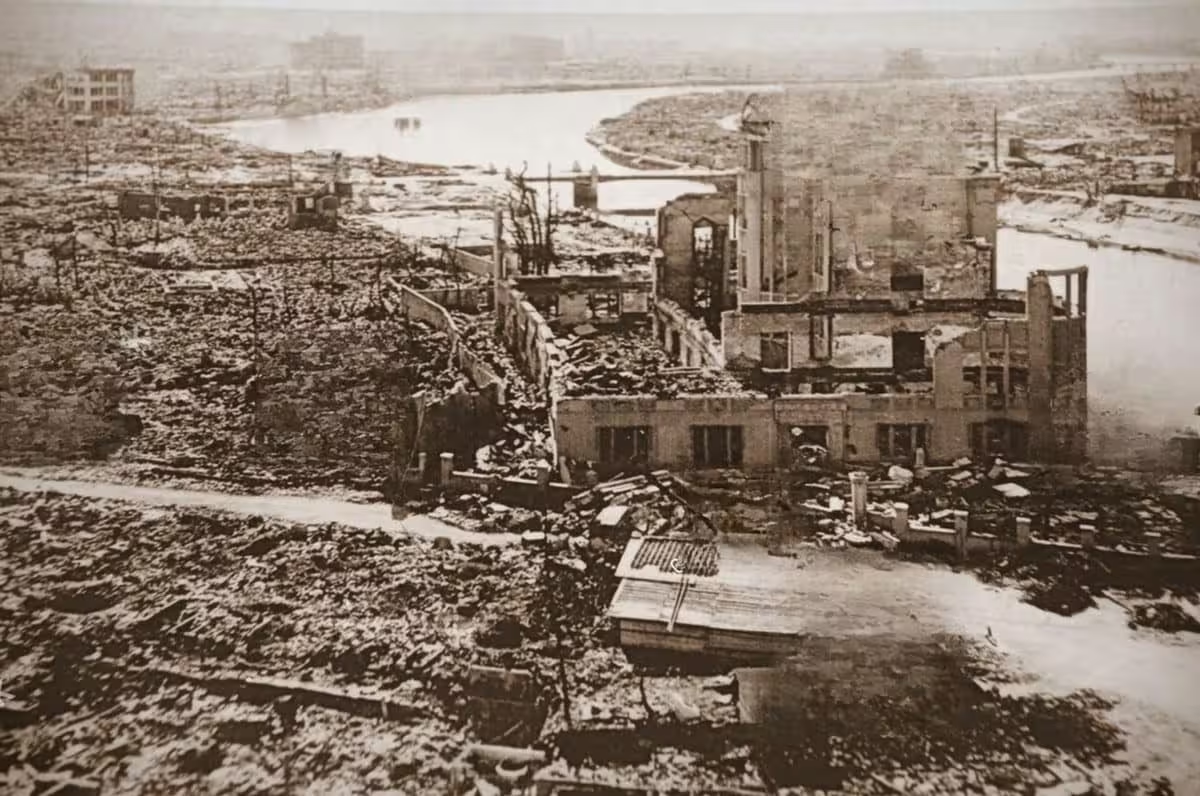
A Rare Atomic Arrangement Discovered in Fallout
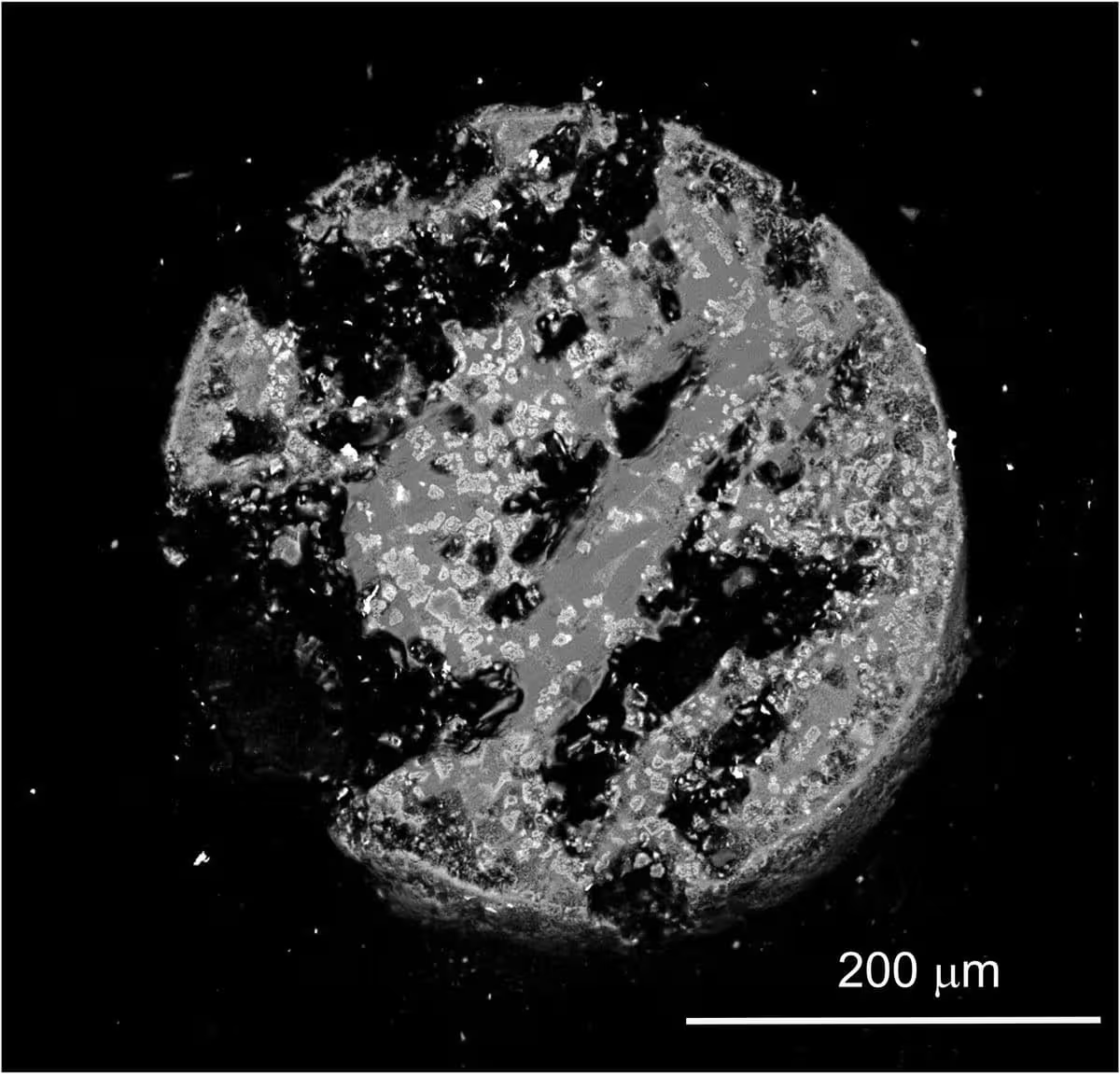
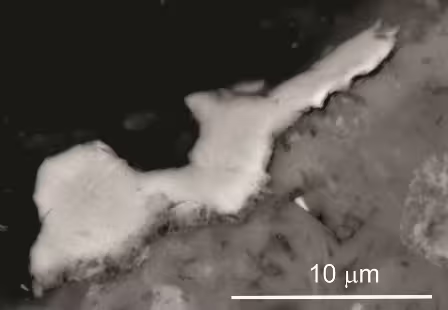
A team led by University of Florence crystallographer Luca Bindi analyzed these particles, documenting their findings in Science Advances. Inside one hiroshimaite, the researchers discovered a metallic grain featuring a unique seven-element composition—iron, chromium, silicon, nickel, manganese, molybdenum, and aluminum—arranged in a crystal lattice never before seen in scientific literature.
This substance is categorized as a multicomponent alloy. Unlike traditional alloys where one base metal dominates, this grain consists of five or more principal elements, likely sourced from the city’s vaporized buildings and structures. Using single-crystal X-ray diffraction, the team confirmed a cubic structure of the AlAu4 type, an arrangement that defies standard metallurgical expectations for such a blend of elements.
Bindi suggests that the extreme conditions of the atomic explosion, coupled with near-instantaneous cooling, forced the atoms into this metastable state. This prevented the material from settling into more conventional, stable structures, effectively freezing the rare configuration in place.
An Accidental Laboratory
Identifying this grain was a meticulous process. Researchers screened 34 hiroshimaites using electron microscopy and chemical analysis. While most metallic inclusions within these spheres were standard iron-chromium alloys, this single microscopic grain stood out. Bindi describes the event as a giant, accidental laboratory for material science, comparable to the extreme pressures found in lightning strikes, meteorite impacts, or hypervelocity planetary collisions.
This is not the first time researchers have scoured nuclear fallout for exotic structures. In 2021, Bindi’s team identified a quasicrystal in trinitite, the glass formed during the 1945 Trinity test in New Mexico. While the Hiroshima alloy is not a quasicrystal, it shares a similar origin story rooted in high-energy, man-made environments. However, the complexity of hiroshimaites—which can contain signatures of Hiroshima’s urban makeup, such as marble, concrete, and rubber—distinguishes them from the relatively uniform trinitite.
The existence of these particles was first documented in 2015 by geologist Mario Wannier, who painstakingly sorted through some 10,000 sand grains collected from Japan’s Motoujina Peninsula. As scientists continue to analyze these fragments, they are uncovering a new perspective on the intersection of human destruction and rare material formation, proving that even in the aftermath of tragedy, there are secrets of nature waiting to be decoded.
This article has been fact checked for accuracy, with information verified against reputable sources. Learn more about us and our editorial process.
Last reviewed on .
Article history
- Latest version
Reference(s)
- Bindi, Luca., et al. “Discovery of a multicomponent alloy forged by the Hiroshima atomic blast.” Science Advances, vol. 12, no. 31, July 31, 2026 American Association for the Advancement of Science (AAAS), doi: 10.1126/sciadv.aeg8299. <https://www.science.org/doi/10.1126/sciadv.aeg8299>.
Cite this page:
- Posted by Bilal Abbasi