The 1961 SL-1 Reactor Explosion: Why a 20-Inch Rod Pull Still Defies Explanation
The 1961 Idaho reactor explosion ended in milliseconds, yet its cause and lingering design flaws still spark debate decades later.
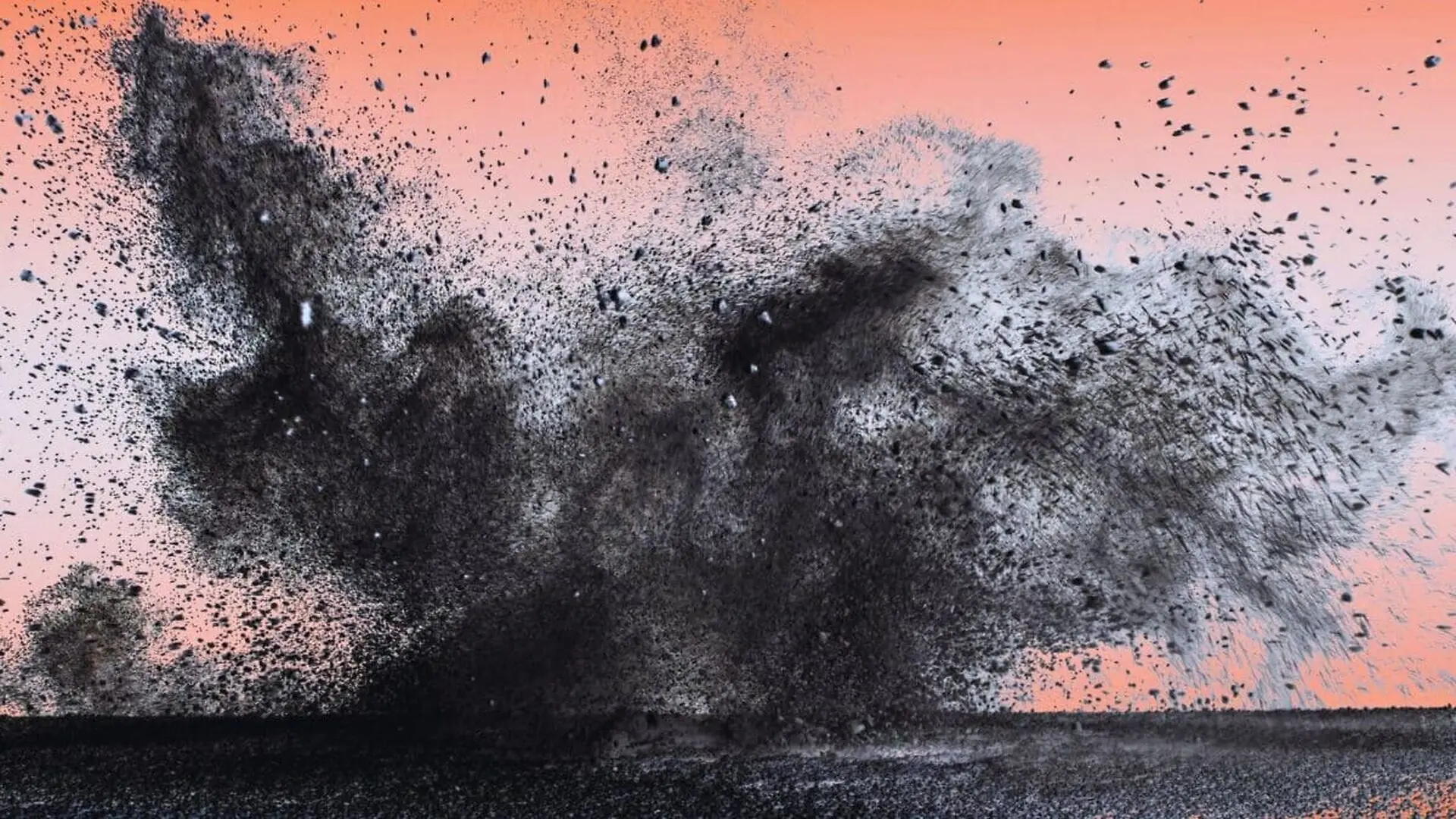
On the morning of 3 January 1961, a routine restart of the Army’s SL‑1 reactor in Idaho went tragically wrong when the central control rod was lifted far beyond its intended position, sparking an instantaneous power surge that killed the three technicians inside the building.
A Small Reactor Designed for Isolated Military Sites
Developed under the Army Nuclear Power Program, the Stationary Low‑Power Reactor Number One was meant to supply electricity and heat to remote installations such as Distant Early Warning radar stations in Alaska and Greenland, where conventional power grids were impractical. The compact design promised a reliable energy source for locations cut off from standard utilities.
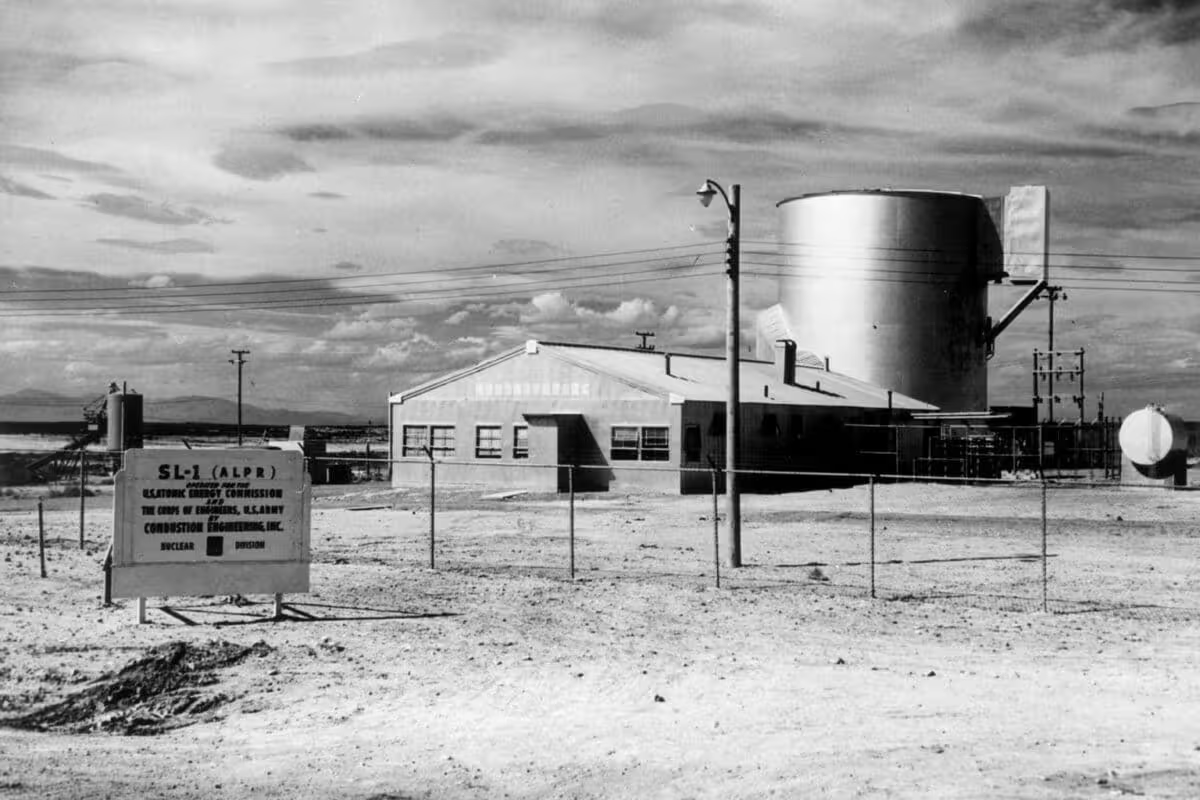
The reactor began producing power in August 1958 at the National Engineering Laboratory near Atomic City, Idaho, delivering about three megawatts. After more than two years of trouble‑free operation, the crew shut it down on 23 December 1960 for the holiday break, fully inserting the central rod and disconnecting its drive mechanism.
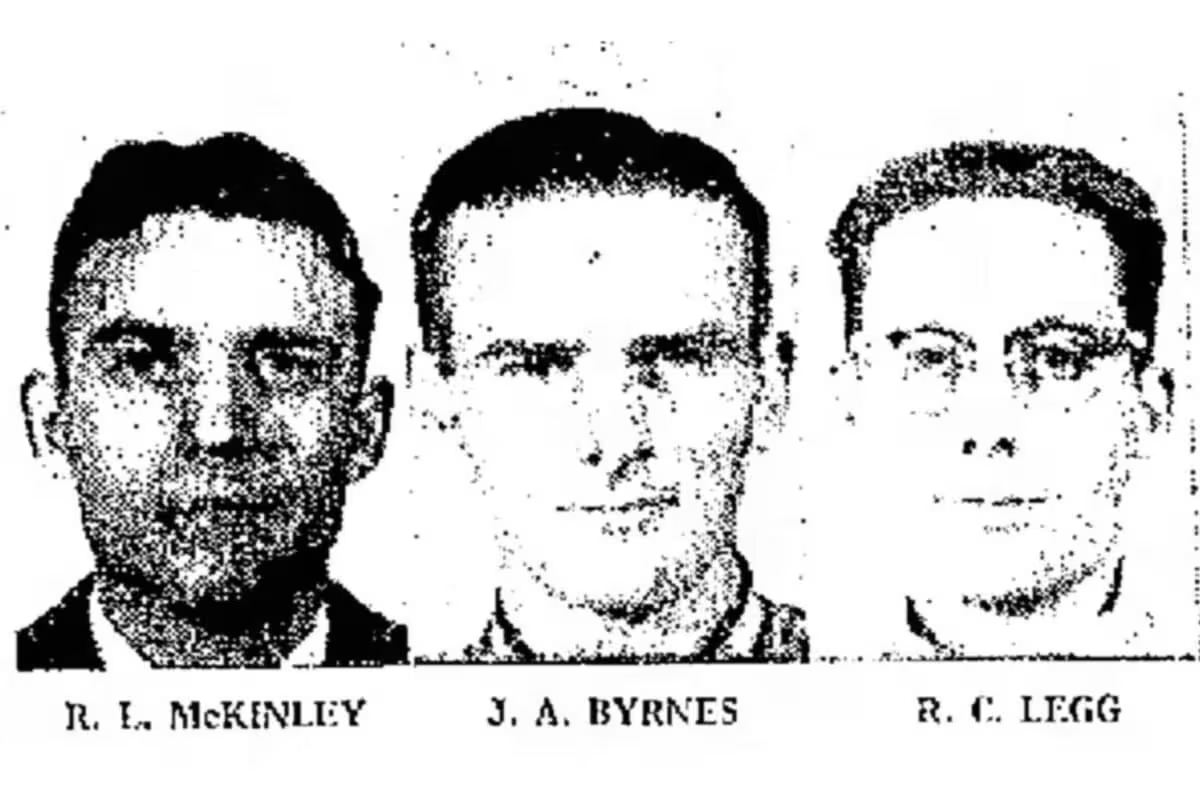
On 3 January 1961, Army specialists Jack Byrnes and Richard McKinley, together with Navy Seabee Richard Legg, returned to restart the unit. Their task required a modest four‑inch lift of the central rod to re‑engage the drive. Instead, the rod surged upward roughly 20 inches, prompting an uncontrolled power increase.
Power Spike Occurred in a Fraction of a Second
In a nuclear reactor, control rods absorb neutrons and thus regulate the fission chain reaction. Lowering a rod dampens the reaction, while raising it allows the rate to climb. At SL‑1, the central rod exercised unusually strong influence, so an excessive lift caused a near‑instantaneous surge rather than a gradual rise that operators could manage.
The abrupt energy release instantly heated the water coolant, turning it into a rapidly expanding steam cloud. The resulting steam explosion shattered the core, hurled reactor components, and inflicted catastrophic damage on the vessel. One of the three men was impaled by the ejected rod and became lodged in the ceiling; all three perished inside the building.
Most of the radioactive material stayed within the reactor structure, though a plume of iodine traveled downwind. Radiation levels inside the building were so extreme that rescue workers could only remain in the most contaminated zones for about one minute at a time while wearing protective gear. Ultimately, the damaged reactor and contaminated debris were buried on site because of the persistent hazard.
A video reconstruction of the SL‑1 incident illustrates the plant layout, the restart steps, and the chain of events that followed the unexpected rod movement, while also summarizing the theories investigators pursued.
Investigators Explored Several Scenarios
A leaked memorandum from an Atomic Energy Commission safety official suggested that Byrnes might have acted deliberately, motivated by a personal dispute involving Legg and Byrnes’s wife. The memo noted that most experts dismiss this motive, and no surviving witness could confirm the final moments of the restart.
Another line of inquiry considered whether careless behavior or “goosing” – a sudden pinch that can cause a startled worker to yank a rod upward – could have produced the accident. Laboratory tests showed that such a reaction could move a rod up to ten inches, but none replicated the full 20‑inch displacement recorded after the event.
Former Idaho National Laboratory safety analyst Tami Thatcher argued that investigators paid insufficient attention to a possible mechanical failure. She told The New York Post that the rod may have become stuck, requiring extra force before it suddenly released and travelled far beyond the intended lift, describing the outcome as a “cover‑up.”
Investigator Wayne Bills expressed doubt that an ordinary accidental movement could account for the full distance. In conversation with author William McKeown he remarked, “It all came down to the center rod being pulled up too far by a crewman. I don’t think you’d overshoot it like that. The fellow could have stopped if it wasn’t some kind of just deliberate ‘to hell with it’ action.” His comments underscored skepticism about the accidental explanation while leaving the cause unresolved.
Design Weakness: One Rod Held Too Much Power
The SL‑1 accident highlighted a fundamental flaw in the reactor’s architecture: a single central control rod wielded enough authority to produce a massive power jump. Pulling that rod beyond its safe limit could destabilize the entire core almost instantly, offering operators virtually no time to intervene.
Subsequent reactor designs distributed control authority across multiple rods, preventing any one movement from causing a catastrophic surge. William McKeown noted that many former nuclear workers believed the three men died because they were operating a poorly engineered system rather than because of individual malice or negligence. In that view, the crew’s action initiated the event, but the reactor’s design amplified the mistake into a fatal outcome.
The restart protocol required a precise four‑inch lift, yet a 20‑inch displacement triggered a destructive power spike within milliseconds. That stark contrast between the required and actual rod positions defines both the physical cause of the accident and the enduring debate over what exactly transpired inside the Idaho facility.
This article has been fact checked for accuracy, with information verified against reputable sources. Learn more about us and our editorial process.
Last reviewed on .
Article history
- Latest version
Cite this page:
- Posted by Zara Tariq