Earth-Like Planets May Have Started Forming Just 100 Million Years After The Big Bang
New research reveals that enough material to form several Earth-sized planets existed shortly after the Big Bang, defying previous cosmic timelines.
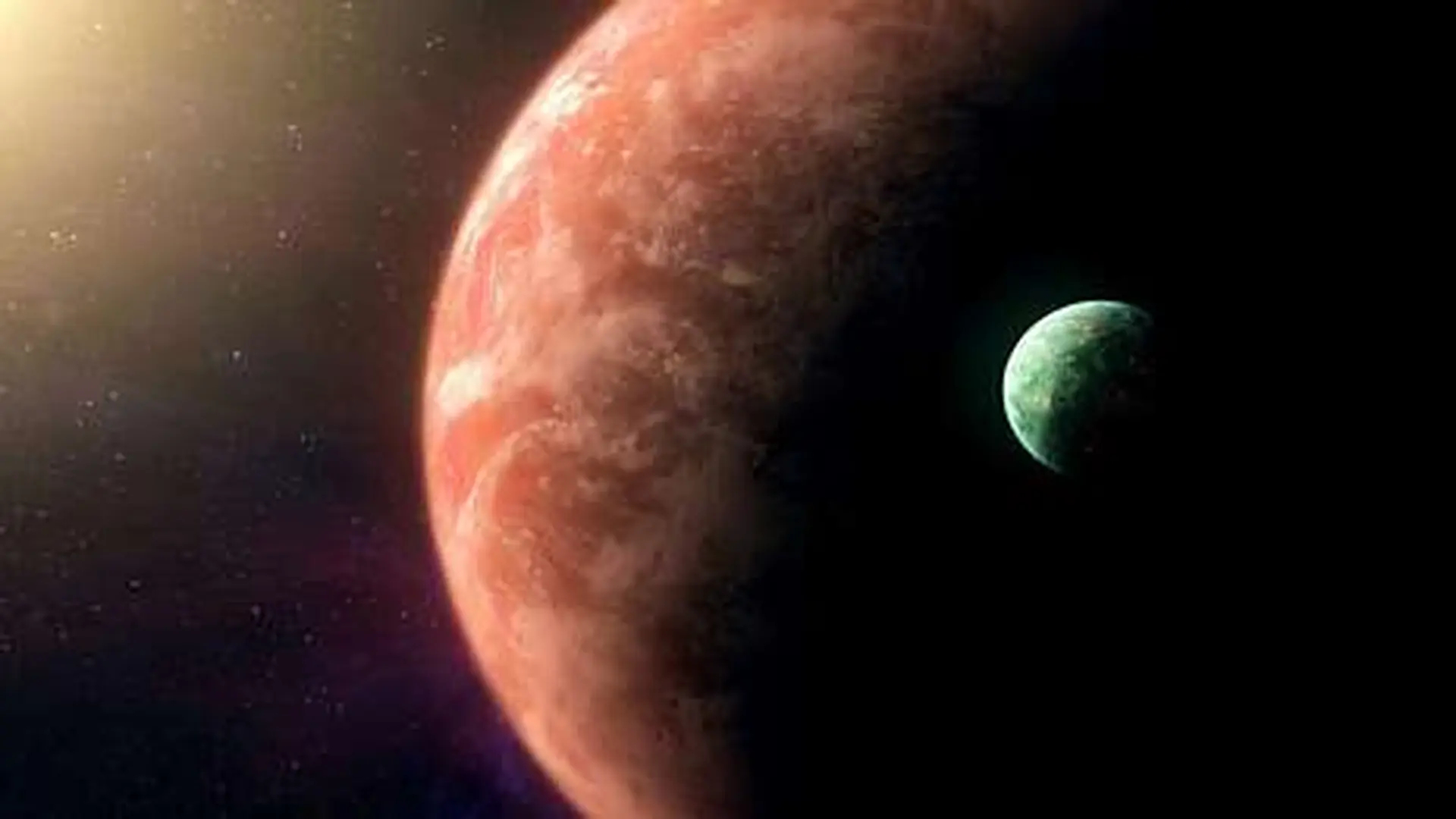
New computational models indicate that the fundamental building blocks required for Earth-like planets may have emerged as early as 100 million years following the Big Bang. This timeline significantly accelerates the history of planetary development, suggesting that the nascent universe was capable of manufacturing the heavy elements necessary for rocky worlds billions of years sooner than previously assumed.
The chemical composition of the early cosmos was originally limited to hydrogen and helium. Heavier elements essential for planet formation—such as carbon, iron, silicon, and oxygen—were absent until the first generation of stars, known as Population III stars, synthesized them. These elements were only dispersed into the surrounding interstellar medium once these massive stars reached the end of their lives and exploded, seeding the environment with the raw materials needed for subsequent stellar and planetary cycles.
Supernova Explosions Paved the Way for Planetary Seeds
A study led by researchers at the University of Portsmouth investigates the impact of pair-instability supernovae, which are among the most cataclysmic events in the universe. Unlike conventional stellar deaths, these massive explosions completely obliterate the progenitor star, ejecting vast quantities of heavy elements into space. According to the research team, which includes Daniel Whalen, these events could release upwards of 100 times the mass of the Sun in elements heavier than hydrogen and helium.
This massive enrichment raised the metallicity of nearby gas clouds, providing the physical density required for solid particles to coalesce. These tiny grains served as the foundation for planetesimals, the primitive precursors to full-scale planets. By simulating the aftermath of these explosions, researchers found that these building blocks could materialize around lower-mass stars during the universe’s formative epochs.
Protoplanetary Discs in the Early Universe
The simulations traced how this enriched gas collapsed under the influence of gravity to form a young star encircled by a rotating protoplanetary disc, mirroring the processes that birthed our own solar system. In a model featuring a star with approximately 70% of the Sun’s mass, researchers detected sufficient solid material to generate several Earth-masses of planetesimals located between 0.5 and 1 astronomical unit from the host star.
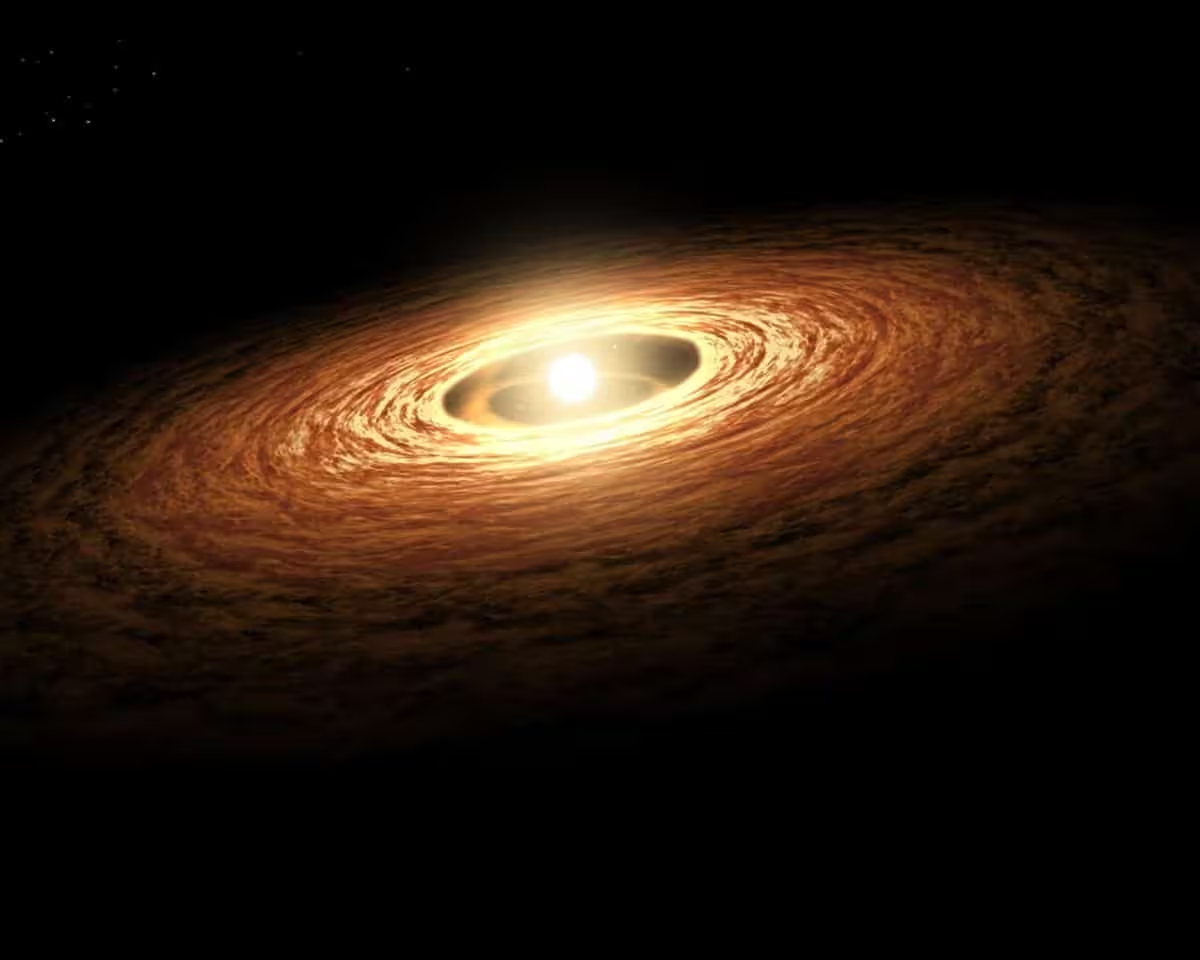
Whalen noted that the presence of these discs suggests that the materials for rocky worlds were readily available long before standard cosmic models predicted. Furthermore, the simulations indicated that these environments were rich in water, with concentrations only marginally lower than those observed during the formation of the Solar System. This implies that early planetary bodies might have acquired water through mechanisms akin to those that shaped the early Earth.
Seeking Ancient Relics in the Milky Way
Because stars with lower masses—such as those possessing 40% of the Sun’s mass—exhibit remarkably long lifespans, it is possible that stars formed in these early, enriched environments still reside within the Milky Way today. Identifying these ancient stars could offer astronomers a unique opportunity to study the chemical footprints of the universe’s earliest planetary systems.
“Our findings suggest that the conditions for planet formation may have existed much earlier than previously thought. If that’s the case, it raises an intriguing question: could potentially habitable worlds have appeared far earlier in the Universe’s history as well?” noted Whalen.
While these findings do not confirm the existence of ancient, habitable planets, they fundamentally shift our understanding of cosmic evolution, proving that the chemical scaffolding for rocky worlds was constructed within the first fraction of the universe’s life.
This article has been fact checked for accuracy, with information verified against reputable sources. Learn more about us and our editorial process.
Last reviewed on .
Article history
- Latest version
Reference(s)
- Vorobyov, Eduard. “Planet Formation at Cosmic Dawn: Planetesimals in H$_2$O-Rich Disks Around Low-Mass Stars.” arXiv.org <https://arxiv.org/abs/2501.08375>.
- “Daniel Whalen.” University of Portsmouth <https://www.port.ac.uk/about-us/structure-and-governance/our-people/our-staff/daniel-whalen>.
Cite this page:
- Posted by Bilal Abbasi