Can Deep Learning Really Predict The Stock Market Or Are Popular AI Studies Flawed
A rigorous new benchmark reveals that common evaluation errors create the illusion of high financial forecasting accuracy.
Advanced machine learning models struggle to beat a simple method that assumes tomorrow will look exactly like today when predicting daily stock market movements. Researchers have found that decades of published studies claiming major breakthroughs in financial forecasting may be built on flawed evaluation techniques rather than genuine predictive power.
Financial algorithms let automated trading systems process millions of data points to forecast asset values, but testing these models accurately is notoriously difficult. When Hari Sitaula and Joseph Opitz from Montana Technological University investigated standard practices in the field, available on the arXiv preprint server, they discovered that three common methodological traps routinely inflate reported accuracy. Many published papers evaluate models against smoothed targets rather than actual prices, omit basic comparison baselines, or cherry-pick the single best run out of dozens of training attempts.
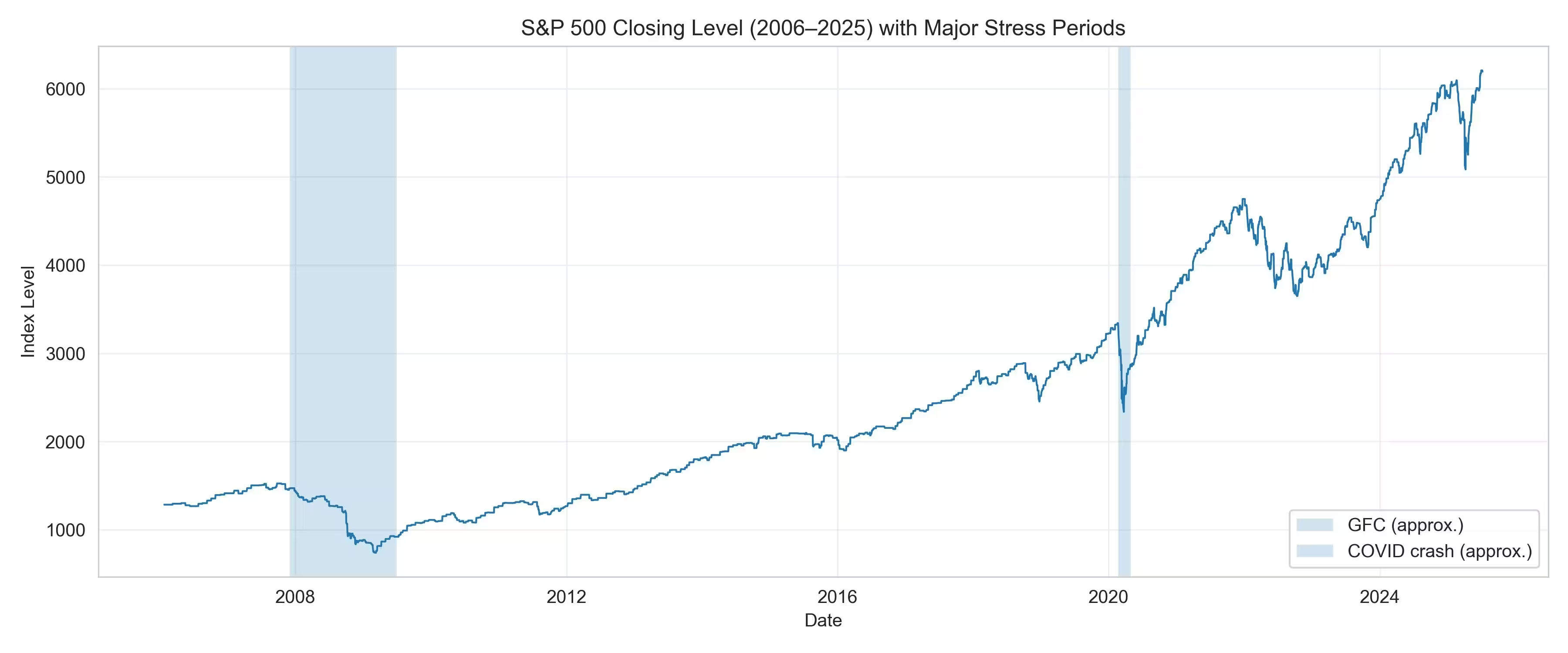
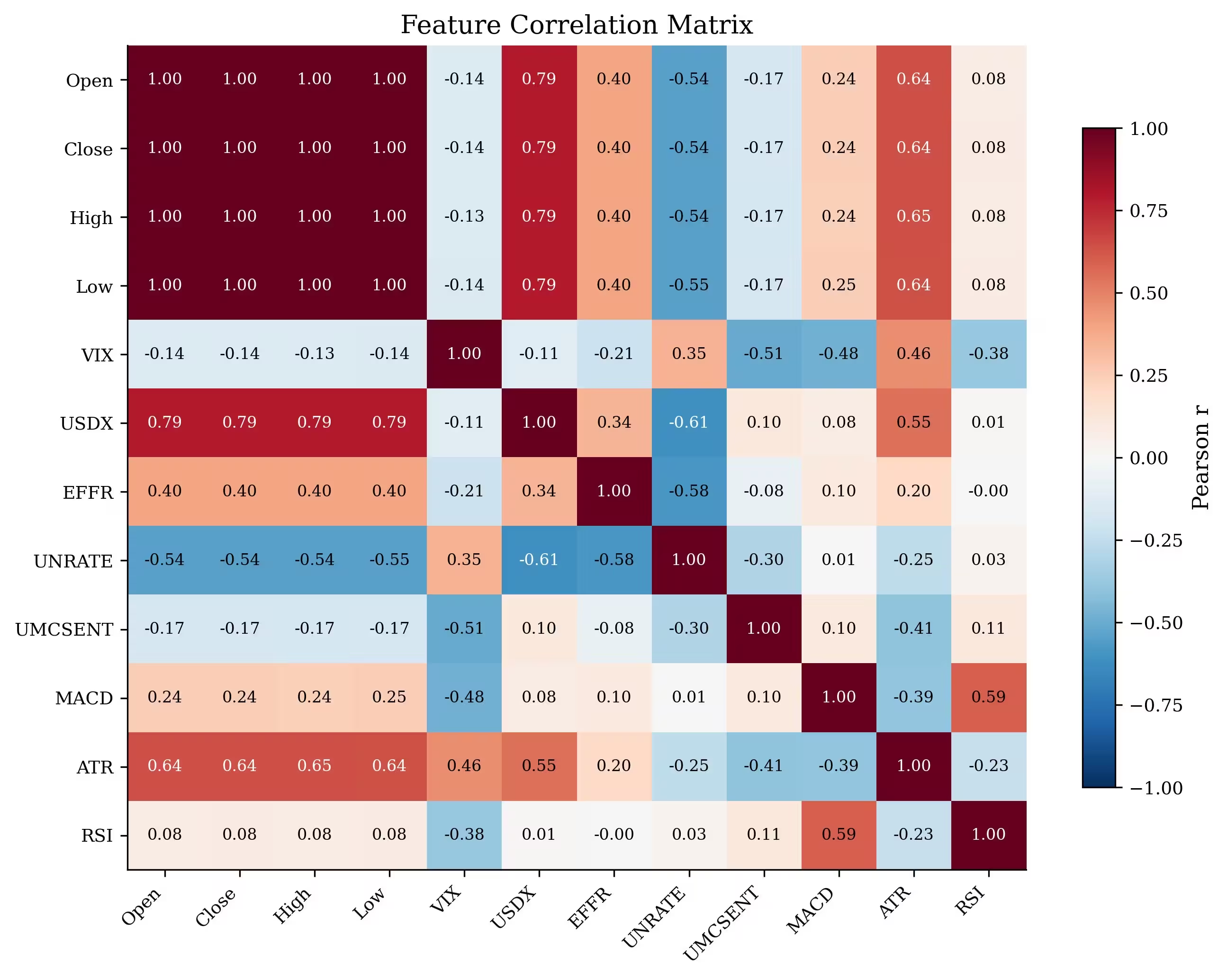
To test what happens when these distortions are removed, the team built a unified evaluation pipeline using data spanning from 2006 to 2025. They fed fundamental price information, economic indicators, and technical signals into linear regression, traditional recurrent neural networks, and long short-term memory networks. Each model was evaluated across thirty independent training replicates to measure true consistency rather than best-case luck.
Why Do Traditional Machine Learning Models Fail To Beat Simple Baselines?
When evaluated without signal smoothing or selective reporting, none of the tested deep learning architectures or linear models managed to outperform a naive persistence forecast. The persistence baseline, which simply assumes tomorrow’s closing price will equal today’s closing price without using any parameters or features, achieved a root mean squared error of 53.16 index points. In contrast, the best-performing neural network configuration produced an error of 53.97 index points, falling slightly short of the basic baseline.
The researchers discovered that combining just three common evaluation errors can make an inaccurate model look like it delivers a massive thirty to forty percent improvement over baseline performance. For instance, applying signal-denoising techniques to both training and test targets grades a model on its ability to follow a smoothed mathematical curve rather than chaotic real-world trading prices. When those artificial filters are stripped away, the illusion of high predictability vanishes.
What Does This Mean For Future Financial Technology Research?
The findings indicate that daily stock market indices behave very close to a random walk, leaving little room for standard algorithms to extract short-term predictive signals from low-frequency closing data. While deep learning models remain powerful tools for image recognition and natural language processing, off-the-shelf neural architectures do not automatically translate into profitable financial edges when applied to daily index closing levels.
The authors recommend that future studies always include a persistence baseline and report full distributional performance across multiple replicates instead of publishing cherry-picked results. Researchers hoping to build better forecasting tools may need to shift their focus toward higher-frequency intraday data, alternative market targets like volatility, or different asset classes where stronger temporal patterns exist.
The study was posted to the arXiv preprint server on November 20, 2026.
This article has been fact checked for accuracy, with information verified against reputable sources. Learn more about us and our editorial process.
Last reviewed on .
Article history
- Latest version
Reference(s)
- Sitaula, Hari. “A Methodologically Rigorous Benchmark of Linear Regression,RNN, and LSTM for S&P 500 Forecasting:Identifying Sources of Performance Inflation in Financial DeepLearning.” arXiv.org <http://arxiv.org/abs/2611.27978v1>.
Cite this page:
- Posted by James Whitmore