Mysterious Mongolian Fossils May Rewrite the Origin Story of the Animal Kingdom
When did animals first emerge? Scientists are grappling with a conflict between fossil evidence and chemical signatures to solve this ancient mystery.
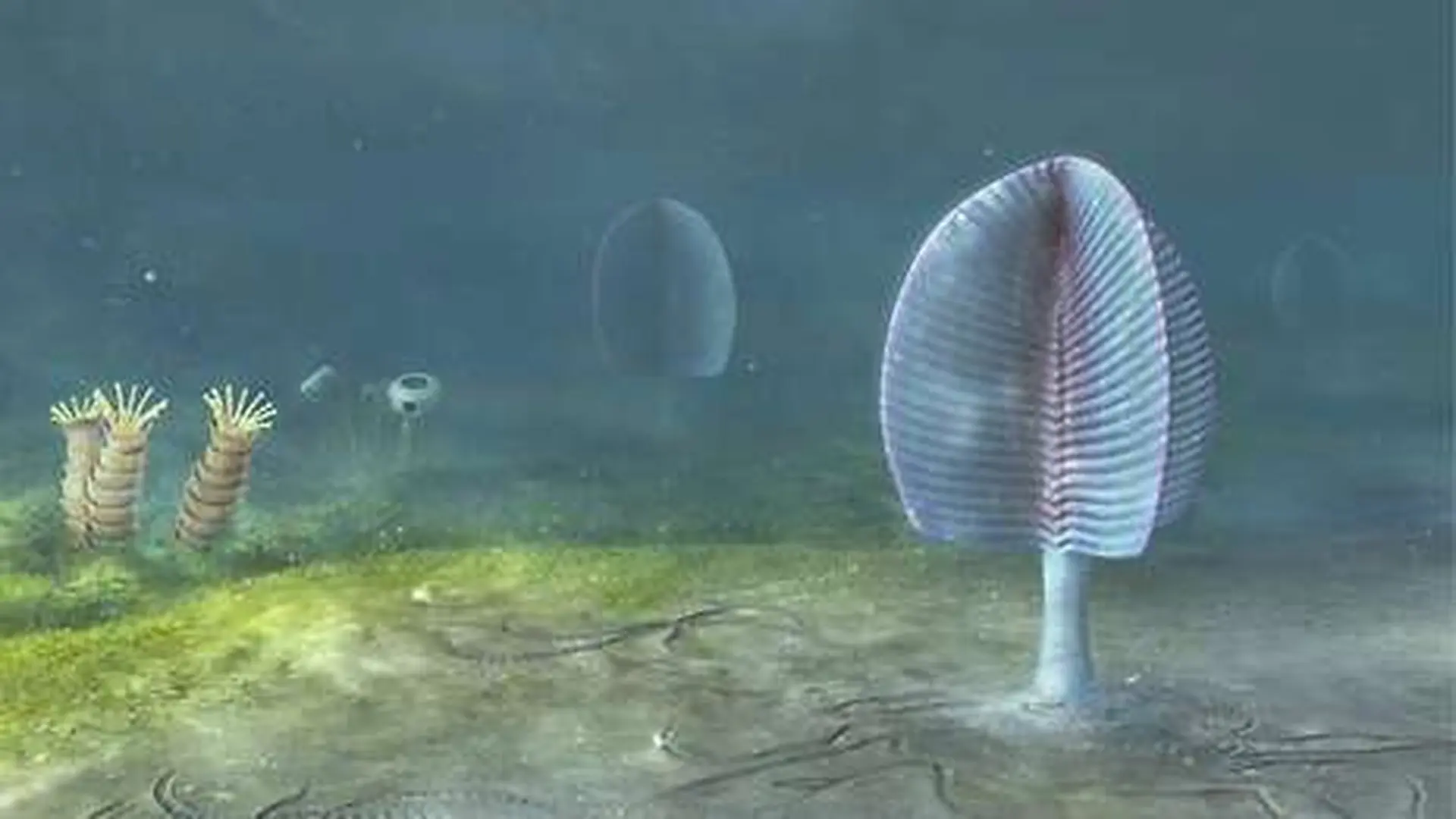
The timeline of animal evolution has long been anchored by the Ediacaran biota, with undisputed fossils appearing roughly 574 million years ago. However, new research suggests this date may significantly underestimate the true age of the animal kingdom. By challenging the reliability of certain fossil deposits used to calibrate evolutionary models, a team of paleontologists has opened the door to the possibility that animals emerged as early as 700 to 800 million years ago.
Resolving the Discrepancy Between Rocks and Chemistry
For years, a persistent conflict has existed between the physical fossil record and molecular clocks, which estimate evolutionary divergence based on genetic mutations in living organisms. While macroscopic animal fossils appear relatively abruptly in the geologic record, chemical evidence—specifically lipid biomarkers associated with sponges—suggests that animal life may have existed before 635 million years ago. Reconciling this “stark dichotomy” has become a primary objective for researchers like Orin Lole Durbin of Virginia Tech and Ross Anderson of Oxford University.
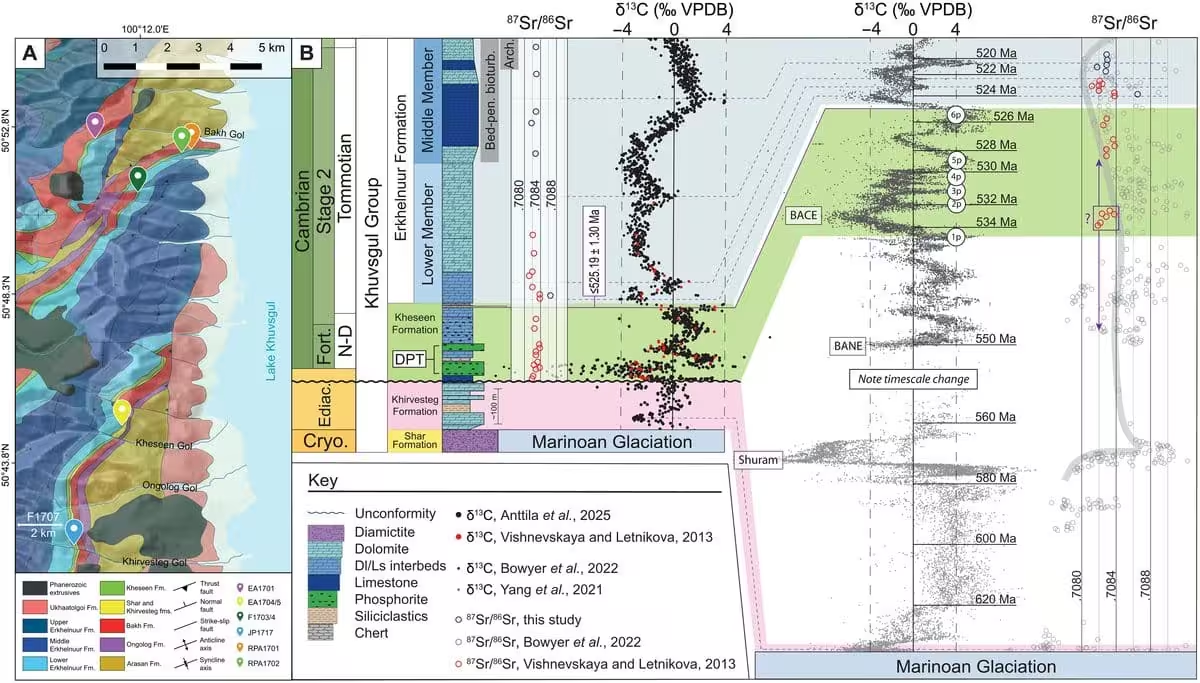
The problem often lies in how researchers determine the “latest possible date” for the emergence of animal life. Many studies have relied on specific, well-preserved fossil assemblages to act as a ceiling for these estimates, assuming that if animals had been present, they would have been captured in the sediment.
The Mongolian Fossil Evidence
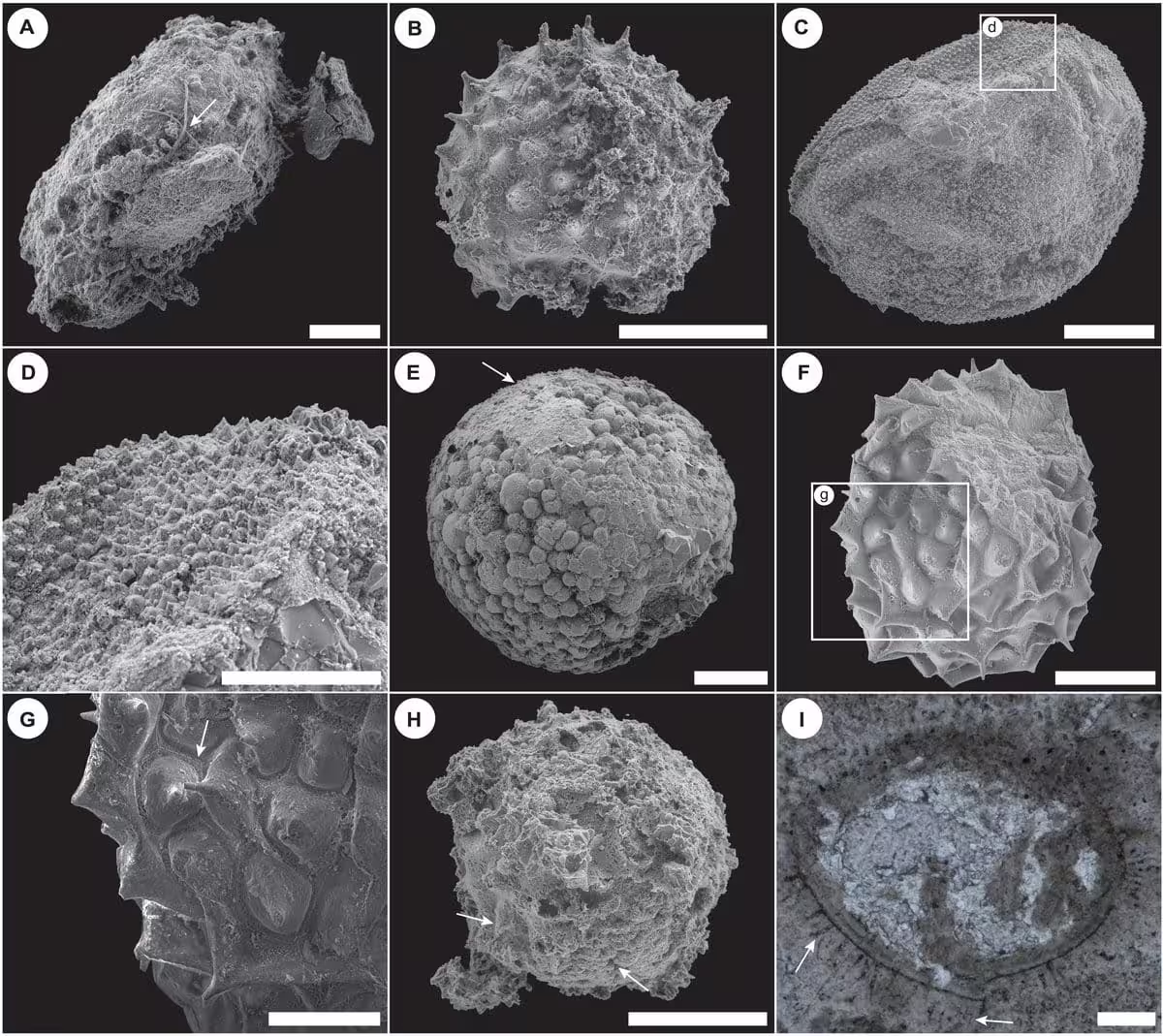
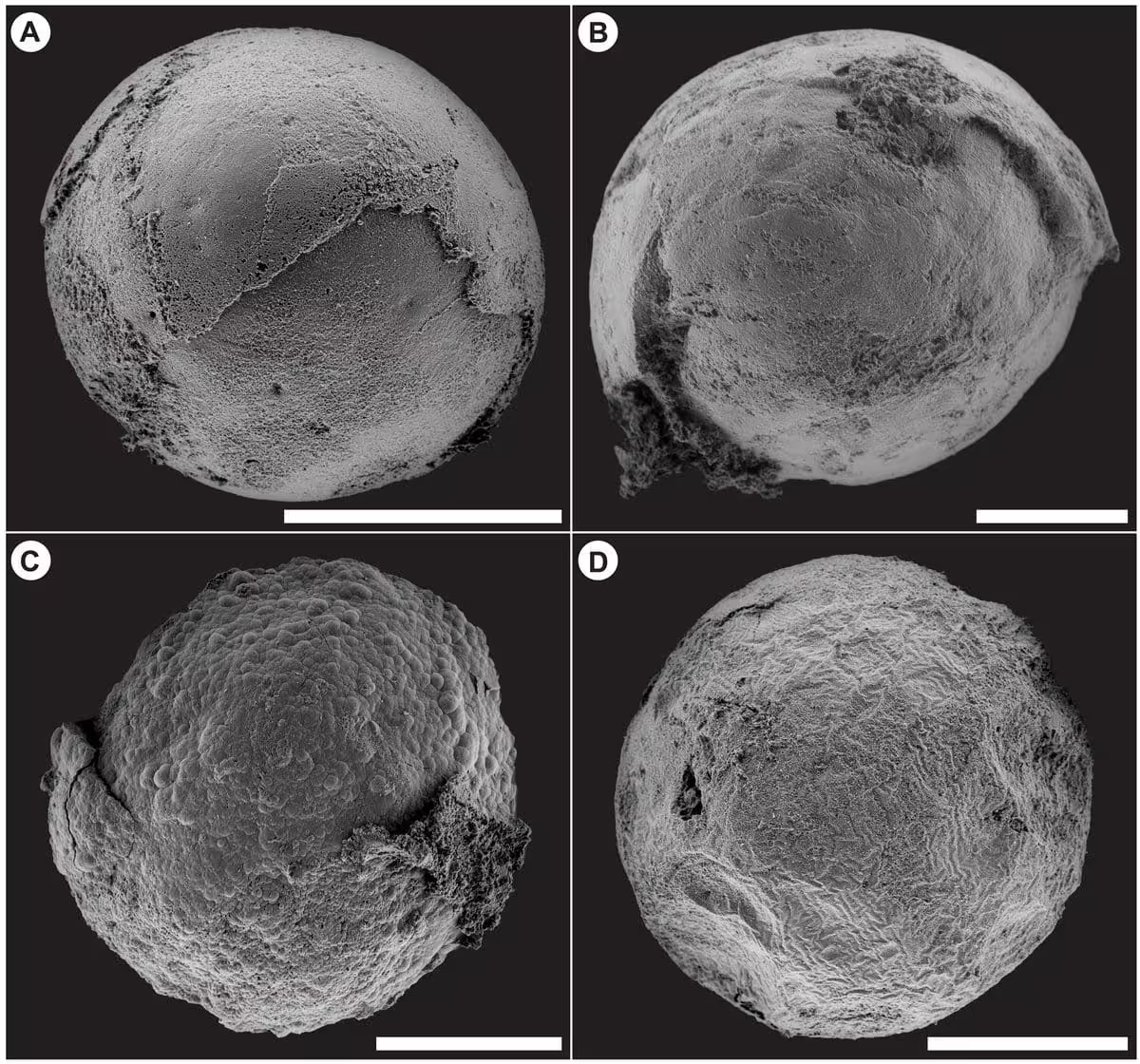
To test this assumption, the research team analyzed the Kheseen Biota in Mongolia, a set of phosphatized microfossils dating back to approximately 550 to 526 million years ago. During this window, animals were known to be thriving in other parts of the world. Yet, despite the excellent preservation of the Kheseen deposits—comparable to the famous Weng’an Biota in China—no animal fossils were found.
“The Kheseen Biota breaks the argument that the exceptional microfossils of Weng’an mean we would have seen animal fossils in the assemblage had they existed at the time,” Dr. Ross Anderson explained. This finding suggests that the absence of fossils in a deposit cannot be definitively used as evidence for the absence of animals, as ecological or geological conditions may have simply prevented their preservation.
Rethinking the Evolutionary Clock
When the team recalibrated their molecular clock models by excluding the younger, potentially misleading calibrations and incorporating older Tonian-age geological data, the resulting estimates for the origin of animals pushed back significantly, landing in the 700 to 800 million-year-old range.
While the study does not offer definitive proof that complex life existed 800 million years ago, it successfully dismantles the rigid reliance on younger fossil benchmarks. Lole Durbin emphasizes that until more comprehensive data—including body fossils, trace fossils, and chemical signatures—are synthesized from diverse environments, the true beginning of the animal kingdom remains a profound, open question.
“Until that evidence becomes available, the precise birth date of the animal kingdom remains uncertain,” Anderson concluded.
This article has been fact checked for accuracy, with information verified against reputable sources. Learn more about us and our editorial process.
Last reviewed on .
Article history
- Latest version
Cite this page:
- Posted by Bilal Abbasi