New British Mars Rover Will Drill Deeper Than Ever Before to Hunt for Ancient Life
A new British-built rover will drill deeper into Mars than ever before, embarking on a critical mission to uncover hidden traces of ancient alien life.
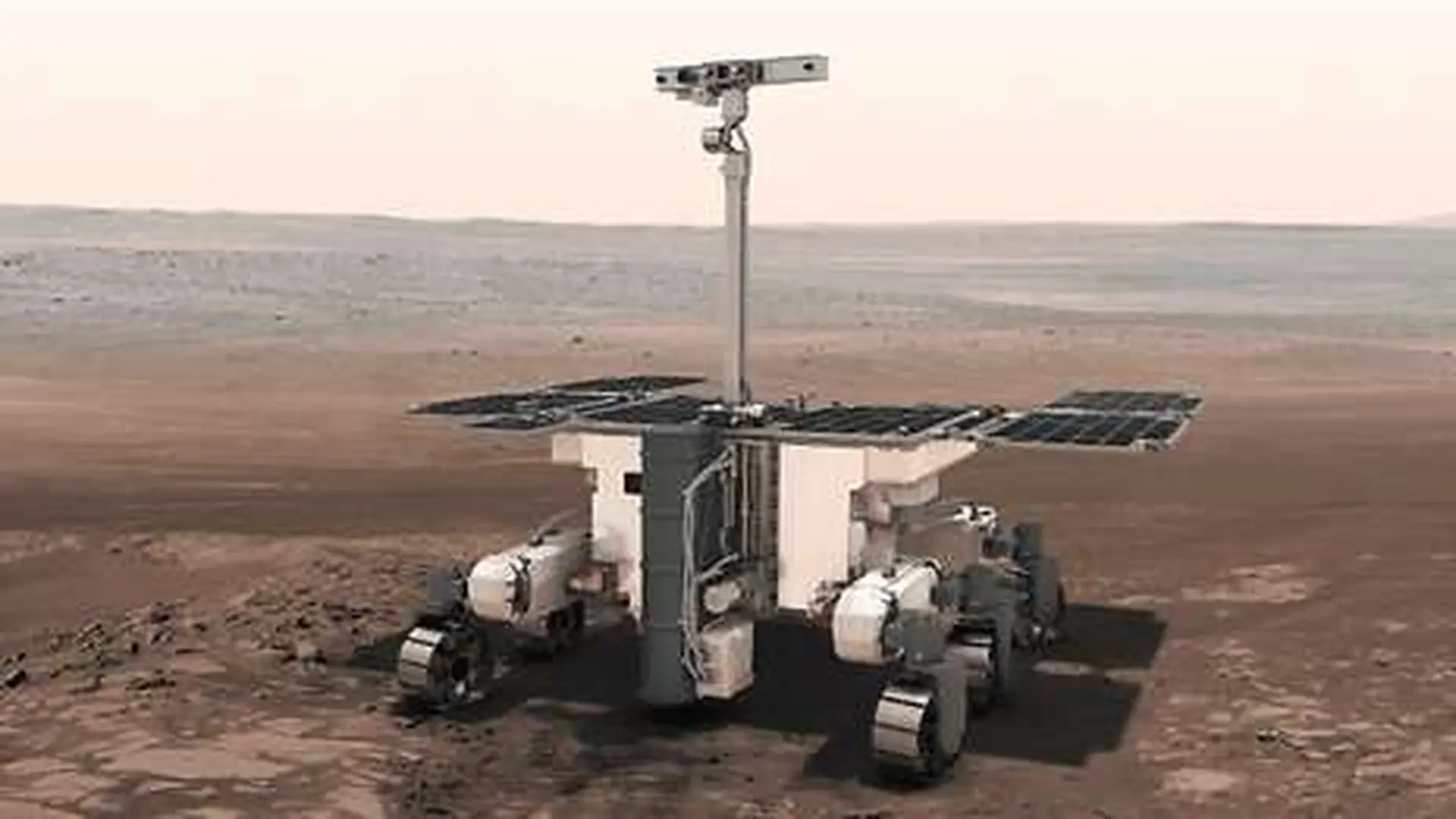
A British-engineered rover, scheduled for a 2028 journey to the Red Planet, is poised to breach the Martian surface at depths never before reached by space exploration. By digging up to two meters (approximately 6.5 feet) into the soil, the ExoMars Rosalind Franklin rover aims to bypass the harsh cosmic radiation that has sterilized the surface for billions of years, potentially uncovering a pristine record of ancient biological activity.
Drilling Into the Martian Past
Developed by Airbus in Stevenage, England, for the European Space Agency, the rover is slated to touch down on Mars in 2030. Previous missions have largely focused on surface or near-surface samples, which are frequently compromised by solar and cosmic rays that break down delicate organic molecules. The Rosalind Franklin mission represents a strategic shift: by probing deep beneath the regolith, researchers hope to access material that has remained protected from these destructive conditions since Mars was a wetter, more hospitable world.
The objective is not to find active life, but to identify biosignatures—molecular or structural evidence that life once thrived in the planet’s distant, water-rich history. This mission serves as both an investigation into past habitability and a critical test of how effectively geological records preserve evidence of ancient biology on a planet that transitioned to a desolate, frozen environment billions of years ago.
The Prospect of a Shared Biological Ancestry
One of the most profound implications of the mission is the potential validation of panspermia, the theory that life or its chemical foundations could be transferred between planets via asteroid impacts. During the solar system’s early, volatile years, Earth and Mars were subjected to intense bombardment, creating a mechanism for rock fragments—and potentially biological material—to travel between the two worlds.
Susanne Schwenzer, a professor of planetary mineralogy at the Open University and a mission scientist, suggests the findings could shift our understanding of our own existence. “If life is the same there, it may be that we are all from the same ancestor,” she explained. “Is panspermia possible? Is it possible for life to travel from one planet for another? We don’t know but these are all questions we have to answer.” Whether life emerged twice independently or was seeded across the solar system, either discovery would fundamentally rewrite the rules of astrobiology.
A Landscape Defined by Ancient Water
Roughly four billion years ago, Mars was a far more dynamic environment, featuring rivers, lakes, and a thicker atmosphere protected by a global magnetic field. However, as the planet’s core cooled and its magnetic protection waned, the atmosphere was stripped away by solar winds, leading to the cold, arid environment we observe today.
The target landing site, Oxia Planum, is rich in ancient clay deposits that formed when water interacted with rock. These clays are prime candidates for capturing and preserving organic material. To navigate this terrain, the rover is equipped with a sophisticated suite of instruments, including panoramic cameras from University College London and an infrared spectrometer developed at Aberystwyth University. These tools will allow the rover to conduct geological analysis, identify subsurface layers with ground-penetrating radar, and select precise drilling sites that maximize the chance of uncovering meaningful data.
Autonomous Exploration in the Face of Deep Space Latency
Operating a rover on Mars requires significant autonomy, as the distance between planets causes signal delays ranging from four to 21 minutes. This makes real-time remote control impossible. While mission operators at the ESA control center in Turin will provide broad objectives, the rover must be capable of independent obstacle avoidance and navigation.
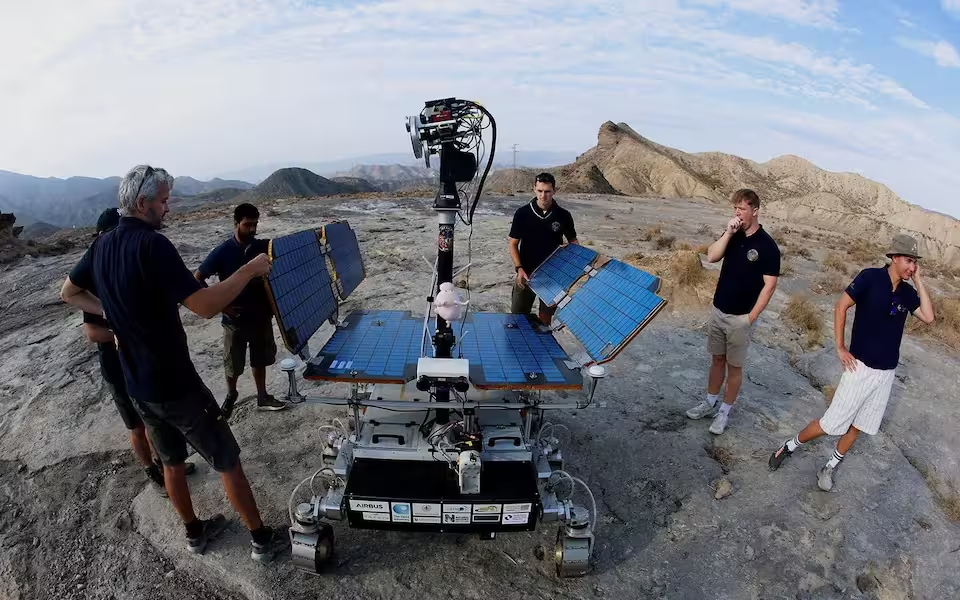
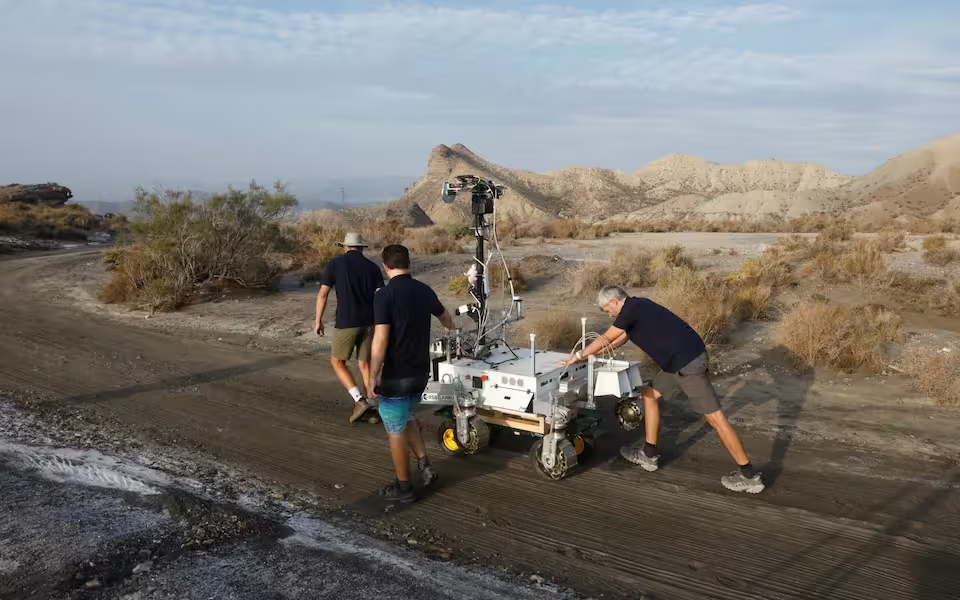
To prepare, the engineering team has been conducting rigorous field tests in the Tabernas Desert in Spain. This harsh, arid landscape serves as a surrogate for the Martian surface, allowing the team to fine-tune the rover’s ability to identify hazards and execute complex drilling sequences autonomously. Success on Mars will require a seamless blend of mechanical reliability and sophisticated onboard software to navigate the unpredictable terrain while managing the limited energy and communication windows available to the craft.
This article has been fact checked for accuracy, with information verified against reputable sources. Learn more about us and our editorial process.
Last reviewed on .
Article history
- Latest version
Reference(s)
- “ExoMars Factsheet.” <https://www.esa.int/Science_Exploration/Human_and_Robotic_Exploration/Exploration/ExoMars/ExoMars_Factsheet>.
Cite this page:
- Posted by Bilal Abbasi