Strange Helium Signal Detected On Nearby Super Earth Could Unlock Secrets Of Alien Worlds
Astronomers have detected a potential helium signal from exoplanet LHS 1140b, offering a rare look at the atmosphere of a potentially habitable world.
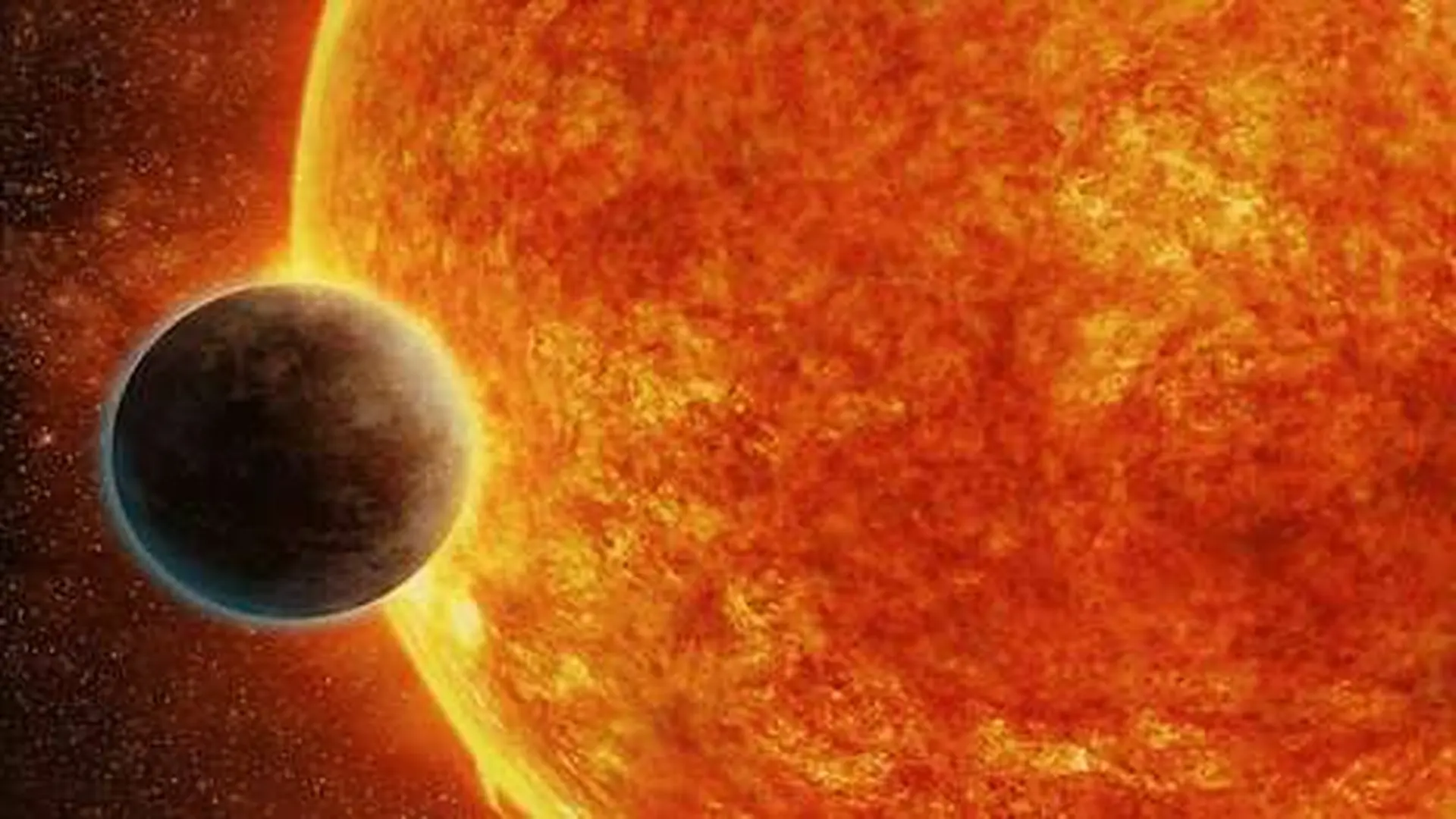
Astronomers may have identified traces of helium escaping from the atmosphere of LHS 1140b, a discovery that offers a rare, high-stakes window into the evolution of rocky worlds orbiting distant stars. This exoplanet, situated in the constellation Cetus, orbits within the habitable zone of a red dwarf, positioning it as a primary candidate for scientists investigating whether liquid water—and potentially life—can exist on planets beyond our solar system.
While the findings, highlighted in recent research published in Science, do not confirm the presence of biological activity, they provide a critical dataset for understanding how small, rocky planets retain or lose their gaseous envelopes over billions of years.
Shifting Perspectives on Planetary Atmospheres
The potential detection of helium is particularly intriguing because previous investigations using the James Webb Space Telescope effectively ruled out a hydrogen-dominated environment for LHS 1140b. Hydrogen-rich envelopes are typically considered primordial, often stripped away by the intense radiation of a host star early in a planet’s life.
If helium is indeed present, it could indicate the existence of a secondary atmosphere. Unlike the transient gases present at a planet’s birth, secondary atmospheres are built up over time through geological processes, volcanic outgassing, and chemical interactions. This is the case for Earth, where our current atmosphere is the result of long-term planetary evolution. By studying such features on LHS 1140b, researchers gain a comparative model to analyze how planetary environments mature into conditions that are either stable or hostile to life.
The Super-Earth Conundrum
First identified in 2017, LHS 1140b has remained a subject of intense debate. Boasting a mass roughly five times that of Earth and a diameter 1.7 times larger, it falls into the mysterious category of super-Earths. Astronomers currently struggle to classify these objects definitively; it remains unclear whether these planets are essentially massive, rocky terrestrial worlds or smaller, gas-shrouded versions of Neptune.
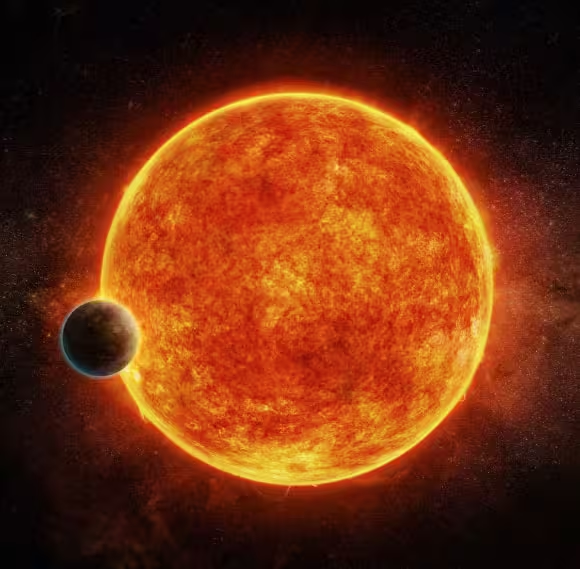
Because super-Earths are ubiquitous across the galaxy yet absent from our own solar system, they represent a significant gap in our current understanding of planetary formation. Every new atmospheric observation serves to refine the diagnostic methods required to distinguish these worlds from one another.
Evaluating Habitability
LHS 1140b resides in the region around its star where temperatures theoretically allow for liquid water. However, surface conditions are dictated by more than just orbital distance. Factors such as greenhouse gas concentrations, atmospheric pressure, and surface composition are decisive in determining the actual climate of the planet. Currently, models are split: some suggest a temperate, potentially water-rich world, while others suggest a far more frigid environment.
The path toward clarity requires moving beyond mere discovery. Astronomers are now tasked with analyzing chemical signatures to build a more granular picture of these distant worlds. This current helium observation is a foundational, albeit preliminary, step in that broader scientific campaign.
A Measured Approach to Future Discovery
The path forward is marked by both excitement and caution. While the potential detection of helium is a breakthrough, subsequent observations have not yet yielded the same signal, prompting ongoing investigations into why these datasets appear inconsistent. Such discrepancies are common in the early stages of exoplanetary characterization, where signals are faint and instrumental precision is being pushed to the limit.
As next-generation observatories come online, the volume of data will grow, allowing researchers to build a robust catalog of atmospheric compositions. By cataloging which gases are prevalent and identifying signatures that might suggest biological activity, scientists are slowly narrowing the search for habitable environments in the vastness of space. For now, the faint signal from LHS 1140b acts as a beacon, guiding the next phase of cosmic exploration.
This article has been fact checked for accuracy, with information verified against reputable sources. Learn more about us and our editorial process.
Last reviewed on .
Article history
- Latest version
Reference(s)
- Cherubim, Collin., et al. “Helium escaping from the atmosphere of a nearby rocky exoplanet orbiting in a habitable zone.” Science, vol. 393, no. 6815, September 3, 2026, pp. 998-1001. American Association for the Advancement of Science (AAAS), doi: 10.1126/science.aea9708. <https://dx.doi.org/10.1126/science.aea9708>.
Cite this page:
- Posted by Bilal Abbasi