Scientists May Have Finally Found Mars’ Missing Ancient Atmosphere Buried Underground
New research reveals that ancient Martian rocks may have sequestered vast amounts of carbon dioxide underground, offering clues to the planet’s lost climate.
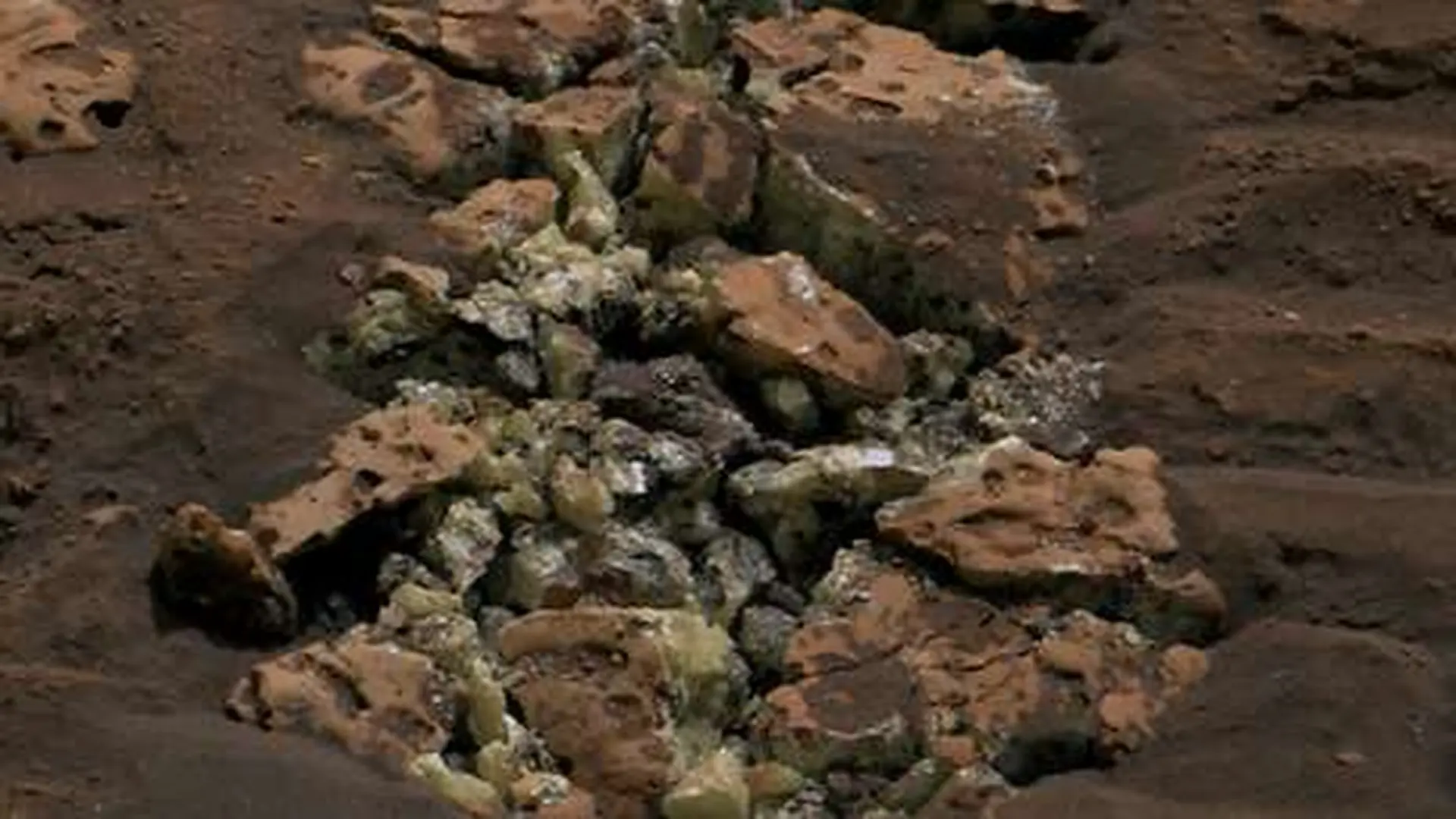
Ancient Martian rocks may harbor the elusive carbon dioxide that once defined the planet’s early climate, according to new research published in the Journal of Geophysical Research: Planets. The study suggests that the specific mineralogy of the crust, shaped by long-term interactions with ancient water, explains the chemical diversity of Martian carbonates and why so much of the expected carbon record has remained hidden from surface-level observations.
The Mystery of Mars’ Missing Carbon Dioxide
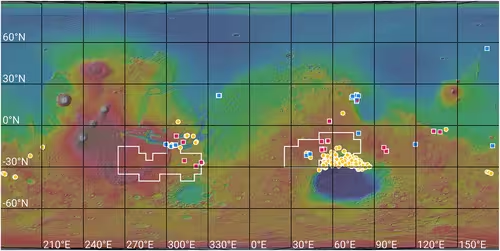
For years, planetary scientists have wrestled with a significant discrepancy in their models: if Mars once possessed a thick, carbon dioxide-rich atmosphere capable of supporting liquid water roughly three billion years ago, where did all that carbon go? As water percolates through rock, it typically traps carbon dioxide in the form of carbonate minerals. However, robotic missions and orbital surveys have identified far fewer of these deposits on the surface than climate models predicted.
This missing inventory has forced researchers to choose between two theories: the carbon was either stripped away into space or sequestered deep within the Martian crust. The latest investigation supports the latter, indicating that the chemical interaction between water and specific types of rock has locked the planet’s atmospheric history out of view.
Modeling Ancient Martian Geochemistry
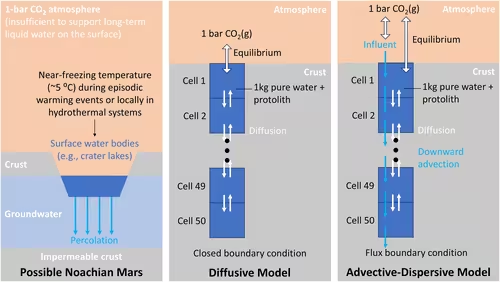
A research team led by Chang-Chin Wang of the University of Tokyo, in collaboration with the Earth-Life Science Institute (ELSI) and JAXA, performed thermochemical simulations to evaluate how different rock types react with water under cold, CO₂-rich conditions. While previous research often centered on mafic rocks—iron- and magnesium-rich materials common on the Martian surface—this study shifted the focus to feldspar-rich rocks, which contain higher concentrations of calcium, sodium, and aluminum.
The simulations accounted for varying timescales and fluid dynamics, including both static diffusion and active groundwater flow. By modeling how water transforms these diverse substrates, the team sought to understand the origins of the two primary carbonate signatures observed on the Red Planet: magnesium-rich varieties and calcium/iron-rich versions.
The Hidden Archive of the Crust
The results indicate that the composition of the underlying rock acts as a primary determinant for the type of carbonate created. Feldspar-rich rocks consistently generated calcium/iron-rich carbonates, whereas mafic rocks favored magnesium-rich outcomes, particularly over extended timeframes. This suggests that the carbonate patterns detected by orbital sensors are not merely reflections of water chemistry, but are deeply linked to the specific geological composition of the Martian crust.
Furthermore, the study highlights the efficiency of groundwater in sequestering carbon. The movement of water through the subsurface serves as a transport mechanism, moving dissolved carbon deep into the planet’s crust. This mechanism offers a compelling explanation for the deficit of surface carbonates, implying that a massive repository of carbon is safely stored beneath the Martian landscape, untouched by surface weathering processes.
Future Exploration Targets
These findings provide a roadmap for future exploration. By identifying regions characterized by feldspar-rich terrain, space agencies can prioritize sites for drilling or high-resolution geological sampling. Accessing these subterranean deposits could provide a direct window into the atmospheric conditions that existed when Mars was a younger, wetter world.
As the scientific community continues to refine its understanding of the Red Planet, this research underscores that the surface we see today is only part of the story. The chemical signatures locked away in the crust may be the final piece of the puzzle in reconstructing the dramatic climatic shift that transformed a potentially habitable world into a barren desert.
This article has been fact checked for accuracy, with information verified against reputable sources. Learn more about us and our editorial process.
Last reviewed on .
Article history
- Latest version
Cite this page:
- Posted by Bilal Abbasi