Curiosity Rover Finds Strange Shallow Pits on Mars That Defy Simple Explanation
NASA’s Curiosity rover has uncovered a mysterious, strangely familiar feature on Mount Sharp that is challenging current geological theories.
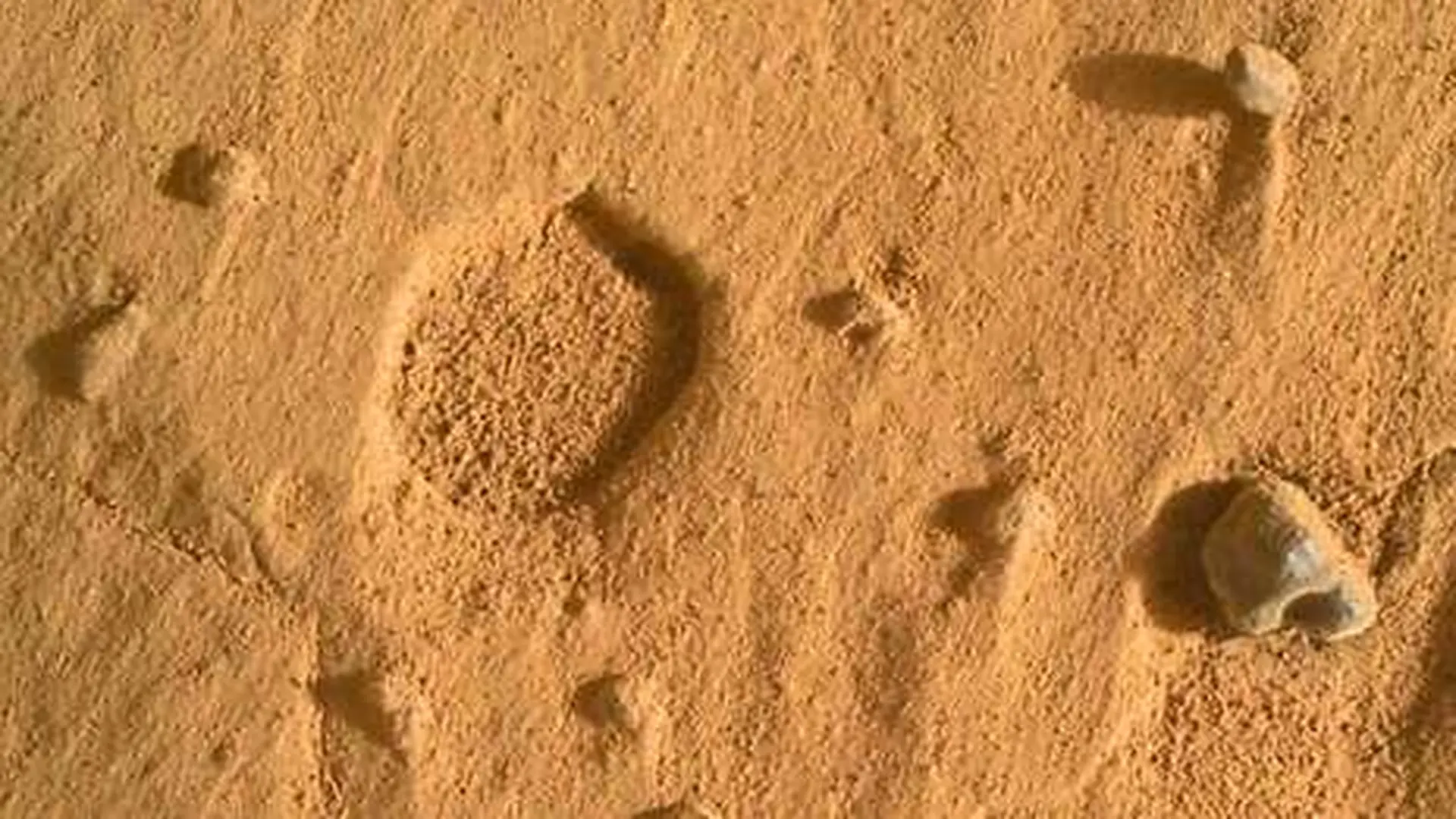
Fourteen years into its remarkable journey across the Martian surface, NASA’s Curiosity rover continues to challenge scientists with geological enigmas. While exploring the slopes of Mount Sharp in late August 2026, the rover encountered a series of mysterious, shallow depressions in the bedrock that have left the mission team searching for answers.
Measuring roughly one centimeter in diameter, these circular pits are distinct from the typical voids usually documented on the Red Planet. In standard Martian geology, pits are often the remnants of resistant nodules or pebbles that have weathered away over eons. However, the features discovered this week defy those conventional explanations. They are significantly broader and shallower than known examples, and notably, they contain no residual material to indicate what might have once occupied them.
Decoding the Martian Surface
To better understand these strange formations, researchers deployed the Mars Hand Lens Imager (MAHLI) and Mastcam to capture detailed stereo mosaics. These images are being used to construct three-dimensional models that will allow the team to analyze the depth-to-width ratios of the pits. If the geometry remains consistent across the site, it could hint at a specific, localized formation process; conversely, significant variations in shape might suggest a more complex, multi-stage origin.
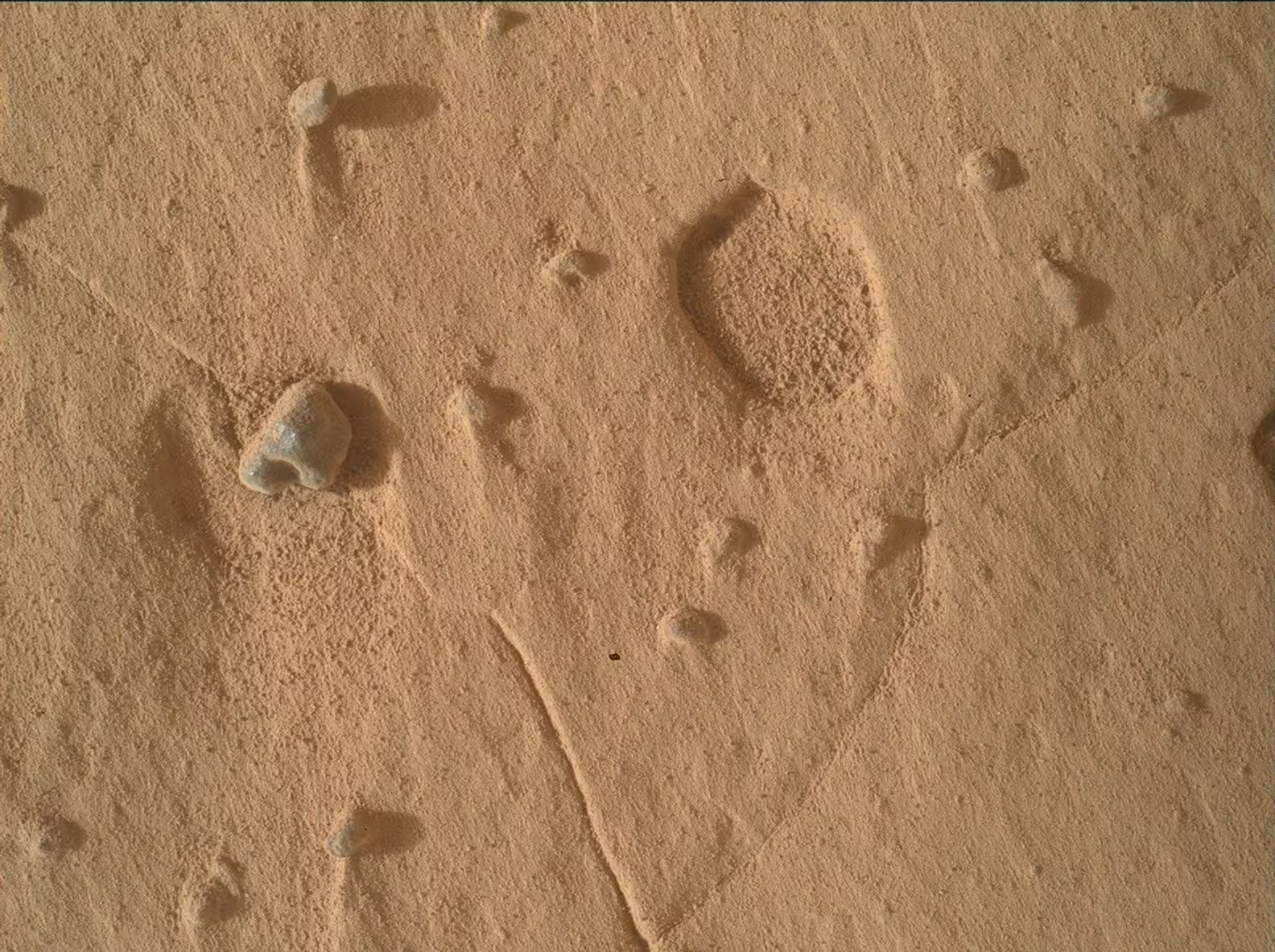
The complexity of the surrounding environment adds another layer to the investigation. The bedrock in this region features intricate, layered packages where textures and structural properties shift rapidly over short vertical distances. Using the ChemCam and APXS (Alpha Particle X-Ray Spectrometer) instruments, the team is analyzing gray, resistant layers that suggest a different chemical composition compared to the host rock. Scientists are also investigating whether scattered gray float rocks found nearby are linked to the formation of the depressions.
Analyzing Distant Landmarks
Beyond the immediate workspace, Curiosity is casting its gaze toward distant geological structures. The team utilized Mastcam and the ChemCam Remote Micro-Imager to conduct a high-resolution survey of the butte known as “Cordillera,” as well as two southern formations, “Tolhuaca” and “Potosí.”
Researchers are particularly focused on cross-bedding—the angled layering of sediment—within these buttes. These patterns act as a historical record of ancient water or wind currents, providing crucial context for the environmental conditions that shaped Mount Sharp. By examining the mineralogy of capping materials on Potosí, the mission aims to reconstruct the climate history of this region.
Atmospheric Observations
Concurrent with its geological fieldwork, Curiosity has been monitoring the Martian sky. The environmental science team increased the frequency of data collection from the rover’s REMS weather station, alongside Navcam and Mastcam observations, to track a potential regional dust storm. While the storm appeared to be subsiding by the end of the week, the effort highlights the rover’s ongoing versatility as a multi-disciplinary laboratory.
Despite a brief interruption caused by a failed downlink, the mission continues to push forward. For now, the origin of the unusual pits remains an open question, leaving scientists to sift through the newly acquired elevation data and chemical signatures in hopes of solving the latest puzzle on the Martian frontier.
This article has been fact checked for accuracy, with information verified against reputable sources. Learn more about us and our editorial process.
Last reviewed on .
Article history
- Latest version
Reference(s)
- “Curiosity Maps Unusual Broad Shallow Pits And Layered Bedrock On Mount Sharp.” <https://discovery.ink/article/curiosity-maps-unusual-broad-shallow-pits-and-layered-bedrock-on-mount-sharp>.
Cite this page:
- Posted by Bilal Abbasi