Hidden Fragments of an Ancient Supercontinent Discovered Beneath Three Modern Continents
Scientists have uncovered hidden fragments of a massive, ancient supercontinent buried beneath three continents, revealing a lost world from Earth’s past.
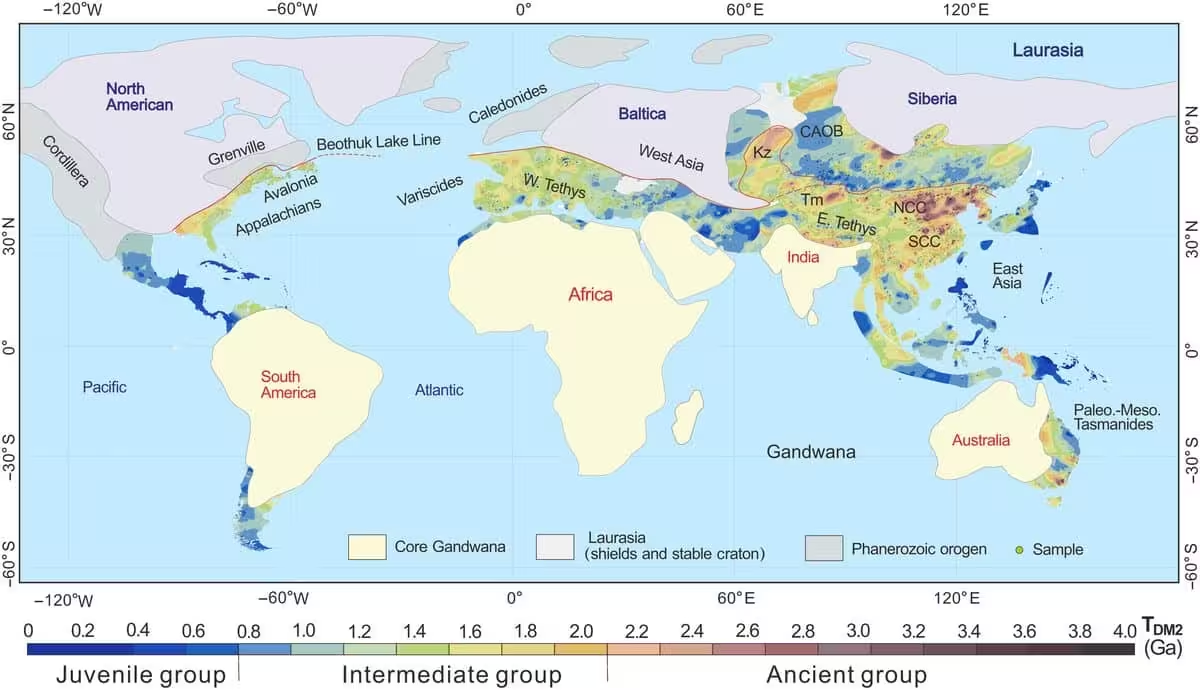
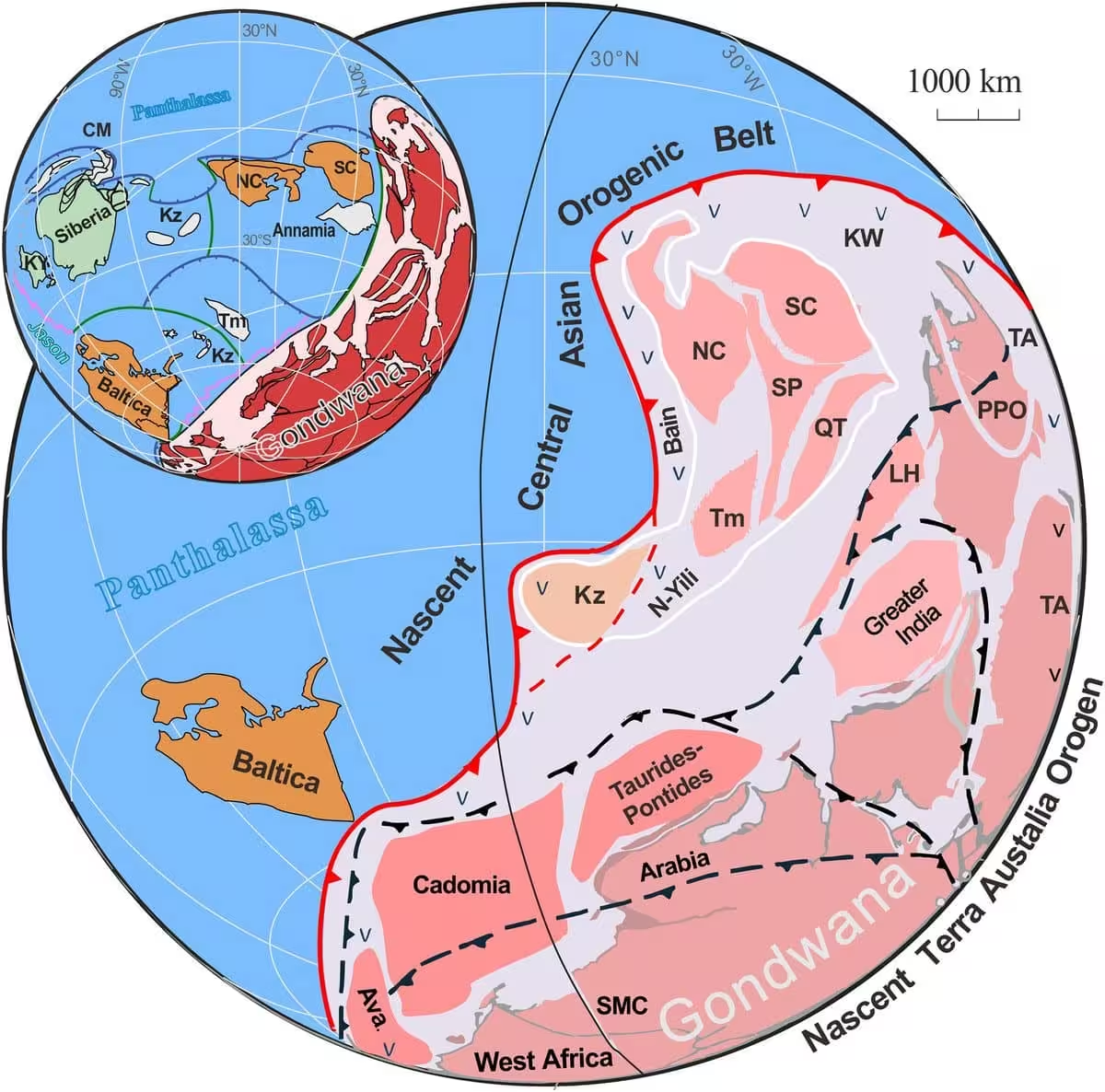
A fresh analysis of more than 25,000 volcanic rock samples has rewritten our understanding of the ancient supercontinent Gondwana, revealing it was significantly more expansive than previously realized. According to the research, this massive landmass accounted for roughly 80 percent of the Earth’s total land area about 500 million years ago, a substantial increase from earlier estimates that pegged the figure at 64 percent.
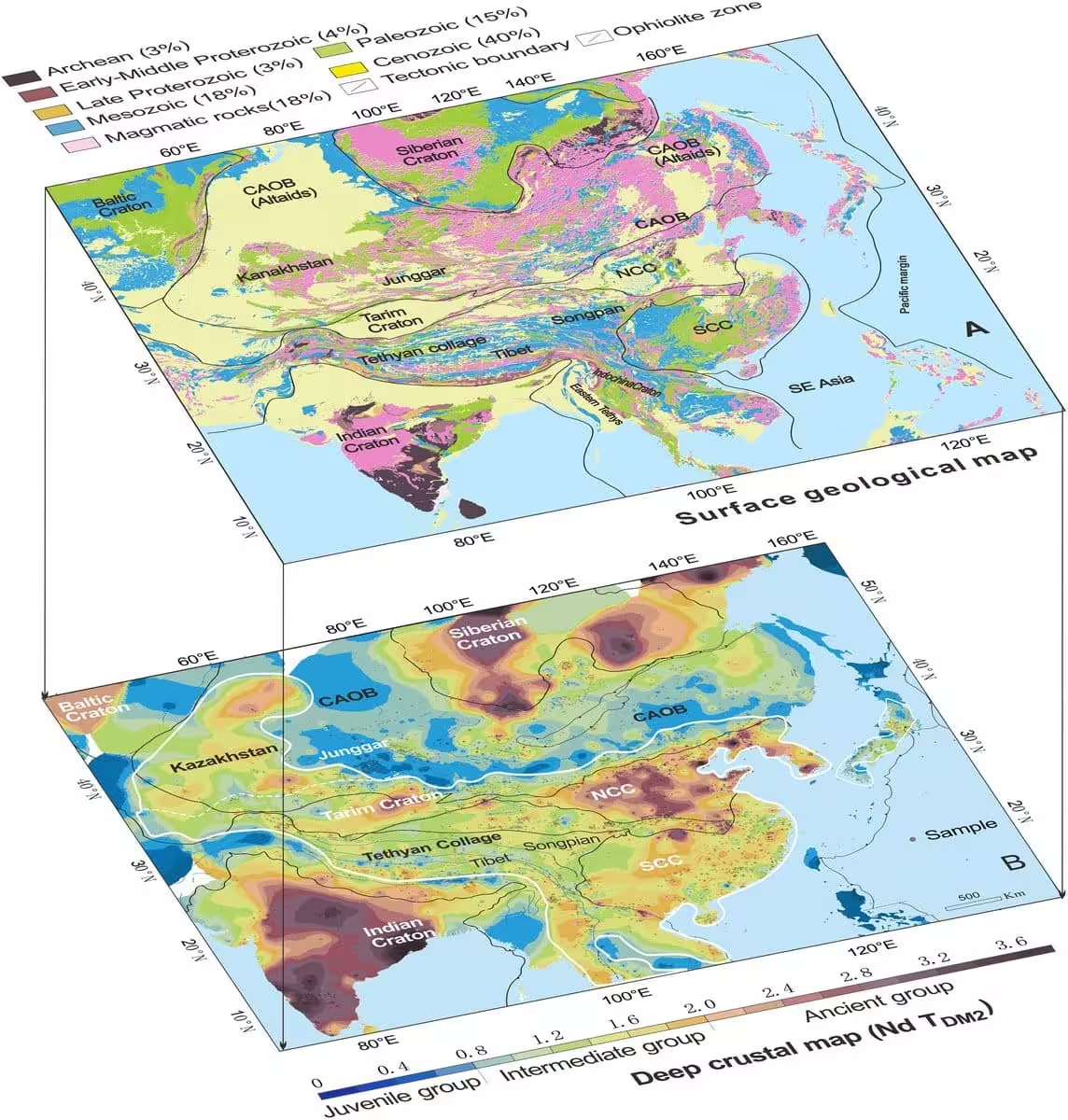
The study, published in the journal Science Advances, suggests that the true extent of Gondwana has been obscured for ages by the relentless churn of plate tectonics. Fragments of the supercontinent’s original crust were carried away and buried deep beneath what is now Asia, Europe, and North America, effectively hiding the true dimensions of the landmass that splintered roughly 180 million years ago.
Mapping the Invisible Crust
To uncover the hidden geography of the ancient world, researchers employed a geochemical “fingerprinting” technique. By analyzing the chemical composition of volcanic rocks archived in various databases, the team successfully traced elements back to their original continental origins. This method allowed scientists to identify crustal remnants that had been subsumed by other, younger landmasses, revealing a global footprint that remains invisible to conventional geological survey methods.
This discovery provides more than just a cartographic correction. The sheer scale of this landmass suggests that Gondwana acted as a primary driver of Earth’s early environmental conditions, influencing everything from global climate patterns to atmospheric chemistry.
Gondwana and the Rise of Complex Life
The research has sparked new interest in the relationship between the supercontinent and the Cambrian explosion, the pivotal era roughly 540 to 530 million years ago that saw the rapid emergence of complex animal life. The authors posit that the formation and evolution of a landmass this size would have significantly altered sea levels and volcanic activity, potentially creating the specific environmental pressures required for such a sudden biological diversification.
While this analysis significantly updates our map of the ancient world, researchers caution that the full story of Gondwana remains incomplete. Portions of the Earth’s crust have been recycled through geological time, suggesting that even more of the supercontinent may remain buried or destroyed beyond recovery.
This article has been fact checked for accuracy, with information verified against reputable sources. Learn more about us and our editorial process.
Last reviewed on .
Article history
- Latest version
Reference(s)
- Wang, Tao., et al. “Buried fragments reveal a “Greater Gondwana” supercontinent.” Science Advances, vol. 12, no. 37, September 11, 2026 American Association for the Advancement of Science (AAAS), doi: 10.1126/sciadv.aeh6155. <https://www.science.org/doi/10.1126/sciadv.aeh6155>.
Cite this page:
- Posted by Bilal Abbasi