Perseverance Finds Ruby‑Like Mineral Hidden in Martian Rocks, Hinting at Impact‑Driven Secrets
NASA’s Perseverance rover finds chromium‑bearing corundum—the first Martian ruby/sapphire mineral—inside Jezero Crater, marking a historic discovery.
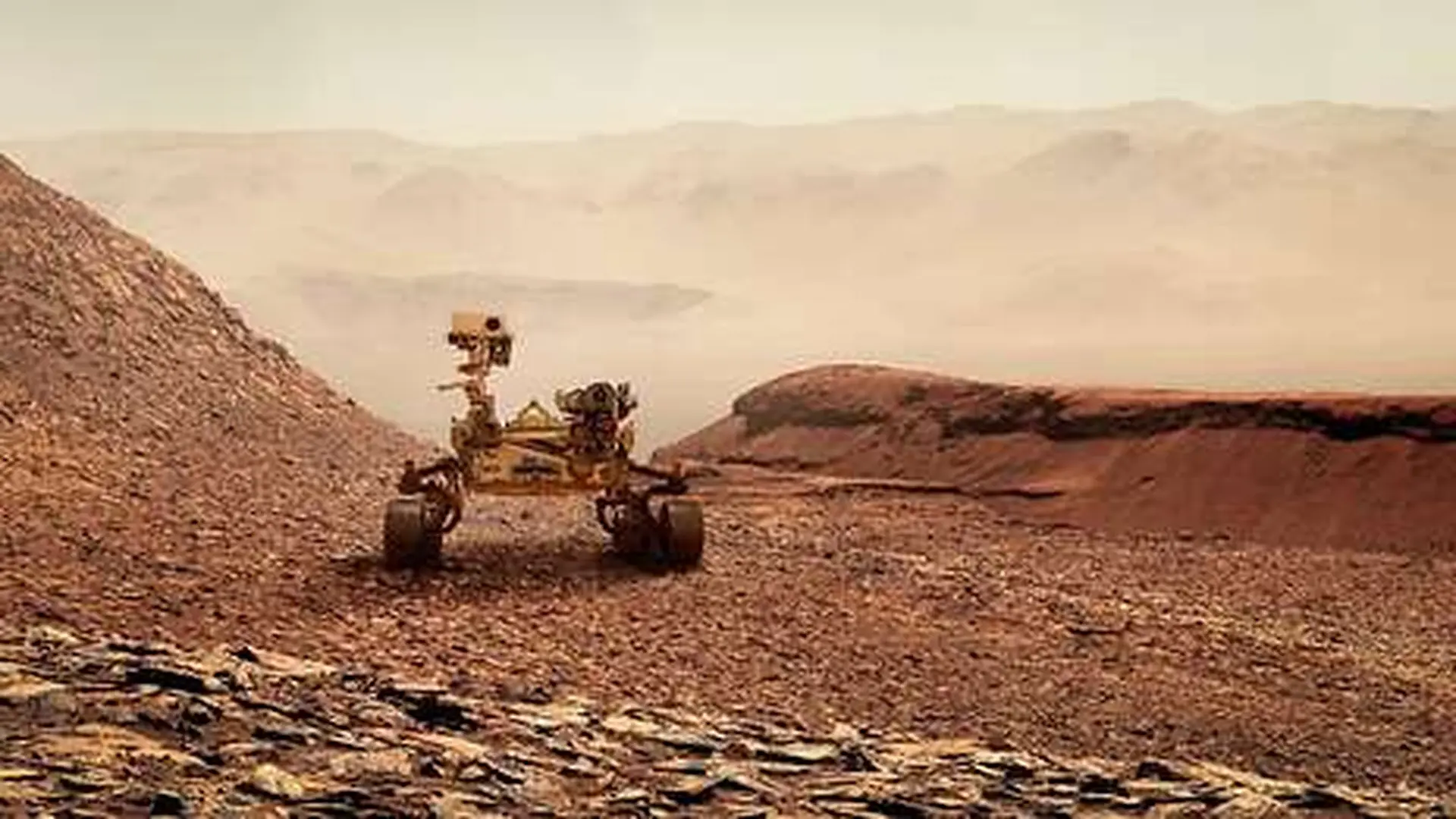
A recent study led by geochemist Ann Ollila of Los Alamos National Laboratory, published in Geophysical Research Letters, highlights that the presence of corundum on Mars is noteworthy more for the extreme conditions required to create the mineral than for any connection to gemstones. Corundum typically forms in environments that are rich in aluminum, depleted in silicon, and subjected to high temperatures or intense tectonic activity.
The mineral was identified in three pale, plagioclase‑rich “float rocks” – Hampden River, Coffee Cove and Smiths Harbour – which Perseverance examined in March, April and July 2025. Because these rocks had detached from their parent bedrock, they may have been transported from elsewhere on the planet.
SuperCam’s Laser Spectroscopy Reveals Chromium‑Bearing Corundum
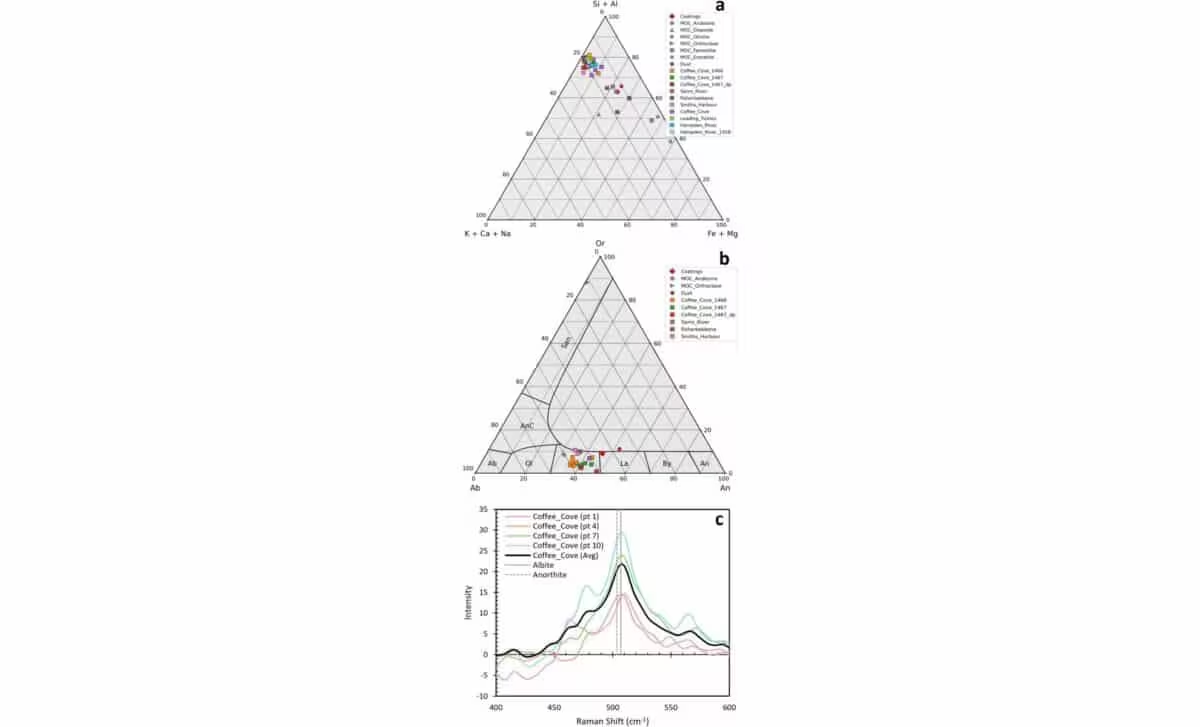
Using time‑resolved luminescence spectroscopy (TRL) with its SuperCam instrument, the rover fired a laser at the samples and recorded the characteristic light emitted as excited atoms relaxed. The resulting spectra displayed two sharp peaks at 692.7 nm and 694.1 nm, wavelengths that match the luminescence of chromium substituting for aluminum in corundum – the same process that gives rubies their red hue on Earth.
Comparisons with laboratory spectra from terrestrial ruby, sapphire and diaspore reinforced the identification, though the findings do not imply that visible gemstones are scattered across the Martian surface. Instead, the data point to minute grains of chromium‑bearing corundum embedded within the plagioclase‑dominant rocks. For the Smiths Harbour sample, the luminescence persisted for roughly three milliseconds, a decay time comparable to that measured for Earth‑derived corundum.
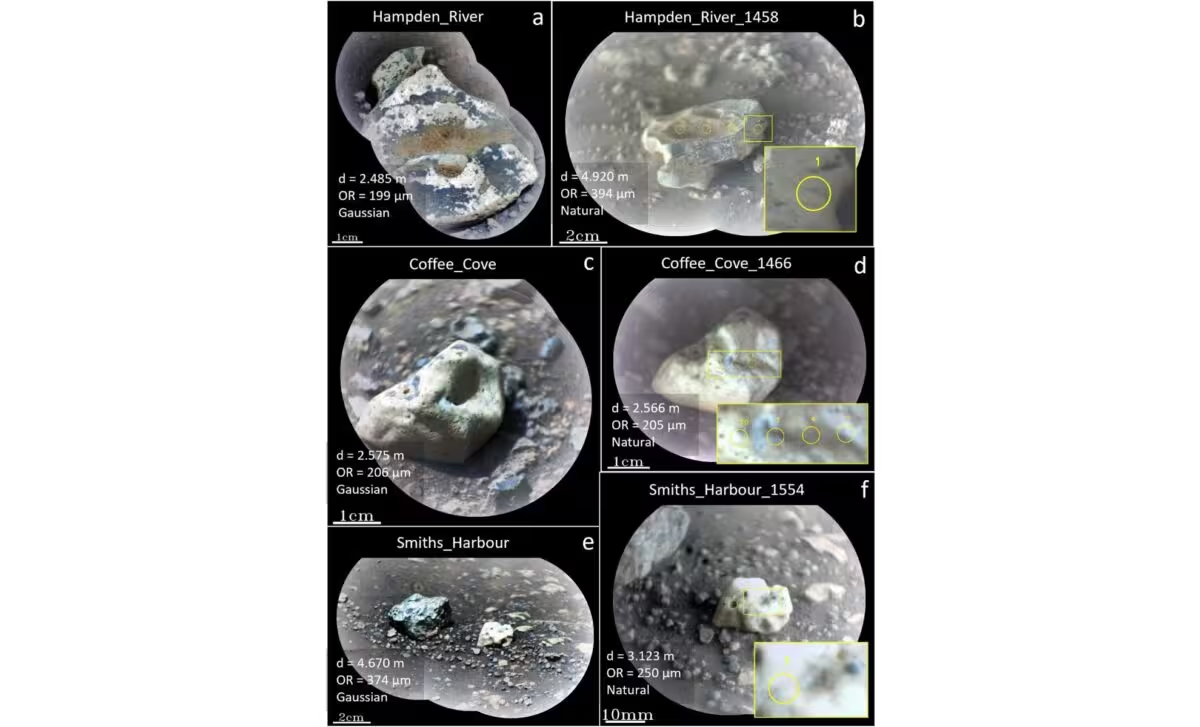
The coexistence of corundum with plagioclase presents a geological paradox. While corundum originates from pure aluminum oxide, the presence of silicon usually drives aluminum into silicate minerals such as plagioclase feldspar. Yet Perseverance detected the oxide mineral within rocks where plagioclase dominates the mineralogy.
Impact History of Jezero Crater May Hold the Key
One plausible explanation involves the cataclysmic impact that formed Jezero Crater billions of years ago. Such impacts generate extreme heat and pressure, conditions known to remodel minerals. Corundum has previously been reported in impact‑altered rocks from both Earth and the Moon, supporting this line of reasoning.
All three float rocks were collected along Jezero’s rim, in proximity to fragments interpreted as impact breccias—rock debris produced during the crater‑forming event. The discovery of corundum as tiny grains within these samples aligns with an impact‑driven origin, though definitive proof remains pending.
Additional clues point to past hydrothermal activity in Jezero. The authors cite evidence of ancient fluid circulation in a related study, suggesting that hot, silica‑poor waters could have created the aluminum‑rich, silicon‑deficient environment needed for corundum formation.
Alternative formation pathways cannot be ruled out, and the original source bedrock for the float rocks has yet to be located. Identifying the parent outcrop would allow scientists to place the mineral assemblage within a more precise geological context.
Future return of a core sample to Earth‑based laboratories could provide decisive evidence about how the chromium‑bearing corundum originated, offering a deeper glimpse into the geological evolution of Mars.
This article has been fact checked for accuracy, with information verified against reputable sources. Learn more about us and our editorial process.
Last reviewed on .
Article history
- Latest version
Reference(s)
- <https://www.researchgate.net/profile/Ann-Ollila>.
- Ollila, A. M.., et al. “Corundum Discovered by SuperCam and the Perseverance Rover at Jezero Crater, Mars.” Geophysical Research Letters, vol. 53, no. 16, August 11, 2026 American Geophysical Union (AGU), doi: 10.1029/2026GL122537. <https://agupubs.onlinelibrary.wiley.com/doi/10.1029/2026GL122537>.
Cite this page:
- Posted by Bilal Abbasi