NASA Images Turquoise Black Sea Bloom Study Links Calm Winds to Extended Carbon Pump
NASA images show the Black Sea glowing turquoise, uncovering a hidden ocean shift that may change how scientists predict Earth’s carbon future.
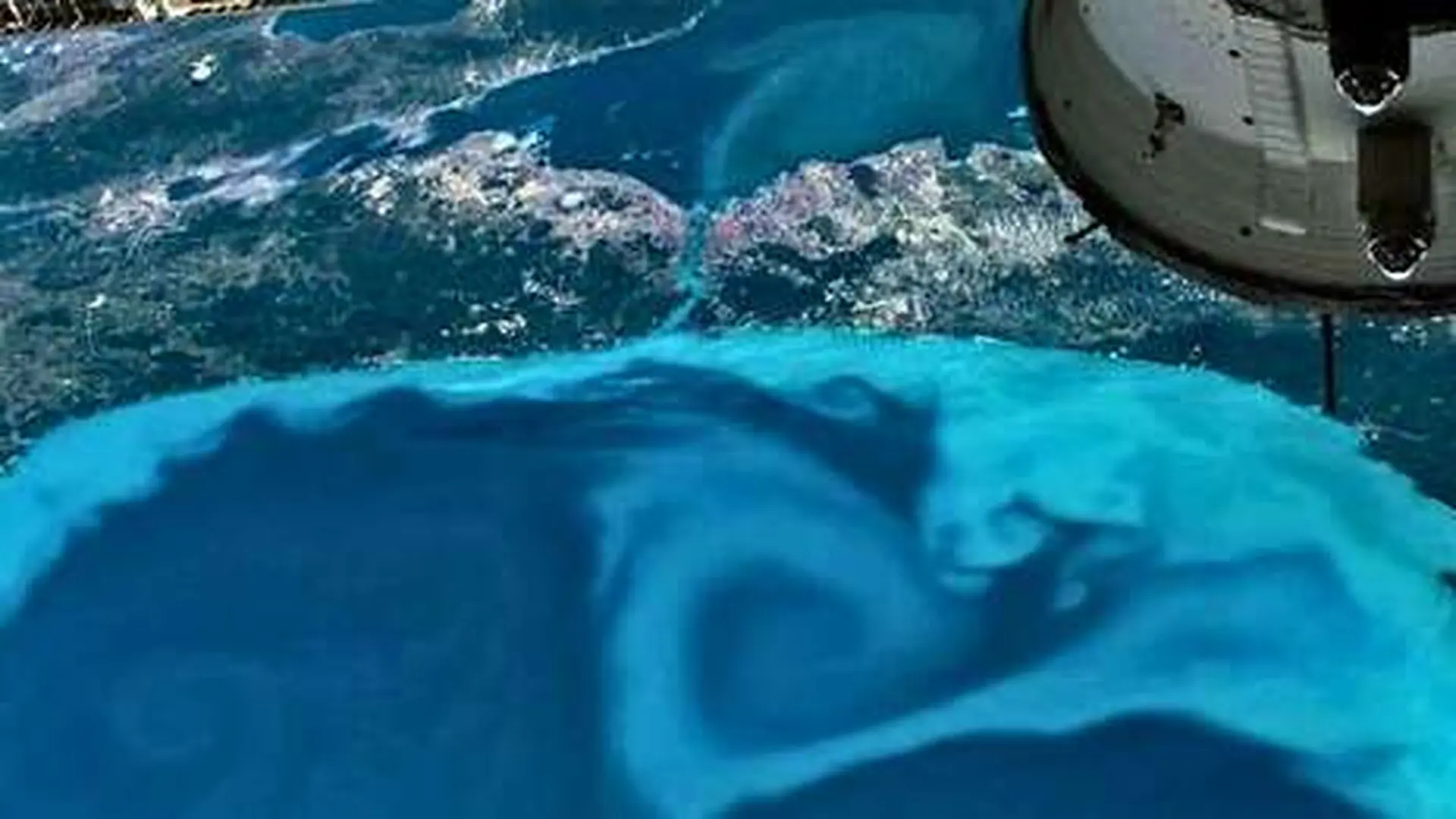
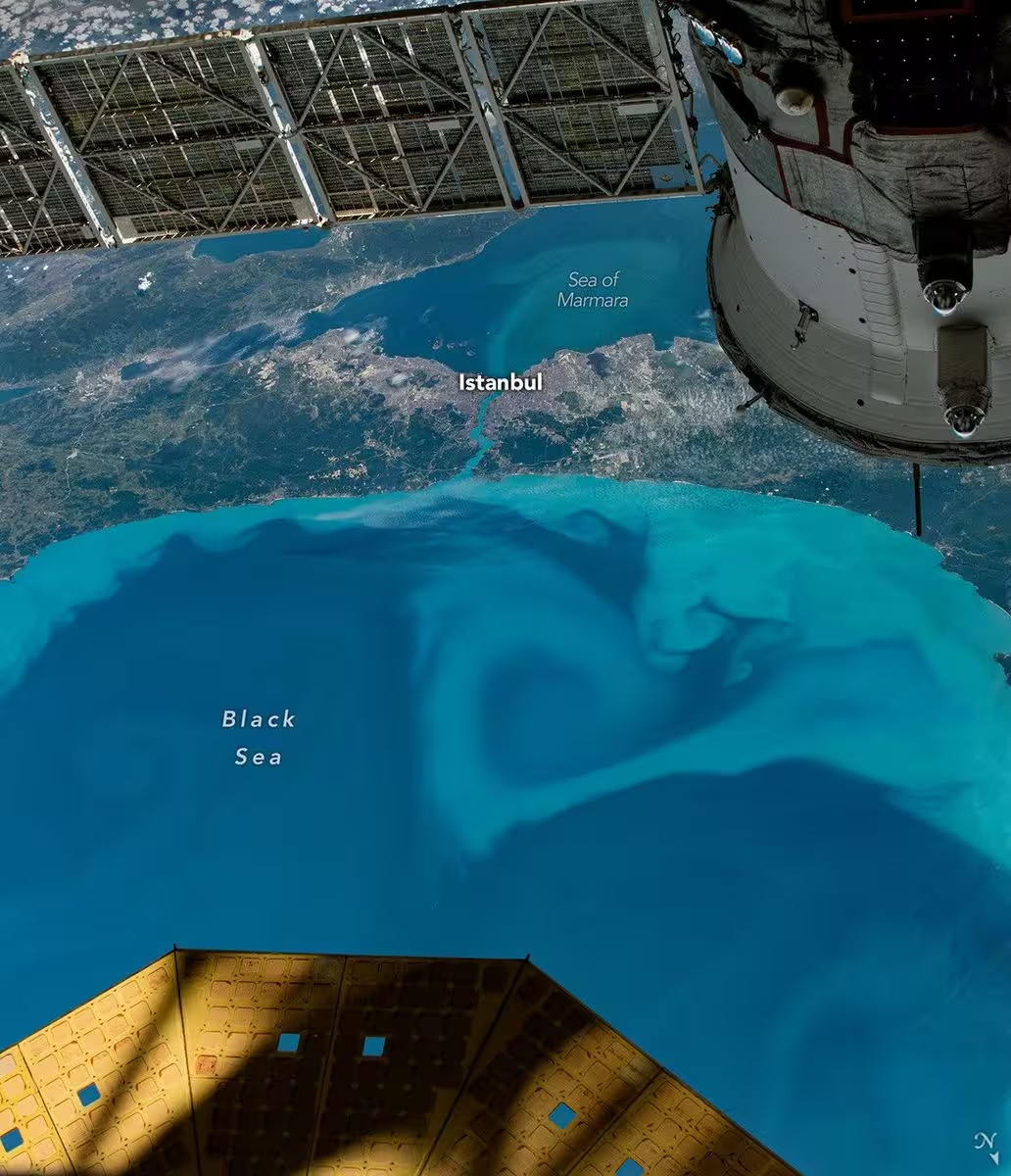
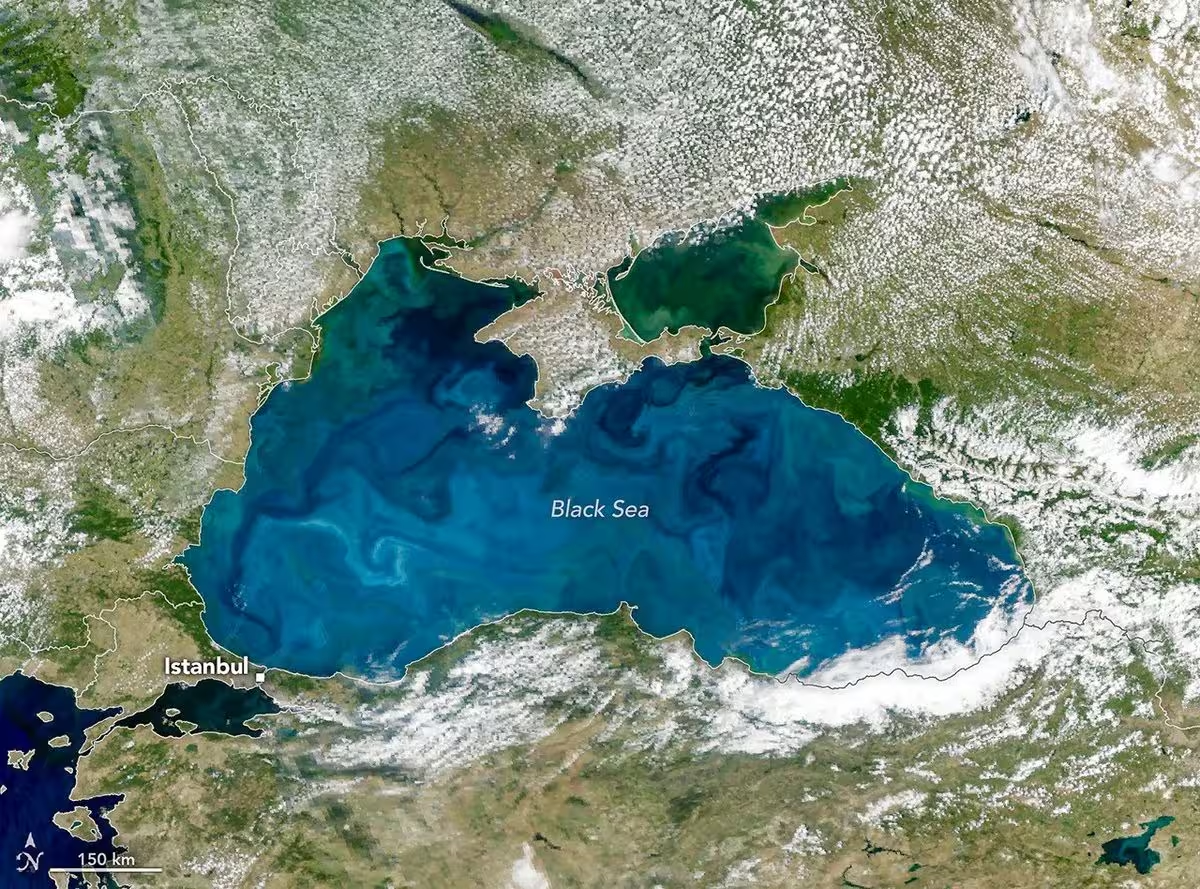
Each spring, the Black Sea transforms from a deep indigo hue to a milky turquoise that ripples across its surface. The shift is driven by coccolithophores—single‑celled algae encased in microscopic calcium carbonate plates that scatter sunlight and tint the water a vivid blue‑green.
NASA’s PACE satellite captured this phenomenon on 22 June 2026, using its Ocean Color Instrument to photograph the bloom from orbit. A few weeks earlier, an astronaut aboard the International Space Station recorded the same turquoise plume moving through Istanbul’s Bosphorus, highlighting the vivid currents that link the Black Sea with the Sea of Marmara.
Wind Lull and Nutrient Imbalance Keep the Turquoise Alive
A recent study in the journal Diversity reports that in 2022 and 2023 the coccolithophore bloom in the northeastern Black Sea persisted well beyond its usual June endpoint, extending into July. The authors trace the anomaly to a trio of factors: unusually calm winds, a shallow thermocline, and a nutrient profile that favored the algae.
Normally, springtime winds stir the water column, breaking up the thin, stable layer known as the thermocline. When that layer deepens, coccolithophores lose the calm, well‑lit environment they need, and diatoms—silica‑shelled algae that darken the water—take over. In the two anomalous years, wind speeds remained low for months, allowing the thermocline to stay at depths of three to eight metres throughout June and July, far shallower than the long‑term average.
Heavy rain events in July 2022 added another twist. Two storms each delivered over 30 mm of precipitation in a single day, flushing extra phosphorus into coastal waters. Because coccolithophores require relatively little nitrogen but thrive when phosphorus is abundant, the altered chemistry gave Gephyrocapsa huxleyi—the dominant species in the Black Sea—a competitive edge, pushing cell concentrations to more than nine million cells per litre in June.
Carbon Sequestration Implications of a Prolonged Bloom
When coccolithophores multiply, their densely packed calcium carbonate shells give the sea a distinct optical signature that is visible from space. This aggregation also fuels the “carbonate pump,” a branch of the biological carbon pump that pulls dissolved carbon from surface waters into the deep ocean as the organisms’ shells sink after death.
NASA’s Earth Observatory has highlighted this process in the Black Sea, noting that coccolithophore blooms export carbon‑rich material to the seafloor and thus contribute to long‑term carbon storage. However, the calcification reaction also releases CO₂ back into surface waters, raising the local partial pressure of carbon dioxide and tempering the ocean’s ability to absorb atmospheric CO₂. This contrasts with the “organic pump” driven by diatoms, which sequesters carbon without a comparable CO₂ release.
Why the Black Sea Serves as a Climate Laboratory
Because its basin is semi‑enclosed and its seasonal cycle is well documented, the Black Sea offers a natural testbed for examining how the biological carbon pump reacts to environmental shifts. The 25‑year record compiled in the Diversity paper shows that blooms lasting into July occurred only twice—in 2022 and 2023—making them statistical outliers rather than a clear trend.
The authors caution that these episodes reflect sensitivity to meteorological conditions that could become more common under climate change. A warming climate might strengthen surface stratification, extending the shallow thermocline that favors coccolithophores and the carbonate pump, thereby limiting CO₂ uptake. Conversely, a future with more frequent storms could deepen the thermocline, boost diatom growth, and reinforce the organic pump.
Untangling these possibilities will require long‑term monitoring, as short‑term fluctuations—such as individual storm events or heavy rain—can obscure broader patterns. Continued satellite observations and in‑situ measurements will be essential to determine whether the Black Sea’s turquoise bursts herald a lasting shift in oceanic carbon dynamics.
This article has been fact checked for accuracy, with information verified against reputable sources. Learn more about us and our editorial process.
Last reviewed on .
Article history
- Latest version
Cite this page:
- Posted by Bilal Abbasi