Rare Dinosaur Species Discovered in Zimbabwe Reveals Hidden Ancient Ecosystems
Paleontologists have uncovered a unique dinosaur species in Africa, revealing a remarkable fossil discovery that challenges our understanding of the region.
Paleontologists have officially described a new dinosaur species, Musango matusadonaensis, unearthed along the shoreline of Zimbabwe’s Lake Kariba. Dating back more than 200 million years to the Triassic period, the creature provides a crucial look at the evolutionary lineage that eventually gave rise to the massive, long-necked giants of the Jurassic.
Standing approximately five feet tall at the hip, M. matusadonaensis serves as a significant addition to Zimbabwe’s sparse fossil record. It is only the fifth dinosaur species ever named from the country, a statistic that highlights how much of the region’s prehistoric history remains hidden beneath the earth. The discovery is challenging previous scientific models that suggested a homogenous population of dinosaurs across southern Africa, instead pointing toward a complex, mosaic landscape of diverse, localized ecosystems within the supercontinent Gondwana.
Excavating the Triassic Record
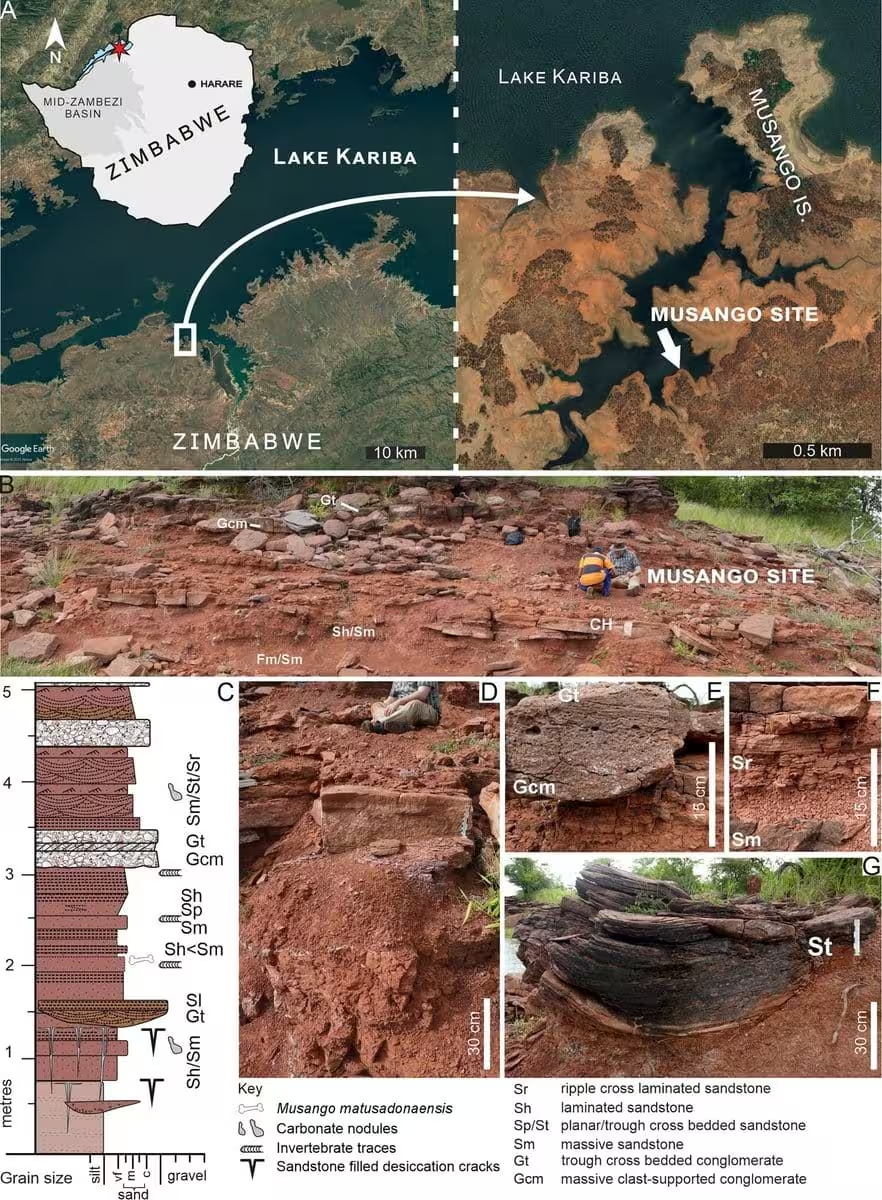
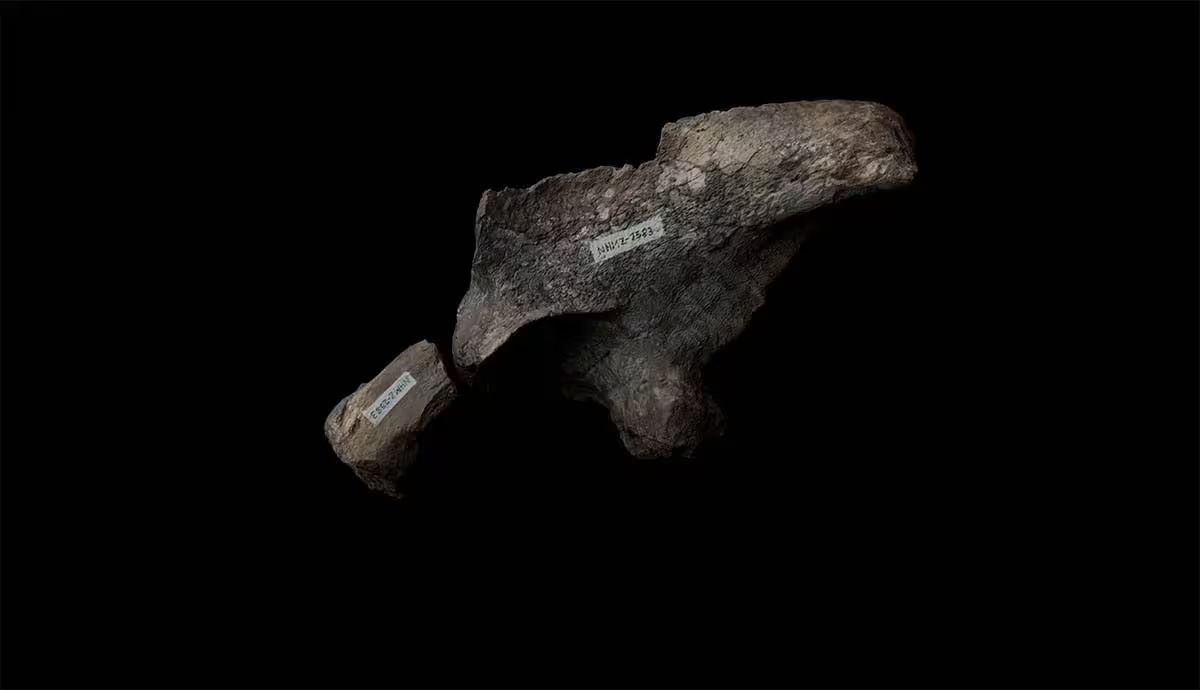
The partial skeleton, which includes critical diagnostic elements such as vertebrae, limb bones, and portions of the shoulder and hip girdles, was initially recovered in 2018 from the Pebbly Arkose Formation near Musango Island. Following detailed analysis, researchers have classified the animal as a sauropodomorph. Measuring roughly 4.5 meters in length and weighing about 222 kilograms, this bipedal herbivore shares a lineage with iconic giants like Diplodocus, though it predates their quadrupedal descendants by millions of years.
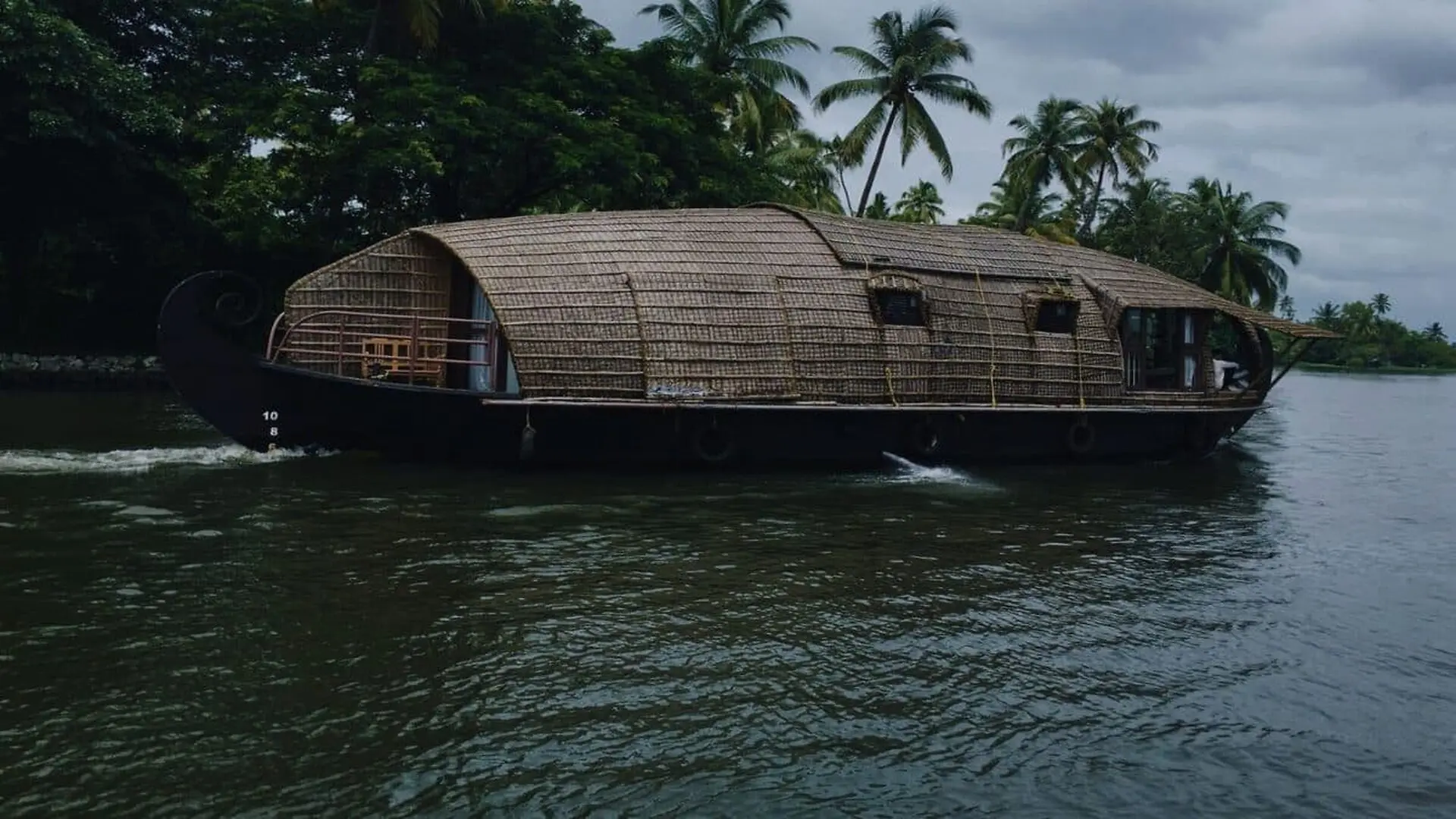
The name Musango matusadonaensis is derived from the ChiShona language, meaning “living in the bush,” a nod to the remote environment where the remains were located. The expedition was also responsible for identifying another distinct species in the same strata, Musankwa sanyatiensis, which was named after the research team’s vessel, the Musankwa, which functioned as both a mobile laboratory and living quarters during their time on the water.
Redefining Ancient Gondwana
The implications of this find extend far beyond the identification of a single species. By comparing the specimen to related fossils from Argentina and South Africa, paleontologists are gaining a clearer picture of how species navigated and adapted across the interconnected landmasses of Gondwana.
“Until recently, it was assumed that the dinosaurs living across southern Africa were largely the same,” said Professor Paul Barrett, the study’s lead author, in comments reported by the Natural History Museum. “However, these discoveries are showing that this part of the ancient supercontinent Gondwana was actually made of a series of smaller ecosystems – each with a different cast of characters.”
Global Collaboration in Field Paleontology
The findings, published in the Journal of Systematic Palaeontology, underscore the success of international cooperation between institutions in the United Kingdom, South Africa, and Zimbabwe. Led by Professor Jonah Choiniere, the team successfully navigated the logistical challenges of excavating near Lake Kariba—the world’s largest artificial reservoir by volume—to secure these rare fossils.
“New dinosaur species like Musango show the value of doing palaeontological fieldwork in remote, and often scenically beautiful, places,” said Choiniere. “This study is the result of a thriving international collaboration between the UK, South Africa and Zimbabwe, and reinforces the importance of southern Africa in understanding dinosaur diversity.”
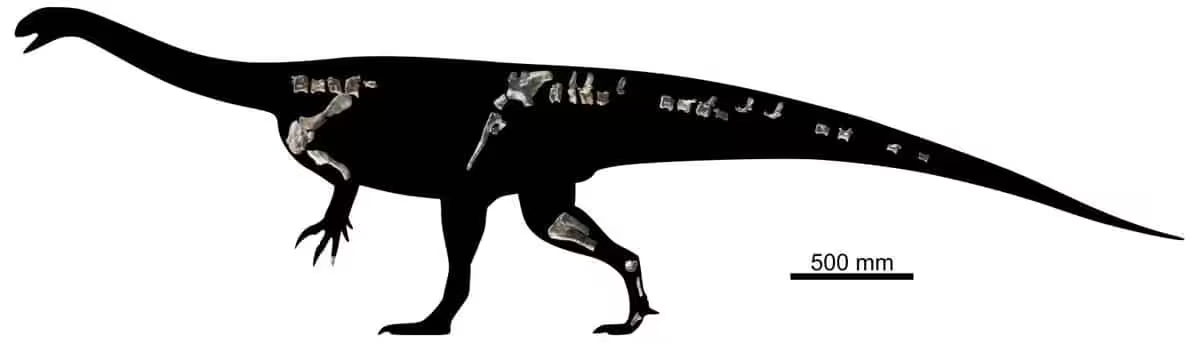
Following the conclusion of the research, the Musango holotype will be housed at the Natural History Museum of Zimbabwe, where it will remain available for future study and public exhibition.
This article has been fact checked for accuracy, with information verified against reputable sources. Learn more about us and our editorial process.
Last reviewed on .
Article history
- Latest version
Reference(s)
- “Prof Paul Barrett | Natural History Museum.” <https://www.nhm.ac.uk/our-science/people/paul-barrett.html>.
- “Musango: The new Zimbabwean dinosaur discovered from a boat | Natural History Museum.” <https://www.nhm.ac.uk/discover/news/2026/july/musango-the-new-zimbabwean-dinosaur-discovered-from-a-boat.html>.
- Barrett, Paul M.., et al. “A new sauropodomorph dinosaur from the Pebbly Arkose Formation (Upper Triassic: Norian) of Kariba, Zimbabwe.” Journal of Systematic Palaeontology, vol. 24, no. 2, July 28, 2026 Informa UK Limited, doi: 10.1080/14772019.2026.2678610. <https://www.tandfonline.com/doi/full/10.1080/14772019.2026.2678610>.
- “[email protected] - Wits University.” <https://www.wits.ac.za/people/academic-a-z-listing/c/jonahchoinierewitsacza/>.
Cite this page:
- Posted by Hassan Raza