324 Million Year Old Fossil Reveals Bizarre 24 Limbed Insect That Lived Between Land And Water
A 324-million-year-old insect fossil reveals an amphibious life stage, showing how early ancestors retained aquatic features before evolving six legs.
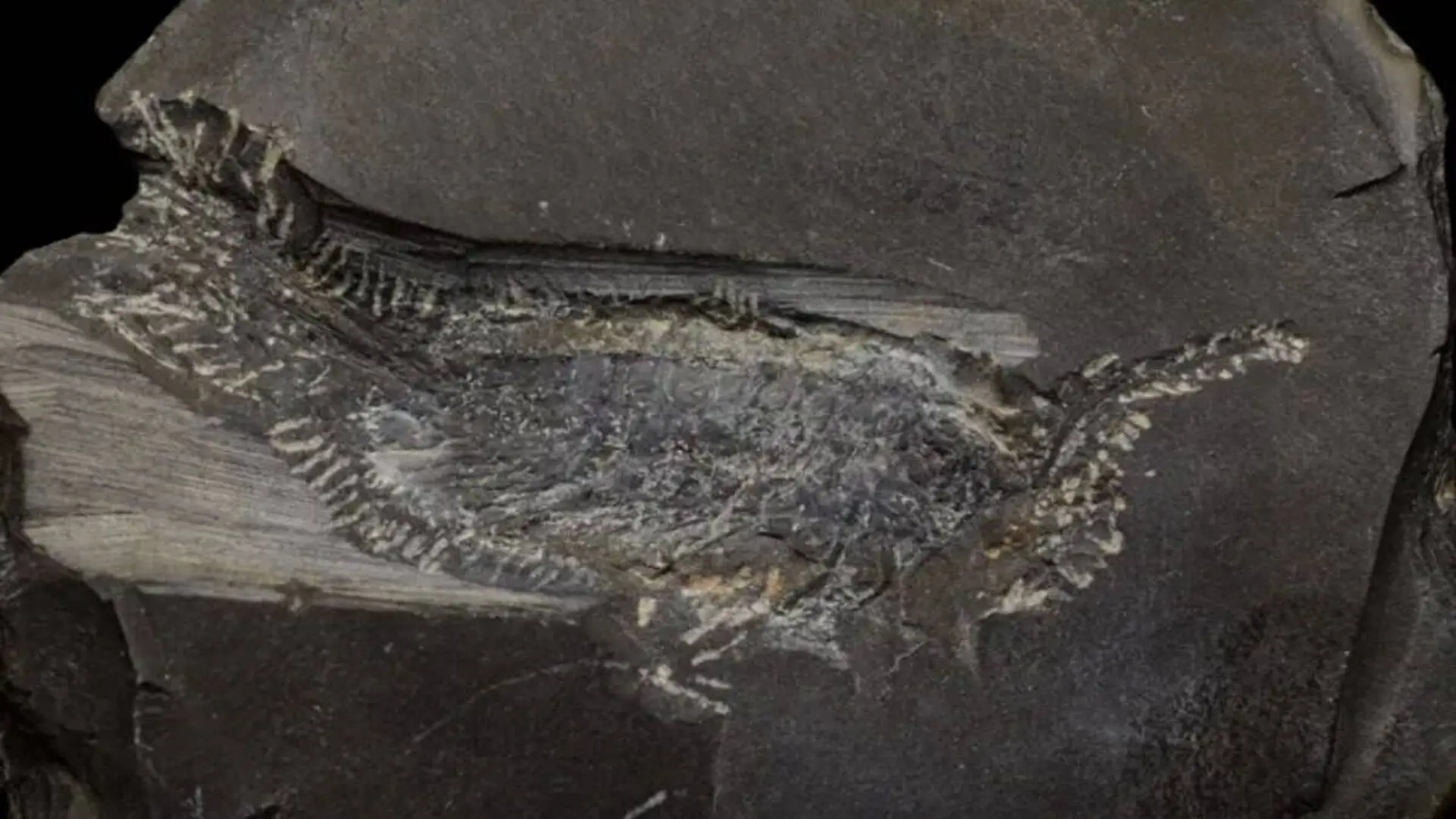
A 324-million-year-old fossil discovered in western Texas is reshaping our understanding of how insects successfully transitioned from aquatic environments to land. Known as Chosha praecursor, the specimen features a surprising anatomy—24 limbs in total—that offers a rare glimpse into a semi-aquatic evolutionary phase previously hidden from the fossil record.
The discovery, detailed in a study published in Nature, clarifies how early insects experimented with various body plans before settling on the rigid, six-legged design seen in modern species. While contemporary insects possess only six thoracic legs, C. praecursor boasted six walking legs alongside 18 additional abdominal appendages, some of which were flattened into paddle-like structures ideal for navigating water.
A Case of Mistaken Identity
The Chosha specimen was originally unearthed in 1985 from the Tesnus Formation, a region once defined by coastal and deltaic waters. For decades, researchers misidentified the fossil as a juvenile Tesnusocaris goldichi, an aquatic crustacean commonly found in the same strata. Because the fossil appeared as a subtle, dark impression against a dark rock, its true complexity remained obscured for nearly forty years.
A breakthrough occurred when scientists re-examined the fossil using cross-polarized light imaging. By reducing glare and enhancing contrast, the imaging technique revealed a distinct anatomy: a three-segmented thorax, an 11-segment abdomen, long antennae, and a prominent ovipositor. These features were clearly insect-like, rather than crustacean.
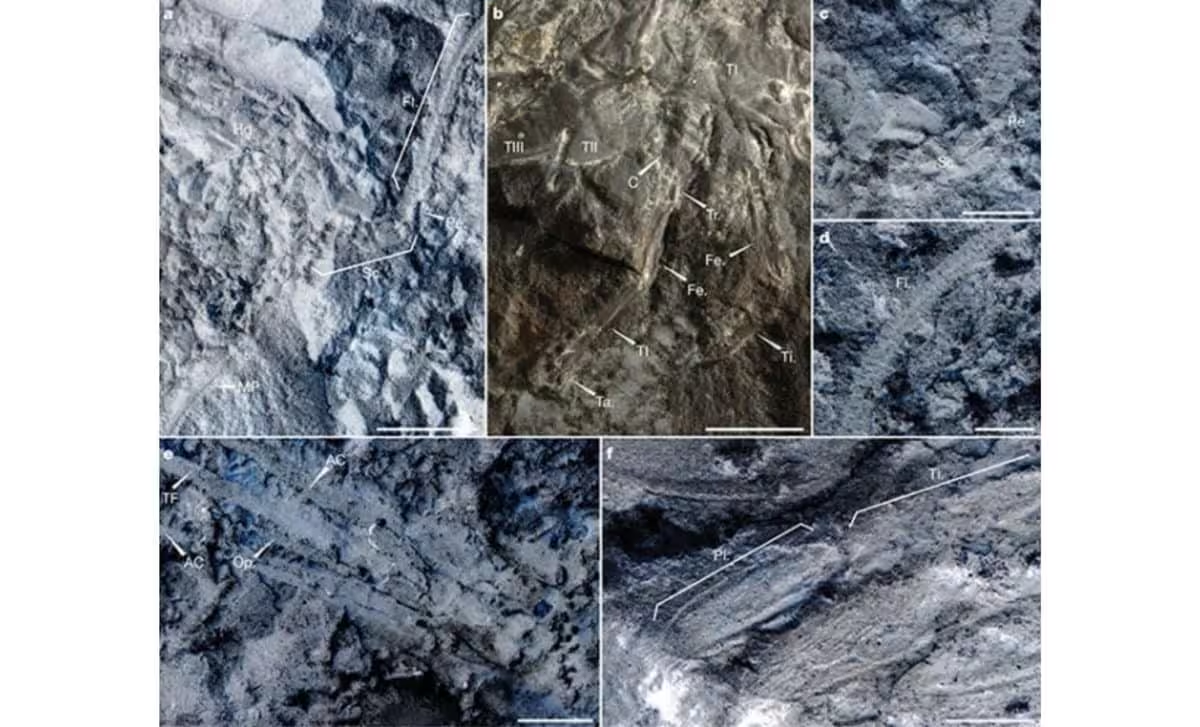
Measuring roughly 32 millimeters in length—or nearly 50 millimeters when accounting for its tail structures—the adult female specimen suggests a creature that occupied a critical evolutionary niche. Phylogenetic analysis places Chosha as an early-diverging insect, prompting researchers to reclassify other enigmatic Paleozoic fossils, such as Leverhulmia from Scotland and specimens from Illinois’ Mazon Creek, as primitive stem insects.
Adapting to Life Between Two Worlds
The presence of paddle-like abdominal limbs strongly suggests that early insects did not abandon their aquatic origins abruptly. According to the Chinese Academy of Sciences, the geological context of the Tesnus Formation supports the theory that these creatures thrived in shallow-water deltas, moving between submerged and exposed habitats.
While the legs served as a precursor to the modern hexapod body, the abdominal appendages likely functioned as swimming aids or even respiratory structures, similar to the gills found on some contemporary aquatic insects. Because the fossil lacks visible spiracles—the breathing holes common in fully terrestrial insects—the mystery of how this creature managed its oxygen intake remains a point of investigation.
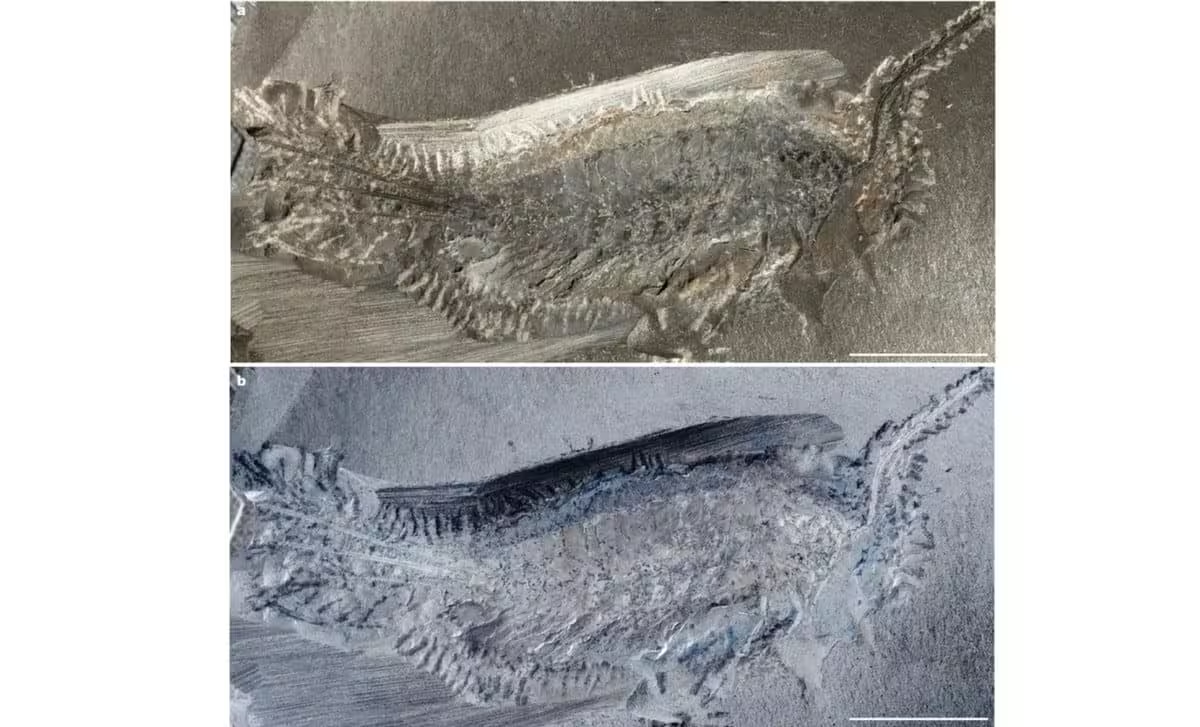
This discovery helps bridge an 80-million-year gap in the fossil record, spanning the time between the earliest known hexapod fossils from the Early Devonian and the rise of more recognizable insects in the Late Carboniferous. By documenting an era where the modern insect body plan was still in flux, Chosha praecursor proves that the path to becoming a terrestrial insect was far more experimental than previously believed.
This article has been fact checked for accuracy, with information verified against reputable sources. Learn more about us and our editorial process.
Last reviewed on .
Article history
- Latest version
Cite this page:
- Posted by Hassan Raza