Scientists Went Searching for a Shipwreck and Found Mysterious Flowers Made of Tar Instead
A sonar scan revealed a mysterious object nearly 6,200 feet below the ocean surface, leaving researchers baffled by what they discovered on the seafloor.
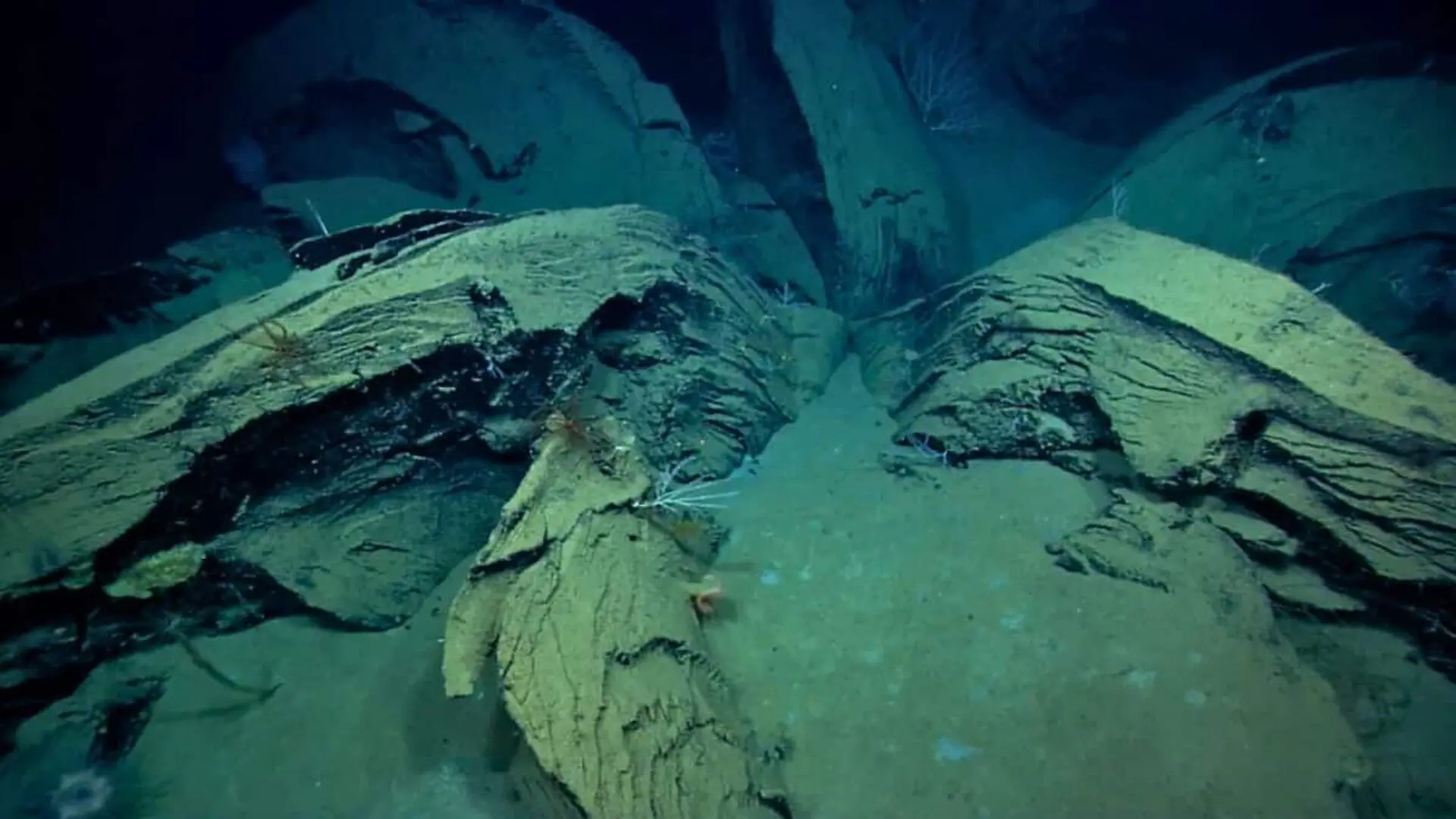
When sonar scans of the Gulf of Mexico seafloor revealed a cluster of unusual, solid structures nearly 2,000 meters below the surface, researchers initially suspected they had stumbled upon a historic shipwreck. However, when the remotely operated vehicle (ROV) Deep Discoverer arrived at the site in April 2014, the team discovered that these formations were not man-made vessels at all. They were, in fact, naturally occurring, flower-shaped sculptures carved from hardened asphalt.
The discovery occurred during a 59-day expedition led by the National Oceanic and Atmospheric Administration (NOAA) aboard the research vessel Okeanos Explorer. Tasked with mapping and documenting previously unexplored regions of the Gulf, scientists were surprised to encounter these bizarre, organic-looking features at a depth of approximately 6,200 feet.
Nature’s Asphalt Sculptures
Geologists and marine scientists have dubbed the formations tar lilies. These structures emerge when thick, natural petroleum is forced upward through cracks in the seafloor by intense geological pressure. Upon hitting the near-freezing deep-sea water, the petroleum rapidly cools and solidifies. As the material contracts, it fractures into petal-like ridges, creating a structure that bears a striking, aesthetic resemblance to a blooming flower.

Ian MacDonald, a marine scientist from Florida State University who specializes in mapping seafloor petroleum seeps, noted that while researchers had long documented ropy or jagged tar flows in other parts of the Gulf, the specific, delicate configuration of the tar lilies was entirely unexpected. The discovery underscores how much of the deep ocean remains a mystery, even in regions subject to intense commercial energy exploration.
The Chemistry of Deep-Sea Seepage
Hydrocarbon seepage is a well-documented phenomenon where oil and gas leak from underground reservoirs into the water column. While this process creates visible oily slicks in shallow waters, the extreme pressure and low temperatures of the deep ocean fundamentally alter the chemical behavior of these substances. Heavy petroleum compounds, rather than dispersing as liquid, congeal into semi-solid or solid masses. When the flow volume and temperature conditions align perfectly, the resulting asphalt builds into the complex, radial shapes observed by the NOAA team.
An Oasis for Deep-Sea Life
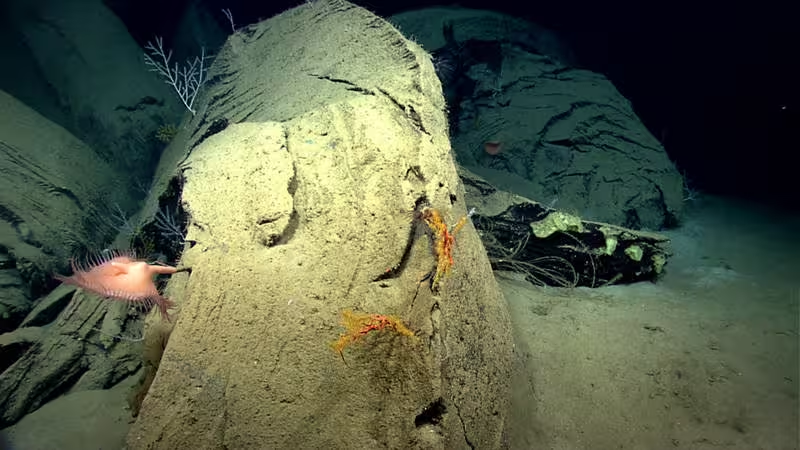
Beyond their geological interest, the tar lilies function as vital anchor points for marine ecosystems. Footage from the Deep Discoverer showed that the hardened asphalt surfaces had been colonized by a variety of life forms, including anemones, sponges, barnacles, and bamboo corals. These organisms utilized the stable, hard substrate to gain a foothold in an environment otherwise dominated by soft, shifting sediment.
Even more compelling was the presence of chemosynthetic organisms, such as tubeworms and microbial mats, clustered at the base of the lilies. Unlike life forms that rely on photosynthesis, these species derive their energy from the hydrogen sulfide and methane escaping from the seafloor. Their presence served as a clear indicator that the petroleum seeps fueling the lilies were not geological relics, but active, ongoing conduits of energy.
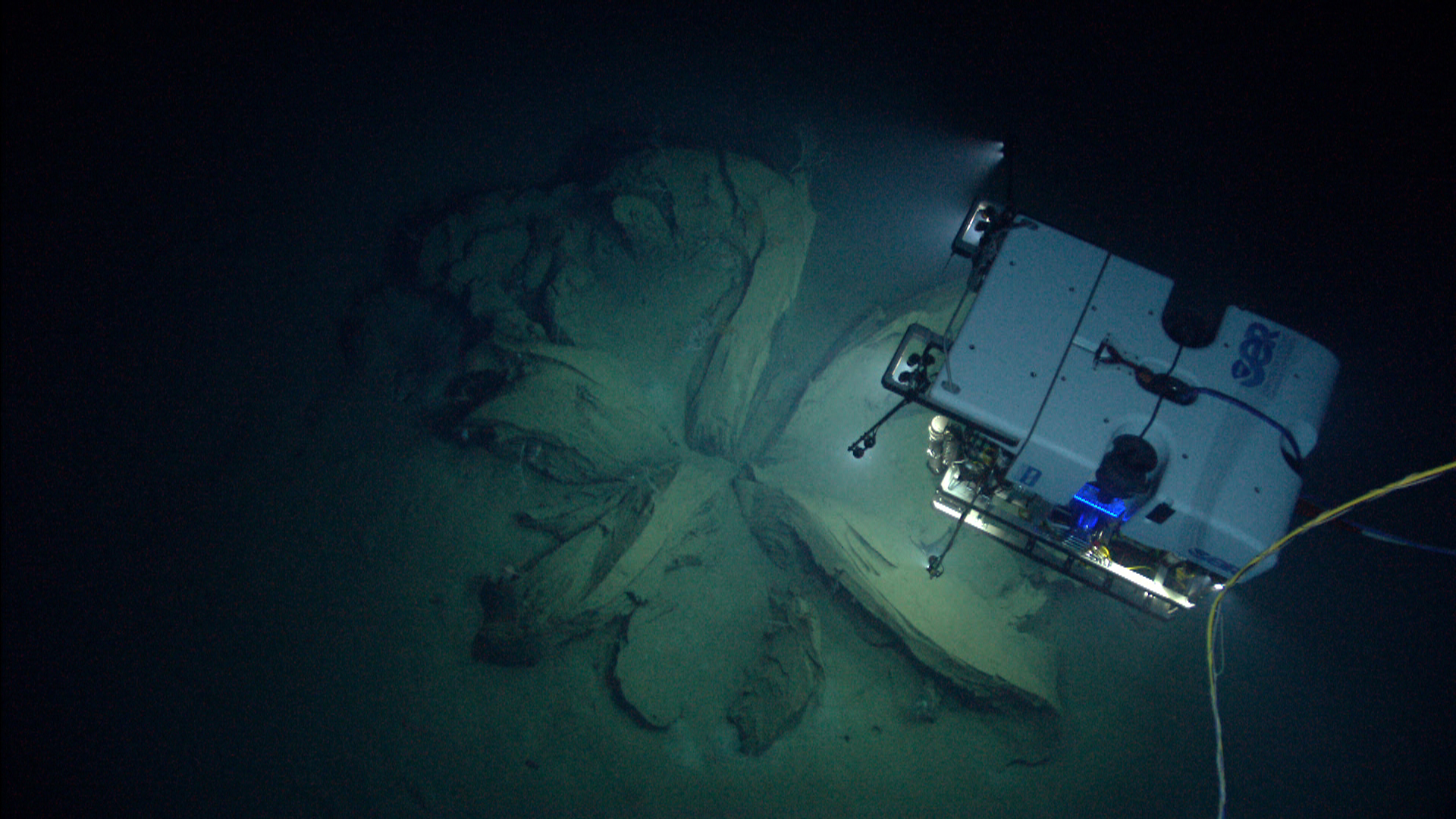
The 2014 expedition served as a stark reminder of the vast disconnect between our industrial presence in the Gulf and our biological understanding of it. Despite decades of mapping for oil and gas infrastructure, the ocean floor remains largely terra incognita. As researchers continue to analyze these sites, they suspect that asphalt volcanism—and the unique, self-sustaining biomes it supports—may be a widespread, yet overlooked, feature of hydrocarbon-rich basins across the globe.
This article has been fact checked for accuracy, with information verified against reputable sources. Learn more about us and our editorial process.
Last reviewed on .
Article history
- Latest version
Reference(s)
- “D2 Hires.” <https://archive.oceanexplorer.noaa.gov/okeanos/explorations/ex1402/logs/apr24/media/d2-hires.jpg>.
- “Lily2 Hires.” <https://archive.oceanexplorer.noaa.gov/okeanos/explorations/ex1402/logs/apr24/media/lily2-hires.jpg>.
Cite this page:
- Posted by Hassan Raza