Ancient Three‑Tier Food Chain Unveiled: Ichthyosaur Ate Pterosaur Then Fell to Giant Pliosaur
Australian scientists reveal a 100‑million‑year‑old fossil showing three predators locked in a single final meal, a world‑first discovery.
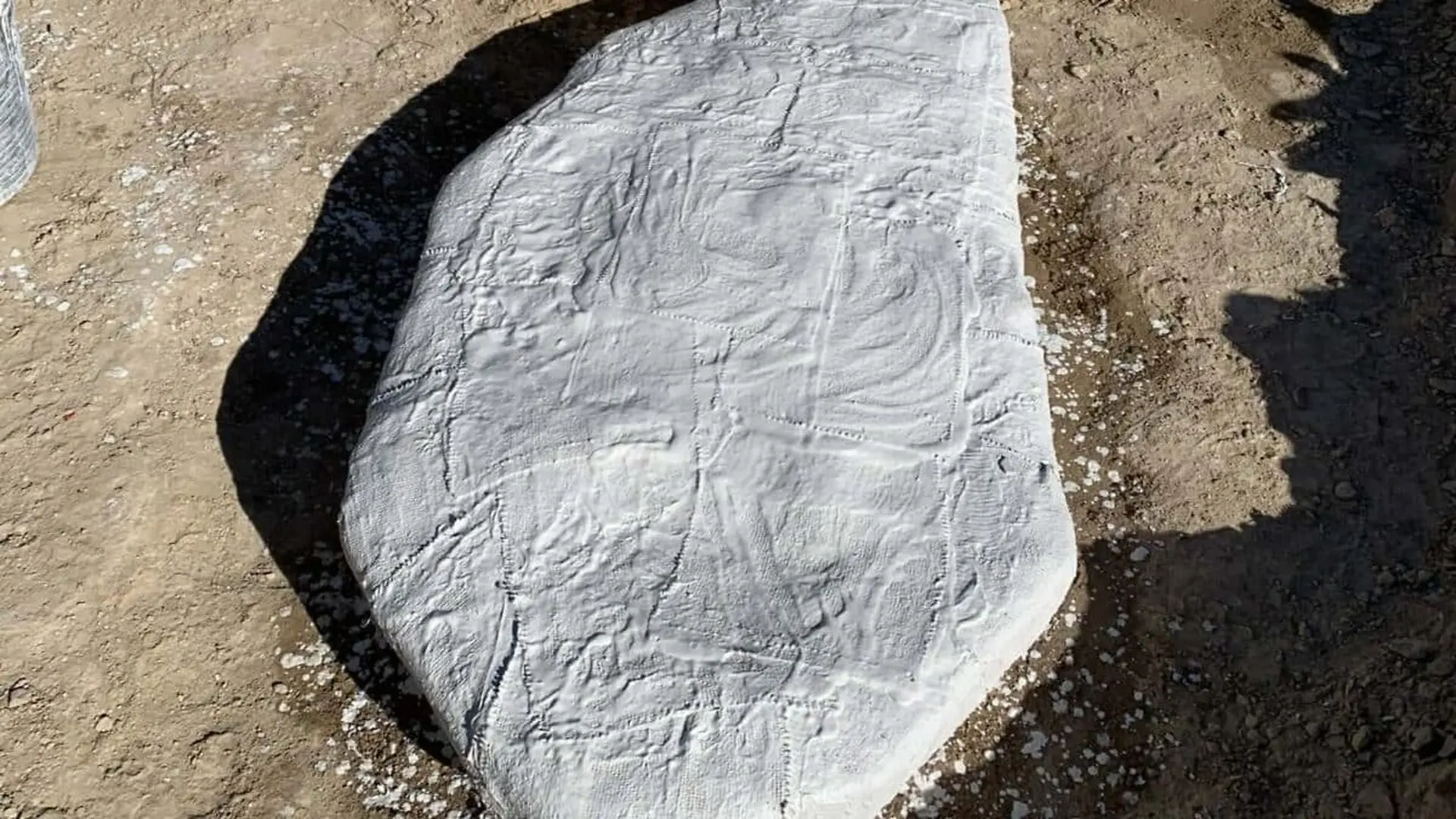
A remarkable fossil from near Richmond, Queensland, has captured a three‑level predator‑prey chain that unfolded over 100 million years ago in the ancient Eromanga Sea. The specimen, now described in Gondwana Research, shows an ichthyosaur that swallowed a pterosaur before falling victim to the massive pliosaur Kronosaurus queenslandicus.
CT imaging uncovers a pterosaur meal inside an ichthyosaur
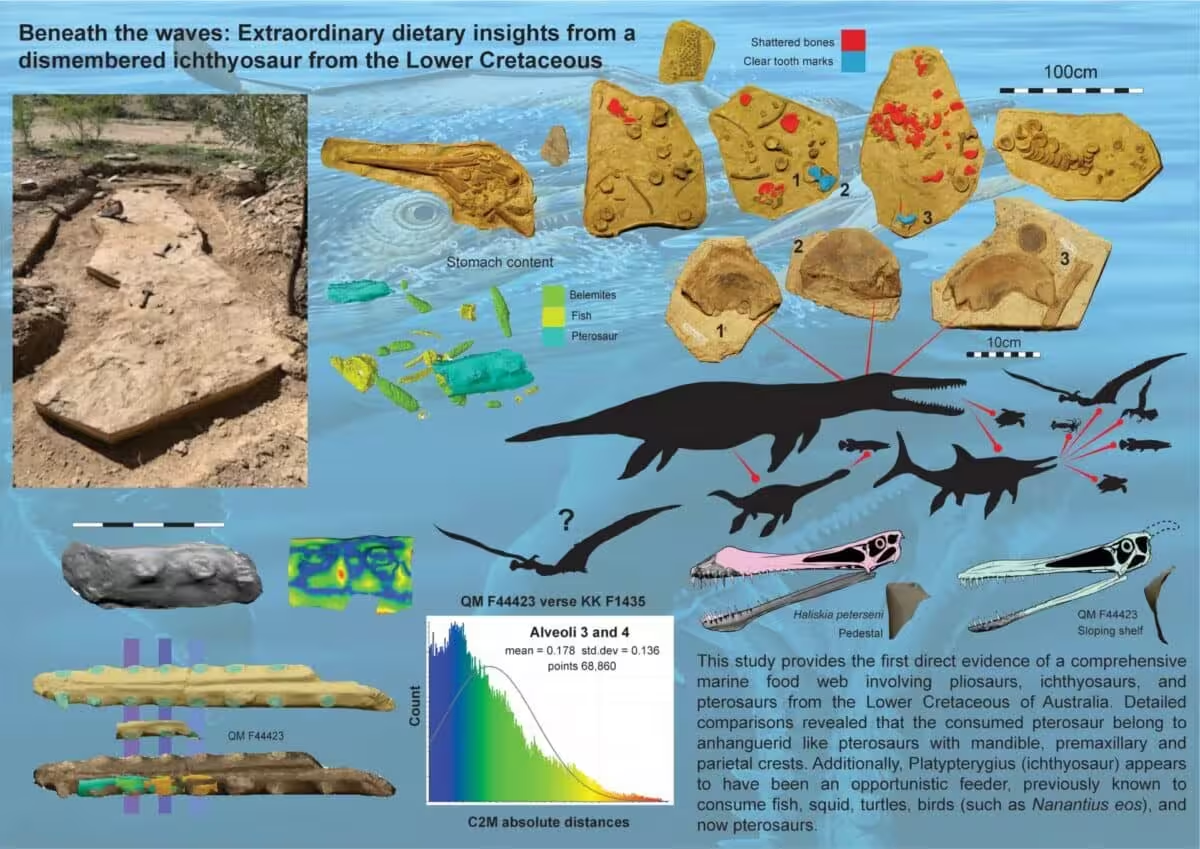
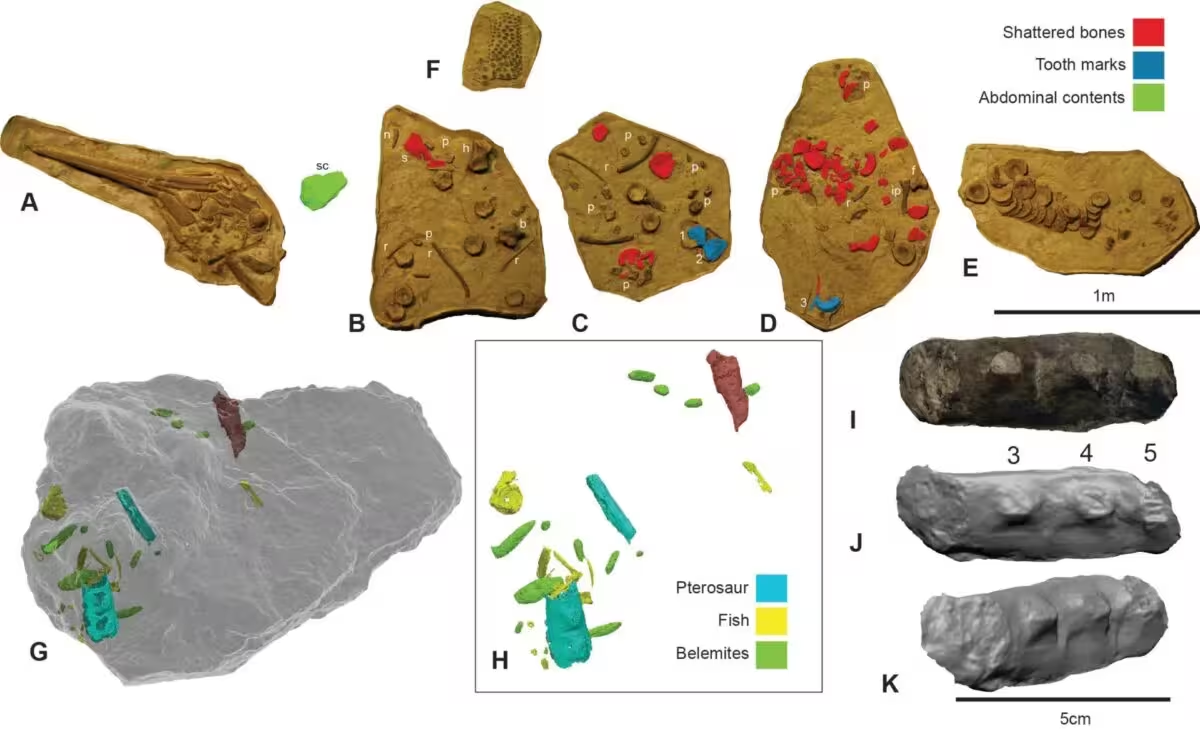
Researchers sent several rock nodules located behind the ichthyosaur’s skull to the Australian Nuclear Science and Technology Organisation (ANSTO). Using synchrotron‑based CT scanning, they visualised a complex assemblage of fish bones, belemnite fragments, shell pieces and, crucially, fragments of a pterosaur jaw. The pterosaur element was identified as belonging to a flying reptile, providing the first unequivocal proof that ichthyosaurs preyed on pterosaurs.
“I was amazed by the size of the ichthyosaur, and shocked to see it littered with bite marks and partially exposed pterosaur remains behind the skull,” said lead author Dr. Matt White, Research Associate at the University of New England.
Bite marks reveal a giant pliosaur’s attack
Beyond the preserved stomach contents, the ichthyosaur’s skeleton bears extensive crushing bite marks, shattered bone fragments and missing sections that point to a second predatory event. The pattern matches damage inflicted by a large pliosaur, identified as Kronosaurus queenslandicus, a dominant Cretaceous apex predator in Australian seas.
“It’s one of the clearest examples ever discovered of a three‑tier predator interaction and offers an unprecedented snapshot of behavior in Australia’s Cretaceous seas. This extraordinary fossil records a trophic interaction between a pterosaur eaten by an ichthyosaur that was then partly consumed by a giant pliosaur. It gives us direct evidence of behavior in the Eromanga Sea.”
The quote above comes from Dr. Dean Lomax, a paleontologist who contributed to the study and is affiliated with the research team.
From a public dig to a museum showcase
The fossil’s journey began in August 2019 when amateur collectors Mike and Cathy Freeman, together with Gary and Barb Flewelling, uncovered a large assemblage of bones at a public fossicking site near Richmond. The material was initially bagged and nicknamed “B.O.B.” (Bag of Bones). Three years later, Kevin Petersen, curator of the Kronosaurus Korner Museum, returned to the site and recovered the remaining elements, revealing a partially articulated ichthyosaur that spanned nearly eight metres.
“More than 600 volunteer and staff hours were invested preparing the specimen before several unusual rock nodules behind the skull prompted scientists to investigate further,” noted Dinosaur Experiences Australia.
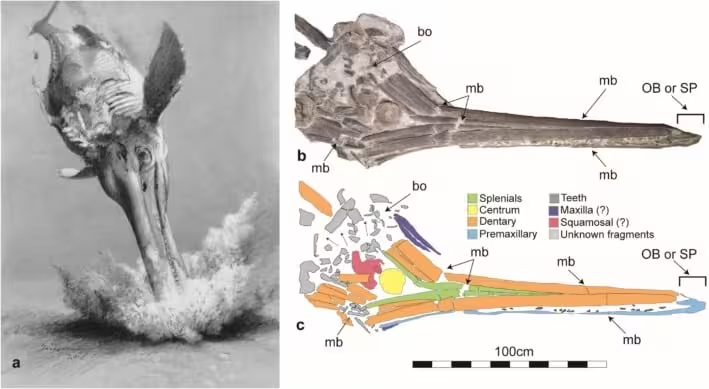
The completed fossil now resides in the Kronosaurus Korner Museum, where Australian paleoartist Peter Trusler contributed detailed scientific illustrations that accompany the publication.
This article has been fact checked for accuracy, with information verified against reputable sources. Learn more about us and our editorial process.
Last reviewed on .
Article history
- Latest version
Cite this page:
- Posted by Hassan Raza