New Study Suggests Thousands of Rabies Deaths May Be Going Undetected in the US
New research from the University of Oxford suggests human rabies deaths in the United States may be significantly undercounted, prompting a closer look.

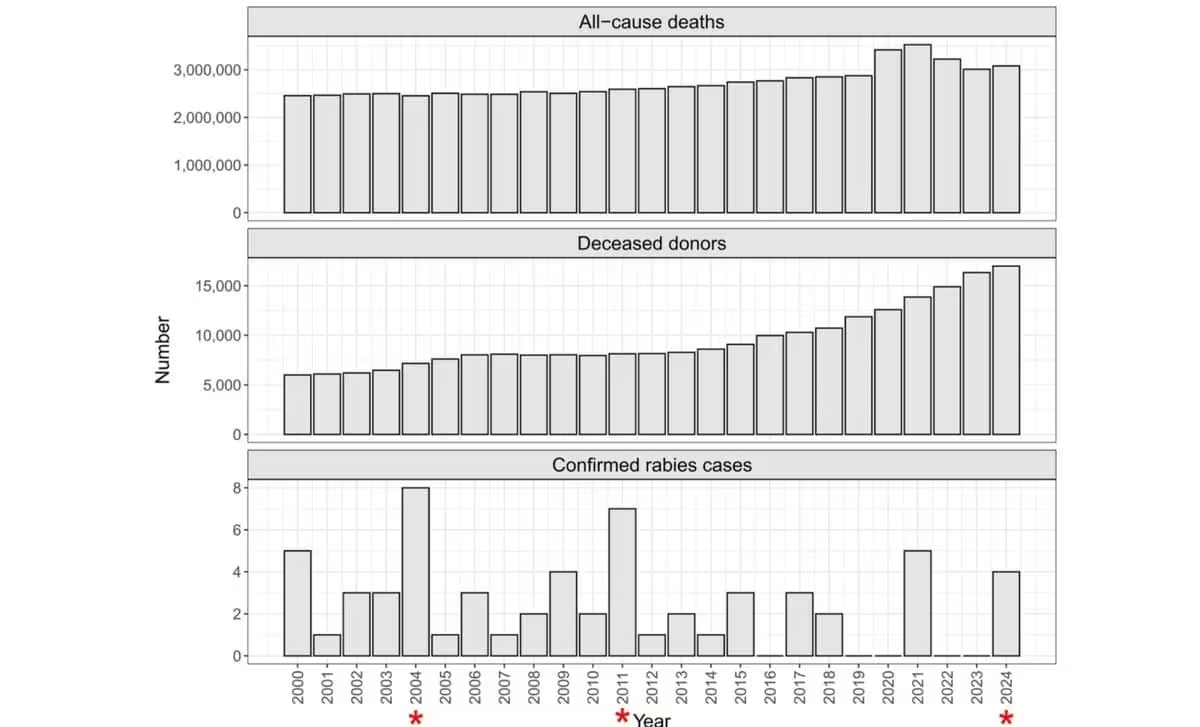
New research suggests that the true number of human rabies deaths in the United States may be significantly higher than official records indicate, raising concerns that current surveillance protocols are failing to capture a substantial portion of infections. By analyzing data from 2000 to 2024, investigators from Oxford University estimate that there were approximately 856 rabies-related fatalities during that period, while only 60 cases were formally confirmed.
The findings, published in the journal Nature, indicate that the officially recorded cases account for roughly 7% of the total estimated mortality. While this does not imply that every death goes entirely unnoticed, it underscores a major disconnect between the actual incidence of the disease and current diagnostic detection efforts.
Transplant Complications Highlight Surveillance Blind Spots
The severity of this diagnostic gap is most visible in the context of organ transplantation. Because rabies is not routinely screened for in donors, the virus has occasionally been passed to recipients when an underlying, undiagnosed infection in the donor is overlooked. A recent case from 2025 involved a kidney recipient who succumbed to rabies after receiving an organ from a donor who had been scratched by a skunk weeks earlier. While the recipient experienced classic neurological symptoms—including confusion, fever, and difficulty swallowing—the link to the donor was only confirmed post-mortem.
Following the discovery, public health officials identified three other recipients who had received corneas from the same donor. These individuals were placed on post-exposure prophylaxis and underwent graft removal, ultimately avoiding the infection. This incident, alongside a notable 2005 investigation where four recipients died after receiving organs from a rabies-positive donor, highlights how transplant events often serve as the only mechanism through which these hidden cases come to light.
The Diagnostic Challenge of a Variable Virus
The difficulty in identifying rabies stems from the virus itself, which features an incubation period that can range from a few weeks to an entire year. By the time a patient presents with symptoms such as tremors, seizures, or encephalitis, the initial exposure to an animal is often forgotten or never disclosed to clinicians.
Because the disease is rare, health systems do not perform routine testing on every donor, nor is it always prioritized for patients presenting with unexplained neurological decline. The research team emphasizes that improving diagnostic rates will require a more heightened index of suspicion among medical professionals, specifically when managing unexplained encephalitis cases. They advocate for more thorough patient histories and a greater focus on potential exposure risks.
While the authors acknowledge that their modeling assumes a uniform risk profile across the general population—and does not account for regional or occupational variables that might influence exposure—they argue the results are a necessary wake-up call. The study does not suggest that organ transplantation is a frequent vector for the disease, but rather that the transplant system serves as a stark indicator of how many cases may be slipping through the cracks of the broader public health network.
This article has been fact checked for accuracy, with information verified against reputable sources. Learn more about us and our editorial process.
Last reviewed on .
Article history
- Latest version
Reference(s)
- Kim, Younjung. “Substantial under-detection of human rabies cases in the United States - Communications Health.”, vol. 1, no. 1, August 29, 2026, pp. 23 Nature, doi: 10.1038/s44528-026-00031-4. <https://www.nature.com/articles/s44528-026-00031-4>.
Cite this page:
- Posted by Hassan Raza