Scientists Found That Replacing Cement With Treated Human Waste Makes Concrete Stronger
Scientists have transformed treated fecal sludge into biochar, discovering that a 10% additive can significantly enhance the structural strength of concrete.
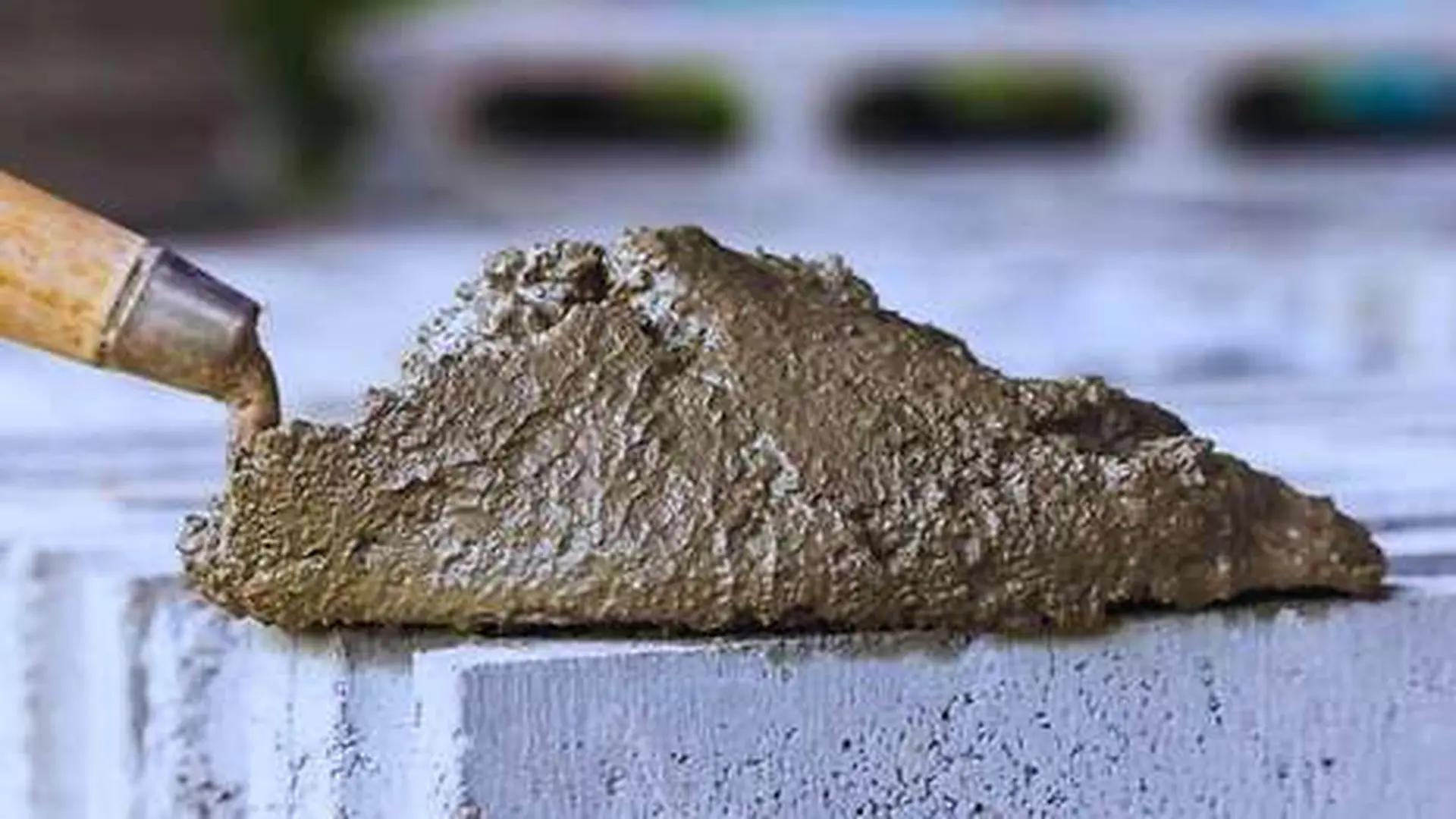
Engineers have discovered a novel way to transform human waste into a structural asset, potentially curbing the massive environmental footprint of the global construction industry. Researchers at Manipal University Jaipur have successfully incorporated processed fecal sludge—converted into carbon-rich biochar—as a partial substitute for traditional cement in concrete mixtures.
The study, which utilized treated waste from a facility in Warangal, India, involved drying and heating the sludge in a low-oxygen chamber to produce a fine, sieved powder. By replacing a fraction of the cement with this biochar, the team created concrete specimens that exhibited significant performance gains compared to standard mixtures.
Structural Performance Gains
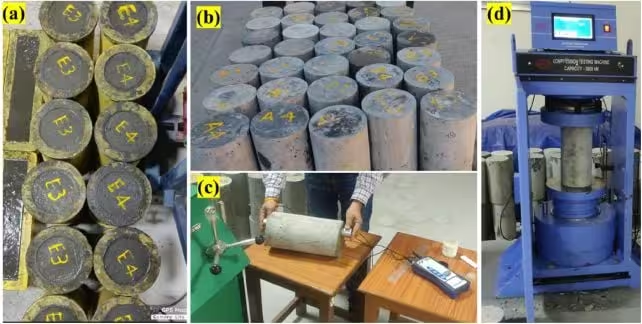
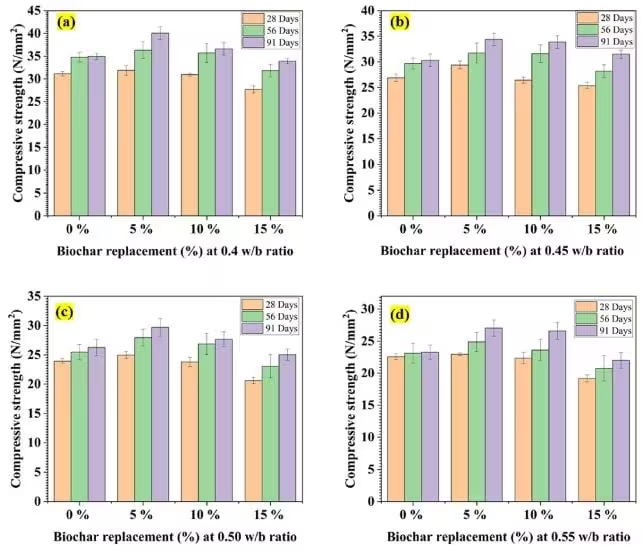
The research team, led by civil engineer Raghuvesh Tiwari, tested concrete samples containing 5%, 10%, and 15% biochar. After a 91-day curing period, the results were striking: the mixture with a 10% replacement of cement demonstrated a 21% increase in compressive strength and a 42% boost in flexural strength compared to the control group.
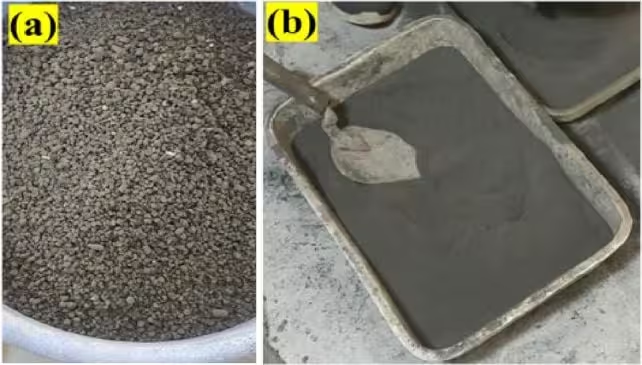
The published findings suggest that the biochar’s porous structure plays a critical role. During the mixing process, these microscopic cavities absorb water, which is then released gradually as the concrete cures, ensuring sufficient moisture for optimal cement hydration. Furthermore, the silica content in the biochar may trigger pozzolanic reactions, creating additional binding compounds that fill voids and densify the internal structure of the concrete.
Addressing Environmental Impacts
Concrete production is currently one of the world’s most significant sources of carbon emissions. The production of Portland cement is an energy-intensive process that accounts for an estimated 4% to 8% of global CO2 output. Reducing reliance on this binder is considered a critical goal for sustainable urban development, as outlined in recent industry commentaries.
However, scaling this solution requires caution. While the study indicates that heavy metal concentrations in the concrete were manageable, the long-term stability of these contaminants under weathering remains an area for future investigation. Additionally, while the material shows promise at lower concentrations, the benefits plateaued and reversed at a 15% replacement level, where microscopy revealed increased cracking and poor bonding.
The research team acknowledges that further work is necessary to quantify the total net-carbon benefit of the process, particularly when factoring in the logistics of sludge treatment and transportation. Ongoing studies will also need to subject these biochar-infused materials to harsher environmental stressors, including extreme temperature fluctuations and saline exposure, to determine their long-term viability in real-world construction applications.
This article has been fact checked for accuracy, with information verified against reputable sources. Learn more about us and our editorial process.
Last reviewed on .
Article history
- Latest version
Reference(s)
- Tiwari, Raghuvesh., et al. “Mechanical, durability, and microstructural performance of biochar-modified concrete using faecal sludge–derived biochar.” Scientific Reports, September 5, 2026 Springer Science and Business Media LLC, doi: 10.1038/s41598-026-66956-6. <https://doi.org/10.1038/s41598-026-66956-6>.
- “A World without Concrete?.”, November 3, 2022 Buildings and Cities <https://www.buildingsandcities.org/insights/commentaries/world-without-concrete.html?utm_source=chatgpt.com>.
Cite this page:
- Posted by Bilal Abbasi